Materials
Everything You Need to Know About Wax 3D Printing
The term wax 3D printing is somewhat misleading, as in fact should be considered indirect 3D printing. In other words, 3D printing is not used to manufacture the final part, but as a step in the process. Wax 3D printing…
- 3 min read
- Materials
- Six more stories
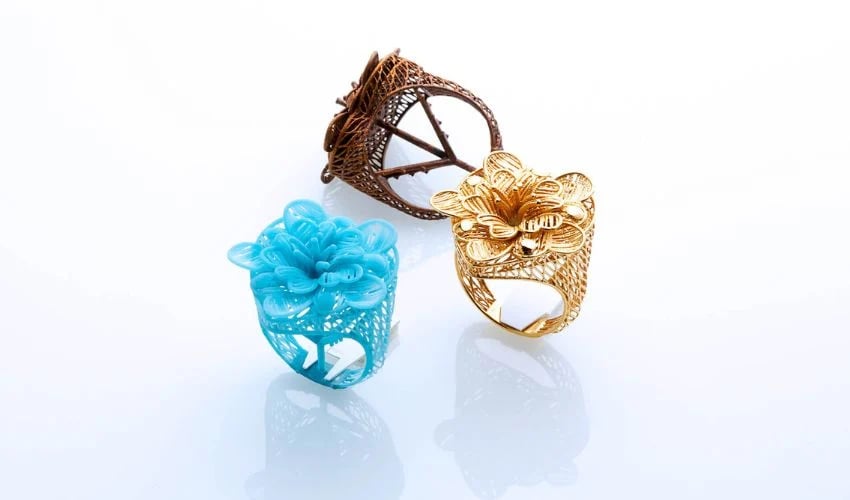
The term wax 3D printing is somewhat misleading, as in fact should be considered indirect 3D printing. In other words, 3D printing is not used to manufacture the final part, but as a step in the process. Wax 3D printing for example makes it possible to produce wax molds that serve as models for the final part. Wax is not the material of the final part. It is simply used to create the shape and is then melted. As the shape of the wax does not ultimately exist and is “lost”, it is often referred to as lost-wax casting.
As you may have guessed, the lost-wax process is a casting process which enables small, identically cast parts to be produced with few finishing steps. It is traditionally highly valued for its dimensional accuracy, detail and surface quality. Wax 3D printing has the same objectives, but the difference is that the mold is 3D printed rather than hand-made.
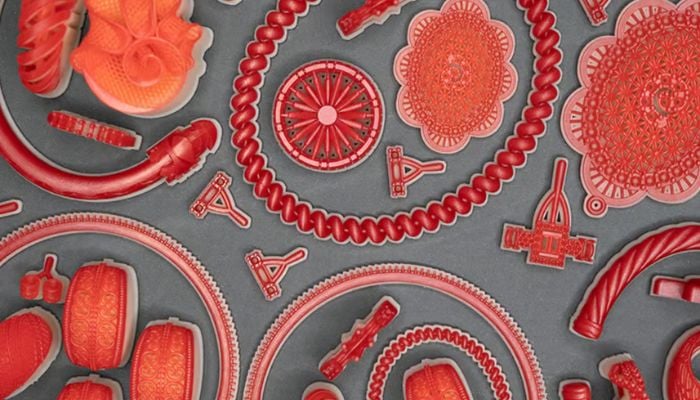
3D wax printing was originally based on the lost-wax principle (photo credits: 3D Systems).
As mentioned, wax 3D printing is primarily used to make molds, which are then used as a form for metal objects, precious or otherwise. The advantage of wax is that it burns with almost no residue, and does not require complex mold processing. In addition to special printing wax, there are also burnable filaments and resins for the same purpose. 3D technology makes it possible to print almost any design and combine cast-iron quality with complex structures. So let’s take a closer look at the process.
More from the desk
Six other notes from the rest of the bench.
 PrintersMosaic Manufacturing: Multiple Materials, Infinite PotentialMosaic Manufacturing is a Canadian company that made a name for itself in 2014 with Palette. This piece of equipment connects to a FDM 3D printer and allows for multi-color and multi-material parts without having to modify the extruder. Based…
 NewsTop 5 Videos: Eating 3D Printed Food Tailored For Dysphagia PatientsWelcome to our compilation of this week’s most compelling 3D printing videos. We kick off this week’s edition with a taste test and exploration of 3D printed food, tailored for those suffering from dysphagia. Next, we’re given an in-depth look…
 GuidesThinking Huts Relies on 3D Printing to Increase Access to EducationThinking Huts is an association that seeks to promote access to education through 3D technologies. By 3D printing schools, it hopes to rapidly multiply the number of available infrastructures, as well as seeking to create jobs locally while promoting more…
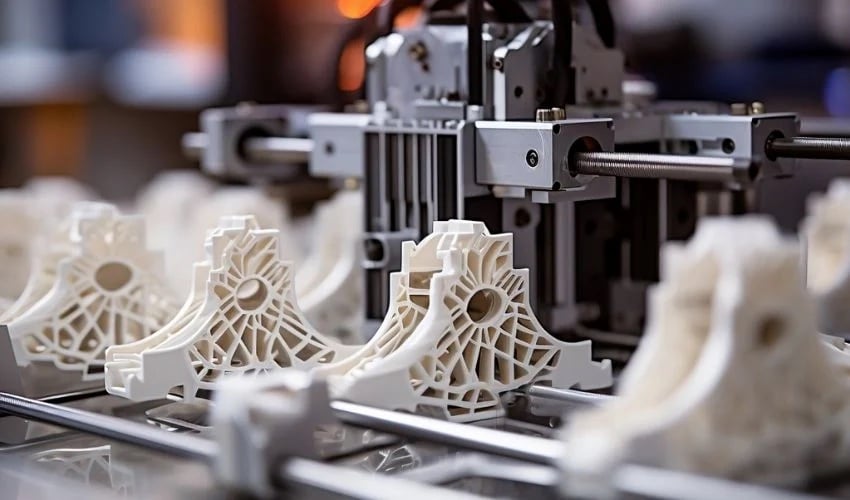 NewsWohlers Report 2025: 9.1% Growth for the Global Additive Manufacturing MarketThe renowned Wohlers Report, the international market study that analyzes the health of the additive manufacturing sector, has officially been published for 2025. This 30th edition is once again marked by growth: according to Wohlers Associate, the industry will have…
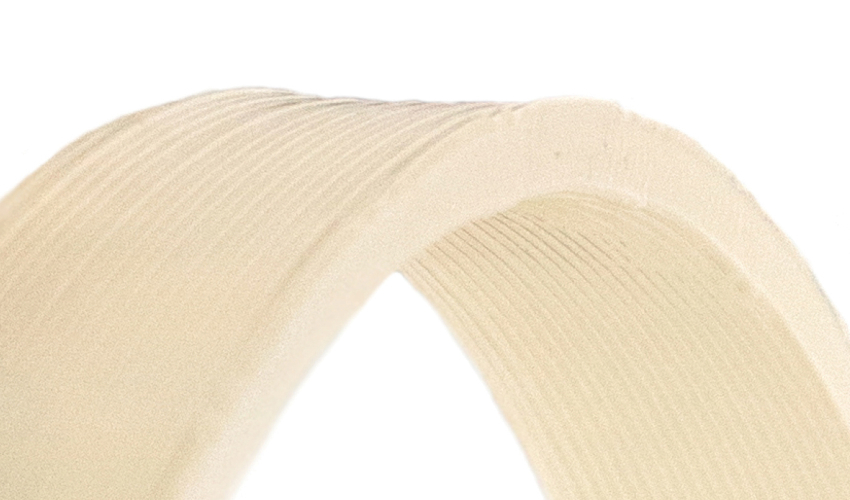 MaterialsIngeo 3D700, The New PLA Grade Biopolymer for Large Format 3D PrintingNatureWorks has developed a brand new PLA-Grade biopolymer which supplies a considerable reduction in warping and minimizes print failures, to add to its Ingeo range. Ingeo 3D700 is particular in that it is designed specifically for large format 3D printing,…
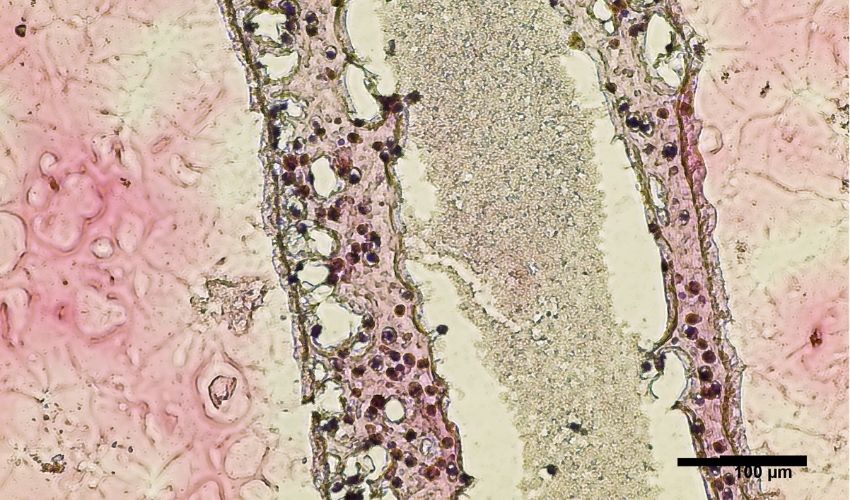 NewsResearchers Successfully 3D Print Male Reproductive CellsThe University of British Columbia recently accomplished a new world first. A team of researchers led by Dr. Ryan Flannigan have succeeded in 3D printing human testicular cells. After a few days of maturation, these cells would have been able…