Applications
3D Printed CBD Suppositories the Next Treatment for Epilepsy?
Epilepsy is a chronic, neurological disease characterized by recurrent seizures and can significantly impair the quality of life of those affected. One treatment for it, prescribed mainly in European nations, is Cannabidiol (CBD)-based medicines. CBD is a medical substance obtain
- 3 min read
- Applications
- Six more stories

Epilepsy is a chronic, neurological disease characterized by recurrent seizures and can significantly impair the quality of life of those affected. One treatment for it, prescribed mainly in European nations, is Cannabidiol (CBD)-based medicines. CBD is a medical substance obtained from cannabis, but one that is not addictive and has no psychotropic effects. It is effective in soothing and relieving pain, anxiety, stress, and sleep disorders. It is currently known and used more in medicine to relieve convulsions generated by epilepsy.
However, the commercially available oral formulation of CBD for the treatment of epilepsy has a marked first-pass effect, which reduces its effectiveness. This means that metabolism of the active ingredient, after oral intake, first passes through the digestive tract and liver before entering the bloodstream. During this stage, a significant portion of the active ingredient is degraded in the liver, thus reducing the amount that actually circulates in the bloodstream and can exert its therapeutic effect. To avoid this, researchers have now developed 3D-printed CBD suppositories that release the cannabidiol. These have been produced by combining additive manufacturing and molding techniques to create a hollow structure, making them safe and functional.
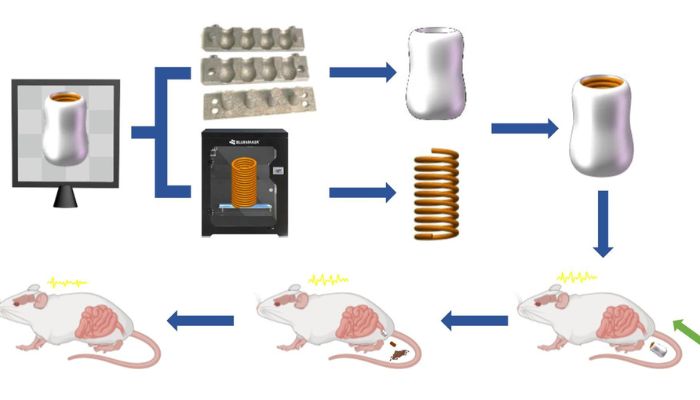
The main goal of 3D printed CBD suppositories is to avoid the disadvantages of traditional oral CBD drugs, particularly the first-pass effect (photo credits: Meng Wei, Dongdong Liu, Hua Xie, Yingbao Sun, Yubao Fang, Lina Du, Yiguang Jin, 3D printed hollow cannabidiol suppositories for the treatment of epilepsy, International Journal of Pharmaceutics)
The suppositories consist of an outer shell that contains CBD and an internal spring structure that supports the shape. To produce the suppositories, FDM 3D printing technology with thermoplastic polyurethane filaments was used to recreate the spring structure. The outer casing was also produced using a 3D printed metal mold containing a mixture of CBD, polyvinyl alcohol, and polyethylene glycol.
More from the desk
Six other notes from the rest of the bench.
 SoftwareMorphi, an Intuitive 3D Modeling Software for BeginnersMorphi is a user-friendly application designed for beginners in the field of 3D modeling, developed by Inventery, a New York-based company. The application is compatible with both Mac and Windows and can be used online or offline. However, the mobile…
 ApplicationsNew Research on 3D Printed Bioactive Bone Implants Reveals Promising PropertiesUsing 3D printing to create bone implants is beneficial in more ways than one. Beyond achieving geometries personalized to the patient’s anatomy, the technology is compatible with diverse materials that can achieve more desirable properties than traditional implants, often
  ApplicationsHow Can Metal Additive Manufacturing Overcome Obstacles for the Creation of Core Parts?As additive manufacturing continues to mature and grow, one trend that has become clear is the increased importance of metal AM in a number of sectors. More and more, OEMs are adopting metal AM technologies as a way to create…
 NewsPrague Receives its First 3D Printed Tram ShelterThe infrastructure of the Czech capital Prague covers a length of 142 kilometers, on which about 991 vehicles are on the road every day, transporting both residents and tourists. Accordingly, the transport company of Prague, which operates the tramway and…
 SoftwareAMFG on its end-to-end workflow management solution for autonomous AMAs companies start to adopt 3D printing at a larger scale, the need to adopt a tool to manage the additive manufacturing workflow is becoming greater. Any industry needs software to manage operations if it aims to be efficient and…
 NewsAffordable 3D Printed Housing Partnership Begins in the Carribean and South AmericaAll around the world, access to affordable housing is a problem that is increasingly present. Growing increasingly desperate, the people affected are looking for solutions to combat this problem, with many people turning to sharing apartments among several people, sometimes&helli