News
Prague Receives its First 3D Printed Tram Shelter
The infrastructure of the Czech capital Prague covers a length of 142 kilometers, on which about 991 vehicles are on the road every day, transporting both residents and tourists. Accordingly, the transport company of Prague, which operates the tramway and…
- 3 min read
- News
- Six more stories
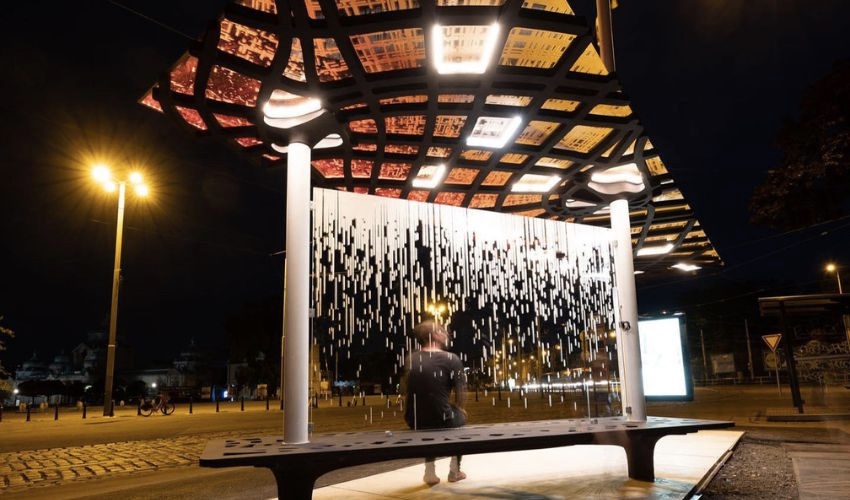
The infrastructure of the Czech capital Prague covers a length of 142 kilometers, on which about 991 vehicles are on the road every day, transporting both residents and tourists. Accordingly, the transport company of Prague, which operates the tramway and metro and keeps them instant, is in charge of all the stations and stops. At one such stop, which is named Stromovka and located in Prague 7, a 3D printed bench ,including a lining was produced in just 36 hours, was unveiled last weekend. The exciting thing here is the fact that the tram shelter is the first of its kind in the Czech Republic to have been produced by additive manufacturing.
The innovative bus stop shelter was manufactured and built by the Prague-based company So Concrete, which provided the bench and shelter to the city of Prague free of charge. The prototype, which will now offer passers-by a place to sit while they wait for the next tram, was made of concrete that has a very special property: it is ten times stronger than conventional concrete and is therefore characterized as ultra-strong. Prague’s politician in charge of transport, Adam Scheinherr, is overjoyed with the benefits that 3D printing brings to Prague explaining, “Combining this kind of concrete with 3D printing is a way to use concrete only where it is absolutely necessary […] This is a change in approach to projects and sets a course that meets conditions for sustainable development. Don’t waste energy and resources, which are becoming rarer and rarer.”
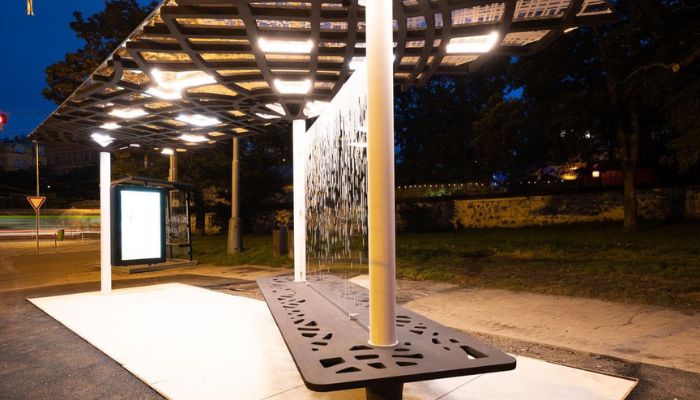
Passers-by can sit under cover at the additively manufactured tram station
Details About the 3D Printed Streetcar Station in Prague
Thanks to the use of this 3D printing manufacturing method, the city of Prague can not only enjoy a new and sustainable way of construction. Additionally, in economic terms, the construction allows for higher efficiency. In this case, just 60% of the materials were used and also in terms of human labor, it was possible to reduce it to a minimum. After the 3D printing was completed, So Concrete took care of the transport of the individual parts printed in concrete, where they were subsequently assembled and now represent a completely new type of streetcar stop. However, 3D printing was not used for all of the construction,. Instead, the entire design was optimized with the help of artificial intelligence, with human labor only being used for modification at the end.
More from the desk
Six other notes from the rest of the bench.
 NewsThe Role of 3D Printing in Interior DesignAs we see 3D printing used in more and more industrial sectors, the question remains: what role does it play in everyday life? Is it able to influence our everyday environment? Looking at the use of 3D printing in interior…
 ApplicationsMichelin’s Uptis Airless Tire is Officially on the Road!In June 2019, we reported on an interesting new tire that came from famous French manufacturer Michelin. Designed to be airless, the concept of the tire is that it could avoid any risk of puncture and be repaired if needed…
 NewsDubai to Rely on 3D Printing for Road MaintenanceWhile additive manufacturing is being used by the rail industry to improve the condition of rails, it is still rare to see the technology employed for roads. But that could soon change. In the United Arab Emirates, in Dubai to…
 NewsAda Hefetz Is Using 3D Printing to Transform Wedding DressesCould you imagine a bride in a 3D printed wedding dress? It may come as a surprise, but in fact the idea is already a reality. Israeli designer Ada Hefetz has launched a new line of wedding dresses made using…
 News3D Printed Autonomous Flying Umbrella That Follows You AutomaticallyYou read that right. This 3D printed umbrella takes flight and follows you around, keeping you protected from the rain while leaving your hands free. To make it possible, John Xu, creator of the YouTube channel I Build Stuff, used…
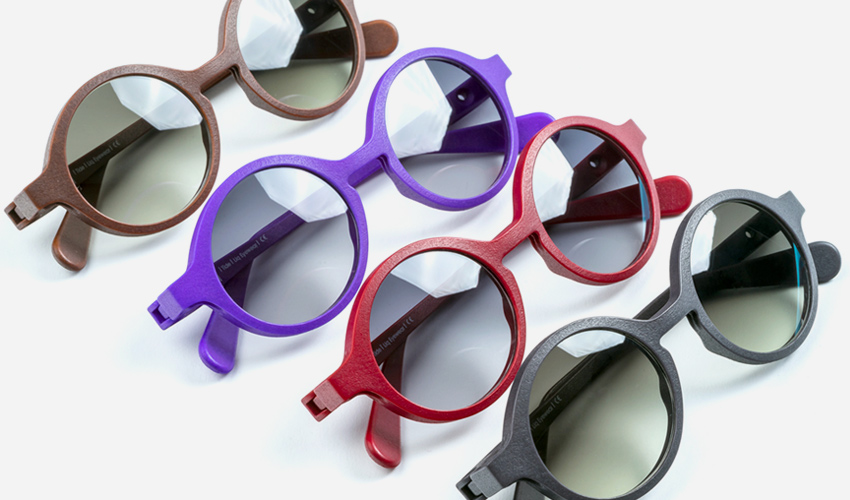 GuidesLiq Eyewear on the Benefits of Creating Personalized Sunglasses With 3D PrintingAccording to a study by Mckinsey & Company, 71 percent of consumers expect companies to deliver personalized interactions, and consumer goods represent a growing sector where 3D printing is gaining significant importance. Additive manufacturing brings several notable advantag