Applications
It Is Now Possible to 3D Print Artificial Cartilage for Living Tissue Replacement
3D printing has reached new frontiers in the medical field, as a research team at TU Wien has achieved a breakthrough by leveraging a precise 3D printing process to produce artificial cartilage. This innovation enables the laboratory cultivation of living…
- 3 min read
- Applications
- Six more stories
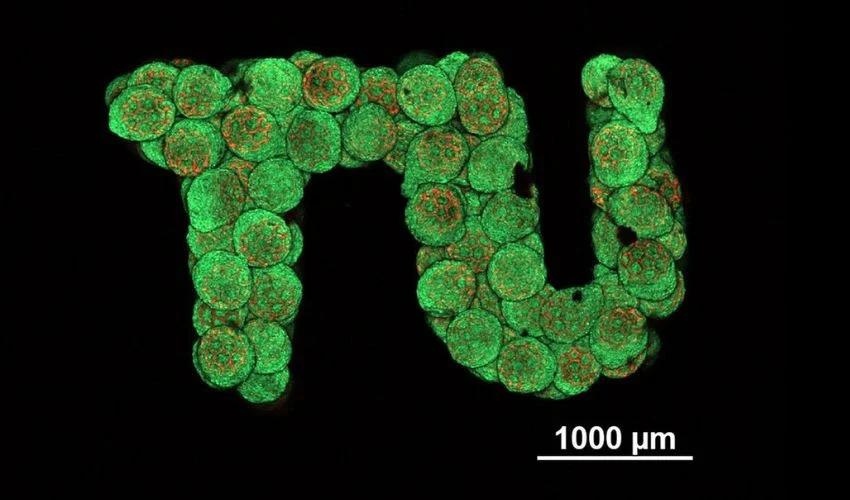
3D printing has reached new frontiers in the medical field, as a research team at TU Wien has achieved a breakthrough by leveraging a precise 3D printing process to produce artificial cartilage. This innovation enables the laboratory cultivation of living replacement tissue tailored to specific needs, a crucial advancement for medical applications. Indeed, the hope is that the technology could prove invaluable in scenarios such as replacing damaged cartilage, where precise tissue formation is essential.
The achievement represents a significant leap forward in the medical industry, since the development of cartilage tissue presented numerous challenges prior to the adoption of these precision 3D printing techniques. Previously, attempts made to cultivate tissue in the laboratory using alternative methods often encountered significant complications. The production of larger tissue is particularly challenging with cartilage cells, as a structure is created between the cells in the cartilage tissue that does not allow the various cell spheres to grow together in the correct formation.
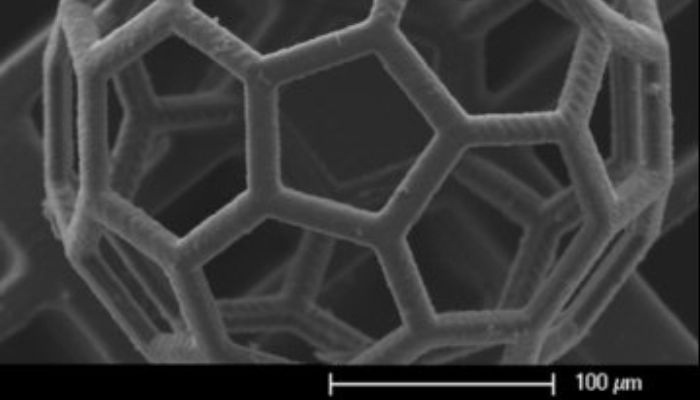
The football-like support structure.
According to one of the study’s authors, Dipl.-Ing. Oliver Kopinski-Grünwald from the Institute of Materials Science at TU Wien, cultivating cartilage cells from stem cells poses less of a challenge. The primary issue lies in the lack of control over the resulting tissue’s shape. This is partly attributed to the tendency of stem cell clusters to change shape over time and shrink. In order to determine the shape of the resulting tissue, the research team at TU Wien is now using laser-based precision 3D printing systems to create support structures for the stem cells.
More from the desk
Six other notes from the rest of the bench.
 PrintersThe Best 3D Printers for Schools3D printers are fantastic tools for education, offering valuable learning opportunities for students at every level, from elementary school to college. With this technology in the classroom, students can bring their ideas to life. They can learn design skills, foster…
 ApplicationsApplication of the Month: A 3D-printed Autonomous All-Terrain VehicleThis is not a concept car that can drive itself from point A to point B, nor is it just a futuristic gadget. We are presenting a prototype autonomous vehicle designed to enhance agricultural research, developed by the startup Lemki…
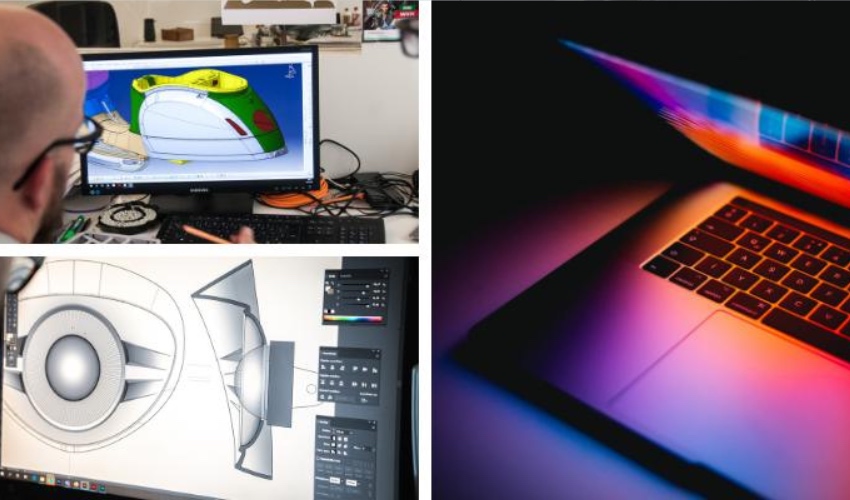 SoftwareHow to Choose the Best Computer for 3D Modeling and CADCAD, or computer-aided design, is the process of creating, modifying and optimizing designs using specialized software. It is widely used in a number of industries, including architecture, engineering, manufacturing (including additive manufacturing) and entertainment. CAD softwa
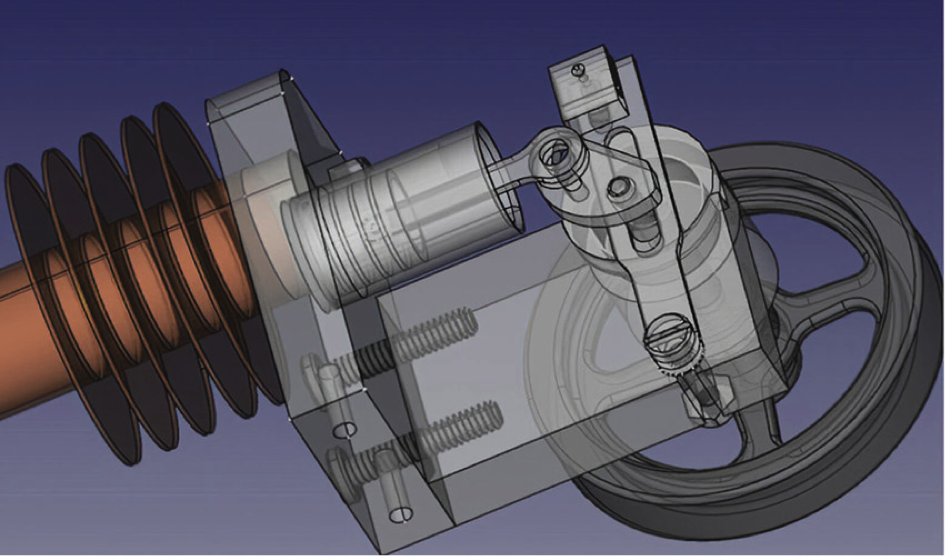 SoftwareFreeCAD: An Open-Source 3D Modeler for All Users3D printing requires for a 3D model to be sent to a slicer, before being sent to the 3D printer. There are sites such as Thingiverse where a variety of such models are available to download. But if you want…
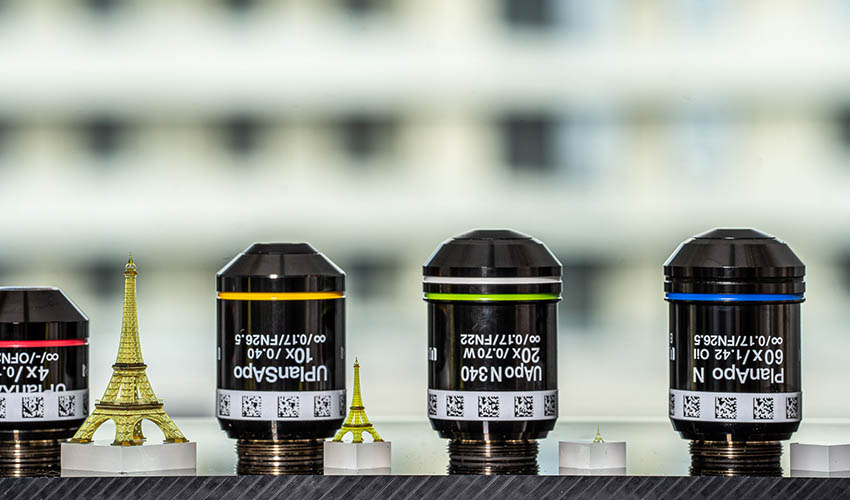 NewsUpNano develops high-resolution desktop 3D printing for micro partsUpNano is a young company based in Vienna that has recently developed a high-resolution microscale 3D printing technology. Based on the 2-photon polymerization process (2PP), the new technique is capable of producing plastic parts with a volume ranging from 100…
 NewsAMUG 2019: recap of all the reveals at the event!AMUG 2019, also called Additive Manufacturing Users Group, took place this week from March 31st to April 4th in Chicago, Illinois. The conference has its roots in the early 1990s when the founders of the Users Group were still called…