Applications
Application of the Month: A 3D-printed Autonomous All-Terrain Vehicle
This is not a concept car that can drive itself from point A to point B, nor is it just a futuristic gadget. We are presenting a prototype autonomous vehicle designed to enhance agricultural research, developed by the startup Lemki…
- 3 min read
- Applications
- Six more stories
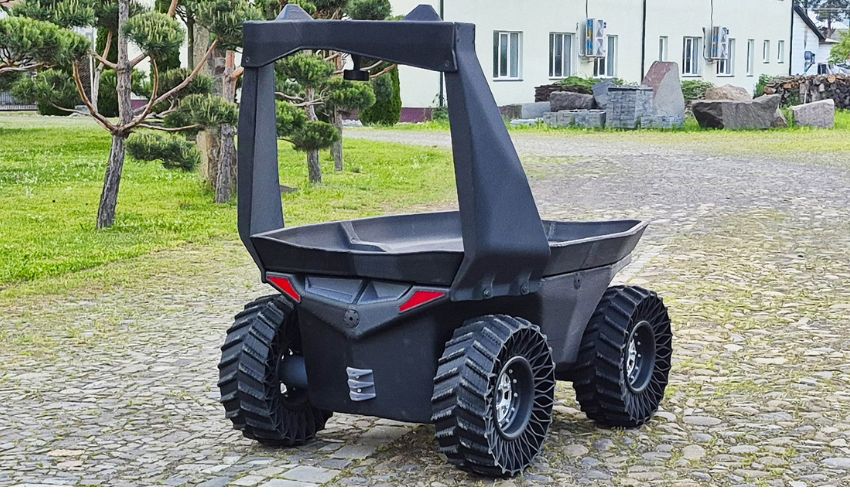
This is not a concept car that can drive itself from point A to point B, nor is it just a futuristic gadget. We are presenting a prototype autonomous vehicle designed to enhance agricultural research, developed by the startup Lemki Robotics, iScale3D, and Zeykan Robotics. The vehicle was conceived as a platform to advance precision agriculture and improve agri-food efficiency through a range of features. What is particularly interesting today is how this prototype was produced. The chassis was created using a pellet extrusion process. The result is a 400-kilogram (882-pound) vehicle measuring 2000 x 1300 x 800 mm (78.7 x 51.2 x 31.5 inches), with a range of 100 kilometers (62 miles), equipped with multiple sensors to carry out its tasks.
You may have heard of iScale3D and the startup Lemki Robotics. We met their teams some time ago to learn more about their 3D-printed camper van. Even then, they wanted to leverage the flexibility of additive manufacturing to rethink vehicle development. This time, they focused on a completely different application. Their wheeled robot could serve as a surveillance platform in many fields thanks to its modular architecture. This includes defense, where it can access more dangerous areas or optimize military logistics, as well as agriculture and infrastructure inspection.
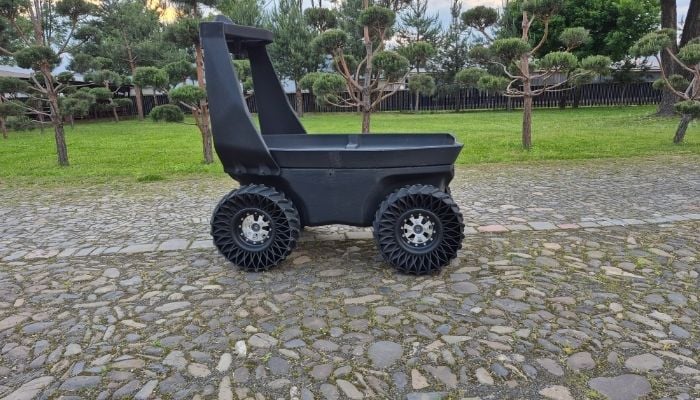
The Autonomous Vehicle Design
Using 3D Printing to Build the Autonomous Vehicle
To design their robotic platform, the teams used Fused Granulate Fabrication (FGF), a process that deposits plastic granules layer by layer. For the chassis, they chose 20% glass fiber-reinforced polypropylene (PP) to achieve greater strength while optimizing weight. A robotic arm carried out the extrusion. The total printing time is unknown, but each component was completed in less than 60 hours.
More from the desk
Six other notes from the rest of the bench.
 NewsAML3D Moves Into US Utilities Through Sale of 3D Printer to TVAThis year, we have seen a surge in popularity in large-format additive manufacturing solutions. Directed energy deposition especially has seen quite a lot of buzz, with applications in aerospace and defense taking center stage. Now there is yet another. AML3D…
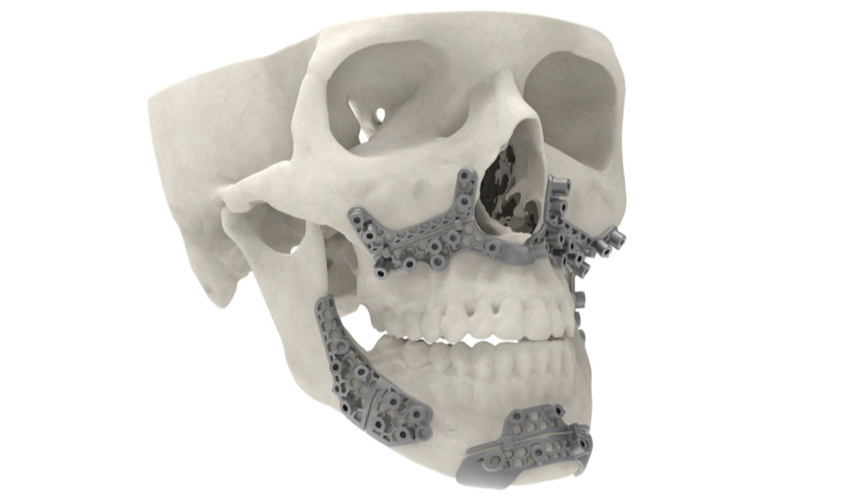 Applications3D Systems Announces All New VSP Hybrid Surgical Guides3D Systems has just announced their latest enhancement to their VSP surgical planning portfolio. The all new VSP Hybrid Guides will deliver a breakthrough patient-specific, occlusal-based solution for maxillofacial surgeries. By combining nylon and titanium guides the new enhance
 NewsXYZBAG, 3D printed personalised handbagsXYZBAG is an Italian brand based in Turin that has chosen digital craftsmanship: it combines traditional design methods and additive manufacturing technologies to produce unique bags. Customisation is undoubtedly one of the reasons why more and more designers are turning…
 ApplicationsAirbus Qualifies Materialise and EOS to Make 3D Printed Flight-Ready PartsFor several years now, Airbus has been using additive manufacturing to produce and repair many parts for its aircraft. And by qualifying the technologies of Materialise and EOS, the European aircraft manufacturer is renewing its confidence in 3D printing. The…
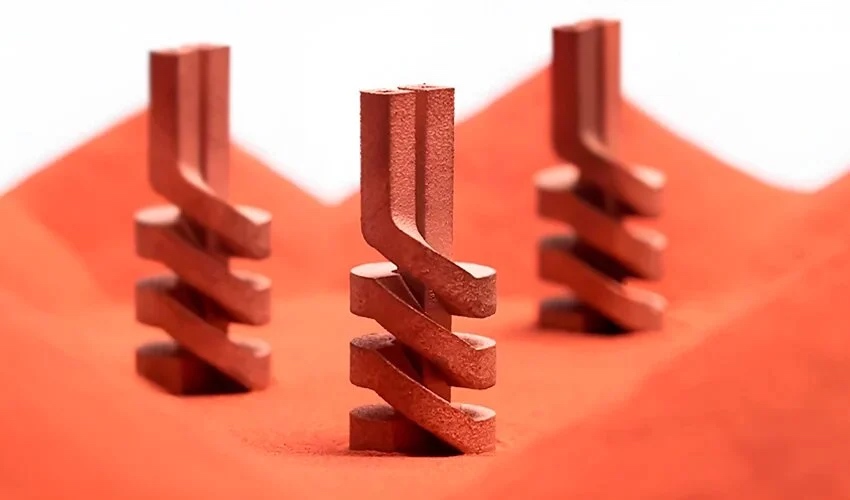 MaterialsAll You Need to Know About Copper 3D PrintingKnown for its reddish-orange hue, copper is a popular metal due to its exceptional physical properties. These characteristics have made it a key material in a variety of industries, from electronics to the creation of end-use parts. With advances in…
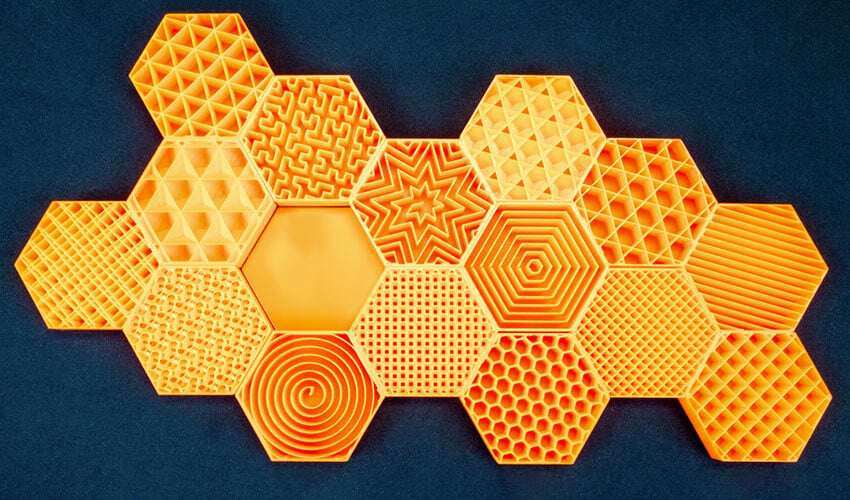 NewsThe Infill Puzzle: Cracking the Code for Perfectly Balanced 3D PrintsInfill serves a vital purpose in 3D printing, offering precise control over the interior structure of printed parts. Unlike traditional manufacturing methods like injection molding or subtractive manufacturing, 3D printing allows for the creation of intricate infill patterns and