Applications
3D Ice Printing Can Create Artificial Blood Vessels in Breakthrough for Lab-Grown Organs
As the need for organ donations, especially for hearts, kidneys and livers, becomes more prevalent, more and more scientists are dedicating themselves to finding ways to create viable artificial organs, although there has been little success in recent years. However,…
- 3 min read
- Applications
- Six more stories
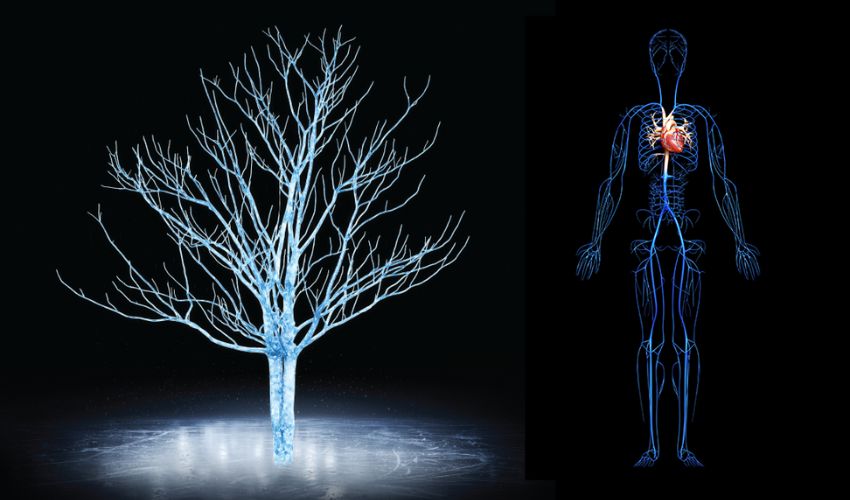
As the need for organ donations, especially for hearts, kidneys and livers, becomes more prevalent, more and more scientists are dedicating themselves to finding ways to create viable artificial organs, although there has been little success in recent years. However, now there could be a solution. Researchers from Carnegie Mellon University have shown found a way to close the gap between available organs and the demand for transplants. By using 3D ice printing, they have found that it is possible to create structures that resemble blood vessels, mimicking their natural design and allowing them to function properly in the body.
The news comes at a fortuitous time. According to the Division of Transplantation (DoT), the federal entity responsible for oversight of organ and blood stem cell transplant systems in the USA, in 2024, there were 103,223 men, women and children on the national transplant waiting list. Furthermore, the number is constantly growing, with a new person being added every 8 minutes.
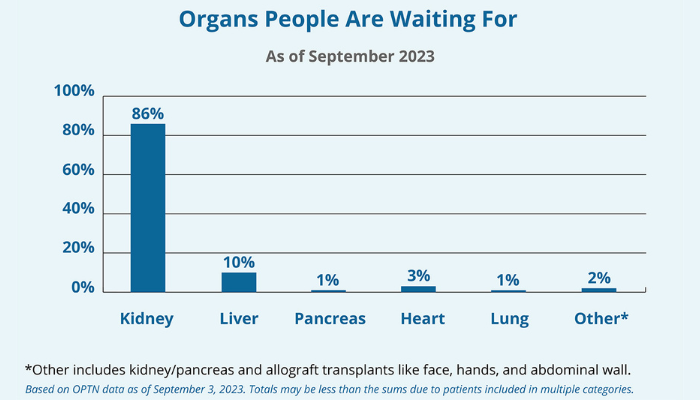
Many on the organ transplant list have waited for quite a while, especially for organs where demand is high, such as for kidneys (image credits: HRSA)
Not only that, but the DoT estimates that about 17 people die each day waiting for an organ transplant, over 6000 a year. That is why so much time and research has been put into not just increasing the number of organ donors (at about 170 million people in the U.S. as of 2022, though it should be noted that not every who registers as a donor can actually donate), but also finding alternative ways to get viable organs. This is where much hope has been put into methods like 3D printing.
More from the desk
Six other notes from the rest of the bench.
 SoftwareAn Argument for 3D Printing 2D Art: HueForge’s Unique Capabilites3D printers can create incredible works of art on large and small scales, especially pieces that are, of course, three-dimensional. But what about creating art through a 3D printer that’s flat—almost two-dimensional? This can be beautifully executed with the software…
 ApplicationsScientists successfully 3D print biosprosthetic ovariesAdvances in 3D printing have hit across many sectors, transforming old ways of manufacturing into a new revolutionary one. One of these sectors to see major growth has been the 3D bioprinting sector, bringing us innovations that are helping to…
 NewsAMT Is Set to Launch New Technology and Bring the Digital Manufacturing Factory of the Future to Formnext 2022With Formnext just a week away, many companies are announcing the launch of new additive manufacturing solutions. The international event in Frankfurt is the ideal opportunity to showcase the latest developments in 3D printing technologies, whether for design, manufacturing, mate
 NewsTop 5 Videos: 10 Dates that Changed 3D PrintingThis week we found the top 5 videos about 3D printing and the way additive manufacturing is changing production. The technology has infiltrated many sectors, from medical to automotive: check our selection of the week to keep up with the innovations! If you enjoy these, you&helli
 GuidesBranch Technology on 3D Printing Construction Technology That Is IBC CompliantOver the past few years, 3D printing has increasingly become one of the strongest allies for the construction sector. Indeed, additive manufacturing opens up a wide range of possibilities for architecture, making it possible to imagine forms that are much…
 Applications#3DExpress: Partnership Seeks to Further Silicone 3D PrintingIn this week’s 3DExpress, start off with a new French partnership between Lynxter and 3Deus that could help advance silicone additive manufacturing in the industrial and healthcare sectors. Then learn about Creality’s latest launch and how the combination of chocolate