
Revolutionizing Aerospace: How Involve Space Leverages Additive Manufacturing for Accessible and Sustainable Stratospheric Exploration
The aerospace sector stands as a crucible of innovation, perpetually seeking advancements in technologies, processes, and materials. At the heart of this pursuit lies additive manufacturing, a transformative technology increasingly embraced for its capacity to achieve higher performance, optimize final parts, and streamline production processes. Its widespread adoption within aerospace is driven by the industry’s critical need for extensive research and development (R&D), pushing the boundaries of what’s possible. To delve deeper into the multifaceted applications of 3D printing in this dynamic industry, we recently spoke with Involve Space, an pioneering Italian startup. Their ambitious mission is to democratize access to space activities, making them both more accessible and environmentally sustainable through the innovative application of additive manufacturing techniques.
Involve Space: Pioneers in Accessible Stratospheric Missions
Meet Involve Space: Redefining Space Access
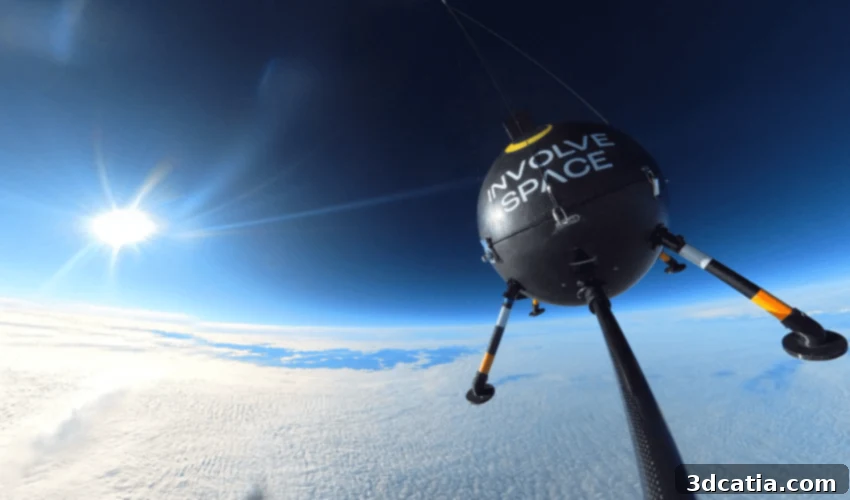
Claudio Piazzai, the Director of Operations and Projects at Involve Space, provides an insightful introduction to the company. “Involve Space is an innovative Italian startup operating distinctly within the aerospace sector,” he explains. “We specialize in providing comprehensive launch services into the stratosphere, utilizing our unique pseudo-satellite platform. This platform ingeniously combines a high-altitude stratospheric balloon and a sophisticated probe, all seamlessly integrated with advanced artificial intelligence (AI) software.” The scope of missions undertaken by Involve Space is remarkably diverse, catering to a broad spectrum of needs. Their primary market segments include rigorous testing for various aerospace components such as satellites, advanced materials, and electronic devices. Furthermore, they contribute significantly to Earth observation initiatives and support crucial scientific research, including detailed atmospheric composition analysis. This blend of cutting-edge technology and a commitment to scientific advancement positions Involve Space as a key player in the evolving landscape of aerospace innovation.
The Genesis of Innovation: Involve Space’s Journey
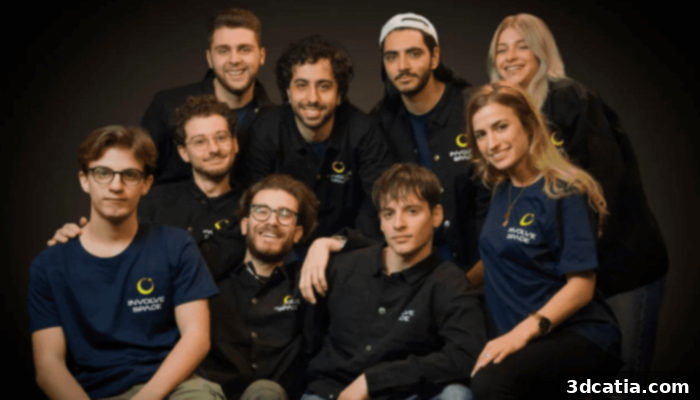
The origins of Involve Space trace back to an inspiring moment in 2015. Jonathan Polotto, now the CEO of Involve Space, embarked on an unconventional experiment: launching a GoPro camera attached to a “homemade” aerospace probe into the stratosphere. His initial goal was to capture captivating footage for a viral YouTube video. This early, ambitious endeavor sparked a series of subsequent stratospheric launches, initially for commercial and marketing purposes, which served as crucial developmental milestones for the nascent company. By 2021, the venture had matured sufficiently, leading to the formal registration of Involve Group as a legitimate company. Piazzai recounts, “In those early days, our infrastructure was vastly different and more rudimentary. However, as we gained experience over the years, we began to uncover the immense potential of these missions.” This realization prompted a strategic pivot, shifting their focus towards what has now become the core business of Involve Space: conducting scientific and technical launches. This transformation led to the formation of a highly specialized team comprising skilled engineers and developers. This technical expertise, combined with a robust commercial and management presence, now forms the indispensable backbone of the entire organization, driving its innovative spirit and operational excellence.
The Power of 3D Printing in Space Technology
Driving Innovation with Additive Manufacturing
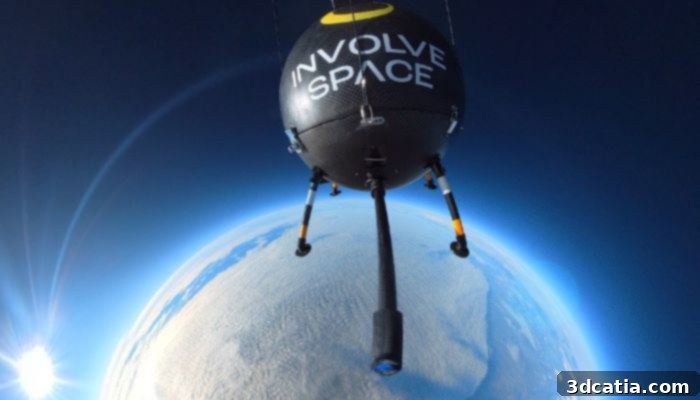
Additive manufacturing, more commonly known as 3D printing, plays a profoundly important and integral role in Involve Space’s operations. “The ability to design and build our sophisticated probe entirely in-house is a significant competitive advantage, largely thanks to the judicious use of additive manufacturing,” Piazzai emphasizes. This technology proves absolutely critical throughout multiple stages of their product development lifecycle. During the crucial prototyping phase, 3D printing allows for rapid iteration and testing of designs, accelerating the development timeline and reducing associated costs. Beyond prototyping, it is equally indispensable in the actual production of components. In fact, a substantial majority of the parts comprising their current stratospheric probe have been not only prototyped but also directly manufactured using 3D printing. This capability provides unparalleled flexibility and control over their designs.
Furthermore, the operational realities of aerospace missions often necessitate swift and efficient solutions for maintenance and repair. “It’s not uncommon for us to encounter situations where a part may become broken or defective,” Piazzai notes. “In such instances, 3D printing empowers us to internally produce an identical replacement part quickly, minimizing downtime and logistical complexities.” This on-demand manufacturing capability is invaluable. Moreover, each mission often presents unique requirements, demanding customized and tailor-made parts to perfectly accommodate specific equipment and payloads. Additive manufacturing excels in this regard, enabling Involve Space to maintain exceptional flexibility and adaptability. They can seamlessly adjust their solutions to meet precise customer needs, ensuring that every component is perfectly suited for its intended function. The ability for their in-house team to design and then print these parts, all under one roof, translates into significant advantages in both time and cost savings, underscoring 3D printing’s strategic importance to their business model.
Material Selection for Extreme Environments
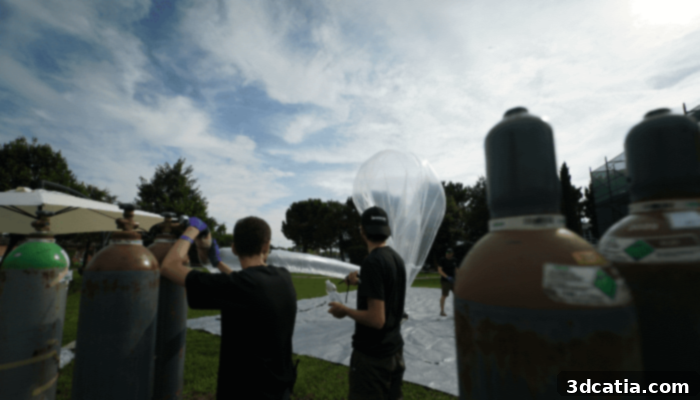
The choice of materials is paramount when designing components for stratospheric missions, where conditions can be extreme. Involve Space carefully selects its 3D printing materials to ensure optimal performance, balancing critical attributes like mechanical strength with minimal weight. “For parts that require robust mechanical strength while simultaneously maintaining lightness, we predominantly utilize PLA and PETG,” Piazzai explains. These materials are instrumental in creating a variety of essential components for their launch service platform. Examples include custom housings meticulously designed to protect sensitive electronics, critical parts for their release systems that ensure successful deployment, and precision-engineered components for balloon valves, among other key structural elements. Beyond rigid components, Involve Space also employs TPU (Thermoplastic Polyurethane) for specific applications. This flexible material is chosen when the design demands elasticity, impact absorption, or other pliable characteristics, demonstrating their comprehensive approach to material science in additive manufacturing.
A Vision for a Sustainable and Accessible Space Future
Democratizing Space: Accessibility and Environmental Responsibility
Involve Space’s vision extends far beyond technical innovation; it encompasses a profound commitment to accessibility and environmental sustainability. For too long, direct engagement with space has been perceived as an exclusive privilege, largely confined to major corporations and exceptionally wealthy individuals. Involve Space is actively challenging this paradigm. “We are committed to making aerospace technology and stratospheric missions accessible even to small and medium-sized enterprises (SMEs),” Piazzai asserts. This democratization is made possible by their remarkably reduced costs, which dramatically lower the barrier to entry for space-related activities. Their commitment to sustainability is equally strong. All their aerospace launches are meticulously designed to be fully environmentally friendly. Both their stratospheric balloons and probes are engineered for multiple reuses, significantly reducing waste and resource consumption. Furthermore, their sole propulsion source is Helium gas, a naturally abundant and non-polluting element, reinforcing their dedication to minimizing ecological impact. This dual focus on accessibility and environmental stewardship truly sets Involve Space apart in the modern aerospace landscape.
Charting the Future: Involve Space’s Next Frontiers
Looking ahead, Involve Space has ambitious plans to expand its reach and capabilities, continuing its trajectory of innovation. One exciting initiative involves the development of a pioneering launch kit-box. “Our goal with this kit-box is to enter the B2C market, empowering individuals to perform ‘amateur’ stratospheric launches autonomously,” Piazzai reveals. This initiative aims to bring the wonder of stratospheric exploration directly to enthusiasts and educators. Concurrently, the company is focused on developing a sophisticated constellation of stratospheric balloons. These advanced platforms will be capable of undertaking multi-day missions, opening new avenues for Involve Space. This will enable their entry into the burgeoning telecommunications sector and significantly expand the range and scope of their Earth surveillance services, offering enhanced data collection and monitoring capabilities. Finally, Involve Space plans to further integrate their stratospheric platform with their cutting-edge artificial intelligence software. This strategic move includes the intention to sell both the core software and its customized versions, offering their proprietary intelligence to other players in the aerospace and related industries.
Final Reflections: Bringing Space Within Reach
Involve Space: Inspiring the Next Generation of Space Enthusiasts
Claudio Piazzai concludes with a powerful message that encapsulates the spirit of Involve Space. “Our team is constantly striving to bring everyone closer to space,” he affirms, “transforming that distant, mysterious, and often sci-fi-like world into a tangible reality within everyone’s grasp.” This driving philosophy is encapsulated in a belief that guides their every endeavor: “If the why is strong enough, the how will come on its own!” This unwavering conviction has propelled Involve Space to ever-greater heights within the stratosphere, and their ambitions continue to soar. “And tomorrow, who knows, perhaps even higher!” he muses, hinting at future expeditions beyond current stratospheric limits. For those eager to learn more about the groundbreaking work of Involve Space, visit their official website. For inquiries related to commercial projects, further information can be found on the Involve Productions website.
What are your thoughts on Involve Space’s innovative approach to making space more accessible and sustainable? Share your insights in the comments below or connect with us on our social media channels: LinkedIn, Facebook, and Twitter. Don’t miss out on the latest advancements in additive manufacturing; sign up for our free weekly newsletter here for direct updates to your inbox. You can also explore our video content on our dedicated YouTube channel.
*All Photo Credits: Involve Space