
Revolutionizing Patient Care: A Deep Dive into Medical 3D Printing Growth and Innovation
The medical sector is witnessing a profound transformation driven by cutting-edge technologies, none more impactful than additive manufacturing, commonly known as 3D printing. A pivotal report, the Medical AM3DP 2018 Annual Report, released by SME (an American professional association), offered a comprehensive global overview of additive manufacturing’s influence on healthcare. This landmark document underscored the critical role of technological innovation in enhancing the cost-effectiveness of care and enabling unprecedented levels of personalization for each patient. It served as a testament to the immense benefits of this technology in crafting tailor-made medical solutions, paving the way for a new era of precision medicine.
The report’s findings illuminated a vibrant landscape of growth and opportunity. While the dental 3D printing market alone is projected to surge to an astounding $9.7 billion by 2027, demonstrating a remarkable 35% growth within a single year, the broader application of additive manufacturing across the entire medical sector is also experiencing exponential expansion. Over 97% of professionals specializing in medical 3D printing anticipate a continuous rise in the applications and overall utilization of 3D technologies. The report meticulously valued the global medical additive manufacturing market at $7.3 billion in 2017, registering an impressive annual growth rate of 21% in terms of revenue. These figures not only highlight current market vitality but also project a future where 3D printing is an indispensable tool in healthcare delivery.
To gather these insights, the report incorporated the results of an extensive survey conducted among a diverse group of medical additive manufacturing professionals. This survey aimed to unravel the intricacies of how this advanced technology is currently being deployed, the specific processes and materials being utilized, the persistent challenges faced by practitioners, and, crucially, their perspectives on the future impact of 3D printing on patient outcomes. Lauralyn McDaniel, SME Sector Manager, emphasized the overarching theme of collaboration in this evolving landscape. “Collaboration between companies and organizations, and particularly between medicine and engineering, was a big part of the story this year,” she stated. “Everyone is working together to continue to grow the millions of patients already directly impacted by the benefits of AM/3DP-enabled precision medicine.” This collaborative spirit extends beyond immediate industry players, encompassing regulatory bodies, various industry groups, and clinical communities, all contributing significantly to the sustained growth of the sector. A prime illustration of this collective progress is the French company Medicrea, which, last year, achieved a significant milestone by receiving FDA approval for their innovative 3D printed spinal implants. This regulatory endorsement empowers Medicrea to offer highly adaptable and patient-specific solutions, setting a precedent for future innovations in medical device manufacturing.
The study further unveiled a compelling economic indicator: an impressive 11% of the medical industry’s total revenue is now derived from 3D printed components, encompassing everything from intricate implants to advanced medical devices. This rapidly escalating interest in additive manufacturing can be largely attributed to the ever-increasing demand for customized medical solutions. Modern healthcare is moving away from a one-size-fits-all approach, recognizing that individual patient anatomies and conditions necessitate bespoke treatments. Dan Fritzinger, Manager at Global Instrument Innovation at DePuy Synthes, succinctly captured this paradigm shift: “3D printing was once an innovation of the future and is now an exciting reality. This technology presents enhanced career growth opportunities for each new generation of engineers and manufacturers entering the workforce.” His statement underscores not just the technological advancement but also the creation of new professional pathways within the field. DePuy Synthes itself has taken a proactive step by establishing its “3D Printing Center of Excellence,” a dedicated facility aimed at accelerating the development of additive manufacturing processes and fostering the customization of medical benefits. This strategic initiative has inspired a significant trend among healthcare providers; the study revealed a staggering 3,200% increase in the number of hospitals in the United States that have installed their own 3D printing centers between 2010 and 2016. This exponential growth signals a widespread adoption of medical additive manufacturing strategies, allowing hospitals to produce patient-specific models for surgical planning, custom surgical guides, and even point-of-care devices, thereby bringing advanced manufacturing capabilities directly to the patient’s bedside.
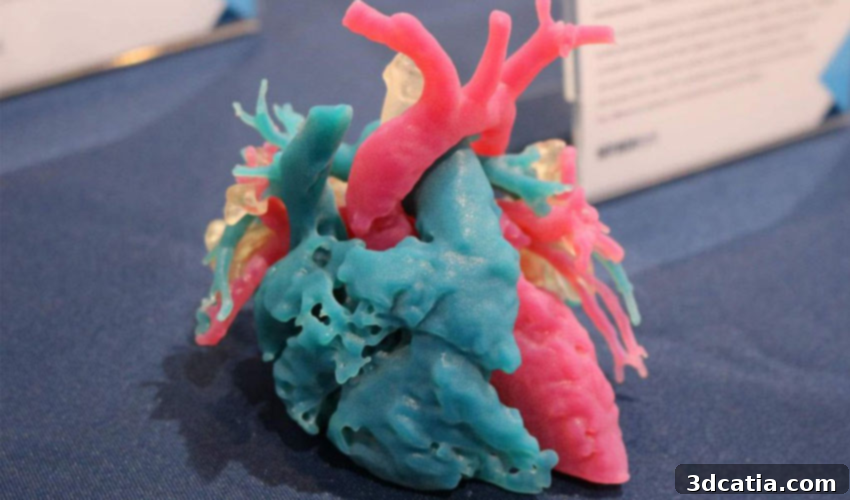
The integration of 3D printing within hospital settings offers multifaceted advantages. For instance, creating anatomical models from patient scan data allows surgeons to rehearse complex procedures, identify potential challenges, and refine their approach before entering the operating room, significantly reducing surgical time and risks. Beyond planning, patient-specific implants, meticulously designed to match an individual’s unique anatomy, ensure a superior fit, reduce discomfort, and promote faster recovery. This level of customization is particularly beneficial in areas like orthopedics, craniofacial surgery, and dentistry. Furthermore, the ability to rapidly prototype and produce specialized medical tools or jigs in-house enhances operational efficiency and responsiveness, especially in critical situations. The investment by hospitals in these centers also represents a commitment to innovation, positioning them at the forefront of personalized healthcare and attracting top medical and engineering talent. It fosters a collaborative environment where clinicians and engineers can work hand-in-hand, translating direct patient needs into tangible, custom-designed solutions, thereby driving continuous improvement in patient care and clinical outcomes.
The trajectory of additive manufacturing in the medical sector points towards an even more revolutionary future. Emerging applications include bioprinting, where living cells and biomaterials are used to create functional tissues and organs for transplantation or drug testing, holding the promise of entirely new regenerative medicine therapies. The development of advanced biocompatible materials, including novel polymers and metal alloys, continues to expand the range of medical devices that can be 3D printed, offering enhanced mechanical properties and biological integration. The move towards distributed manufacturing, enabled by hospital-based 3D printing centers, democratizes access to advanced medical solutions, particularly in remote or underserved areas. As regulatory frameworks continue to evolve to accommodate these rapid technological advancements, the path for wider adoption and innovation becomes clearer. The insights from the SME Medical AM3DP Report serve as a crucial benchmark, illustrating the current landscape and pointing towards the immense potential that additive manufacturing holds in shaping the future of personalized, efficient, and cost-effective patient care globally. This report, and the trends it highlights, are essential reading for anyone involved in healthcare, engineering, or medical technology, offering a glimpse into the ongoing revolution that will define medicine for generations to come.
You can find the complete SME study on their official website for deeper insights into these transformative trends.
What are your thoughts on the exponential growth of additive manufacturing in the medical market and its potential impact on future healthcare? We encourage you to share your perspectives and engage with our community. Let us know in a comment below or connect with us on our Facebook and Twitter pages! Don’t forget to sign up for our free weekly Newsletter, ensuring you receive all the latest news and developments in 3D printing delivered straight to your inbox!