

Inkbit Secures $12 Million to Propel AI-Powered Multi-Material 3D Printing into Industrial Production
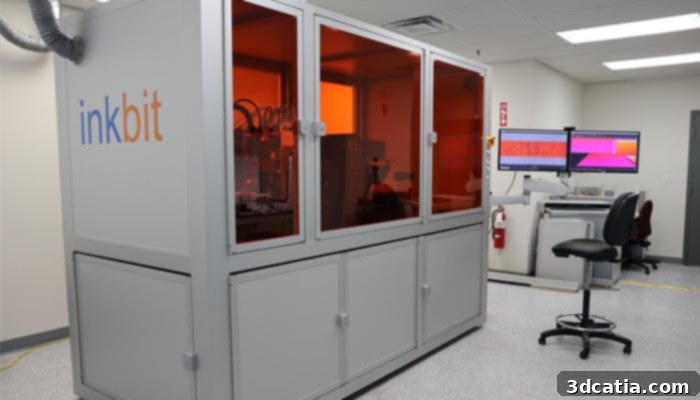
Inkbit, an innovative startup that emerged from the Massachusetts Institute of Technology (MIT), has successfully closed a significant $12 million equity financing round. This substantial investment is set to accelerate the company’s ambitious mission: to overcome the traditional limitations of additive manufacturing by integrating advanced machine vision and artificial intelligence into its industrial 3D printing systems. Often described as giving its machines ‘eyes’ and a ‘brain,’ Inkbit’s technology represents a paradigm shift in how 3D printers operate and the quality of parts they produce.
The core of Inkbit’s offering is a sophisticated multi-material 3D printer capable of fabricating extremely flexible materials, such as silicone, and high-temperature materials like epoxy, with unprecedented accuracy and reliability. These materials have historically posed significant challenges for conventional additive manufacturing processes due to their unique rheological properties and thermal behaviors. By leveraging machine learning and artificial intelligence, Inkbit directly addresses these hurdles, enabling the creation of complex, high-performance components previously deemed impossible or too costly to produce via 3D printing. The recent equity financing round garnered support from prominent industry players, including Stratasys, a global leader in 3D printing solutions, and DSM Venturing, the venture capital arm of Royal DSM, a global science-based company in nutrition, health, and sustainable living. Further participation from Ocado, a technology company revolutionizing online grocery, 3M, a diversified technology company, and Saint-Gobain, a world leader in light and sustainable construction, underscores the broad industrial relevance and potential impact of Inkbit’s technology.
Real-Time Correction and Predictive Manufacturing with AI
What truly differentiates Inkbit’s system is its intelligent, closed-loop feedback mechanism. Unlike traditional 3D printers that operate blindly, Inkbit’s machines continuously scan each layer as it is being printed. This real-time visual inspection allows the system to detect and correct errors instantaneously, ensuring every layer is laid down perfectly before the next begins. Beyond simple error correction, the integrated machine learning algorithms process this vast amount of visual data to predict material behavior, particularly the warping and deformation that can occur during the printing of complex geometries or with challenging materials. This predictive capability significantly enhances print success rates and part accuracy, especially crucial for demanding industrial applications.
Davide Marini, CEO and Co-Founder of Inkbit, emphasized the strategic importance of this funding round. “The composition of this syndicate was chosen to maximize the speed of development and commercialization of our platform,” Marini stated. He further explained Inkbit’s clear value proposition: “Our value proposition to customers is simple: we are adding a layer of machine vision and machine learning to material jetting, increasing its accuracy, reliability and enabling its use with production-grade materials.” This statement highlights the transformative potential of Inkbit’s approach, moving additive manufacturing beyond prototyping towards high-volume, reliable production.
Strategic Use of Funding: Industrialization and Material Expansion
The proceeds from this $12 million equity round are earmarked for several critical initiatives designed to scale Inkbit’s operations and expand its market footprint. A primary focus will be the industrialization of its additive manufacturing system. This involves refining the hardware and software to meet the stringent requirements of multi-material and high-volume manufacturing environments, ensuring robustness, repeatability, and ease of integration into existing production lines. This step is crucial for transitioning from advanced prototypes to fully scalable industrial solutions.
Furthermore, a significant portion of the investment will be dedicated to expanding the available material set. This expansion is particularly vital for applications in medical, life sciences, and robotics, where specific material properties—such as biocompatibility, elasticity, strength, and chemical resistance—are paramount. By broadening its material portfolio, Inkbit aims to unlock new possibilities for customized medical devices, functional components for advanced robotics, and innovative solutions for research and development in life sciences. Finally, the company plans to commence the installation of its first units for select customers, marking a pivotal step in commercialization and validating its technology in real-world industrial settings.
Improving Material Jetting 3D Printing: Overcoming Traditional Hurdles
Material Jetting is a well-established additive manufacturing technology that operates similarly to a 2D inkjet printer but in three dimensions. It selectively jets tiny droplets of photopolymer resin or other materials onto a build platform, which are then immediately cured by UV light. This layer-by-layer process allows for the creation of intricate geometries and smooth surface finishes. Historically, 2D material jetting has found wide application across various industrial processes, including ceramic and textile manufacturing, known for its precision and ability to handle multiple materials.
The primary advantage of Material Jetting technology in 3D printing is its unparalleled ability to print multi-material and multi-color parts. Thanks to its multiple print heads, each material or color can be stored in a separate reservoir, allowing for seamless integration and processing of diverse properties within a single component. The resulting composite material, often referred to as “Digital Material,” allows for voxel-level control over material properties, enabling the creation of highly detailed prototypes that closely mimic the final product’s aesthetics and feel. However, despite its strengths in prototyping and visual representation, the traditional application of Material Jetting in production has been severely restricted by limited material choices and the necessity of extensive post-processing steps like planarization.
Inkbit’s Breakthrough: Contactless Material Jetting for Production-Grade Parts
Inkbit’s innovative approach, known as “contactless Material Jetting,” fundamentally changes the game. This proprietary process eliminates the long-standing need for planarization—a chemical-mechanical polishing step typically required in traditional material jetting to ensure layer flatness and remove excess material. By bypassing this tedious and costly post-processing step, Inkbit not only streamlines the manufacturing workflow but also enables the use of a much broader range of production-grade materials that would otherwise be incompatible with planarization. This breakthrough is critical for unlocking the full potential of Material Jetting for functional, end-use components.
The ability to use production-grade materials means that parts printed by Inkbit are no longer limited to mere prototypes but can serve as actual components in complex systems. These materials offer superior mechanical properties, durability, and performance characteristics, meeting the rigorous demands of industrial applications. Inkbit has already initiated collaborations with key industry partners through an early access program. For instance, working with Johnson & Johnson, a global leader in healthcare products, Inkbit is developing an initial set of applications that leverage its unique capabilities. These early partnerships are crucial for demonstrating the real-world value and versatility of Inkbit’s technology in diverse industrial contexts, from medical devices to consumer goods.
The Future of Manufacturing: Volume Production and Automated Quality Assurance
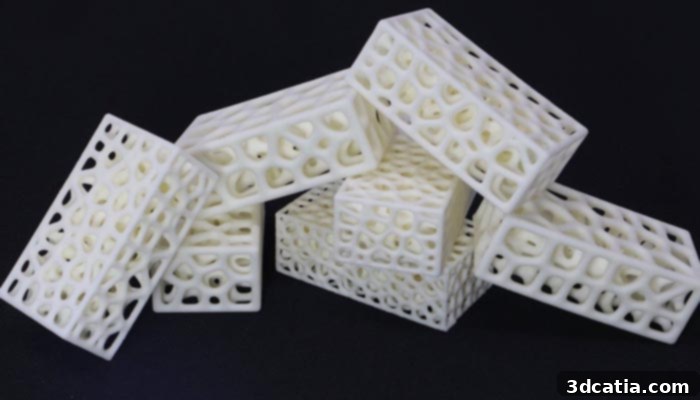
Looking ahead, Inkbit plans to release its first production systems to select customers in 2021, signaling its readiness to scale its technology commercially. These advanced machines promise to equip customers with unprecedented volume production capabilities, allowing them to rapidly manufacture large quantities of highly complex, multi-material parts. The combination of high accuracy, real-time error correction, and predictive modeling translates into a significant reduction in waste and an increase in manufacturing efficiency.
Perhaps one of the most compelling advantages Inkbit offers is automated quality assurance for every single printed part. This built-in inspection and validation system eliminates the need for extensive manual quality checks, ensuring consistent part quality, traceability, and adherence to strict industry standards. This level of integrated quality control is a game-changer for critical applications where part failure is not an option. By delivering higher accuracy, volume production capabilities, and robust quality assurance, Inkbit is poised to position additive manufacturing as a true alternative to traditional manufacturing methods for a wide array of industrial applications, particularly those requiring bespoke designs, rapid iteration, and specialized material properties.
Inkbit’s commitment to innovation and its recent funding round are clear indicators of a new era in additive manufacturing. The integration of AI and machine vision into the 3D printing process addresses some of the most persistent challenges in the industry, paving the way for more reliable, precise, and cost-effective production of complex parts. This advancement holds immense potential for transforming product development, supply chains, and manufacturing processes across various sectors. For more comprehensive details on Inkbit’s groundbreaking technology and its applications, you can visit their official website HERE.
What are your thoughts on this significant funding boost for Inkbit and its potential impact on the future of 3D printing? We invite you to share your insights and comments below, or engage with us on our Facebook and Twitter pages! Don’t miss out on the latest advancements and news in additive manufacturing—be sure to sign up for our free weekly Newsletter, delivered straight to your inbox.