

3D Printing Revolutionizes Indian Army’s Defense Infrastructure in High-Altitude Regions
The Indian Army’s Trishakti Corps is pioneering the use of construction 3D printing technology in defense applications. They are deploying a mobile, robotic concrete 3D printer in forward areas of northern Sikkim and neighboring regions to construct critical infrastructure. This system, mounted on a vehicle, can navigate challenging mountainous terrain, enabling rapid construction of structures like bunkers, sentry posts, and protective barriers directly on-site. To ensure reliability, these 3D-printed structures undergo rigorous live ballistic trials, validating their strength and durability.
While construction 3D printing has predominantly been used for civilian projects, such as building homes, commercial properties, churches, and mosques, the Indian Army’s initiative marks a significant shift towards leveraging the technology for defense purposes. In civilian applications, 3D printing offers benefits like faster construction times, reduced labor costs, and the ability to create complex geometries. However, in defense scenarios, the priorities are different, emphasizing structural integrity, blast resistance, and rapid deployment in challenging environments.
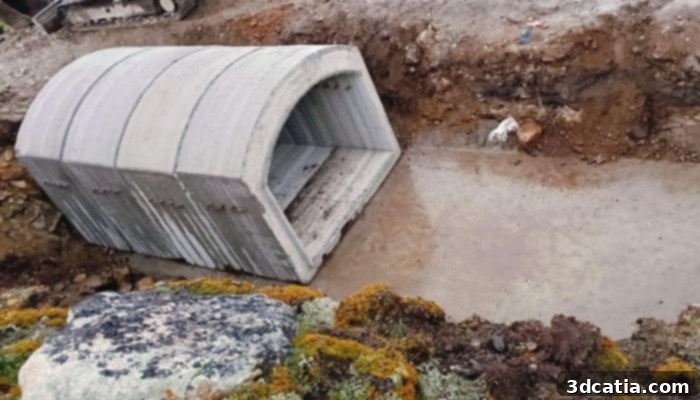
The printer had to adapt to difficult terrain.
The Indian Army’s northern border requires infrastructure specifically designed to withstand harsh terrain and potential combat situations. Project PRABAL (Portable Robotic Printer for Printing Bunkers and Accessories), developed in collaboration with IIT-Hyderabad, addresses this need. This innovative 3D printer can create custom designs tailored to the local topography while incorporating advanced camouflage techniques. Furthermore, the printed structures boast enhanced blast and ballistic resistance, as well as superior compressive strength. According to reports, this approach optimizes the use of local materials and accelerates construction within tactically acceptable timeframes.
Project PRABAL gained further recognition when, in collaboration with Simpliforge Creations and IIT-Hyderabad, the team successfully constructed India’s first on-site 3D-printed military-grade protective structure. This structure was built at an impressive altitude of 11,000 feet in Leh, making it the world’s highest-altitude 3D-printed construction, built under challenging high-altitude, low-oxygen conditions.
Ultimately, additive manufacturing is proving to be a game-changer, enhancing the Indian Army’s operational readiness, particularly in high-altitude regions. Traditional construction methods in these areas are often slow, labor-intensive, and hampered by difficult terrain. The adoption of on-site 3D printing represents a major advancement in the Army’s engineering capabilities, enabling rapid, sustainable, and mission-oriented infrastructure development in challenging environments.
The Significance of 3D Printing in Modern Defense
The application of 3D printing in defense is not merely a technological upgrade; it represents a fundamental shift in how military infrastructure is conceived, designed, and deployed. Traditional construction methods often involve lengthy planning, transportation of materials, and extensive manual labor, all of which can be significantly challenging in remote or hostile environments. 3D printing offers a streamlined alternative that can overcome many of these limitations.
One of the key advantages of 3D printing is its ability to produce customized structures on-demand. In the context of defense, this means that bunkers, barriers, and other protective structures can be tailored to the specific requirements of a given location. Factors such as terrain, weather conditions, and potential threats can all be taken into account during the design process, resulting in structures that are optimized for performance and durability.
Moreover, 3D printing allows for the incorporation of advanced features that would be difficult or impossible to achieve with traditional construction methods. For example, structures can be designed with complex internal geometries that enhance blast resistance or provide improved thermal insulation. The use of locally sourced materials can also reduce transportation costs and logistical challenges, making the technology a more sustainable and cost-effective solution.
Overcoming Challenges in High-Altitude Environments
Operating in high-altitude environments presents a unique set of challenges for construction projects. The thin air, extreme temperatures, and limited accessibility can all impact the efficiency and effectiveness of traditional methods. 3D printing offers a way to mitigate some of these challenges by reducing the need for manual labor and minimizing the amount of materials that need to be transported to the site.
The Project PRABAL initiative, with its focus on developing a portable and adaptable 3D printing system, is specifically designed to address the challenges of high-altitude construction. The robotic printer can be easily transported to remote locations, and its ability to utilize locally sourced materials reduces the reliance on external supply chains. The automated nature of the printing process also minimizes the risk of human error and ensures consistent quality, even in challenging conditions.
Furthermore, the team’s success in building the world’s highest-altitude 3D-printed structure in Leh demonstrates the feasibility of using this technology in extreme environments. This achievement not only highlights the potential of 3D printing for defense applications but also paves the way for its use in other challenging contexts, such as disaster relief and remote infrastructure development.
The Future of 3D Printing in Defense
The Indian Army’s adoption of 3D printing is just the beginning of what promises to be a transformative trend in the defense sector. As the technology continues to evolve, we can expect to see even more innovative applications emerge, ranging from the production of customized weapons and equipment to the creation of advanced medical implants.
One area of particular interest is the use of 3D printing for rapid prototyping and manufacturing of spare parts. Military equipment often requires specialized components that are difficult or expensive to obtain through traditional channels. 3D printing offers a way to produce these parts on-demand, reducing downtime and improving operational readiness.
Another promising application is the use of 3D printing for the construction of temporary or mobile facilities. In situations where rapid deployment is critical, 3D printing can be used to create temporary shelters, medical clinics, and command centers in a matter of hours. This capability could be invaluable in disaster relief operations or during military deployments.
As 3D printing technology matures, it is likely to become an increasingly integral part of the defense industry, enabling new capabilities and improving the efficiency and effectiveness of military operations. The Indian Army’s pioneering efforts in this field are setting a precedent for other nations to follow, and we can expect to see a growing number of defense organizations embracing 3D printing in the years to come.
Conclusion
The Indian Army’s Project PRABAL demonstrates the transformative potential of 3D printing in modern defense. By deploying a mobile, robotic concrete 3D printer in challenging high-altitude regions, the Army is able to construct critical infrastructure faster, more efficiently, and with greater customization than traditional methods allow. This innovative approach enhances operational readiness, reduces reliance on external supply chains, and paves the way for future advancements in military engineering.
As 3D printing technology continues to evolve, it is likely to play an increasingly important role in the defense sector, enabling new capabilities and improving the efficiency and effectiveness of military operations worldwide. The Indian Army’s pioneering efforts are setting a new standard for innovation in defense infrastructure development and showcasing the potential of 3D printing to revolutionize the way we build and protect our world.