
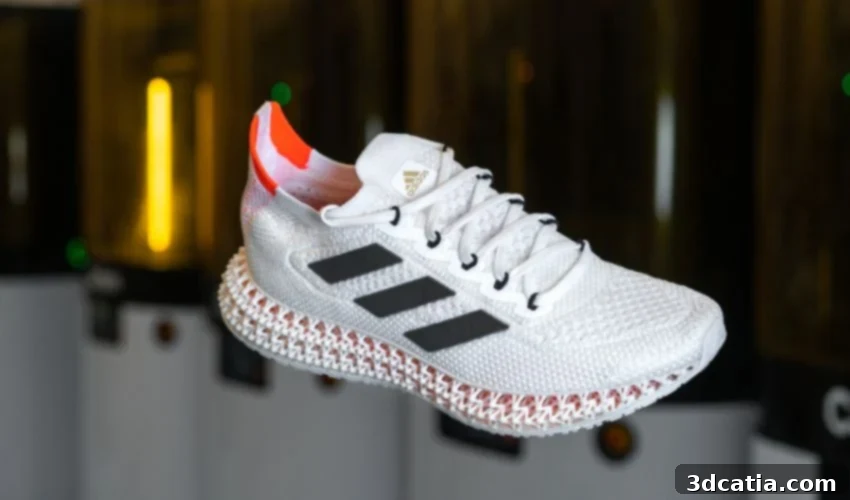
Carbon’s Sustainable Vision: Revolutionizing Manufacturing with DLS Technology and Advanced Materials
Since its inception in 2013, Carbon has been at the forefront of transforming product development and manufacturing through its groundbreaking Digital Light SynthesisTM (DLS) photopolymerization printing process. This ultra-fast additive manufacturing technology has propelled Carbon into a leadership position, attracting major industry players such as adidas, Ford Motor Company, and Becton Dickinson Company. These companies leverage the Carbon DLS™ platform to innovate rapidly, delivering superior products to market in significantly less time than traditional methods allow. Carbon’s ambition extends beyond technological enhancements; the company is deeply committed to pioneering advanced material development and championing sustainability across the additive manufacturing industry. To gain deeper insights into their revolutionary technology, innovative materials, and dedicated efforts toward a more environmentally conscious world, we recently engaged in a comprehensive discussion with Jason Rolland, Carbon’s Senior Vice President of Materials.
Meet Jason Rolland: Driving Material Innovation at Carbon
Jason Rolland, a key figure in Carbon’s journey, leads the dynamic Materials team. With over eight years at the company, Jason was an early pioneer, joining as employee number eight. He has witnessed Carbon’s remarkable growth from a nascent startup to an industry leader boasting over 500 employees, contributing significantly to its numerous groundbreaking achievements. Jason’s academic foundation is rooted in Polymer Chemistry, with an undergraduate degree from Virginia Tech and a PhD from the University of North Carolina Chapel Hill. It was during his PhD studies that he met his advisor, Joseph DeSimone, who later co-founded Carbon and invited Jason to join the venture. DeSimone’s early introduction to the technology ignited Jason’s passion, leading him to build and scale Carbon’s Materials team and platform. Prior to this, Jason was new to the world of 3D printing, yet he quickly recognized the immense potential of the novel technology, finding it immensely exciting to contribute to its evolution and widespread adoption.

Jason Rolland, SVP of Materials at Carbon
Unveiling Carbon’s Digital Light Synthesis (DLS) Technology
From its very inception, Carbon’s core mission has been to elevate 3D printing from a prototyping tool to a robust solution for high-volume production. Achieving this vision necessitated addressing two critical limitations of conventional additive manufacturing: print speed and material performance. Traditional 3D printing processes, regardless of the underlying technology, are often inherently slow, which directly impacts the cost per part and hinders their viability for mass production. To overcome this, Carbon engineered its revolutionary Digital Light Synthesis (DLS) technology.
At the heart of the DLS process lies a sophisticated mechanism designed to dramatically accelerate printing. Imagine one of Carbon’s DLS machines: it features a build platform resembling a bottom-up Digital Light Processing (DLP) system. Below a resin-filled cassette, a highly specialized oxygen-permeable window sits directly above a digital projection system. The pivotal innovation came from understanding and harnessing the role of oxygen. By precisely controlling the permeability of oxygen through the base of this cassette, Carbon created a consistent, infinitesimally thin layer of uncured resin—often referred to as a “dead zone”—that remains present throughout the entire build process. This continuous liquid interface significantly reduces the powerful adhesion forces that typically bind a newly cured layer to the bottom of the resin tank in other resin-based printing methods. The result? A profound increase in print speeds. This innovative approach ensures that polymerization occurs precisely at the interface, curing right above this thin liquid layer. Consequently, Carbon’s DLS technology enables certain geometries to be printed up to 10 times faster than traditional 3D printers, making high-volume production economically feasible. Once this speed barrier was broken, Carbon intensified its focus on developing advanced materials capable of meeting the rigorous demands of industrial applications.
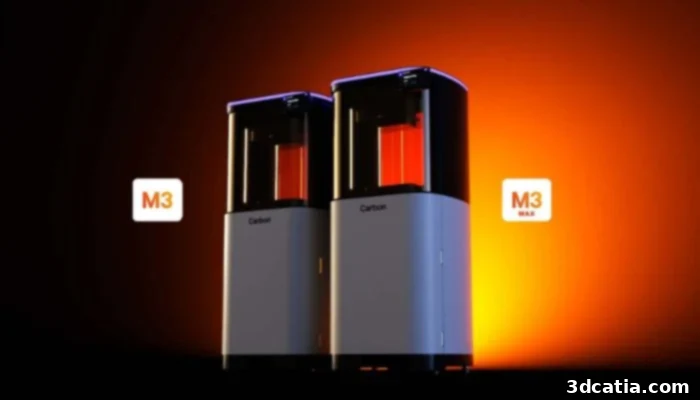
Carbon’s latest launch was the M-series printers, the M3 and the M3 Max
Revolutionizing Materials: The Power of Dual-Cure Systems
Carbon recognized early on that for customers to truly transition from prototyping to full-scale production, the materials used in 3D printing needed to perform on par with those used in established manufacturing processes like injection molding or foam production. This presented a significant challenge, as printers based on UV-curable chemistry are inherently limited by the types of chemistries that react with UV light, typically requiring specific functionalities at the ends of polymer chains. This limitation severely restricted the range of achievable properties and formulations, hindering the creation of high-performance parts.
To address this bottleneck, Carbon developed and subsequently patented its revolutionary dual-cure material systems. Unlike conventional single-stage UV-curable chemistries, dual-cure systems integrate both UV-curable chemistry and thermally curable chemistry. This innovative approach dramatically expands the palette of material properties available. Thermally curable chemistries, common in traditional manufacturing, often involve two reactive components (Part A and Part B), as seen in epoxy resins, silicone resins, polyurethanes, and high-temperature thermosets—a vast array of materials that are non-UV reactive. Carbon’s breakthrough involved combining these two-part thermally-curable chemistries with UV-curable chemistries.
The process begins with resins formulated from Part A and Part B, which are blended just prior to printing. The DLS printer utilizes UV light to define the precise shape of the part, effectively entrapping the unreacted thermal chemistry within the nascent structure. Upon completion of the print, the part is in what Carbon refers to as a “green state.” It then undergoes a washing or spinning step to remove any residual liquid resin before moving to a critical baking phase. During this post-cure baking step, the separate thermal chemistry, now physically trapped within the UV network, is activated. This results in both components reacting to form the final, high-performance part. This dual-cure approach has unlocked an unprecedented range of materials, enabling cost-effective additive manufacturing in factory settings with properties comparable to or even exceeding those of traditionally manufactured components. It’s crucial to distinguish this from simple UV flood-curing, which is a common finishing step for single-part UV-curable chemistry and merely further polymerizes the initial UV reaction. Carbon’s dual-cure system involves distinct, sequential chemical reactions, fundamentally changing the material’s properties and opening up new possibilities for advanced manufacturing.
Carbon’s Commitment to a Sustainable Future
Sustainability is a cornerstone of Carbon’s philosophy, and the company has identified and actively addresses several critical areas to minimize environmental impact. The first major focus is on mitigating the generation of hazardous waste, a particularly pressing issue within the liquid resin printing sector.
Carbon’s spinning post-processing has helped reduce toxic waste in the creation of midsoles for adidas
Traditionally, after a part is printed and still dripping with resin, it’s immersed in a solvent bath, often isopropyl alcohol, to clean it. While this yields a clean part, it creates a significant problem: a solvent mixture contaminated with dissolved resin, which must be treated as hazardous waste. This method might be manageable for small-scale prototyping, but it becomes an enormous environmental and economic burden in production environments. Beyond the sustainability implications, there’s a substantial financial cost associated with both the wasted resin and the expensive disposal of hazardous materials.
In response, Carbon engineered a revolutionary spin cleaning technology that is entirely solvent-free. This innovative post-processing method efficiently removes excess resin, leaving parts exceptionally clean with only a minimal, very thin layer of residual resin that is subsequently addressed during the post-curing process. This spinning technique has proven indispensable for high-volume applications, including the thermoforming models used in dental applications, the intricate lattice structures of adidas midsoles, and various other complex geometries. Carbon projects that this spin cleaning technology alone prevented the generation of thousands of metric tons of hazardous waste in 2022 for its high-volume applications. This demonstrates a powerful synergy where economic efficiency and sustainability goals align, offering a single, elegant solution to both challenges.
Furthermore, Carbon is actively incorporating bio-derived or plant-derived raw materials into its resin formulations. Historically, the vast majority of chemicals, including those used to produce plastics, have originated from petroleum, a byproduct of oil refinement. However, a significant global trend within the chemical industry is shifting towards utilizing nature’s “factories”—plants—to produce these essential building blocks in a more sustainable and renewable manner. Carbon is embracing this trend, particularly in its focus on polyurethanes. Collaborating with partners, Carbon has successfully developed polymers derived from corn, which form integral components of the overall polyurethane chain.
A prime example of this commitment is Carbon’s new EPU44 resin. This advanced material boasts an impressive 40% by weight of raw material derived from plants, resulting in a substantially reduced carbon footprint without compromising performance. EPU44 offers high performance and a lower viscosity, which translates to improved printability. Notably, adidas is already utilizing EPU44 in high volumes for the production of its innovative midsoles. Another remarkable material is RPU130, a rigid resin with 25% by weight of plant-based content. RPU130 delivers exceptional performance, characterized by high thermal stability and impact strength. These examples unequivocally demonstrate that sustainable materials can not only match but often surpass the performance of their traditional counterparts, proving that environmental responsibility and advanced engineering can go hand-in-hand.
Echoing the broader additive manufacturing industry, Carbon has identified light-weighting and material reduction as crucial elements of its sustainability strategy. To facilitate this, the company developed Design Engine, a sophisticated, stand-alone software product. Users can input a solid CAD model, define desired properties, and the software intelligently generates an optimized lattice model tailored to those requirements. This capability allows for the creation of parts that are significantly lighter and require less material, offering substantial benefits in sectors like transportation. In automotive and aerospace, even a slight reduction in weight translates directly into improved fuel efficiency, making strong yet lightweight parts a win for manufacturers, consumers, and the environment. This holistic approach, integrating material science, advanced software, and cutting-edge hardware, ensures that products manufactured with Carbon technology are inherently more sustainable across their lifecycle.
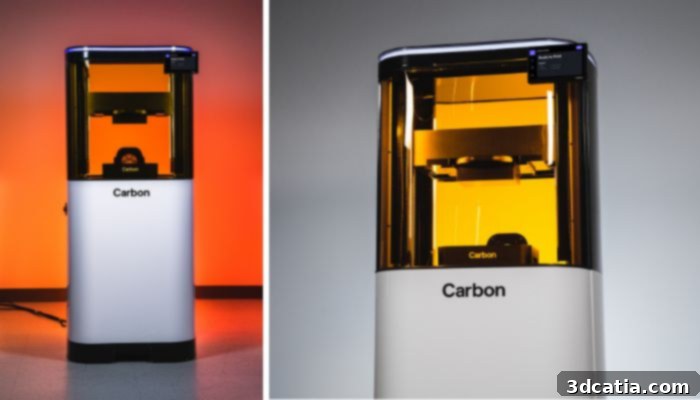
Carbon’s new, more sustainable materials can be used in their machines
The final frontier in Carbon’s sustainability efforts is recycling, an area globally challenged by inefficient workflows and low actual recycling rates. There are two primary approaches to recycling, both of which Carbon is actively exploring. The first is traditional mechanical recycling, where discarded parts are cleaned, chopped into flakes, and then blended with virgin feedstock material—typically at a concentration of 5-10%—before being melt-processed into new components. While this method serves a purpose, it is inherently inefficient. A significant limitation is that each time a polymer is heated, its molecular chains tend to shorten, leading to a degradation of mechanical properties. There are only so many “loops” a material can endure before the recycled output no longer meets performance requirements. Despite these challenges, Carbon is actively working in this space; for instance, adidas midsoles can be mechanically recycled by chopping them into pieces and extruding them into new forms, remarkably retaining approximately 80% of their original mechanical properties through this process.
The second, and arguably more exciting, avenue is chemical recycling. This advanced method goes beyond merely chopping and remelting materials. Instead, it involves a chemical process that “unzips” the polymer chain, regenerating the original monomers used to construct it. This groundbreaking approach allows for the creation of a recycled polymer that fully retains its virgin properties. Carbon has already developed R&D-stage resins where they can recover up to 50% of the starting material through a chemical recycling process. This regenerated material can then be reintroduced into subsequent resin batches, establishing a truly closed-loop system. Carbon is actively seeking partners to further develop and scale this technology, with more exciting announcements anticipated in the coming years.
Beyond materials and processes, Carbon is also focusing on reducing packaging waste. In high-volume production, the size and type of containers used for resins significantly contribute to overall waste generation, making it a critical area for optimization.
The Broader Impact: Additive Manufacturing and Sustainability
Beyond Carbon’s specific innovations, additive manufacturing as a whole plays a pivotal role in fostering a more sustainable industrial landscape. One of its most significant contributions is enabling local production. Manufacturers can produce parts exactly where and when they are needed, dramatically reducing transportation costs and the associated carbon footprint. The COVID-19 pandemic starkly illuminated the vulnerabilities of global supply chains, which are often optimized solely for cost rather than efficiency or speed of part delivery. This often leads to shortages and significant disruptions. Additive manufacturing offers a resilient alternative, fostering localized production and reducing reliance on complex, extended logistics networks.
Furthermore, traditional manufacturing often necessitates vast warehouses filled with injection-molded parts, requiring energy-intensive temperature and humidity control. These parts are frequently over-ordered due to the inherent difficulty in precisely predicting market demand, leading to significant waste. In stark contrast, a facility equipped with 3D printers can operate on an on-demand manufacturing model. Parts are produced only when required, eliminating the need for extensive inventory, reducing storage energy consumption, and eradicating waste from overproduction. As previously discussed, additive manufacturing also inherently supports light-weighting, allowing for the creation of strong, optimized parts with significantly less material, further contributing to overall resource efficiency and environmental benefits.
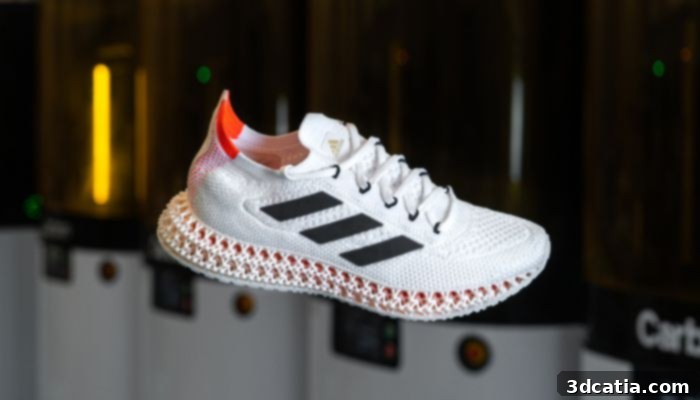
Carbon’s more sustainable methods have played a role in the development of products for adidas
A Call to Action for the Future of Manufacturing
In today’s rapidly evolving global landscape, particularly with the ongoing challenges to supply chains, additive manufacturing stands as more critical than ever before. Carbon’s driving force is to continually find innovative ways to accelerate product development and manufacturing. The company’s unique approach involves collaborating with designers and manufacturers from the initial idea stage all the way through to final production, leveraging a consistent set of processes and advanced materials throughout the entire development cycle. This integrated methodology ensures efficiency, speed, and quality from concept to consumer. To delve deeper into Carbon’s transformative projects and pioneering technologies, further information is available HERE.
What are your thoughts on Carbon’s visionary approach to material development and its unwavering commitment to sustainability in additive manufacturing? We invite you to share your insights in the comments section below or join the conversation on our LinkedIn, Facebook, and Twitter pages! Don’t miss out on the latest 3D printing news—sign up for our free weekly Newsletter here, delivered straight to your inbox. You can also explore all our informative videos on our dedicated YouTube channel.
*All Photo Credits: Carbon