
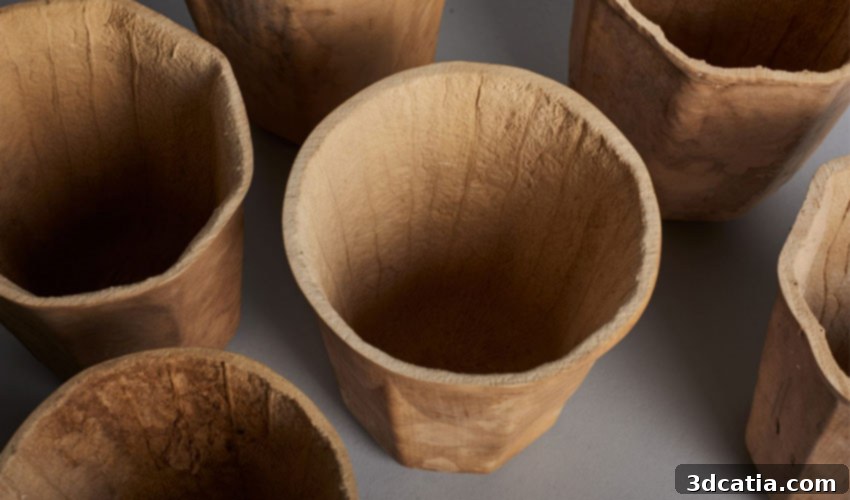
HyO-Cups: Revolutionizing Sustainability with 3D Printed Squash Cups and Biodesign
Imagine a world where your morning coffee cup doesn’t just disappear after use, but seamlessly returns to nature, leaving no trace behind. This visionary concept is at the heart of the HyO-Cups project, a groundbreaking initiative led by the innovative design studio Crème. Spearheaded by designer Jun Aizaki, this project takes a truly organic approach to combating single-use waste by growing biodegradable cups directly from vegetables, specifically squash, cultivated within precisely engineered 3D-printed molds. The ingenious fusion of nature’s growth processes with advanced additive manufacturing positions HyO-Cups as a beacon of sustainable packaging, offering a profoundly environmentally friendly alternative to the billions of traditional plastic and even paper cups that plague our planet annually.
The choice of squash for these pioneering vegetable cups is no arbitrary decision. Squash plants are renowned for their rapid growth cycles and the robust, sturdy fruits they bear each season. Historically, gourds have been utilized across various cultures for centuries as practical containers and decorative vessels, thanks to their remarkable natural properties. Once fully dried, the outer skin and inner fibers of the gourd become inherently watertight and durable, making them an ideal, naturally occurring material for such applications. Crème design studio has masterfully adapted this ancient wisdom, bringing it into the 21st century by integrating custom 3D printed molds to shape these natural containers into modern, functional, and entirely compostable HyO-Cups. This innovative blend of biomimicry and cutting-edge technology promises a future where everyday objects are designed not just for use, but for harmonious reabsorption into the ecosystem.
The Innovative Process Behind HyO-Cups: Where Nature Meets Additive Manufacturing
The process of HyO-Cups
The creation of a HyO-Cup involves a meticulously planned, yet surprisingly organic, multi-stage process that leverages the precision of 3D printing to guide natural growth. The studio initiates this fascinating journey by first designing and then 3D printing custom molds. These molds are crafted to reflect the exact desired shape and dimensions of the final cup or container. Crucially, each mold is designed in two complementary parts, allowing for easy placement of the seed and subsequent removal of the fully formed gourd. Once the 3D printed mold is ready, a squash seed is carefully placed inside, marking the beginning of its transformative journey. As the squash plant grows, its fruit develops directly within the confines of this custom mold, taking on the precise shape that has been predetermined by the designers.
Once the squash fruit has fully ripened within its 3D printed casing, the two parts of the mold are carefully separated, revealing the perfectly shaped vegetable vessel. The next critical step involves a natural drying process, during which the squash gradually loses its moisture, solidifying its structure and developing the robust, watertight qualities essential for a functional cup. According to Jun Aizaki, the timeline for this innovative creation is approximately three weeks for the squash fruit to grow to its full size, followed by another three weeks for it to ripen completely. The final and longest stage is the drying process, which currently takes around four months. While this period might seem extensive for mass production, the team at Crème is actively exploring methods and technologies to significantly accelerate this drying phase, paving the way for larger-scale manufacturing and wider adoption.
A significant advantage of this method lies in the accessibility and flexibility of the technology utilized. Jun Aizaki proudly explains that all the intricate molds were fabricated directly within their studio using their own 3D FDM printer. FDM (Fused Deposition Modeling) 3D printing is a widely accessible and versatile additive manufacturing technology, allowing the designers unprecedented control over the shape, size, and intricate details of the molds. This capability empowers them to bestow the squash with virtually any desired form, leading to the creation of truly unique, biodegradable, and aesthetically original cups and other containers. This in-house manufacturing capacity streamlines the design-to-production pipeline, fostering rapid prototyping and iterative improvements, crucial for such an innovative project. The ability to customize shapes not only opens doors for diverse products but also ensures that each HyO-Cup is a testament to bespoke sustainable design.
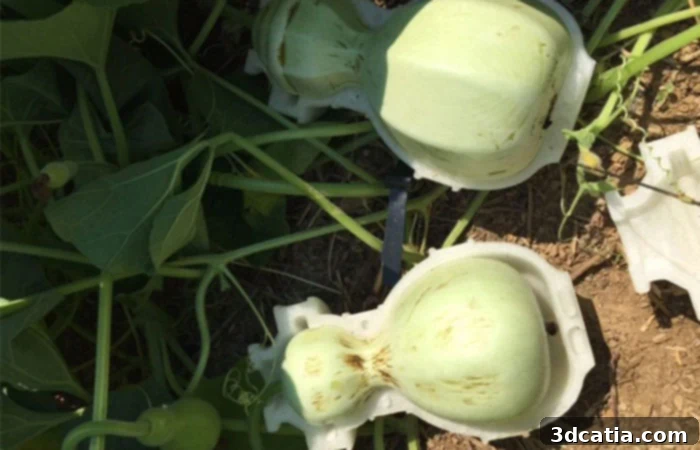
Squash ripen directly in 3D printed molds
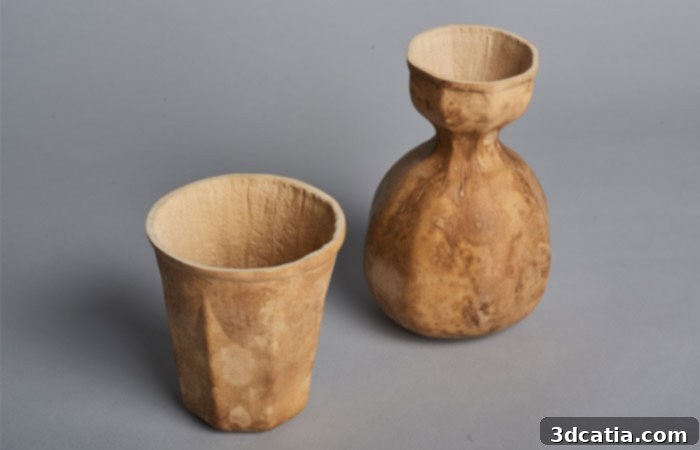
The vision of Crème design studio extends beyond mere cups. They are also successfully crafting small vegetable carafes, demonstrating the broad applicability of their innovative method. This expansion into various container types highlights the immense potential for plant-based, customizable solutions across numerous industries. As the studio eloquently puts it, “We can grow squash in customizable shapes, such as cups and carafes that can be composted instead of polluting our earth with plastic.” This statement perfectly encapsulates the core philosophy of HyO-Cups: leveraging natural processes and modern technology to create functional items that are entirely benign to the environment, promoting a truly circular economy where products return to the earth as nutrients, not pollutants.
A Green Revolution: Tackling Waste with HyO-Cups and Sustainable Materials
The environmental urgency driving projects like HyO-Cups cannot be overstated. Traditional single-use cups, whether made of plastic or paper, pose significant challenges to our planet. Plastic cups, ubiquitous in daily life, are notorious for their persistence in landfills and oceans, breaking down into harmful microplastics that contaminate ecosystems and enter the food chain. Their production is energy-intensive, reliant on finite fossil fuels, and their disposal contributes massively to the global waste crisis. Despite recycling efforts, a vast majority of plastic waste never gets recycled, ending up in our natural environments for centuries.
Even seemingly more eco-friendly options, such as paper-based cups, come with their own considerable environmental footprint. While often marketed as biodegradable, many paper cups are lined with a thin layer of plastic (polyethylene) to prevent leaks, rendering them incredibly difficult and expensive to recycle in conventional facilities. The designers behind HyO-Cups meticulously point out that the process of manufacturing a typical paper-based cup generates more than 100 grams of carbon dioxide. Furthermore, the sad reality is that less than one percent of these cups are actually recycled after disposal, meaning the vast majority end up in landfills or incinerators, releasing greenhouse gases and consuming valuable resources without providing any sustainable benefit.
In stark contrast, HyO-Cups offer a radically different and truly sustainable paradigm. Being made entirely from squash, these vegetable cups are 100% compostable and biodegradable. Once discarded, they naturally decompose, returning their organic matter to the soil without leaving behind any toxic residues or microplastics. This means a HyO-Cup doesn’t just reduce waste; it actively enriches the earth, embodying a closed-loop system that is desperately needed in today’s consumer landscape. By eliminating the reliance on fossil fuels, reducing carbon emissions associated with manufacturing and transport, and offering a genuinely compostable end-of-life solution, HyO-Cups represent a pivotal step towards significantly reducing global waste and mitigating climate change. They are not merely an alternative; they are a fundamental rethinking of how we design, produce, and consume everyday objects in harmony with nature.
The potential impact of HyO-Cups extends beyond individual consumers. Envision large-scale events, cafes, or even corporate campuses adopting these plant-based containers, drastically cutting down on their environmental footprint. The ability to grow these cups locally in various regions could also foster new agricultural practices and local economies focused on sustainable biomaterial production. While the initial drying time presents a challenge, the dedication to accelerating this process indicates a strong commitment to making HyO-Cups a viable solution for mass market adoption. This innovation truly embodies the principles of a circular economy, where resources are kept in use for as long as possible, maximum value is extracted from them whilst in use, and products and materials are recovered and regenerated at the end of each service life.
For those intrigued by this pioneering blend of design, nature, and technology, more comprehensive information and visual insights can be found on the official website of Crème. Additionally, the embedded video below provides an engaging look into the HyO-Cups project, showcasing the process and the vision behind this remarkable sustainable innovation. It’s a compelling glimpse into what the future of eco-conscious design holds.
What are your thoughts on this inspiring plant-based initiative from Crème and their HyO-Cups? Do you believe sustainable innovations like this are the key to a greener future? We invite you to share your valuable opinions and insights by leaving a comment below, or by engaging with us on our Facebook and Twitter pages! Don’t miss out on the latest advancements in 3D printing and sustainable design – remember to sign up for our free weekly Newsletter, delivering all the cutting-edge news directly to your inbox!