
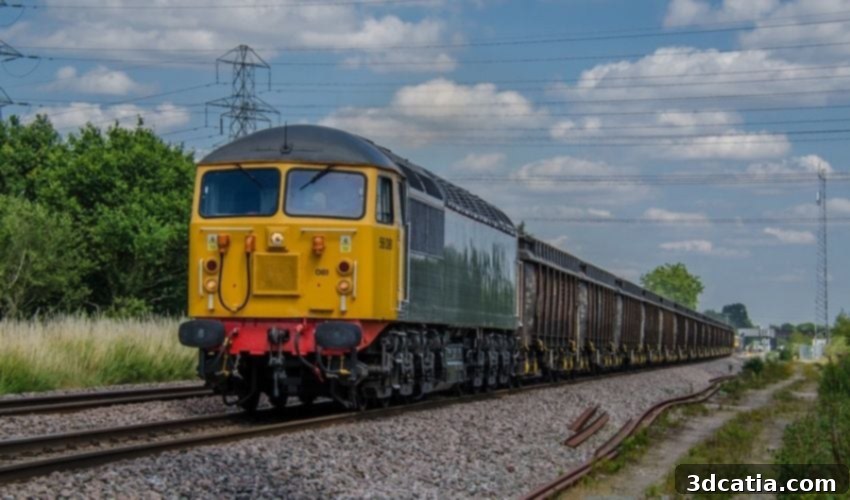
Printfrastructure: How HS2 is Transforming Rail Construction with Graphene and 3D Concrete Printing
The United Kingdom’s ambitious High-Speed 2 (HS2) rail network, first announced in January 2012, stands as a monumental endeavor designed to revolutionize national infrastructure. This transformative project aims to connect major cities across the UK, offering a faster, more reliable, and environmentally sustainable mode of transport. Currently, significant progress is being made on the initial phase of the railway, encompassing a vital 140-mile stretch that will link London to Birmingham. Facing the inherent complexities and challenges of constructing such a large-scale project, including the imperative to mitigate costs and enhance environmental benefits, HS2 Ltd’s London tunnels contractor, SCS JV (Skanska Costain STRABAG Joint Venture), has embraced a groundbreaking innovation. They have opted to deploy a novel technology dubbed “Printfrastructure,” which leverages the power of 3D printing with concrete, crucially reinforced with graphene, to achieve unparalleled efficiency and sustainability on the project.
The vision behind HS2 extends far beyond merely speeding up journeys; it is fundamentally about enhancing the UK’s infrastructure for the 21st century. By providing a modern, high-capacity, and environmentally friendly alternative for intercity travel, HS2 is set to reduce reliance on domestic flights and congested road networks, thereby significantly lowering national carbon emissions. Once fully operational, the network will seamlessly connect passengers across the country, serving key hubs such as London, Birmingham, Leeds, Manchester, Sheffield, and the East Midlands. The new railway is projected to transport an astonishing 26,000 people per hour at peak times, with trains capable of reaching speeds of up to 250 miles per hour, truly revolutionizing the transportation landscape of the United Kingdom. However, the construction of this mega-project has presented numerous constraints. These include the critical need to minimize environmental impact, manage substantial costs effectively, and devise innovative methods for building next to existing, live railway lines without disrupting ongoing services. In response to these intricate challenges, the adoption of 3D concrete printing emerges as an ingenious and multifaceted solution.
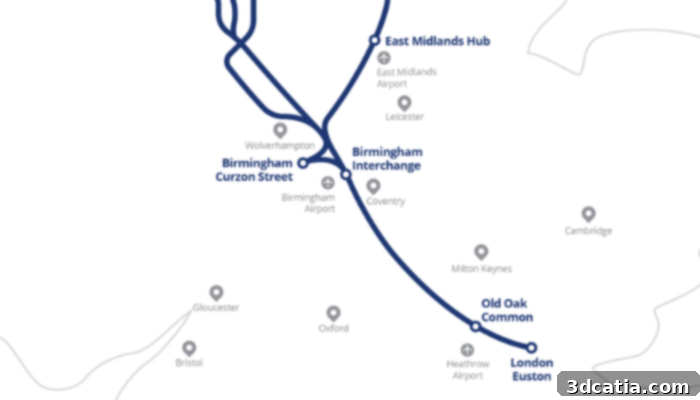
A map of Phase 1 of the HS2 (photo credits: HS2)
3D Concrete Printing and Graphene Reinforcement: A Synergistic Approach for HS2
The implementation of “Printfrastructure” by SCS JV represents a significant leap forward in construction methodology. The joint venture will deploy sophisticated computer-operated robotic systems to fabricate structures directly on-site. This innovative approach effectively eliminates the necessity for complex and often prohibitively expensive logistical arrangements typically associated with transporting pre-fabricated components. Furthermore, a crucial advantage derived from the automation of this system is the ability to sustain construction activities adjacent to operational railway lines. This means that critical infrastructure work can proceed unimpeded, even while trains continue to run, thereby preventing costly delays and disruptions to the rail network. In terms of the 3D printing process itself, SCS JV is utilizing an extrusion method. This technique focuses on constructing robust and efficient structures featuring intricate internal lattice geometries. This unique design not only imbues the structures with exceptional strength but also significantly reduces the overall volume of concrete required. The result is a substantial reduction in material waste, leading to a profound environmental advantage and contributing to a more sustainable construction paradigm for the HS2 project.
Beyond the advanced application of 3D printing, another truly remarkable facet of this project lies in the innovative reinforcement of the concrete itself. A significant technological breakthrough was achieved through the collaborative efforts of ChangeMaker 3D and advanced materials specialist, Versarien. This partnership has further enhanced the capabilities of 3D concrete printing by integrating graphene into the concrete mix. Graphene, widely recognized as the strongest material ever scientifically tested, is an allotrope of carbon, characterized by its one-atom-thick, two-dimensional structure. The concrete used in Printfrastructure incorporates microscopic strands of graphene, mere atoms thick, intricately woven throughout its matrix. This revolutionary addition effectively replaces the traditional steel rebar commonly found in reinforced concrete. The implications of this substitution are vast: graphene is lighter, resistant to corrosion, and its production has a significantly lower carbon footprint compared to steel. This pioneering material science integration not only boosts the structural integrity of the concrete but also aligns perfectly with HS2’s sustainability objectives, marking a pivotal moment in construction material innovation.
The myriad benefits of this novel construction methodology are already becoming abundantly clear. The synergistic combination of graphene-reinforced concrete with advanced 3D printing techniques has initiated a paradigm shift in project execution. This includes a notable improvement in site safety, primarily due to the automation of the printing process which reduces the need for manual labor in potentially hazardous environments. It has also resulted in greater construction flexibility, enabling the rapid creation of complex geometries and bespoke components directly on demand. Crucially, this method drastically shortens build times, accelerating project delivery and reducing overall costs. Perhaps most significantly, it contributes to a substantially smaller carbon footprint. SCS JV itself has estimated that by employing this innovative process and material combination, they anticipate reducing the project’s carbon footprint by an impressive 50%. This remarkable environmental benefit stems from several factors: the elimination of steel reinforcement, the ability to use less concrete overall thanks to optimized designs (leading to less material production waste), and the substantial reduction in transportation emissions because components are printed directly on-site rather than being manufactured off-site and then shipped.
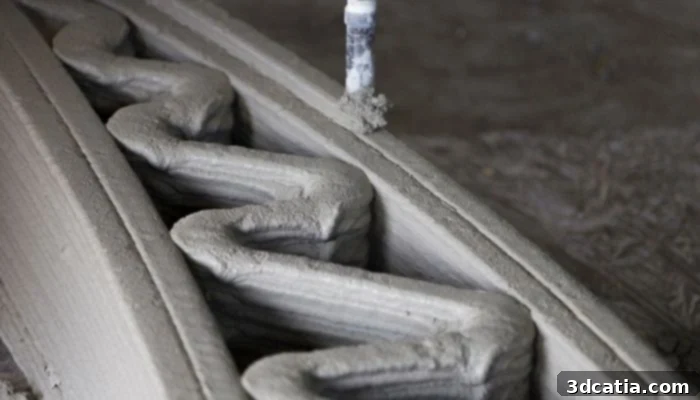
The concrete 3D printing process (photo credits: HS2)
The implications of “Printfrastructure” for the HS2 project, and indeed for the future of construction worldwide, are profound. By embracing digital manufacturing and advanced materials science, HS2 is not merely building a railway; it is setting a new benchmark for sustainable and efficient infrastructure development. This approach transforms the traditional construction site into a high-tech manufacturing hub, optimizing resource utilization and minimizing environmental impact at every stage. The ability to create complex, bespoke structures on demand with unprecedented speed and precision, combined with the superior properties of graphene-reinforced concrete, signals a new era for mega-projects. This technology could pave the way for more resilient, durable, and environmentally conscious construction practices across various sectors, from bridges and tunnels to residential and commercial buildings. HS2 is proving that innovation is key to addressing the dual challenges of rapidly expanding infrastructure needs and stringent environmental targets.
Andrew Duck, SCS JV Temporary Works Manager, aptly summarized the impact of this pioneering approach: “Automation enabled by Printfrastructure’s 3D reinforced concrete printing creates a factory-like environment that delivers a high-quality product that both increases efficient use of materials, and reduces our carbon footprint.” This statement underscores the core advantages of the technology: precision manufacturing, optimized material usage, and a significant contribution to environmental sustainability. This project exemplifies how cutting-edge technology can be harnessed to achieve ambitious national goals while simultaneously prioritizing ecological responsibility and economic efficiency. More information can be found in the official press release HERE.
What are your thoughts on the innovative use of 3D concrete printing for the HS2 project? Let us know your opinions in a comment below or engage with us on our Facebook and Twitter pages. Don’t forget to sign up for our free weekly newsletter, ensuring you receive all the latest news and developments in 3D printing directly to your inbox!
*Thumbnail Photo Credits: Rob Reedman/Flickr