
Revolutionary 3D Printing Innovations: From Sustainable Homes to Grammy Stages
This week, we delve into the latest groundbreaking developments in the world of 3D printing. From Italy’s innovative self-sufficient housing project to VulcanForms’ impressive funding round and Sabrina Carpenter’s 3D-printed microphone for the Grammys, and finally, to Formnext’s exciting announcement about its 2026 partner country, the United Kingdom, we’ll explore the diverse and rapidly evolving landscape of additive manufacturing. Get ready for a journey into the future of technology!
3D Printed Sustainable Living: The Itaca Project in Italy
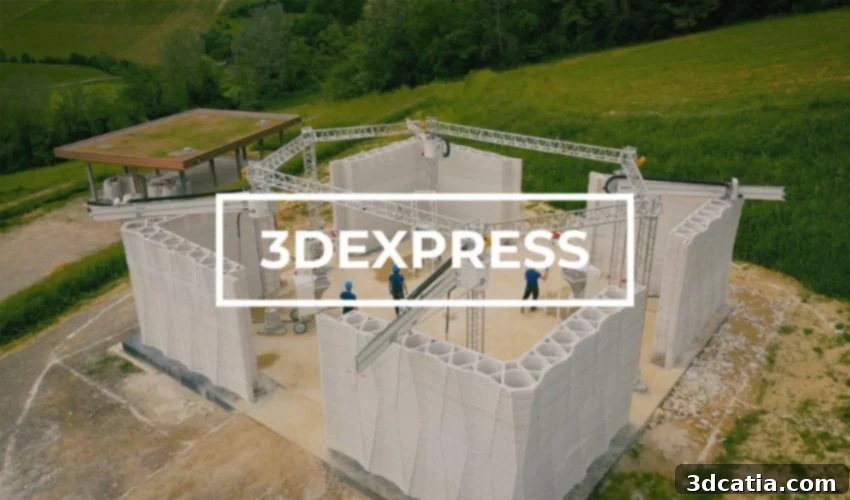
In the heart of the Italian countryside, a revolutionary project is taking shape: Itaca, a self-sufficient farm and living model constructed using cutting-edge 3D printing technology. Spearheaded by WASP, this open-air laboratory for sustainable living represents a significant leap forward in eco-friendly construction. The project, first announced in 2022, has now achieved a major milestone with the successful 3D printing of its walls.
Itaca is designed as a replicable model for sustainable living, adhering to the same regulatory standards as conventional buildings. Its core principle revolves around a circular micro-economy, minimizing waste and maximizing resource utilization. The construction process is a marvel of engineering, employing four robotic arms anchored to a hexagonal structure. These arms work in tandem to simultaneously print four wall sections, enabling the rapid completion of the 164.9 m² structural shell in just a few days.
What truly sets Itaca apart is its innovative approach to integrating building systems. During the printing phase, radiant heating, ventilation, and electrical systems are seamlessly embedded within the walls. This eliminates the need for complex post-construction retrofitting and allows the building to actively regulate air quality and temperature, creating a comfortable and energy-efficient living environment.
Beyond its efficient construction and integrated systems, Itaca boasts impressive environmental credentials. The project achieves a negative CO₂ emissions balance by utilizing a lime-based mixture combined with agricultural waste, replacing traditional concrete. This sustainable material choice significantly reduces the building’s carbon footprint. Furthermore, the walls are packed with rice husks byproduct, mixed with natural lime powder, to maximize thermal efficiency and carbon sequestration.
This filler acts as internal insulation, transforming the structure into a passive energy house that naturally regulates temperature. By leveraging readily available agricultural waste and natural materials, Itaca demonstrates a commitment to minimizing environmental impact and promoting sustainable building practices.
The Itaca project showcases the potential of 3D printing to revolutionize the construction industry, offering a cost-effective, energy-efficient, and environmentally friendly alternative to traditional building methods. Its innovative design and sustainable materials make it a compelling model for future housing developments around the world. As the project progresses, it promises to provide valuable insights into the possibilities of sustainable living and the role of technology in creating a more environmentally responsible future.
VulcanForms Secures $220 Million to Expand Digital Metal Manufacturing Capabilities
VulcanForms, a pioneering force in advanced digital metal manufacturing technology, has recently secured a substantial $220 million in funding, signaling a major expansion of its operations. This oversubscribed financing round was led by Eclipse and 1789 Capital, with significant participation from Washington Harbour, Fontinalis, IEQ Capital, and other prominent investors.
The influx of capital will fuel the expansion of VulcanForms’ integrated manufacturing facilities, which represent a paradigm shift in metal part production. These facilities seamlessly integrate advanced metal additive manufacturing technologies with precision machining, automation, inspection, and proprietary AI-enabled software, creating a streamlined end-to-end workflow.
VulcanForms’ integrated approach aims to revolutionize the manufacturing process by reducing complexity, minimizing waste, and lowering overall system costs. By consolidating the entire supply chain into a single production system, the company can deliver high-performance products at scale, ensuring consistent quality and secure supply chains.
The investment will also support ongoing R&D programs aimed at further strengthening VulcanForms’ platform, expanding its materials portfolio, and facilitating future capacity expansion. This commitment to innovation ensures that VulcanForms remains at the forefront of digital metal manufacturing, pushing the boundaries of what’s possible.
VulcanForms’ technology holds immense potential for various industries, including aerospace, defense, and automotive, where high-performance metal parts are critical. By enabling the production of complex geometries with superior material properties, VulcanForms empowers manufacturers to create innovative products and gain a competitive edge.
The $220 million funding round underscores the growing confidence in VulcanForms’ vision and its ability to transform the metal manufacturing landscape. As the company continues to expand its capabilities and scale its operations, it is poised to become a leading force in the future of manufacturing.
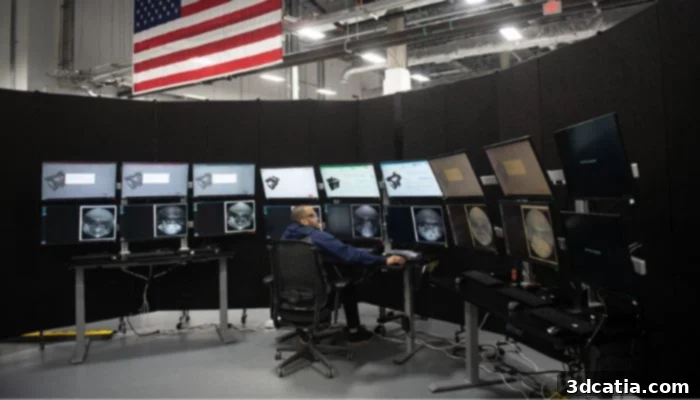
Photo Credits: VulcanForms
Sabrina Carpenter’s 3D Printed Microphone Housing: A Grammy Stage Innovation
The 2026 Grammy Awards witnessed a unique blend of art and technology as Sabrina Carpenter took to the stage with a custom-designed, 3D-printed microphone housing. This innovative prop was brought to life by There You Have It 3D, a Los Angeles-based union 3D printing, scanning, design, and fabrication shop.
There You Have It 3D utilized multi-jet fusion technology to create the microphone housing, showcasing the versatility and precision of additive manufacturing. The company faced a tight deadline, receiving the request on a Tuesday and delivering two sets of the finished product by Friday morning rehearsals.
The microphone housing is entirely 3D printed with durable nylon, ensuring it can withstand the rigors of a live performance. It is designed to seamlessly integrate with a wireless performance microphone, providing both functionality and aesthetic appeal.
This project highlights the growing role of 3D printing in the entertainment industry, where it can be used to create custom props, costumes, and set designs with unprecedented speed and flexibility. The ability to rapidly prototype and produce complex geometries makes 3D printing an ideal solution for meeting the unique demands of the entertainment world.
Sabrina Carpenter’s 3D-printed microphone housing is a testament to the creative possibilities of additive manufacturing, demonstrating how technology can enhance artistic expression and create memorable performance experiences. As 3D printing technology continues to advance, we can expect to see even more innovative applications in the entertainment industry and beyond.
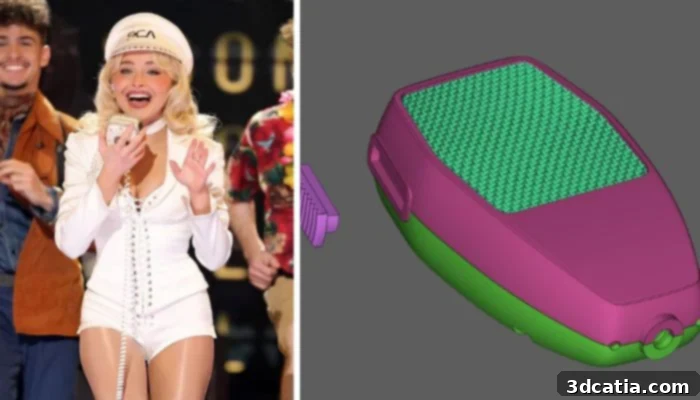
Photo Credits: There You Have It 3D
United Kingdom Named Partner Country for Formnext 2026
Formnext, the leading international exhibition for additive manufacturing and industrial production, has announced that the United Kingdom will be its official partner country for the 2026 edition. This prestigious designation recognizes the UK’s strong manufacturing heritage and its vibrant ecosystem of AM systems, software, and industrial applications.
“The UK has long been a key global player in the world of Additive Manufacturing thanks to the close ties with the country’s robust manufacturing industry, and with established system manufacturers such as Renishaw as well as fast-growing companies such as Wayland Additive and many innovative start-ups,” said Sascha F. Wenzler, Vice President Formnext at Mesago Messe Frankfurt GmbH.
The partnership will provide a platform for UK-based companies and organizations to showcase their expertise and innovations in additive manufacturing to a global audience. Formnext 2026 will also feature a dedicated UK pavilion, providing a central hub for networking and collaboration.
In addition to the partner country announcement, Formnext also revealed that it will increase its focus on key user industries such as orthopedics, aviation, and the automotive sector in 2026. This strategic shift reflects the growing adoption of additive manufacturing across various sectors and the increasing demand for customized solutions.
Exhibitors have until March 2nd to take advantage of an attractive early bird discount for Formnext 2026. This is an excellent opportunity for companies to secure their participation in the leading event for additive manufacturing and connect with potential customers and partners.
The selection of the United Kingdom as the partner country for Formnext 2026 underscores the country’s significant role in the global additive manufacturing landscape. As the industry continues to evolve, Formnext remains committed to providing a platform for innovation, collaboration, and growth.
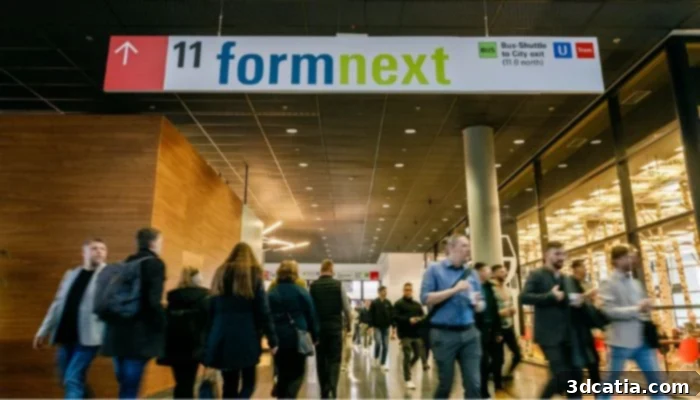
Photo Credits: Formnext
What are your thoughts on the self-sufficient housing project? What is your opinion about the new AI advancements in the 3D printing industry? Share your thoughts in the comments below, or connect with us on LinkedIn or Facebook! Don’t forget to subscribe to our free weekly Newsletter to stay updated on the latest 3D printing news. You can also find all our videos on our YouTube channel.