
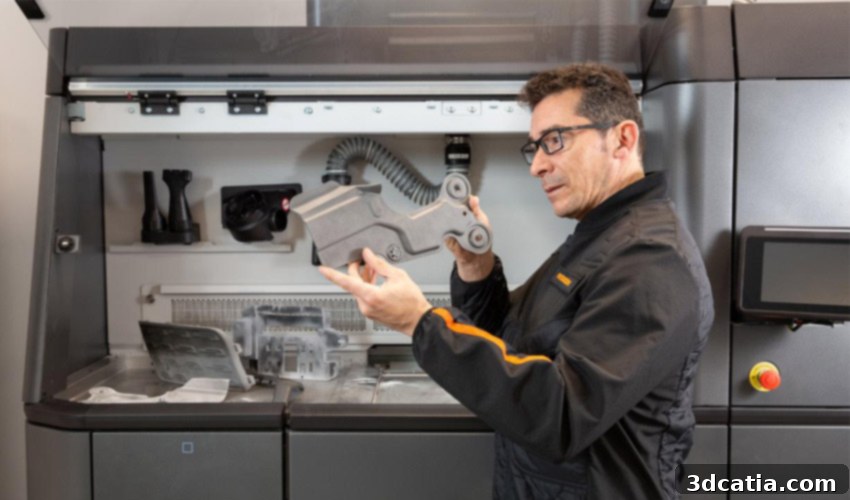
HP Digital Manufacturing Report: Unveiling Global Additive Manufacturing Trends and the Future of 3D Printing
In a rapidly evolving industrial landscape, understanding the trajectory of manufacturing technologies is paramount. Last October, HP provided invaluable insight into this transformation with the release of its comprehensive Digital Manufacturing Report. This extensive global study, drawing insights from 2,175 decision-makers across three continents and nine distinct geographic areas, meticulously explores the profound impact of digital manufacturing technologies on contemporary production methods. A core focus of the report is the escalating adoption of additive manufacturing (AM) by businesses worldwide and the increasingly vital role that 3D printing is poised to play in shaping future industries. The overarching conclusion from the study is unequivocal: digital manufacturing is universally recognized as a potent engine for economic growth, with an impressive 85% of respondents indicating their firm intention to substantially increase investments in 3D printing technologies. These advanced technologies are celebrated for their capacity to accelerate innovation cycles, significantly reduce manufacturing costs, and enable unprecedented levels of mass customization, fundamentally altering how products are conceived, produced, and consumed. Despite this enthusiastic outlook, the path to widespread adoption is not without its challenges. A significant hurdle highlighted by the report is the persistent belief among many industry leaders that the integration of AM technologies remains difficult due to a critical shortage of skilled labor. Through this landmark global study, HP not only underscores the immense potential of additive manufacturing but also emphatically illustrates its transformative capability to redefine the entire value chain—from initial design and rapid prototyping to full-scale production and ultimately, consumer interaction.
The Transformative Power of Additive Manufacturing in a Post-Pandemic World
The recent global health crisis served as a stark and undeniable demonstration of the inherent vulnerabilities within our traditional supply chains and exposed the critical limitations of conventional production methodologies. In this crucible of disruption, additive manufacturing emerged as an exceptionally powerful asset, proving its resilience and adaptability in meeting unprecedented challenges. By offering a decentralized production model, 3D printing facilitates localized and on-demand manufacturing, dramatically reducing reliance on geographically distant supply lines and mitigating risks associated with global disruptions. A compelling testament to this agility was witnessed during the initial phases of the COVID-19 pandemic. Manufacturers and users of 3D printing technologies were among the first to rapidly pivot their operations, leveraging their capabilities to produce essential Personal Protective Equipment (PPE) and other critical medical devices. This swift, localized response played a crucial role in addressing urgent shortages and reinforcing healthcare infrastructure when traditional supply chains faltered. Looking ahead, respondents to HP’s study identified the medical, industrial, and automotive industries as the sectors most primed for significant innovation and widespread adoption of additive manufacturing and 3D printing technologies over the next five years. This anticipation stems from AM’s ability to create complex geometries, produce highly customized parts, and enable rapid iteration, all of which are critical for these advanced and fast-paced industries.
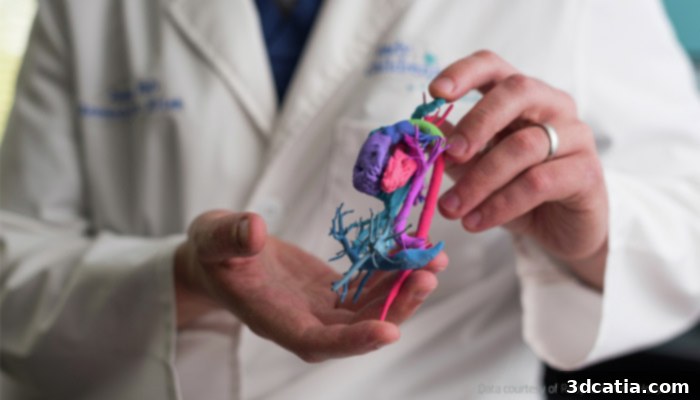
Additive Manufacturing has had a significant impact on the medical sector (photo credits : Rady Children’s Hospital / piece 3D printed on a HP machine)
Driving Innovation and Mass Customization with 3D Printing
Additive Manufacturing at the Heart of Innovation
The HP Digital Manufacturing Report unequivocally positions 3D printing as a cornerstone of modern industrial innovation. For a substantial three-quarters of the study’s respondents, 3D printing is not merely a tool for incremental improvements but a fundamental pathway to enhancing operational agility. More significantly, its profound capacity for innovation is what truly captivates these global participants. The overwhelming majority acknowledge that 3D technologies fundamentally accelerate the development of innovative ideas and cutting-edge solutions. This accelerated pace is largely attributable to additive manufacturing’s unique ability to facilitate on-demand production, enabling companies to create parts only when and where they are needed, thus optimizing resource utilization and minimizing waste. Furthermore, the inherent flexibility of 3D printing supports highly personalized production, allowing for bespoke designs and tailored products that would be impractical or prohibitively expensive with traditional methods. A key benefit driving this innovation is the technology’s capacity to virtually eliminate the need for vast physical inventories. By manufacturing parts as required, businesses can significantly reduce storage costs, mitigate risks associated with obsolete stock, and free up valuable capital and space, channeling these resources back into research and development to foster further innovation.
Further extending the discussion on innovation, it is impossible to overlook the groundbreaking capability of mass customization offered by additive manufacturing. This represents a paradigm shift in product development and consumer engagement. A striking 91% of respondents expressed a keen desire to actively explore mass customization strategies, recognizing the immense potential for personalized parts created through 3D printing and additive manufacturing to be directly applicable and highly beneficial to their respective businesses. The foundational principle of producing parts by adding material layer-by-layer fundamentally eliminates the traditional necessity of designing and manufacturing expensive, time-consuming molds that are then used to produce standardized, identical parts. This liberates designers and engineers, allowing for unparalleled design freedom. Moreover, working with a digital 3D model in a virtual environment makes it significantly easier and faster to iterate on designs. Changes can be implemented rapidly, prototypes can be produced instantly, and products can evolve dynamically according to specific needs or emerging market demands. This agility allows companies to conceptualize and bring to market multiple tailor-made products with unprecedented efficiency. For instance, recent studies vividly demonstrate this impact, predicting significant growth in the market for 3D printed surgical models over the next five years. These models are revolutionizing surgical planning and training by providing patient-specific anatomical replicas. In the realm of consumer products, companies like SmileDirectClub, in a strategic partnership with HP, are already leveraging industrial 3D printing to produce thousands of personalized dental appliances daily. This exemplifies how mass customization powered by AM is moving from a niche concept to a mainstream reality, directly impacting individual consumers with bespoke solutions.
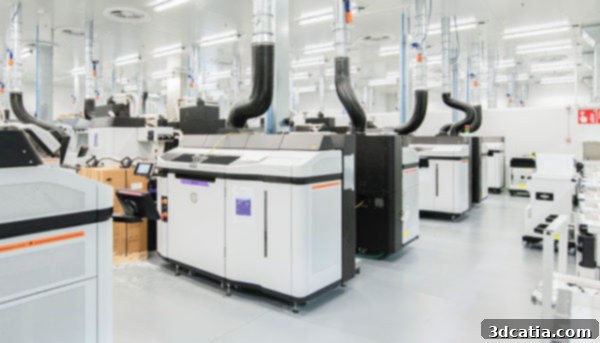
3D printing solutions at HP’s 3D Printing Centre of Excellence (photo credits: FTP Edelman)
Overcoming Barriers: Global Adoption, Skilled Labor, and Sustainability
The Adoption of Additive Manufacturing Globally
While there is an undeniable and growing inclination among companies to invest substantially in advanced 3D printing technologies, the widespread integration and full realization of additive manufacturing’s potential are still frequently hampered by a persistent and critical challenge: the glaring lack of a sufficiently skilled workforce. This particular impediment consistently emerges as a significant point in virtually every study of this nature, indicating that a substantial portion of potential users are not adequately trained or prepared to operate, maintain, and innovate with these sophisticated technologies. Addressing this skills gap is paramount for unlocking the next phase of industrial growth. Encouragingly, the HP report reveals that 64% of respondents are actively seeking to offer more professional training services within their organizations, signaling a clear recognition of the problem and a commitment to internal solutions. Furthermore, an even larger cohort, 53%, emphatically states the imperative for collaborative efforts among diverse stakeholders—including companies, government bodies, educational institutions, and even citizens—to jointly invest in comprehensive education and targeted job-skilling programs. This collaborative approach is essential to cultivate a robust talent pipeline capable of navigating the complexities of digital manufacturing and ensuring sustained growth and innovation in the sector.
Beyond the immediate challenge of talent development, companies are demonstrating a clear readiness to embrace additive manufacturing, driven in no small part by the significant and demonstrable environmental benefits that these technologies represent. Sustainability is no longer a peripheral concern but a core strategic imperative. An overwhelming 90% of respondents consider the recyclability of 3D printed powders and finished parts to be of critical importance, reflecting a growing consciousness about material lifecycle and waste reduction. Complementing this, 88% believe that governments have a crucial role to play in fostering a sustainable ecosystem. They advocate for governmental initiatives to incentivize and invest in the development of digital manufacturing technologies that offer both social and environmental benefits, thereby creating a supportive policy landscape for greener industrial practices. In direct response to this urgent need, HP itself has been a frontrunner, notably developing a new, highly reusable polypropylene in collaboration with BASF. This innovative material boasts a remarkable characteristic: 100% of any unused powder can be recycled back into the production process, drastically reducing material waste and embodying the principles of a circular economy. Ramon Pastor, General Manager of HP 3D Printing & Digital Manufacturing, eloquently summarizes the prevailing sentiment: “The global manufacturing sector is clearly signaling a desire for greater supply chain resiliency, more manufacturing flexibility, increased speed of innovation, and stronger environmental sustainability. And they are seeing industrial 3D printing as a way to not only lower costs and go to market faster, but as a unique competitive advantage that accelerates innovation for customers.” This powerful statement encapsulates the multifaceted appeal of additive manufacturing, positioning it not just as a cost-saving measure or a speed enhancer, but as a fundamental enabler of competitive differentiation and customer-centric innovation. For those eager to delve deeper into these transformative insights, the complete study is available for download HERE.
The findings from HP’s Digital Manufacturing Report paint a vivid picture of an industry on the cusp of profound transformation, with additive manufacturing and 3D printing at its core. These technologies are not merely tools but catalysts for unprecedented economic growth, innovation, and sustainable practices. While challenges such as the skilled labor gap persist, the collective will to address them through education and collaboration is strong. The future of manufacturing promises greater agility, personalization, and environmental responsibility. What are your thoughts on the global adoption trends for additive manufacturing? How do you perceive this industry-wide shift towards digital manufacturing and the increasing emphasis on sustainability within the AM sector? Share your insights and perspectives in a comment below or join the conversation on our Facebook and Twitter pages! Don’t miss out on the latest advancements and news—sign up for our free weekly Newsletter here, delivering the freshest 3D printing updates directly to your inbox!