
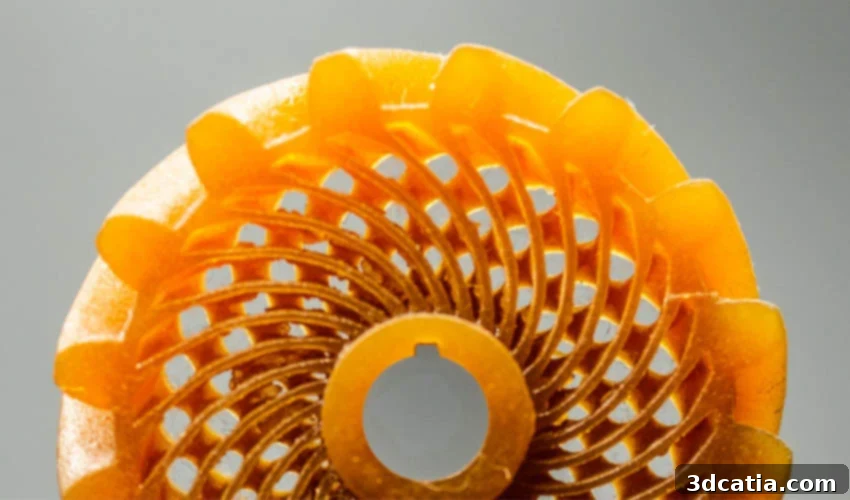
Henkel and Fortify Revolutionize High-Performance 3D Printing with Advanced Composite Materials
In a significant development poised to transform the landscape of industrial additive manufacturing, global chemical giant Henkel and innovative 3D printing technology firm Fortify have officially announced a strategic collaboration. This powerful alliance is dedicated to unlocking unprecedented capabilities for high-performance applications in the realm of 3D printing. The core objective of this partnership is to collaboratively engineer and deploy groundbreaking solutions across critical areas such as injection mold tooling, advanced prototyping, and efficient low-volume production. Fortify has long been recognized within the competitive 3D printing industry for its pioneering and patented Digital Composite Manufacturing (DCM) platform. This sophisticated technology empowers manufacturers to produce custom composite parts with exceptional resolution and mechanical properties. Through the synergy of this partnership, Henkel, with its profound expertise in advanced materials, has custom-engineered a new generation of resins specifically designed to meet the rigorous demands of Fortify’s platform. These specialized resins are characterized by their superior durability, high-temperature resistance, and impressive modulus, marking a significant leap forward in material science for additive manufacturing.
The momentum surrounding composite 3D printing continues to accelerate, particularly within industrial sectors where performance and efficiency are paramount. The ability of fiber-reinforced polymers to yield parts that are not only incredibly strong but also remarkably lightweight positions them as a cornerstone for next-generation industrial components. These materials consistently demonstrate outstanding performance metrics across a wide array of demanding applications. Henkel substantiates this claim by highlighting that injection molded parts, when effectively reinforced with fibers, typically exhibit substantial enhancements: a remarkable 20 to 100% increase in critical properties such as strength, stiffness, and heat deflection temperature (HDT). Such significant improvements are undeniably compelling for industries seeking to push the boundaries of material performance and operational efficiency. Joshua Martin, the visionary CEO and Co-Founder of Fortify, articulated the transformative potential of this collaboration, stating: “The Fortify platform enables our customers to leverage materials that weren’t conceivable, let alone practical on other platforms. With Henkel’s assistance, we are pushing this technology forward and solving the customer problems we expected as well as discovering exciting new opportunities.” His statement underscores the strategic advantage gained by combining Fortify’s advanced hardware with Henkel’s cutting-edge material science.
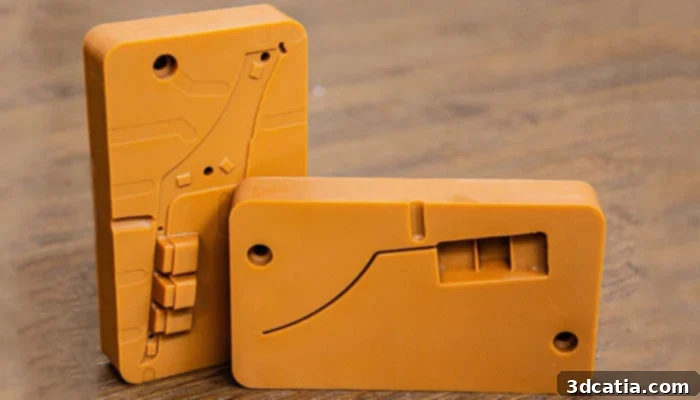
A 3D printed tool by Fortify which is used to mold an automotive part, showcasing the precision and strength of their composite technology.
Generating More Industrial Applications Through Innovation
One of the primary and most impactful applications where Fortify is concentrating its collaborative efforts with Henkel is in the development of 3D printed injection mold tools. Traditionally, creating molds involves lengthy and often prohibitively expensive processes, typically relying on machined metal. By strategically replacing these conventional metal tools, or specific inserts within them, with advanced 3D printed components, molders can achieve dramatic reductions in their production schedules – often cutting weeks or even months from their timelines. Beyond the expedited production, this approach also translates into substantial cost savings, making it an attractive proposition for manufacturers worldwide. While the concept of 3D printing for injection mold tooling has been explored by various entities, the critical differentiator and key to success in truly demanding industrial applications lies in the step-change performance offered by these new, reinforced materials. The enhanced durability, temperature resistance, and stiffness provided by Henkel’s custom resins for Fortify’s platform elevate the viability of 3D printed molds to unprecedented levels, enabling them to withstand the rigorous conditions of high-volume manufacturing.
The conventional paradigm of mold creation is notoriously characterized by its lengthy lead times and significant financial investment. For businesses engaged in product prototyping or the manufacturing of parts in small to medium production runs, these inherent tooling costs and the protracted timeframes represent formidable barriers to market entry and agile innovation. The overarching aim of the Henkel-Fortify partnership is to directly address these challenges by offering a compelling alternative: sophisticated 3D printed molds that leverage the superior properties of Henkel’s specially formulated resins. This innovative approach promises to drastically shorten development cycles and reduce overheads, thereby democratizing access to custom tooling. Karlos Delos Reyes, Vice President of Applications and Co-Founder at Fortify, perfectly encapsulates this vision: “As we help injection molders reduce the expense and time involved with producing molds, they can quickly react to new opportunities.” This agility is crucial in today’s fast-paced market, allowing companies to iterate designs rapidly, test market demand with minimal risk, and bring highly specialized products to market with unprecedented speed.
Transforming Prototyping and Low-Volume Production
The impact of this collaboration extends far beyond just injection mold tooling. The ability to rapidly produce durable, high-performance molds also has profound implications for prototyping and low-volume production scenarios. In traditional manufacturing, creating prototypes often involves significant investment in temporary tooling or expensive, slow machining processes. With Henkel’s materials processed on Fortify’s DCM platform, engineers can quickly print molds that are robust enough for short production runs, enabling functional testing of end-use parts made from actual production materials. This iterative capability speeds up the design validation process, minimizes costly rework, and allows companies to bring new products to market faster and more efficiently. For low-volume production, where the economics of traditional tooling are often prohibitive, 3D printed molds offer a cost-effective alternative, enabling manufacturers to produce niche products or specialized components without the burden of massive upfront investments. This flexibility is vital for industries requiring customized solutions or those operating in markets with fluctuating demand, further solidifying the partnership’s value proposition.
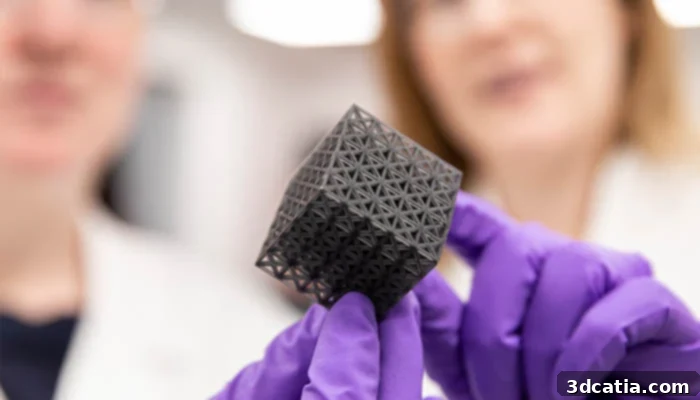
A 3D printed sample demonstrating the superior properties of Henkel’s custom-developed resin, ready for high-performance applications.
The Future of Additive Manufacturing: Beyond Current Horizons
Looking ahead, Fortify is poised to initiate field beta testing of its advanced 3D printers in the spring of 2020. This crucial phase will involve deploying their technology to key partners and customers, gathering invaluable real-world data and feedback to further refine and optimize the platform. Beyond the immediate focus on injection molding applications, the combined expertise of Henkel and Fortify is actively exploring a multitude of other end-use part applications where their integrated solutions can deliver a significant competitive advantage. This includes sectors such as aerospace, automotive, medical devices, and consumer electronics, where the demand for lightweight, high-strength, and high-performance components is consistently growing. The partnership’s exploration into these diverse fields underscores the versatility and transformative potential of their collaboration, promising a new era of possibilities for industrial manufacturing. The synergy between Fortify’s precision hardware and Henkel’s material science acumen is expected to unlock innovations across a broad spectrum of industries, enabling designs and functionalities that were previously impossible to achieve with traditional manufacturing methods.
Expanding Applications and Market Impact
The development of high-performance composite materials suitable for additive manufacturing is a critical enabler for the broader adoption of 3D printing in industries with stringent performance requirements. Henkel’s long-standing leadership in material science, particularly in adhesives, sealants, and functional coatings, provides a strong foundation for developing resins that can withstand extreme conditions, from high temperatures and pressures to corrosive environments. When combined with Fortify’s innovative DCM platform, which allows for precise control over fiber alignment and distribution within composite parts, the potential for creating truly bespoke materials with tailored properties becomes immense. This precision in material engineering and part fabrication means that designers and engineers are no longer limited by conventional manufacturing constraints. They can now envision and create complex geometries, intricate internal structures, and multi-functional components that deliver optimal performance for their specific application, reducing weight, increasing durability, and improving overall system efficiency.
The impact of such strategic partnerships resonates throughout the entire additive manufacturing ecosystem. By demonstrating the viability and superior performance of 3D printed composite tools and parts, Henkel and Fortify are not only addressing current industry challenges but also paving the way for future innovations. This collaboration serves as a powerful testament to the necessity of interdisciplinary approaches—combining hardware innovation with advanced material science—to push the boundaries of what’s possible in manufacturing. As industrial sectors continue to seek more sustainable, agile, and cost-effective production methods, solutions offered by this partnership will become increasingly vital. Their work promises to accelerate the transition towards a more digital and decentralized manufacturing future, where customized, high-performance parts can be produced on demand, anywhere in the world. This level of responsiveness and customization has profound implications for supply chain resilience, product development cycles, and competitive advantage in global markets.
For those interested in delving deeper into the technological advancements and expanded possibilities offered by this exciting partnership, more comprehensive information can be found HERE.
What are your thoughts on this groundbreaking partnership between Henkel and Fortify and its potential to reshape the future of industrial 3D printing? We invite you to share your insights and comments below, or engage with us on our vibrant Facebook and Twitter pages! Don’t miss out on the latest news and innovations in additive manufacturing; sign up for our free weekly Newsletter to receive all the crucial updates directly in your inbox!