
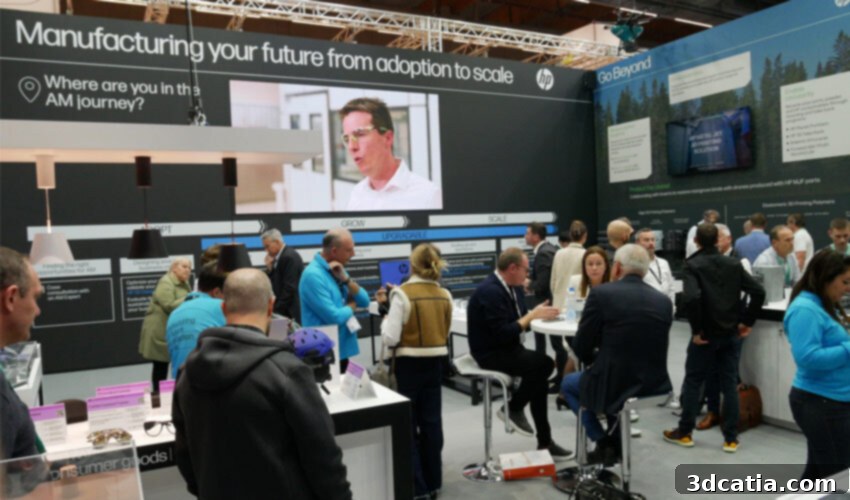
HP at Formnext 2023: Driving the Future of 3D Printing Through Innovation, Sustainability, and Automation
Formnext, the premier global exhibition for additive manufacturing, once again drew the entire 3D printing world to Frankfurt, serving as the essential hub for industry insights and groundbreaking announcements. Among the standout exhibitors, HP Inc. consistently captures attention, and Formnext 2023 was no exception. Building on a legacy of innovation, HP reinforced its position as a key driver in the additive manufacturing (AM) landscape, showcasing advancements and strategic initiatives that promise to shape the future of industrial production.
In previous years, HP has consistently demonstrated its long-term vision. In 2021, the company emphasized the critical role of material development, outlining a comprehensive 5-year plan that underscored its commitment to evolving AM technologies. HP recognized additive manufacturing as a pivotal force behind Industry 4.0 and expressed clear intentions to play a leading role in this transformation. This ambitious goal was to be achieved through attracting top talent, investing heavily in research, and forging strategic partnerships across the ecosystem.
The tangible results of this forward-looking strategy began to emerge in 2022, notably with the introduction of the HP Metal Jet S100 solution. This launch, coupled with significant collaborations with industry leaders such as Legor Group in jewelry and Volkswagen in automotive, provided a clear glimpse into HP’s expansive plans. These developments set the stage for Formnext 2023, where HP aimed to further accelerate its technological advancements and remain steadfast in its mission. This year, the focus was sharply on innovation and sustainability, underpinned by three core pillars: an expanded product portfolio, sustainable manufacturing practices, and enhanced automation. Let’s delve deeper into what these pillars signify for the industry and for HP’s trajectory.
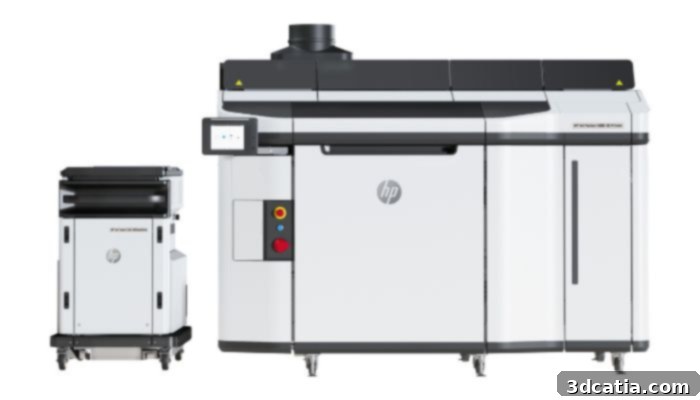
As in previous years, HP will be presenting numerous innovations at Formnext this year. (Credits: HP)
HP Unveils an Expanded Product Portfolio at Formnext 2023 for Enhanced Production
HP’s polymer solutions, built on its innovative Multi Jet Fusion (MJF) technology, are already well-established and highly regarded within the additive manufacturing community. These include the robust 5200 series and the advanced 5400 series, known for their production capabilities. At Formnext 2023, HP significantly broadened this offering with the highly anticipated introduction of the new HP Jet Fusion 5600 series. This latest iteration is engineered to push the boundaries of the Multi Jet Fusion process, delivering even greater levels of repeatability, reliability, and customization for industrial applications. The advancements in the 5600 series are designed to provide a substantial cost advantage for businesses embracing additive manufacturing, making MJF technology an even more compelling choice for scalable, high-volume production. This expansion underscores HP’s commitment to continuously enhancing its core polymer technologies, ensuring that customers can achieve unprecedented precision and efficiency in their manufacturing workflows. The enhanced capabilities of the 5600 series aim to open new doors for intricate part production and broader industrial adoption, reinforcing MJF’s position as a leading polymer 3D printing technology.
François Minec, Global Head of 3D Polymers, Personalization & 3D Printing at HP, highlighted the profound importance of collaborative efforts in achieving industry-wide progress. He enthusiastically stated, “We’re thrilled to see esteemed companies such as BMW, Protolabs, and Prototal leverage HP’s evolving solutions. These collaborations are a testament to our commitment to advancing technology for the betterment of industries worldwide.” These partnerships not only validate HP’s technological prowess but also exemplify a shared vision for pushing the envelope of what is possible with additive manufacturing. This seamless integration of innovation and collaboration naturally leads us to the second pivotal focus for HP at this year’s Formnext: a deep and unwavering commitment to sustainability, which is increasingly becoming a non-negotiable aspect of modern manufacturing and industrial practices.
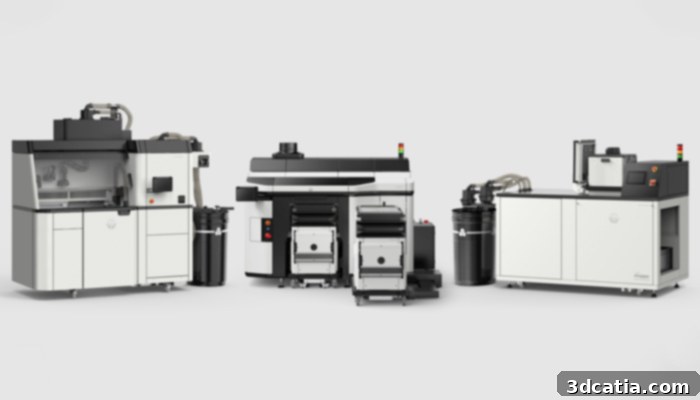
HP introduced the HP Jet Fusion 5600 Series at Formnext. (Credits: HP)
HP Championing Sustainability Across All Levels of 3D Printing
HP’s commitment to sustainability extends far beyond mere rhetoric, manifesting in tangible initiatives across multiple dimensions of its operations and product offerings. This multifaceted approach is built upon a foundation of innovative materials, advanced hardware, intelligent software, and robust, long-term sustainable partnerships. The company’s comprehensive strategy aims to significantly reduce the environmental footprint of additive manufacturing, positioning it as a greener alternative to traditional production methods. While we’ve already discussed HP’s groundbreaking new printing solutions, including the Jet Fusion 5600 series, for both polymers and metals, its dedication to sustainable additive manufacturing goes much deeper, integrating environmental responsibility at every stage of the product lifecycle.
A significant highlight at Formnext 2023 was the unveiling of HP’s new software solutions designed to enhance transparency in environmental impact. Among these is the innovative Carbon Footprint Calculator tool, which empowers users to accurately assess the carbon footprint of specific 3D printed parts. This tool is a testament to HP’s unwavering commitment to transparency and its proactive stance on knowledge sharing within the industry. Savi Baveja, President of Personalization and 3D Printing at HP, articulated this vision clearly: “We are on a path to redefine sustainable 3D printing, pushing the boundaries of innovation and empowering industries to create a greener, more agile future. Our commitment to sustainability is at the core of our vision.” This statement underscores the strategic importance HP places on integrating environmental stewardship directly into its core business strategy.
Recognizing that sustainable 3D printing is fundamentally reliant on sustainable materials, HP is also making significant strides in this critical area. The company is actively promoting a circular economy model through various take-back programs. A prime example is the PU01 Second Life initiative, which further strengthens HP’s long-standing collaboration with materials giant BASF. This program facilitates the repurposing and recycling of materials, minimizing waste and maximizing resource efficiency. Furthermore, HP is intensely focused on developing and utilizing materials derived from renewable resources and those requiring less energy during their production. In partnership with Arkema, HP is pioneering bio-based materials formulated with renewable castor oil, and by utilizing biomethane in their processes, they are actively working to significantly reduce the overall carbon footprint of these materials. Another crucial collaboration is with Evonik, where HP is doubling down on sustainability efforts by developing the 3D High Reusability PA12. This advanced material, produced using renewable energy, has the potential to reduce the carbon footprint of the widely used PA12 material by an impressive 49%, all without compromising its exceptional properties and performance. Complementing these material innovations, Arkema also offers a comprehensive Take Back program, providing essential solutions for companies to effectively recycle both excess powders and end-of-life components, further embedding circularity into the manufacturing process. A prominent user of this program is Decathlon, a global leader celebrated for its unwavering commitment to sustainable manufacturing practices for consumer products.
DECATHLON’s dedication to sustainability is evident in its continuous pursuit of eco-friendly practices across its consumer product lines. A notable collaboration in June of this year saw the creation of a sustainable 3D-printed sports shoe, a remarkable achievement born from the joint efforts of HP, DECATHLON, and Lonati. Beyond the product itself, these three companies are actively engaged in evaluating the environmental impact of additively manufactured products and collaboratively exploring innovative methods to further reduce their carbon footprint throughout the entire lifecycle. This partnership exemplifies how leading organizations are working together to pioneer more sustainable approaches in sports equipment manufacturing.
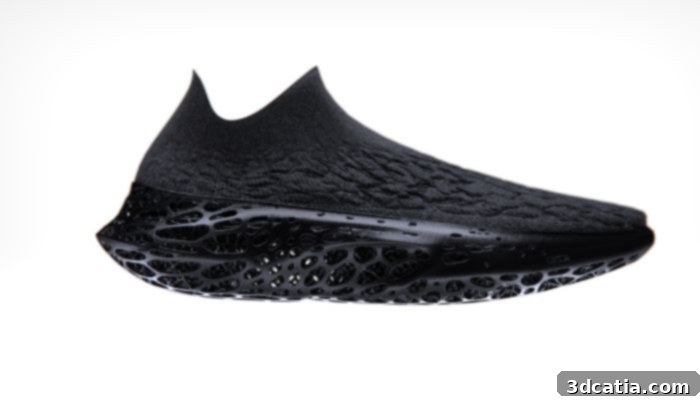
This sustainable sports shoe was created through a collaboration of HP, DECATHLON and Lonati. (Image courtesy of DECATHLON)
For DECATHLON, leveraging HP’s advanced technologies, particularly Multi Jet Fusion, is absolutely central to its sustainability objectives. The company emphasized, “Additive manufacturing, specifically with the Multi Jet Fusion technology, offers us the ability to not only extend the lifecycle of our sports products through on-demand spare part production, enhancing their durability and upgradability, but also plays a pivotal role in mitigating the environmental impact of our manufacturing processes. These environmental considerations regarding raw materials and the printing process significantly influence our choice of current and future materials and technologies.” This statement underscores the multifaceted benefits of MJF, from extending product utility to profoundly impacting material selection and process optimization for a greener future. The ability to produce parts on-demand reduces waste from overproduction and allows for repair rather than replacement, directly contributing to a more circular economy for consumer goods.
HP Drives Automation and Integrated Software for Enhanced 3D Printing Workflows
The third crucial pillar of HP’s strategy, prominently showcased at Formnext, revolves around accelerating automation and integrating sophisticated software options throughout the 3D printing process chain. To achieve this, HP announced several pivotal strategic partnerships with leading technology providers, including Siemens, Materialise, and Autodesk. These collaborations are designed to streamline workflows, enhance efficiency, and ultimately make additive manufacturing more accessible and powerful for industrial applications.
With Siemens, for example, HP is focusing on the development of advanced process control software and robust automation hardware. This collaboration aims to ensure more efficient production cycles with significantly reduced downtime, optimizing the entire manufacturing pipeline from design to final part. The goal is to create a seamless, highly automated production environment where human intervention is minimized, and throughput is maximized.
Concurrently, HP’s partnership with Materialise is geared towards advancing 3D volume printing and deeply integrating HP technologies within Materialise’s CO-AM software platform. CO-AM is a comprehensive manufacturing execution system (MES) designed to manage and optimize additive manufacturing operations. This integration will empower users to more effectively track print jobs, implement rigorous quality control measures, and enhance overall machine utilization, thereby boosting productivity and ensuring consistent part quality. The synergy between HP’s hardware and Materialise’s software promises a more intelligent and interconnected AM ecosystem.
Furthermore, the collaboration with Autodesk is focused on bundling Autodesk Fusion 360, a powerful integrated CAD/CAM software, with both HP Multi Jet Fusion and Metal Jet printers. This initiative aims to provide designers and engineers with a unified platform for integrated design and manufacturing solutions. By bringing design and production tools closer together, HP and Autodesk are facilitating a more fluid workflow, from initial concept to final printed part, reducing complexities and accelerating product development cycles.
Another revolutionary project unveiled at this year’s Formnext, emphasizing industry-wide collaboration on automation and interoperability, is the AM I Navigator initiative. This groundbreaking project involves not only HP but also other prominent leaders in the AM sector, including Siemens, DyeMansion, BASF Forward AM, and EOS. AM I Navigator proposes a holistic model that meticulously maps out the industrialization stages of the additive manufacturing industry. Its core objective is to significantly increase interoperability across the entire AM value chain. By defining the different stages of the process chain—from material development and machine operation to post-processing and automation—this common model will serve as a crucial framework. It will enable stakeholders to identify pathways for scaling and seamlessly integrating additive manufacturing into existing conventional production processes, ultimately accelerating the broader adoption and industrialization of AM.
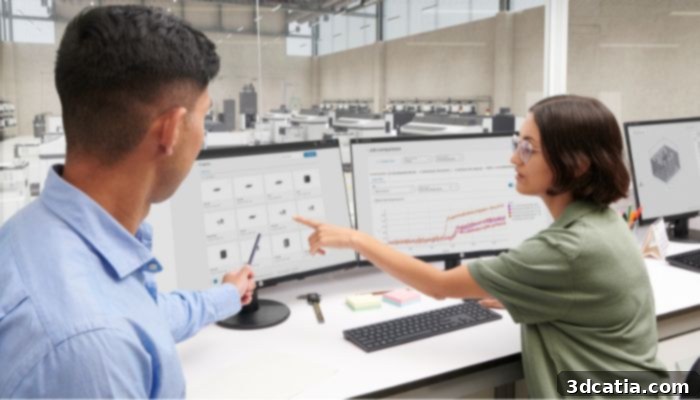
HP announced numerous partnerships at Formnext 2023, including one to drive AM process automation. (Credits: HP)
While Formnext 2023 saw a strong emphasis on HP’s polymer solutions and related innovations, it is imperative to highlight that HP is also vigorously advancing its metal additive manufacturing capabilities. The company continues to invest substantially in its HP Metal Jet technology, recognizing its immense potential for industrial applications. This dedication has translated into significant momentum, evidenced by strong collaborations with key industry leaders such as GKN Additive, Sandvik, Elnik, and Elnik’s sister company, DSH Technologies. These partnerships are not merely transactional; they represent deep engagements aimed at pushing the boundaries of metal 3D printing, enabling the production of high-performance parts with enhanced speed, precision, and cost-effectiveness. All these diverse collaborations, spanning both polymer and metal solutions, collectively underscore HP’s unwavering commitment to advancing the entire spectrum of 3D printing technology and materials, solidifying its role as a comprehensive solutions provider in additive manufacturing.
To gain a deeper understanding of HP’s pioneering approach to innovation, sustainability, and automation, visitors to Formnext 2023 were encouraged to engage directly with HP representatives. The company’s vibrant presence in Hall 12.1 at Booth D41 offered an unparalleled opportunity to explore their latest offerings and discuss the future of additive manufacturing. Attendees also had the chance to witness HP’s thought leadership firsthand by attending various panel discussions featuring HP experts, details of which were available on the 3Dnatives event agenda. For those unable to attend Formnext, the latest information and updates from HP are always accessible on their official website HERE.
Did you have the opportunity to visit HP at Formnext 2023? We’d love to hear your insights and impressions! Share your thoughts in a comment below or connect with us on our LinkedIn, Facebook, and Twitter pages! Don’t forget to sign up for our free weekly Newsletter here to receive the latest 3D printing news directly in your inbox. You can also explore all our engaging videos and content on our YouTube channel for further insights into the world of additive manufacturing.