
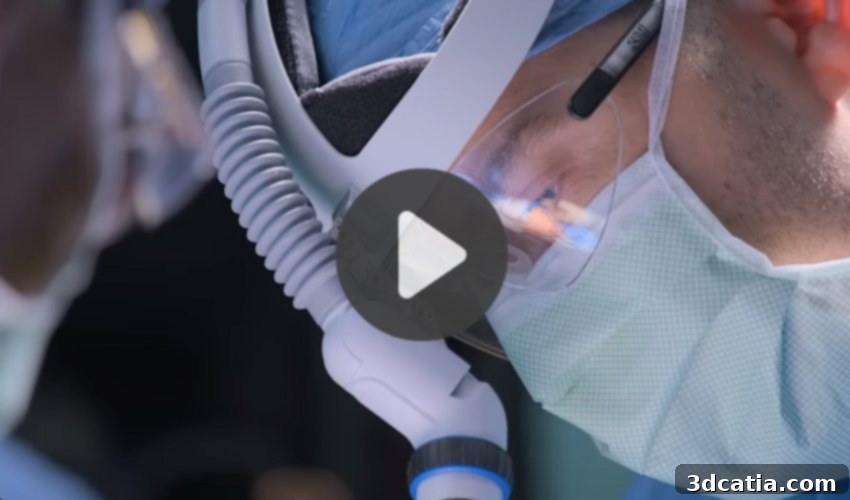
Revolutionizing Healthcare: Exploring the Transformative Power of Medical 3D Printing Innovations
Welcome to our latest deep dive into the extraordinary world of 3D printing, where groundbreaking innovations are rapidly reshaping the future of healthcare. In observance of World Health Day, we dedicate this week’s compilation to showcasing the Top 5 most compelling medical 3D printing videos. These selections powerfully illustrate the remarkable advancements and unparalleled advantages emerging at the intersection of medical science and cutting-edge additive manufacturing technology. From enhancing surgical precision to enabling life-saving personalized implants and streamlining regulatory processes, 3D printing is not just a tool; it’s a catalyst for profound transformation in patient care, medical device development, and dental practices worldwide. Join us as we explore how this technology is pushing the boundaries of what’s possible, promising a healthier, more personalized future for all.
Our journey begins with Dr. Jeffrey R. Janus, an esteemed Otolaryngologist, who sheds light on the immense benefits of 3D modeling and printing within the medical industry, emphasizing its significant impact on patient treatment and surgical outcomes. Next, we witness the life-saving potential firsthand through the inspiring story of Wayne Morgan, a double lung transplant recipient whose fight against advanced pulmonary fibrosis was aided by custom 3D printed stents. Following this, Bryan Ibarra, an Additive Manufacturing Engineer at the FDA, provides an invaluable perspective on the critical role of additive manufacturing in regulatory science, ensuring the safety and efficacy of medical products. The fourth highlight features Dr. Bill Edwards, a prominent spine surgeon, who shares his experience with DeGen Medical’s pioneering 3D printing technologies, demonstrating how the company is revolutionizing spinal care with state-of-the-art solutions. Finally, SHINING3D Dental offers practical tips and tricks for optimizing the 3D scanning experience within the bustling dental industry. Let’s dive into these fascinating insights!
Top 1: The Transformative Role of 3D Modeling and Printing in Modern Surgery
In our first featured video, Dr. Jeffery R. Janus, a distinguished Otolaryngologist, passionately discusses the profound significance of innovation in the field of surgery, with a particular focus on the revolutionary applications of 3D modeling and printing technologies. Dr. Janus articulates how these advanced tools empower surgeons to elevate their techniques, enabling them to meticulously plan and reconstruct complex patient anatomies with unprecedented precision. This level of accuracy ultimately translates into significantly improved patient outcomes, minimizing risks and enhancing recovery. By embracing these cutting-edge technologies, Dr. Janus exemplifies his unwavering commitment to transcending traditional methodologies, constantly seeking and implementing innovative solutions that dramatically enhance the quality and effectiveness of patient care. The ability to create exact anatomical models allows for pre-surgical planning that was once unimaginable, offering surgeons a tangible, hands-on understanding of the patient’s unique physiological challenges before ever making an incision. This not only refines surgical execution but also serves as an invaluable training tool for medical students and residents, fostering a deeper understanding of complex procedures in a risk-free environment. Ultimately, 3D printing in surgery represents a paradigm shift towards more personalized, safer, and more effective medical interventions, pushing the boundaries of what is possible in reconstructive and corrective procedures.
Top 2: A Second Chance at Life – 3D Printed Stents in a Lung Transplant Patient
Our second video presents an incredibly moving and powerful testament to the life-changing capabilities of 3D printing. Wayne Morgan, a courageous double lung transplant recipient, celebrates a momentous two-year anniversary since his life-saving surgery. This incredible milestone was made possible not only through the selfless act of organ donation but also by the remarkable advancements in medical 3D printing. Diagnosed with severe advanced pulmonary fibrosis, Wayne faced daunting challenges prior to his transplant. His daily life was profoundly impacted by extreme difficulty walking and breathing, rendering him heavily reliant on various medical aids. However, these critical complications were ingeniously addressed and overcome through the innovative application of 3D printing technology. Customized silicon stents were precisely designed and printed, perfectly tailored to Wayne’s unique airway anatomy. These personalized medical interventions highlight the immense potential of additive manufacturing to create patient-specific solutions that can literally mean the difference between life and death. Wayne’s story is a beacon of hope, demonstrating how 3D printing can provide customized, precise medical devices that integrate seamlessly with complex human biology, significantly improving post-operative quality of life and offering a renewed future for individuals facing similar debilitating conditions. It underscores the profound shift towards personalized medicine, where technology adapts to the individual, rather than the other way around.
Top 3: Navigating Innovation – The FDA’s Role in Additive Manufacturing for Medical Products
Our third compelling video takes us inside the U.S. Food and Drug Administration (FDA) with Bryan Ibarra, an Additive Manufacturing Engineer from the FDA’s Office of Science and Engineering Laboratories. Ibarra provides crucial insights into the pivotal role of 3D printing within regulatory science. He elaborates on how FDA researchers are strategically leveraging 3D printing to develop and rigorously test a diverse array of medical devices, including fascinating examples like “phantom fingers.” These phantom models are not merely curiosities; they are sophisticated testing tools designed to simulate human anatomy, allowing for the comprehensive evaluation of new technologies in a controlled environment. Furthermore, Ibarra reveals how 3D printing is instrumental in enhancing and refining regulatory standards, thereby playing a crucial role in safeguarding the quality, reliability, and ultimate safety of all FDA-regulated medical products. The FDA’s proactive engagement with additive manufacturing is essential for fostering innovation while simultaneously ensuring that these groundbreaking technologies meet stringent safety and performance criteria. Their work in this lab is fundamental to understanding the unique characteristics of 3D printed devices, from material properties and structural integrity to long-term biocompatibility, guaranteeing that patients receive only the highest standard of care from these advanced medical solutions. This commitment ensures that the rapid pace of technological advancement in medical 3D printing is matched by equally robust regulatory oversight, instilling confidence in both practitioners and patients.
Top 4: DeGen Medical – Pioneering a New Era in Spinal Care with 3D Printing
The fourth video in our series, presented by DeGen Medical, offers an illuminating tour led by Dr. Bill Edwards, a highly respected spine surgeon practicing in Florence, South Carolina. Dr. Edwards provides viewers with an exclusive glimpse into the DeGen Medical facility, showcasing his firsthand experience with the company’s truly revolutionary additive manufacturing technology. He speaks with conviction about DeGen Medical’s rapid ascent and impressive growth, directly attributing their significant success to the recent and strategic adoption of these cutting-edge technological approaches in spinal care. Through Dr. Edwards’ insightful perspective, viewers are granted a unique opportunity to witness the profound impact of these advancements that are fundamentally reshaping the landscape of spine surgery. 3D printing allows DeGen Medical to produce highly specialized, anatomically precise spinal implants and surgical instruments that were previously impossible to manufacture. This precision not only enhances the efficacy of surgical interventions but also significantly improves patient recovery times and long-term outcomes. The customization enabled by 3D printing means that implants can be perfectly matched to individual patient anatomy, leading to better fit, stability, and integration. This segment powerfully demonstrates how innovation in medical device manufacturing is directly translating into superior patient care, setting new benchmarks for quality and personalization in the complex field of spinal surgery and orthopedics.
Top 5: Mastering the Art of Intraoral 3D Scanning – Essential Tips and Tricks for Dental Professionals
To conclude our exploration of medical 3D printing innovations, SHINING3D Dental presents an incredibly practical and insightful video, offering invaluable tips and tricks for significantly improving the 3D scanning experience within the dynamic dental industry. This segment is dedicated to shedding light on critical details throughout the scanning process that are often inadvertently overlooked but are paramount for achieving optimal results. The hosts emphasize several key recommendations for dental professionals, including the importance of meticulously controlling outside lighting conditions, proactively avoiding direct light sources that can interfere with scan accuracy, and ensuring the scanner is properly stabilized throughout the procedure. Moving beyond these foundational principles, the host proceeds to provide highly specific, step-by-step instructions tailored for scanning various intricate areas of the teeth. These detailed guidelines are designed to help capture complete and accurate scan data for each unique clinical case, whether for prosthetics, orthodontics, or surgical planning. Overall, viewers are equipped with a wealth of essential insights on how to refine and enhance the intraoral scanning process, thereby guaranteeing the production of accurate, high-quality digital impressions. This precision is vital for the successful application of 3D printing in dentistry, from crafting perfectly fitting crowns and bridges to designing custom clear aligners and surgical guides, ultimately leading to superior patient comfort and treatment outcomes.
We hope this compilation has provided a comprehensive overview of how 3D printing is actively revolutionizing the medical and dental sectors, offering unparalleled precision, customization, and life-changing solutions. From enhancing surgical safety and enabling personalized patient care to ensuring regulatory integrity and improving dental diagnostics, the impact of additive manufacturing is profound and continually expanding. The stories and technologies highlighted this week are just a glimpse into a future where medical challenges are met with innovative, tailored, and highly effective solutions.
What was your favorite video this week? Did any particular innovation inspire you the most? We invite you to share your thoughts and insights in a comment below or join the conversation on our LinkedIn, Facebook, and Twitter pages! Don’t miss out on the latest advancements and news in the 3D printing world—sign up for our free weekly newsletter here to receive updates directly in your inbox! You can also explore all our fascinating videos and more content on our YouTube channel.
*Cover Photo Credits: Mayo Clinic