
Autonomous 3D Printing: Revolutionizing Infrastructure, Coastal Defense, and Urban Energy Efficiency
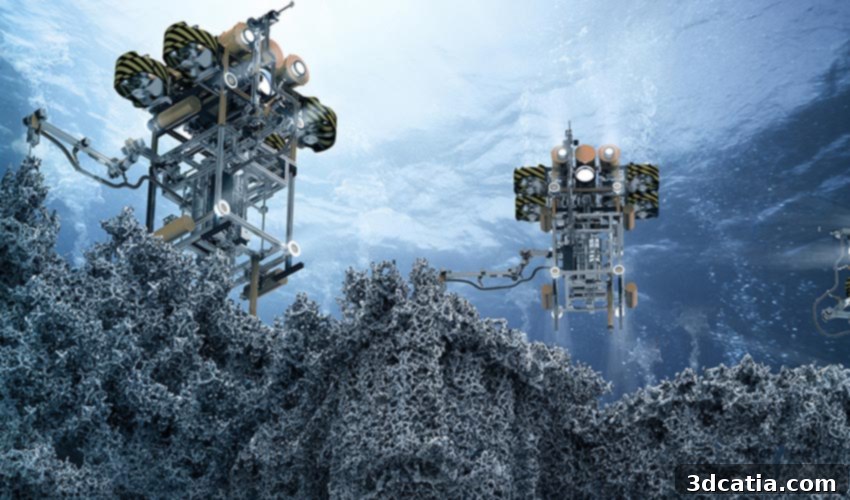
In an era marked by rapid population growth, escalating climate change impacts, and the pressing need for sustainable development, innovative solutions are more critical than ever. The groundbreaking “Break the Grid” initiative emerges as a beacon of such innovation, envisioning a future where advanced 3D printers are no longer confined to static industrial settings but are set free to autonomously crawl, swim, and fly. This ambitious project, a collaborative effort between Denmark’s visionary GXN Innovation (a subsidiary of the renowned 3XN architecture firm), Dansk AM Hub, and the innovative design studio MAP Architects, aims to fundamentally redefine how we approach urban development, social challenges, and environmental protection. At its core, the initiative seeks to rigorously study and develop how these mobile, autonomous 3D printing systems can offer dramatically cheaper, superior, and faster responses to some of humanity’s most critical global challenges.
Kasper Jensen, the visionary Founder of GXN, eloquently captures the transformative potential of this endeavor: “Freeing 3D printers to meet these challenges could be a revolution in the making. By enabling 3D printers to crawl, swim and fly, we can address environmental threats at lower costs and with greater efficiency.” This statement underscores the paradigm shift that “Break the Grid” promises – moving from traditional, labor-intensive, and often slow construction and maintenance methods to a future empowered by intelligent, self-sufficient additive manufacturing technologies. The goal is not just incremental improvement, but a radical rethinking of construction and repair, making it more responsive, precise, and environmentally conscious.
Autonomous 3D Printing to Change the Future of Construction
The research project meticulously explores several critical scenarios where the deployment of advanced additive manufacturing techniques, specifically through autonomous mobile units, could provide unparalleled solutions to pressing global issues. These scenarios represent a comprehensive approach to modern challenges, ranging from decaying infrastructure to vulnerable ecosystems and energy-inefficient buildings. The initiative posits that by leveraging the inherent flexibility and precision of 3D printing, coupled with robotic mobility and AI, we can tackle problems that have historically been deemed too complex, too costly, or too hazardous for conventional methods.
Revolutionizing Infrastructure Maintenance with Crawling 3D Printers
One of the most significant challenges facing nations worldwide is the pervasive issue of aging and deteriorating infrastructure. Roads, bridges, and essential utility networks often suffer from cumulative wear and tear, leading to costly repairs and potential safety hazards. The “Break the Grid” initiative specifically targets isolated road networks, which are particularly susceptible to neglect due to their remote locations and the prohibitive costs associated with manual maintenance. Small cracks, fissures, and potholes in asphalt, if left unattended, rapidly escalate into major structural failures, incurring immense repair expenses and causing significant disruption.
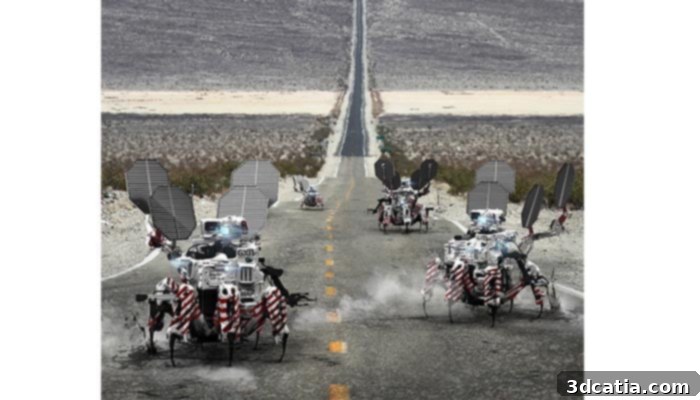
GXN’s proposed solution leverages autonomous crawling 3D printers to fundamentally change this reactive maintenance paradigm. Imagine a fleet of self-navigating robotic units equipped with advanced sensing technologies that continuously patrol road networks. These intelligent crawlers would be capable of scanning surfaces with millimeter-level precision, detecting nascent defects like hairline cracks long before they become visible to the human eye or develop into serious damage. Upon detection, these units would then autonomously deploy specialized additive manufacturing techniques to patch and reinforce the affected areas using durable, rapidly curing materials. This proactive, on-demand repair system offers numerous advantages:
- Cost-Efficiency: By addressing small defects early, the need for large-scale, expensive overhauls is drastically reduced.
- Increased Efficiency: Repairs can be conducted continuously, day and night, without human intervention, ensuring optimal road conditions.
- Enhanced Safety: Minimizes the need for human workers in hazardous traffic conditions.
- Extended Lifespan: Proactive maintenance significantly prolongs the operational life of infrastructure assets.
- Sustainability: Precise material deposition reduces waste compared to traditional patch-and-fill methods.
As GXN emphasizes on their website: “An autonomous system of crawling 3D printers could scan and patch small defects on isolated roads, solving the problem before it becomes unmanageable.” This vision points towards a future where infrastructure is not merely maintained, but intelligently cared for, ensuring longevity and optimal performance for future generations.
Credits: GNX
Safeguarding Coastal Habitats with Swimming 3D Printers
The next critical objective of the “Break the Grid” initiative focuses on protecting the planet’s invaluable coastal habitats, which are increasingly vulnerable to the escalating impacts of climate change. Rising sea levels, increased storm intensity, and ocean acidification threaten shorelines globally, affecting an estimated 600 million inhabitants who live in low-lying coastal areas. The degradation of coastal ecosystems – including coral reefs, mangrove forests, and seagrass beds – not only compromises biodiversity but also removes natural buffers against extreme weather events, leading to widespread social and economic damage.
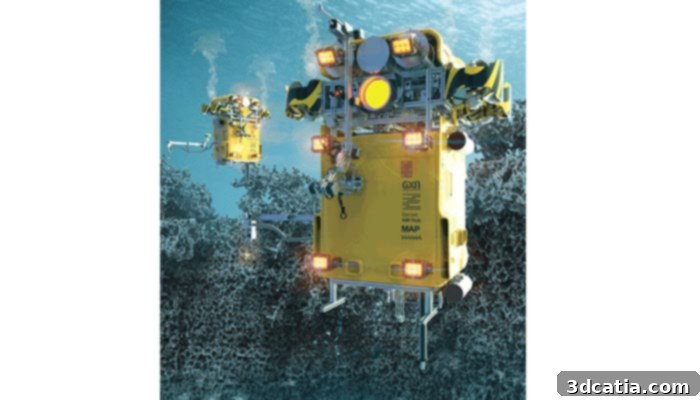
Traditional coastal protection methods often involve large-scale, intrusive engineering projects like seawalls or artificial nourishment, which can be environmentally disruptive and financially draining. The “Break the Grid” project proposes a radically different, more ecological approach: the deployment of autonomous swimming 3D printers. These aquatic robots would operate directly on the seafloor, addressing the root causes of coastal erosion and habitat loss before the problems manifest on inhabited shores. GXN elaborates: “New approaches to coastal protection can focus on the seafloor to set in where the problem forms before hitting our inhabited costs to cause large scale social and economic damage.”
The swimming 3D printers could be utilized for a variety of critical tasks, including:
- Building Artificial Reefs: Printing intricate, biologically compatible structures to encourage coral growth and provide habitat for marine life, thereby restoring damaged ecosystems.
- Seabed Reinforcement: Precisely depositing materials to stabilize vulnerable seabeds and prevent erosion, creating natural barriers against wave action.
- Sediment Management: Constructing localized structures to guide natural sediment deposition, helping to rebuild degraded shorelines.
- Monitoring and Repair: Continuously monitoring underwater conditions and autonomously repairing or reinforcing protective structures as needed.
This innovative approach offers a sustainable, less intrusive, and highly adaptable method for coastal defense, working in harmony with natural processes rather than against them. By focusing on the “prevention” rather than “cure” at the source of the problem, autonomous underwater 3D printing could offer a dynamic and environmentally sound strategy to safeguard our vital coastlines and the communities that depend on them.
Credits: GNX
Optimizing Urban Energy Performance with Flying 3D Printers
The final pillar of the “Break the Grid” initiative addresses the challenge of aging urban structures, particularly high-rise buildings, which often suffer from significant energy and economic losses due to inefficient facades and degradation. Many of the world’s towering structures, while iconic, are not aging gracefully. Their thermal envelopes can become compromised over time, leading to vast amounts of wasted energy through heating and cooling losses, contributing significantly to urban carbon footprints and operational costs for building owners. Traditional retrofitting processes for such buildings are inherently complex, expensive, disruptive, and often hazardous, requiring extensive scaffolding and manual labor.
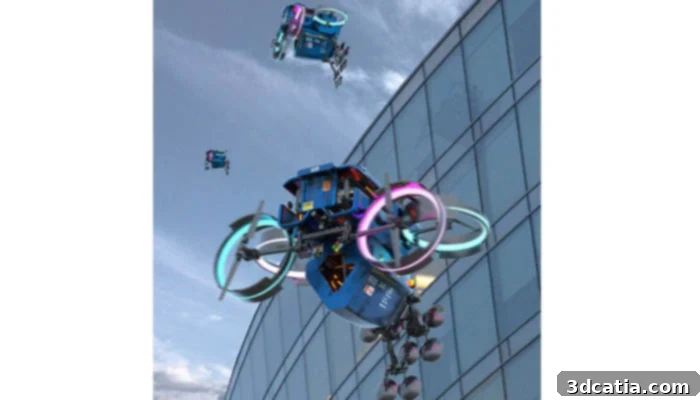
To combat this, the project envisions the deployment of autonomous flying 3D printers. These drone-based additive manufacturing systems represent a revolutionary approach to building maintenance and energy efficiency upgrades. Equipped with an array of advanced sensors – including thermal cameras, LiDAR scanners, and high-resolution visual cameras – these flying robots could conduct comprehensive, non-invasive analyses of building facades. This would allow for an incredibly detailed and precise assessment of their energy performance, identifying thermal bridges, insulation gaps, and material degradation with unprecedented accuracy.
Once problematic areas are identified, the flying 3D printers could then autonomously apply targeted material solutions. This could involve printing new insulating layers, sealing cracks and gaps, or even applying specialized coatings to enhance thermal reflectivity or absorption, all tailored to the specific needs of each section of the facade. As GXN suggests, “A better analysis of the energy performance of the facades on these high-rises would allow for efficient material solutions on a case by case basis, with much lower investment requirements and minimal human interaction.” The benefits of this aerial approach are multifaceted:
- Enhanced Energy Efficiency: Dramatically reduces heat loss and gain, lowering energy consumption and operational costs.
- Reduced Investment: Targeted repairs avoid the need for costly, full-building overhauls.
- Minimal Disruption: Operations can be conducted with little to no impact on building occupants or pedestrian traffic.
- Improved Safety: Eliminates the risks associated with human workers at great heights.
- Precision and Customization: Each repair is precisely tailored to the specific defect and material requirements.
- Rapid Deployment: Drones can quickly access hard-to-reach areas and complete tasks efficiently.
By embracing flying 3D printers, cities can move towards smarter, more sustainable, and economically viable management of their valuable high-rise assets, transforming existing buildings into energy-efficient, future-ready structures.
Credits: GNX
The Technology and Vision Behind Mobile Additive Manufacturing
The “Break the Grid” initiative is not merely a conceptual exercise; it is grounded in practical experimentation and technological foresight. The collaborative team has already embarked on creating mobile mechanical prototypes of these autonomous 3D printers, leveraging a sophisticated integration of existing sensing and printing technologies. This foundational work involves adapting and combining off-the-shelf components with custom-designed robotics to achieve mobility on land, underwater, and in the air.
Crucially, the development process involved extensive exploration of “virtual hacks” – simulating different scenarios and technical challenges in a digital environment. This iterative process of virtual prototyping allowed the team to refine designs, test operational parameters, and identify optimal strategies for autonomous mobile 3D printing across diverse environments. This synergy between physical prototyping and advanced simulation is key to overcoming the inherent complexities of making additive manufacturing truly mobile and intelligent.
Mads Kjøller Damkjær, CEO of The Danish AM Hub Fund, articulates the broader vision: “Converging technologies are enabling new approaches to construction. We hope to inspire the additive manufacturing industry to envision new possibilities, which will require combining design and technology to shift our values and our current ways of thinking.” This statement highlights the interdisciplinary nature of the project, emphasizing that the future of construction lies at the intersection of robotics, artificial intelligence, advanced material science, and innovative design. The initiative serves as a powerful call to action for the entire additive manufacturing industry to push the boundaries of what is currently perceived as possible, fostering a mindset where design and technology are seamlessly integrated to create sustainable, resilient, and adaptive solutions for a rapidly changing world.
The “Break the Grid” initiative thus stands as a testament to human ingenuity in addressing complex global challenges. By conceptualizing and developing 3D printers that can crawl, swim, and fly, the project paves the way for a future where maintenance, repair, and construction are conducted with unparalleled efficiency, minimal environmental impact, and significantly reduced human risk. This autonomous approach promises to unlock new potentials for urban resilience, ecological restoration, and a more sustainable global infrastructure, fundamentally transforming our built and natural environments.
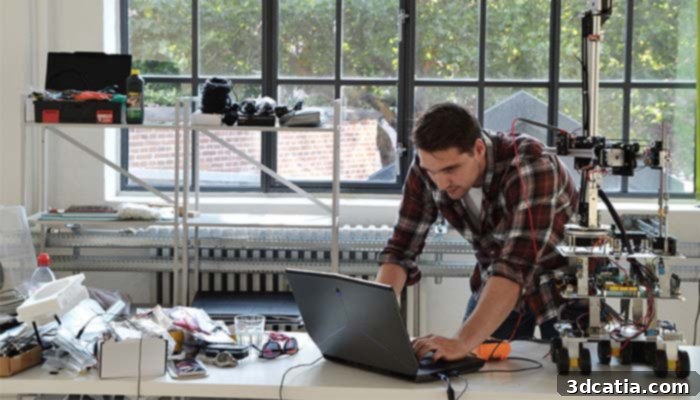
Autonomous additive manufacturing could become crucial to respond to global challenges | Credits: GXN
What are your thoughts on this groundbreaking initiative and the future of autonomous 3D printing in addressing global challenges? Share your insights and join the discussion in the comments below or on our Facebook and Twitter pages! For all the latest news and innovations in the world of 3D printing, remember to sign up for our free weekly Newsletter, delivered straight to your inbox.