
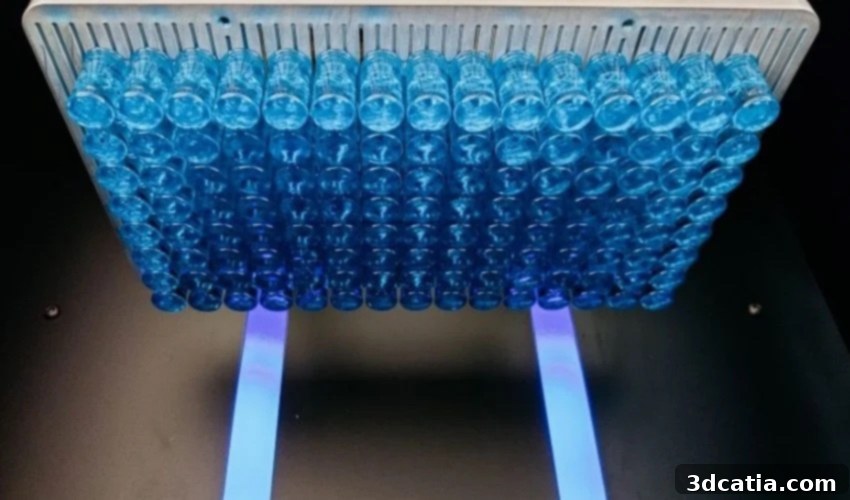
Nexa3D and Addifab Revolutionize Tooling with Freeform Injection Molding: A New Era for High-Performance Manufacturing
The manufacturing landscape is continuously evolving, driven by innovative technologies that promise greater efficiency, design freedom, and speed. In the realm of tooling, a critical sector underpinning countless industries, additive manufacturing (AM) has emerged as a powerful disruptor. Several initiatives have been launched to promote the integration of 3D printing into tooling, and a significant new development is poised to accelerate this trend even further. Industrial 3D printer manufacturer Nexa3D, a California-based leader in ultrafast polymer 3D printing, has announced a strategic partnership with Addifab, a recognized pioneer in 3D printing solutions for the tooling industry. This collaboration introduces the groundbreaking Freeform Injection Molding (FIM) platform, a transformative solution first unveiled in 2019, designed to empower professionals worldwide to produce molds of virtually any size using Nexa3D’s high-performance NXE 400 systems. Through this strategic alliance, Nexa3D and Addifab aim to provide diverse industries with an incredibly effective answer to the long-standing challenges faced within the tooling sector, paving the way for unprecedented agility and innovation.
Nexa3D is renowned for its ultrafast polymer 3D printers, which leverage Lubricant Sublayer Photo-curing (LSPc) technology to deliver superior speed, accuracy, and material versatility, making them ideal for high-volume production and industrial applications. Addifab, on the other hand, specializes in innovative 3D printing techniques for tooling, particularly focusing on methods that simplify and accelerate the mold-making process. Their combined expertise brings to the market a platform that is not merely an incremental improvement but a fundamental shift in how injection molds are designed, produced, and utilized.
The Freeform Injection Molding (FIM) Platform: A Paradigm Shift in Tooling
The FIM platform is meticulously engineered to industrialize and significantly enhance existing tooling production processes, thereby opening up novel opportunities for manufacturers. Lasse Staal, CEO and co-founder of Addifab, eloquently articulated the vision behind Freeform Injection Molding in the official press release, highlighting its profound benefits: “Injection molding is inherently a complex process, and the construction of the tool itself represents the most intricate and time-consuming part. With Freeform Injection Molding, our goal is to furnish injection molders with a comprehensive and fully transparent suite of tools – no pun intended – that will enable them to drastically accelerate tool designs and validation cycles, while simultaneously elevating the benchmark for tool innovation. Our partnership with Nexa3D now allows us to take these capabilities to an entirely new level, broadening access to this revolutionary technology and supercharging its performance for a wider range of industrial applications.” This statement underscores the platform’s core objective: to demystify and streamline the most challenging aspect of injection molding, fostering an environment where innovation can truly thrive.
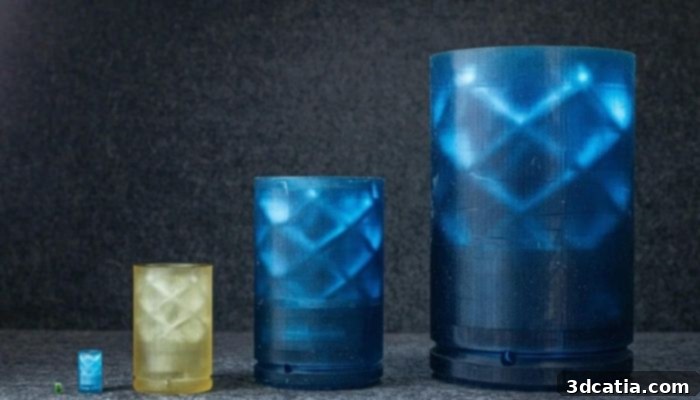
Photo Credits: Nexa3D
Unlocking Unprecedented Advantages with FIM Technology
The Freeform Injection Molding platform offers a multitude of compelling advantages that are set to redefine rapid tooling and product development cycles. These benefits stem from FIM’s unique ability to integrate additive manufacturing capabilities directly into the mold-making process, circumventing many of the limitations associated with traditional methods.
Accelerated Time-to-Market and Production Speed
One of the most significant advantages touted by the project’s innovators is the dramatic reduction in mold production time. With FIM, users can manufacture highly functional molds in mere hours, a stark contrast to the several weeks typically required for conventional machining processes. This monumental speed improvement means that manufacturers can transition from design concept to the production stage of parts significantly faster. For industries where rapid iteration and quick market entry are crucial—such as consumer electronics, medical devices, and automotive prototyping—this translates directly into a substantial competitive edge. Companies can test designs, make adjustments, and begin producing final parts at an unprecedented pace, shrinking product development timelines and responding more dynamically to market demands.
Designing for Complexity: Beyond Traditional Limitations
Another critical benefit of the FIM solution is its unparalleled capability to facilitate the design and production of molds featuring complex geometries. These intricate designs are often impossible or prohibitively expensive to achieve using conventional subtractive manufacturing techniques like CNC machining. Additive manufacturing, at the heart of FIM, liberates designers from traditional manufacturing constraints, enabling them to create molds with features such as conformal cooling channels. These channels follow the exact contours of the molded part, allowing for more uniform cooling, which in turn leads to improved part quality, reduced cycle times, and minimized warping or defects. Furthermore, FIM can produce molds with lightweighting structures, optimized gate designs, and integrated sensors, all of which contribute to superior part performance and manufacturing efficiency.
Material Versatility for Diverse Applications
The FIM platform also boasts broad compatibility with a wide array of thermoplastics, including many high-performance engineering plastics. This versatility is crucial for industries that require specific material properties for their end products, whether it’s high strength, chemical resistance, thermal stability, or biocompatibility. By being compatible with the majority of thermoplastics used in injection molding, FIM ensures that manufacturers are not limited in their material choices, enabling them to produce prototypes or short-run production parts using the same materials as their final mass-produced components. This ensures accurate validation and predictable performance, closing the gap between prototype and final product.
Cost-Efficiency and Reduced Waste
While implicitly linked to speed and design freedom, the cost-effectiveness of FIM deserves explicit mention. By significantly shortening lead times for mold production and reducing the need for costly manual interventions or complex multi-axis machining, FIM drives down overall tooling costs. Furthermore, the ability to rapidly iterate on mold designs digitally before physical production minimizes material waste associated with failed tooling attempts. For short-run production or bridge tooling, where traditional steel molds would be economically unfeasible, FIM offers a cost-effective alternative that maintains high part quality.
The Synergy of Additive Manufacturing and Injection Molding
This innovative approach—the marriage of additive manufacturing (3D printing) and injection molding—is a methodology that has been rapidly gaining traction and popularity across various manufacturing sectors in recent years. For a long time, additive manufacturing and injection molding were often positioned as “rivals,” with discussions focusing on which technology would ultimately dominate. However, a clearer understanding has emerged: by intelligently combining the strengths of both, manufacturers can truly achieve the best of both worlds. 3D printing offers unparalleled flexibility, enabling users to create more complex molds faster and at a lower cost, especially for prototyping, short production runs, or molds with intricate internal features. When these advanced 3D printed molds are then utilized in the established process of injection molding, manufacturers simultaneously acquire the inherent benefits of traditional injection molding technology, most notably its incredible efficiency and cost-effectiveness when it comes to large-series production. This logical synergy is precisely what has driven the development of this powerful joint solution from Nexa3D and Addifab, aiming to bridge the gap between rapid prototyping and mass manufacturing.
Driving Industry Innovation and Accessibility
The collaboration between Nexa3D and Addifab, and the resulting FIM platform, represents a significant leap forward in making advanced tooling accessible to a broader market. Carsten Jarfelt, Addifab US sales manager, expressed immense enthusiasm for the partnership: “I am truly excited to take this important next step with the team members from Nexa3D. The comprehensive packages we are offering to injection molders are truly outstanding, and we eagerly look forward to connecting with innovators and thought leaders not just in the US, but globally.” This enthusiasm reflects the tangible benefits that FIM brings to the table – not just as a technological advancement but as a practical, scalable solution for industrial users. The strategic decision to market the FIM solution through Nexa3D’s extensive global reseller network ensures that this revolutionary technology will reach a wide audience of manufacturers eager to optimize their tooling processes.
For those keen to witness the Freeform Injection Molding solution in action firsthand, Nexa3D and Addifab are scheduled to showcase it at the RAPID+ TCT conference, a premier event in the additive manufacturing industry, held in Detroit. This provides an excellent opportunity for industry professionals, engineers, and potential adopters to see the platform’s capabilities and understand its transformative potential. Further detailed information regarding this groundbreaking partnership and the FIM platform is readily available in the official press release, which can be accessed HERE.
Engage and Learn More About Freeform Injection Molding
What are your thoughts on the innovative Freeform Injection Molding solution developed through the partnership between Nexa3D and Addifab? We invite you to share your perspectives, questions, or predictions regarding its impact on the future of tooling and manufacturing. Let us know what you think in a comment below! You can also engage with our community and stay updated by following us on our LinkedIn, Facebook, and Twitter pages. Don’t miss out on the latest advancements and news in the dynamic world of 3D printing; sign up for our free weekly Newsletter here to receive updates directly in your inbox. Additionally, explore a wealth of educational and informative content, including all our video features, on our dedicated YouTube channel. Join the conversation and become part of the future of digital manufacturing!
*Cover Photo Credits: Nexa3D