
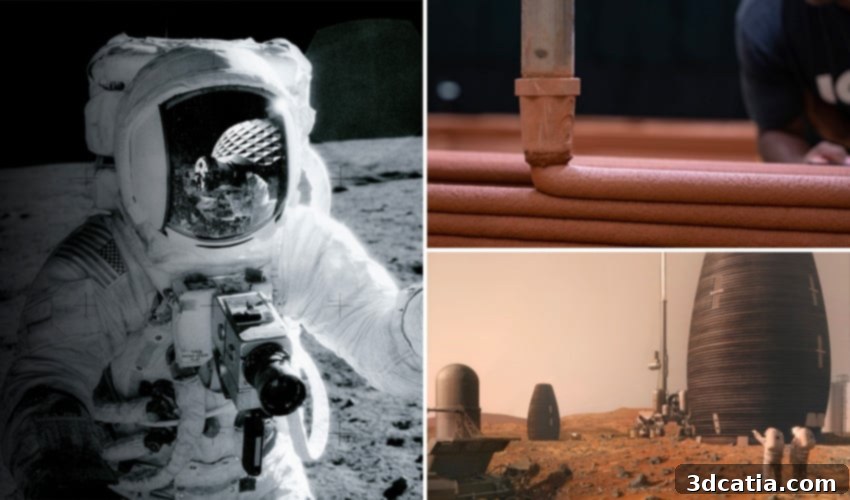
3D Printing the Future: How Additive Manufacturing is Paving the Way for Space Colonization
The echoes of the 20th-century Space Race, a monumental rivalry between the Soviet Union and the United States, have long faded into history. Yet, today, a new and even more ambitious cosmic endeavor is unfolding, sparking a fresh Space Race. This contemporary quest unites scientists, engineers, and visionaries from around the globe in a shared pursuit: to enable humanity to live beyond Earth. Among the multifaceted goals, colonizing other planets and making them habitable for human life stands paramount. To transform this audacious vision into reality, advanced technologies are being rigorously explored, and at the forefront of this innovation is additive manufacturing, more commonly known as 3D printing. Its unparalleled adaptability, cost-effectiveness, and crucial ability to utilize local, extraterrestrial materials position it as a game-changer for space colonization. This article delves into the transformative ways 3D printing is making it possible for humans to establish a sustained presence on the Moon, Mars, and potentially even further into our Solar System.
ICON and NASA Pioneer 3D Printed Surface Habitats for Mars
As humanity inches closer to deep-space exploration, the need for reliable, self-sufficient infrastructure on other celestial bodies becomes increasingly apparent. NASA, recognizing the immense potential of 3D printing in this domain, has partnered with ICON, a renowned construction technology company specializing in large-scale additive manufacturing. This collaboration aims to revolutionize the way future space habitats are conceived and constructed. Their latest groundbreaking project involves the 3D printing of a simulated Mars Surface Habitat, a venture undertaken in partnership with the acclaimed architecture firm BIG-Bjarke Ingels Group. This will be the first structure of its kind, designed to provide invaluable insights into the feasibility and challenges of building on another planet.
Christened MARS DUNE ALPHA, this impressive 1,700-square-foot structure is engineered to replicate the conditions of a Martian habitat for NASA’s comprehensive one-year Mars mission analog study. This long-duration simulation will allow researchers to evaluate the habitat’s structural integrity, operational efficiency, and ergonomic suitability for astronauts. By studying human performance and health in an isolated, Mars-like environment, critical data will be gathered to inform the design of actual extraterrestrial settlements. Upon its completion, the 3D-printed model will be meticulously delivered to NASA’s Johnson Space Center in Houston, Texas, where it will serve as a crucial testbed for future Martian expeditions. ICON’s innovative approach highlights how terrestrial construction expertise can be adapted and scaled for the unique demands of space, leveraging local materials to minimize the prohibitive costs and logistical complexities of transporting building materials from Earth.
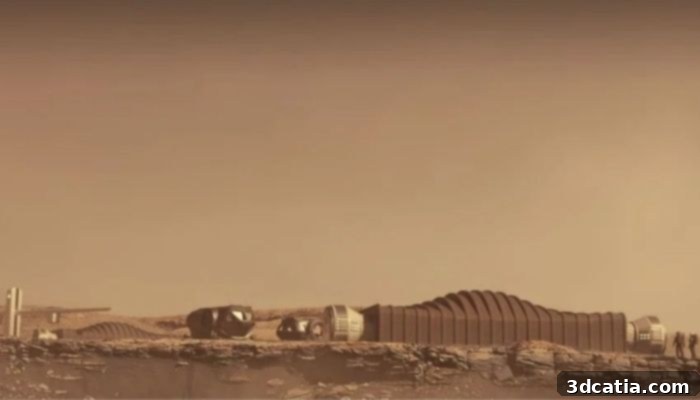
Photo Credits: ICON
Imagining Life on Mars Through 3D Printing: The Habitat Challenge
The dream of inhabiting Mars has fueled numerous scientific and technological endeavors. Since 2014, NASA has been actively nurturing this vision through its “3D-Printed Habitat Challenge,” a prestigious competition designed to spur innovation in creating deployable and sustainable extraterrestrial living structures. The challenge encourages participants to imagine and develop structures that could be 3D printed directly in space, or on planetary surfaces, to support human life on planets beyond Earth. One of the most notable and award-winning projects to emerge from this challenge is MARSHA, conceived by the American company AI Spacefactory.
MARSHA represents a revolutionary concept for 3D-printed houses on Mars. These striking, cone-shaped structures, each spanning 34 square meters, are designed with the Martian environment in mind. A core principle of the MARSHA project is its reliance on *in-situ resource utilization (ISRU)*, meaning the habitats would be constructed primarily from resources found directly on the Red Planet. This approach dramatically reduces the logistical and financial burdens associated with transporting building materials from Earth, a critical factor for long-term space colonization. Furthermore, MARSHA incorporates a sophisticated double-shell system. This ingenious design provides critical insulation, shielding the habitable interior spaces from the extreme structural stresses and dramatic temperature fluctuations characteristic of the Martian environment. By minimizing thermal expansion and contraction, the double-shell ensures the long-term integrity and safety of the habitat, making sustained human presence on Mars a more tangible prospect.
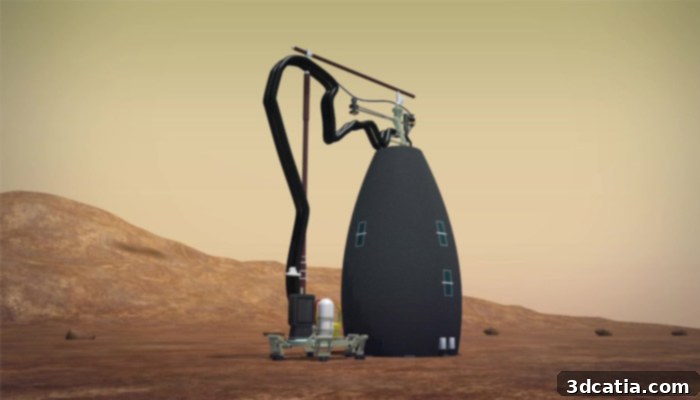
Photo Credits: AI Spacefactory
3D Printed Spacesuits: Custom Gear for Colonizing the Red Planet
The journey to Mars is only one piece of the puzzle; ensuring human survival once we arrive is equally, if not more, critical. The harsh, unforgiving environment of Mars — characterized by a thin atmosphere, extreme temperatures, and pervasive radiation — necessitates highly specialized protection. Recognising this, leading space agencies like NASA and the European Space Agency (ESA) are heavily invested in developing next-generation spacesuits. Additive manufacturing is proving to be a pivotal technology in this area, offering unprecedented levels of customization and efficiency.
The now-defunct Mars One company, founded in 2011 with the ambitious goal of establishing a permanent human settlement on Mars, made significant strides in spacesuit development using 3D technologies. Through the integration of digitalization and advanced additive manufacturing techniques, the company developed a spacesuit concept that could be perfectly adapted to the individual morphology of each astronaut. This personalized fit is crucial for maximizing comfort, mobility, and most importantly, ensuring the astronaut’s survival and operational effectiveness on Mars. Traditional spacesuits are often generic and require extensive modifications, leading to compromises in fit and function. 3D printing allows for precise, on-demand fabrication of components, enabling suits to be tailored to an astronaut’s exact body measurements, enhancing their ability to perform complex tasks, and significantly reducing the risk of injuries or discomfort during prolonged missions. While Mars One’s ambitious mission did not materialize, their work on 3D printed spacesuits laid an important conceptual groundwork for future personalized protective gear for deep space explorers.
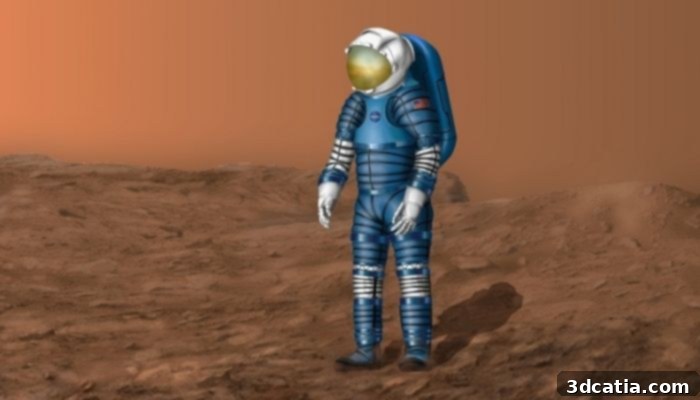
Photo Credits: Mars One
Zebro Robots: Autonomous 3D Printing to Pave the Way for Martian Habitats
Beyond static habitats, another innovative application of 3D printing for Martian colonization involves intelligent robotics. Researchers at Delft University of Technology have unveiled an ingenious method leveraging additive manufacturing and autonomous robots to construct subterranean structures on Mars. Their creation, known as the Delft’s Zebro Swarm Robots, represents a modular and highly adaptable solution for extraterrestrial construction.
These sophisticated Zebro robots are specifically designed to excavate subterranean living spaces on the Red Planet. This strategy offers significant advantages over surface habitats, primarily by providing natural shielding against the intense solar and cosmic radiation that bombards the Martian surface, as well as mitigating the dramatic temperature swings between day and night. Once the excavation is complete, the robots employ 3D printing technology to solidify the walls of these underground tunnels and chambers using Martian regolith, the loose surface material found on Mars. This ingenious integration of excavation and additive manufacturing allows for the creation of robust, radiation-protected environments without needing to transport heavy building materials from Earth.
Functioning as autonomous swarms, similar to how ants collectively build complex colonies, the Zebro robots communicate with each other, divide tasks, and coordinate their digging and printing operations. This decentralized, cooperative approach enhances efficiency, fault tolerance, and scalability. The scientists envision subterranean living as a far more suitable and safer option for humans on Mars, given the protection it offers from harsh environmental factors. The European Space Agency (ESA) has recognized the profound importance and innovative potential of this project, awarding the Delft team a substantial grant to further develop and refine their robotic construction system. This initiative underscores the critical role that robotics and advanced manufacturing will play in building the foundational infrastructure for future human outposts.
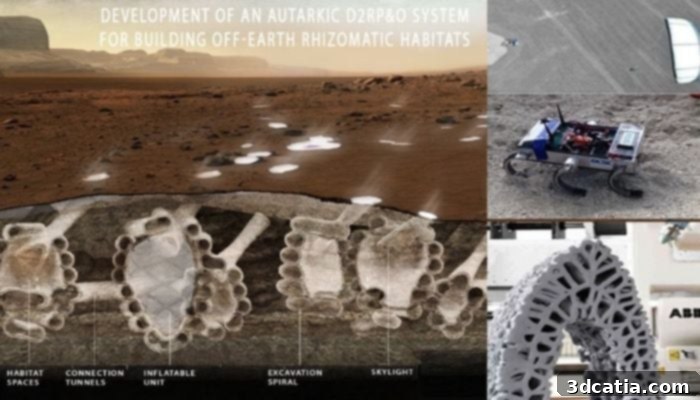
Luyten and the Vision for 3D Printing Structures on the Moon
While Mars captures much of the imagination for future human settlement, the Moon remains a primary and strategic target for initial colonization efforts. Companies like Luyten are at the forefront of developing additive manufacturing solutions specifically tailored for lunar exploration and habitation. As part of their ambitious “Meeka project,” the Australian 3D printer manufacturer has forged a crucial collaboration with the University of New South Wales (UNSW) to push the boundaries of lunar construction.
The central goal of the Meeka project is to leverage Luyten’s specialized Platypus Galacticus 3D printer to construct robust and sustainable structures directly on the lunar surface. This innovative printer is designed to utilize lunar regolith – the pulverized rock and dust that blankets the Moon – as its primary building material. This approach is fundamental to the concept of *in-situ resource utilization* (ISRU), significantly reducing the colossal cost and logistical complexity of transporting building materials from Earth. Luyten aims to demonstrate the capability to construct substantial structures, envisioning buildings up to 12 meters long and 9 meters high, providing ample space for habitats, laboratories, or storage facilities.
To ensure the success of these construction endeavors, Luyten plans to deploy a fleet of autonomous rovers that will accompany the Platypus Galacticus printer. These advanced rovers will serve multiple critical functions: some will be tasked with meticulously assessing potential buildable areas, identifying optimal locations free from undue hazards and with favorable terrain. Others will be dedicated to efficiently collecting and processing vast quantities of lunar regolith, preparing it for the 3D printing process. This integrated system of autonomous printers and support rovers exemplifies the comprehensive, technologically advanced approach required to establish a sustainable human presence on the Moon, laying the groundwork for further deep-space exploration.
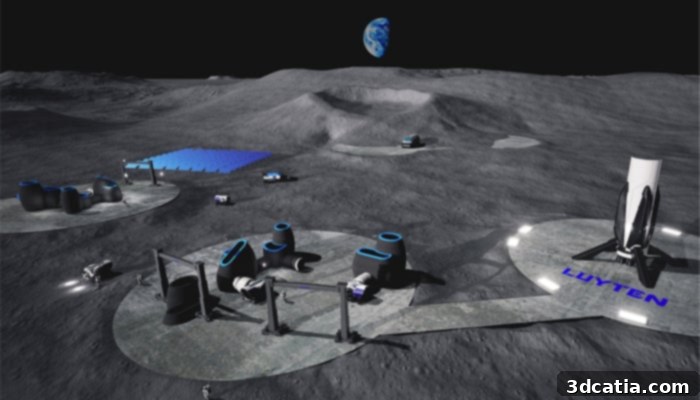
Photo Credits: Luyten
The Frontier of Healthcare: 3D Bioprinting in Space
Life in the microgravity environment of space poses unique physiological challenges for astronauts. Prolonged exposure leads to significant bone density loss and muscle atrophy, among other health concerns. Addressing these medical realities is crucial for long-duration missions and future space colonization. Recognizing this imperative, ESA researchers have embarked on pioneering 3D bioprinting projects aimed at developing on-demand biological materials, such as skin and bone samples, directly in space.
A critical aspect of this research involves demonstrating the feasibility of bioprinting under microgravity conditions. Researchers have successfully conducted printing processes in a reverse configuration to simulate and prove that the technology can be adapted for the unique physics of space. The implications of having a functional 3D bioprinter on future space missions are profound. Imagine a scenario where astronauts could respond to medical emergencies – for instance, printing new skin grafts in the event of severe burns, or even generating bone tissue to aid in fracture repair. This capability would drastically reduce dependence on Earth-based medical supplies and specialists, transforming the paradigm of emergency healthcare in deep space.
In ESA’s specific experiments, several skin and bone samples were successfully 3D printed using a sophisticated bio-ink formulation comprising plasma, methyl cellulose, and alginate. Plasma, a component of human blood, provides essential nutrients and growth factors, while methyl cellulose and alginate act as structural scaffolds. These proof-of-concept demonstrations are vital steps toward establishing a sustainable, autonomous medical capability for astronauts, ensuring their health and safety as humanity ventures further into the cosmos. This groundbreaking work could not only revolutionize space medicine but also have significant ripple effects for medical advancements on Earth, particularly in regenerative medicine and personalized treatments.
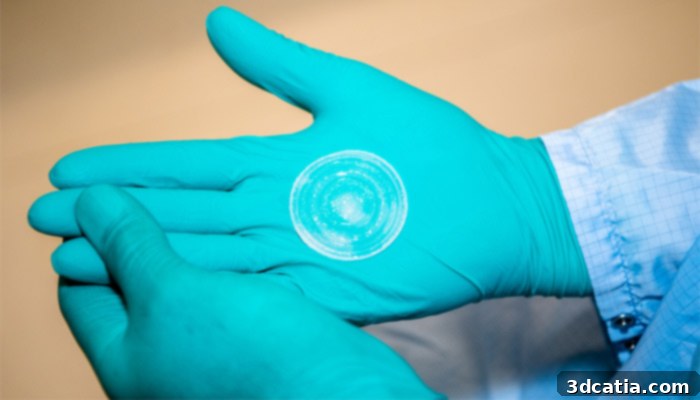
Sample printed with human skin cells using human blood plasma as a nutrient-rich bio-ink (photo credits: ESA – SJM Photography)
Moon Village: The International Vision for a 3D Printed Lunar Base
The versatility of 3D printing technology is truly staggering, capable of fabricating everything from intricate automotive parts to entire residential structures and even biological organs. Recognizing this immense potential, the European Space Agency (ESA) is championing one of the most ambitious projects in space exploration: the “Moon Village.” This groundbreaking initiative envisions a permanent, international lunar base, constructed primarily through additive manufacturing. ESA is not alone in this endeavor; it has forged partnerships with formidable space powers like Russia and China, underscoring the collaborative spirit of this new Space Race.
A cornerstone of the Moon Village concept is the ingenious plan to utilize lunar materials as the primary building blocks. The sheer cost and logistical nightmare of transporting all necessary construction materials from Earth make traditional building methods economically unfeasible for a large-scale lunar base. Instead, scientists and engineers propose harvesting and processing lunar regolith – the ubiquitous Moon dust – to serve as raw material for advanced 3D printers. For several years, experts in additive manufacturing and the global space industry have been meticulously studying the technical feasibility and operational challenges of this project. Early assessments have been overwhelmingly positive, indicating that the vision of a 3D-printed lunar base is not just a dream, but a realistically achievable goal.
The Moon Village is conceived not just as a single habitat, but as a modular, expandable complex that could host scientific research, resource extraction, and even space tourism in the long term. Its development would represent a critical step towards establishing a multi-planetary civilization, acting as a proving ground for technologies and strategies vital for future missions to Mars and beyond. The international cooperation inherent in this project also symbolizes a new era of space exploration, where shared challenges lead to shared successes, paving the way for humanity’s permanent presence off-world.
The Moonrise Project: Pioneering 3D Printing with Lunar Regolith
Further validating the potential of lunar regolith as a construction material, a team of pioneering researchers from the Technical University of Braunschweig and the Laser Zentrum Hannover (LZH) achieved a significant milestone in January 2021. For the very first time, they successfully demonstrated the 3D printing of simulated lunar regolith, a crucial step towards building on the Moon. This groundbreaking experiment, aptly named “Moonrise,” involved an intricate process designed to replicate future lunar operations.
To execute the experiment, the scientists equipped a lunar rover prototype with a powerful laser system. This laser was then used to precisely melt simulated lunar materials, effectively fusing particles together to form a solidified structure, thereby demonstrating the direct processing of regolith. Once this initial melting and consolidation step was completed, the researchers utilized the IRAS MIRA3D rover, a highly specialized lunar vehicle specifically engineered for additive manufacturing in extraterrestrial environments. This advanced rover is capable of depositing and shaping the processed regolith into complex geometries.
The team behind the Moonrise project confidently announced their ability to design and fabricate objects directly from regolith using this innovative system. This achievement represents a monumental “first” in the realm of space construction. It not only proves the viability of using local lunar resources for construction but also opens up an entirely new field of possibilities for building and maintaining infrastructure on the Moon. From creating habitats and landing pads to fabricating tools and spare parts, the Moonrise project demonstrates a critical pathway towards reducing reliance on Earth-based supply chains, accelerating the establishment of a sustainable human presence on our closest celestial neighbor.
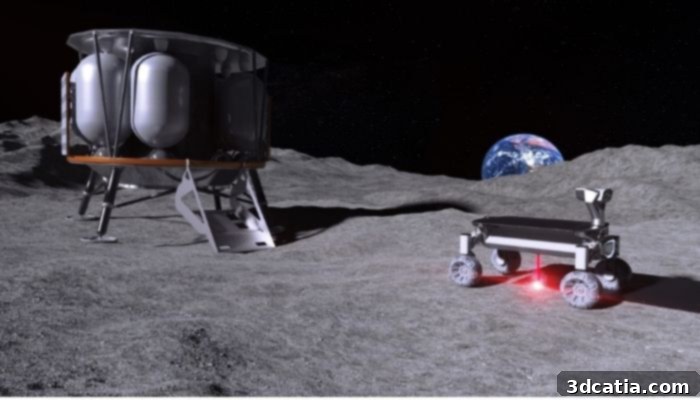
Photo Credits: LZH
3D Printed Bio-Adhesive Bandaids: Advancing On-Orbit Medical Care
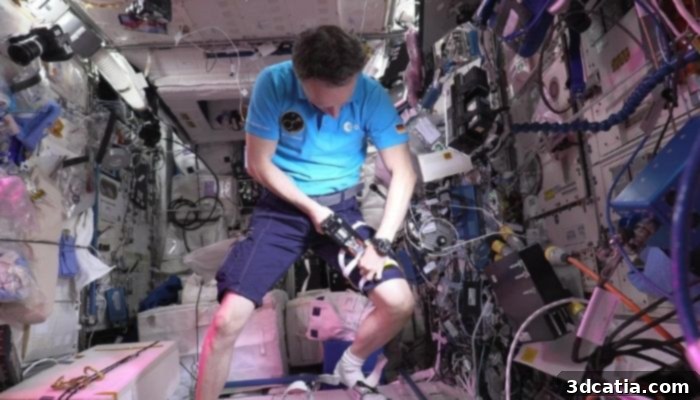
Medical capabilities in space are paramount for astronaut safety and mission success, especially as missions extend further from Earth. During the “Cosmic Kiss” space mission, German Astronaut Matthias Maurer conducted a groundbreaking test aboard the International Space Station (ISS) – evaluating the efficacy of bioprinted adhesive plasters in microgravity. These innovative plaster strips, known as “Bioprint FirstAid,” are designed with a critical objective: to simplify future medical first aid in remote, desolate areas or under extreme conditions, both in space and on Earth.
The Bioprint FirstAid system utilizes a compact, hand-held mechanical bioprinter. This device is applied directly to the desired area on the skin, where it immediately prints a plaster-like strip using a specialized bio-ink. This unique ink contains biomaterials that can conform to the wound, promote healing, and provide immediate protection. The simplicity of handling and the printer’s compact form factor make it an ideal solution for environments where traditional medical supplies are limited or difficult to deploy. Scientists envision its future application not only in complex environments like space or the Arctic region but also in terrestrial doctors’ practices, offering rapid and personalized wound care. This technology represents a significant leap forward in autonomous medical care for astronauts, reducing the need for extensive medical training and complex procedures, and enhancing the overall safety and self-sufficiency of long-duration space missions.
The LavaHive Project: Inflatable Habitats Reinforced by Lunar 3D Printing
In March 2015, NASA’s “3D Printed Habitat Challenge” brought forth a multitude of innovative designs for off-world habitation. Among the 160 compelling entries, one project particularly captivated the jury: LavaHive. Developed collaboratively by members of the European Astronaut Centre and the Austrian group Liquifer Systems, LavaHive presented a truly novel approach to lunar and Martian habitats, blending the advantages of inflatable structures with the robustness of additive manufacturing.
Echoing the principles seen in the Moonrise project, the core idea behind LavaHive was to ingeniously harness regolith – the local lunar or Martian soil – as the primary material for 3D printing structural elements. This not only championed the crucial concept of *in-situ resource utilization* but also offered a pragmatic solution to the logistical challenges of space construction. Specifically, the LavaHive concept centers around an inflatable habitat, which, upon deployment, would be reinforced with external walls 3D printed directly from the lunar or Martian material. This hybrid approach allows for a lightweight, compactly packed structure during transit, which then expands to create a spacious interior, subsequently protected by a robust, locally sourced shield.
To achieve a sufficiently large and functional living space, this central inflatable zone is designed to connect to three sub-habitats via a series of tunnels, all of which are also envisioned to be 3D printed. This modular and expandable design provides flexibility for different mission requirements and allows for future growth of the base. The combination of inflatable technology for speed and volume, coupled with 3D printed regolith for protection and structural integrity, positions LavaHive as a highly promising and resource-efficient solution for establishing durable, comfortable, and safe human outposts on other planets.
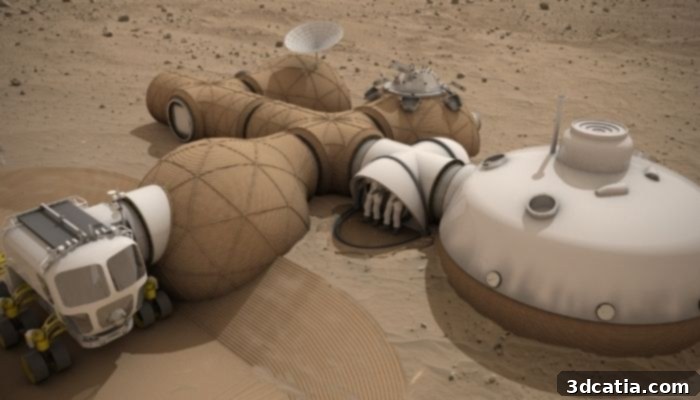
Photo Credits: LavaHive
The boundless potential of 3D printing in the burgeoning era of space colonization is undeniable. From fabricating resilient habitats on Mars and the Moon using extraterrestrial dust to creating personalized spacesuits and even bioprinting vital tissues for astronaut health, additive manufacturing is proving to be an indispensable tool. It minimizes Earth-dependency, reduces launch mass, and enables on-demand fabrication in the harsh environments of space, accelerating humanity’s journey to becoming a multi-planetary species. As these innovative projects continue to advance, the dream of living and thriving beyond Earth rapidly moves closer to becoming a tangible reality.
What are your thoughts on the revolutionary role of 3D printing in colonizing space? We’d love to hear your insights! Let us know in a comment below or join the conversation on our LinkedIn, Facebook, and Twitter pages. Don’t forget to sign up for our free weekly Newsletter here for the latest 3D printing news delivered straight to your inbox! You can also find all our videos on our YouTube channel.