
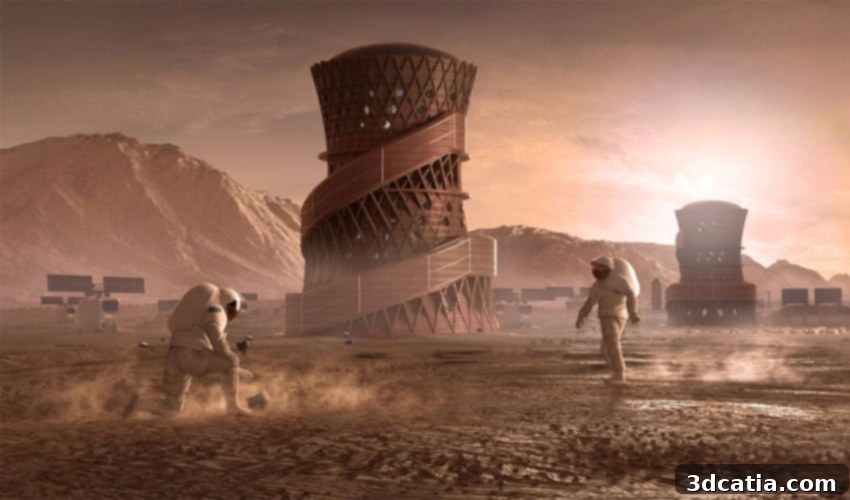
The Final Frontier: How 3D Printing is Revolutionizing Space Exploration and Enabling Our Cosmic Future
Humanity’s inherent curiosity has driven an unwavering fascination with space exploration since the dawn of the 20th century. The quest to understand the cosmos and unlock the mysteries beyond Earth has been spearheaded by prominent agencies such as NASA and the European Space Agency (ESA). In recent decades, a revolutionary technology has emerged as a critical enabler in this ambitious endeavor: 3D printing, also known as additive manufacturing. This innovative design and production technique has rapidly gained traction across various industries, particularly within the aerospace sector, due to its unparalleled ability to create intricate, complex geometries with remarkable speed and cost-efficiency. From lightweight satellite components and robust spacesuit elements to high-performance rocket engine parts, 3D printing is fundamentally transforming how we conceptualize, design, and manufacture for space. Industry reports underscore this paradigm shift; SmarTech estimates that the market value of additive manufacturing in the private space sector alone is projected to soar to an impressive €2.1 billion by 2026. This significant economic projection highlights the growing reliance on additive manufacturing and compels us to delve deeper into a crucial question: How precisely is 3D printing empowering humanity to achieve greater prominence and sustainable presence in the challenging frontier of space?
Initially, the primary application of 3D printing was confined to rapid prototyping across diverse sectors like medical, automotive, and general aerospace engineering. However, as the technology matured and became more accessible, its utility expanded dramatically to include the production of high-performance, end-use parts. The advent of metal additive manufacturing techniques, notably Laser Powder Bed Fusion (L-PBF), has been particularly transformative. L-PBF allows for the fabrication of components from a wide array of metals, imparting properties and resistance levels specifically engineered to withstand the extreme conditions encountered in space, such as vacuum, radiation, and vast temperature fluctuations. Beyond L-PBF, other advanced 3D printing technologies like Directed Energy Deposition (DED), Binder Jetting, and various extrusion processes are also increasingly deployed for manufacturing critical aerospace components. This technological evolution has paved the way for innovative business models, with pioneering companies such as Made in Space and Relativity Space emerging to specialize in designing and producing aerospace-grade parts using these sophisticated 3D printing methods, pushing the boundaries of what’s possible in space engineering.
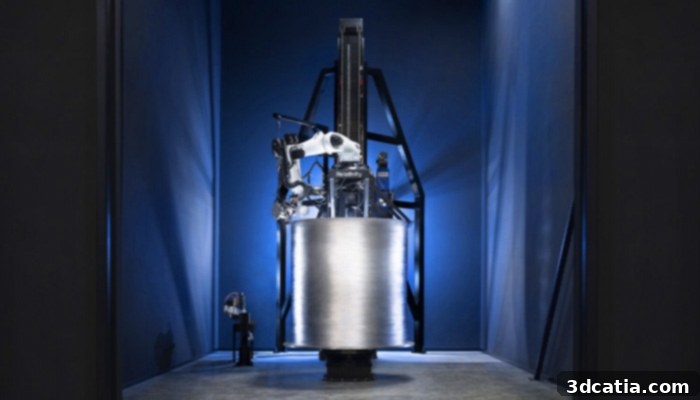
Relativity Space develops 3D printers for the aerospace industry (photo credits: Relativity Space)
Advanced 3D Printing Technologies Driving Aerospace Innovation
Having established the pivotal role of 3D printing, let us now delve deeper into the specific additive manufacturing technologies most widely adopted and revered within the aerospace industry. Undoubtedly, metal additive manufacturing, particularly Laser Powder Bed Fusion (L-PBF), stands as the most prevalent and impactful process in this demanding sector. L-PBF operates by meticulously fusing thin layers of metal powder using a powerful laser energy source, building complex components layer by layer. This precision enables the creation of small, incredibly intricate, and highly customized parts with unparalleled detail and accuracy. For aerospace manufacturers, L-PBF is invaluable for producing components with optimized geometries, such as lattice structures, that significantly reduce weight while maintaining or even enhancing structural integrity—a critical factor for spacecraft where every gram counts. This technology is ideal for high-performance applications like intricate turbine blades, complex manifold systems, and structural brackets.
Another powerful metal additive manufacturing technique is Directed Energy Deposition (DED). Unlike L-PBF’s powder bed approach, DED involves precisely depositing metallic wire or powder material, which is then melted and fused onto a substrate using a focused energy source, typically a laser or electron beam. This technology is particularly well-suited for repairing high-value components, adding material to existing parts for refurbishment, applying protective coatings, or manufacturing large, custom-made metallic or ceramic parts that might be challenging with other methods. Its ability to work with various materials and its larger build volumes make it a versatile choice for structural aerospace applications.
In contrast, Binder Jetting offers significant advantages in terms of production speed and cost-effectiveness, making it suitable for mass production of certain parts. However, it typically requires extensive post-processing steps, such as sintering or infiltration, to achieve the high mechanical properties demanded by aerospace applications. These additional steps can increase the overall manufacturing time and complexity, making it less ideal for critical structural components compared to L-PBF or DED without further reinforcement. Nevertheless, its potential for rapid, large-volume production of specific non-structural or indirectly structural parts remains an area of active development.
Extrusion-based technologies, such as Fused Deposition Modeling (FDM) or Fused Filament Fabrication (FFF), also prove highly effective and versatile within space environments, particularly for creating components from high-performance polymers. While not all polymers are suitable for the harsh conditions of space, advanced engineering plastics like PEEK and ULTEM offer exceptional strength-to-weight ratios, high thermal stability, and excellent resistance to radiation and chemicals. These properties enable them to replace some metal parts, providing significant weight savings—a paramount concern in aerospace. Although extrusion processes are still less widespread for primary structural components than metal AM, their potential to allow for the use of new, lighter materials and facilitate on-demand manufacturing of tools, jigs, and spare parts in remote or off-world locations makes them a valuable and rapidly evolving asset for future space exploration missions. The ability to print complex polymeric geometries on-site could drastically reduce the need for extensive spare parts inventories on long-duration missions.
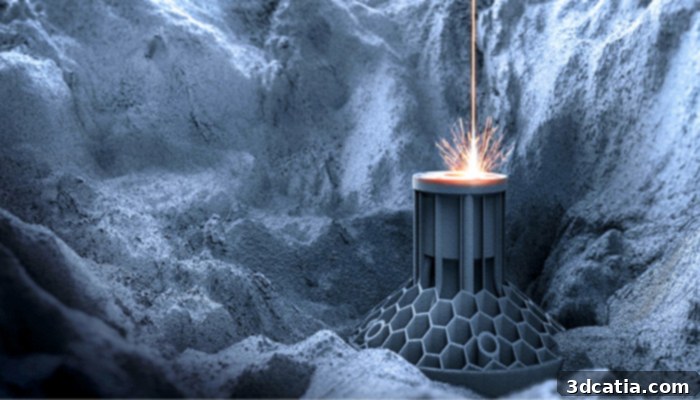
Laser fusion on a powder bed is a widespread process in aerospace 3D printing (photo credits: DMG Mori)
Unlocking the Potential of Extraterrestrial Materials for Space Manufacturing
The aerospace industry’s adoption of 3D printing extends beyond traditional materials, actively exploring and developing innovative alternatives that promise to revolutionize space manufacturing. While conventional metals such as titanium, aluminum, and inconel have long been the primary focus for high-performance aerospace components due to their robust properties, a new class of materials derived directly from celestial bodies is gaining unprecedented attention: lunar and Martian regolith. This concept, known as In-Situ Resource Utilization (ISRU), is quickly taking center stage, offering a pathway to self-sufficiency in space.
Lunar regolith, the fine, dust-like material covering the Moon’s surface, has been identified by the European Space Agency (ESA) as a groundbreaking resource when combined with 3D printing technologies. Advenit Makaya, an advanced manufacturing engineer at ESA, describes lunar regolith as compositionally similar to concrete, primarily consisting of silicon, alongside other critical chemical elements like iron, magnesium, and aluminum, all bound with oxygen. This unique composition makes it a versatile candidate for construction and manufacturing. In a significant collaborative effort with Lithoz, the ESA has successfully demonstrated the feasibility of producing small, functional parts—such as screws and gears—using a sophisticated lunar regolith simulant. This simulant meticulously mimics the mechanical and chemical properties of actual moon dust, proving that complex objects can be fabricated directly from extraterrestrial soil.
Most processes involved in manufacturing from lunar regolith leverage thermal methods, making it highly compatible with existing 3D printing technologies such as Selective Laser Sintering (SLS) and various powder bonding solutions. These heat-intensive techniques effectively fuse the regolith particles, creating solid, durable structures. The ESA is also actively investigating D-Shape technology, an innovative binder jetting approach that aims to mix magnesium chloride with the lunar material. This mixture, upon interaction with the magnesium oxide inherently present in the regolith simulant, creates a strong, solid part without the need for extreme heat. One of the most compelling advantages of utilizing this lunar material for additive manufacturing is its exceptionally fine particle size, which allows for a finer print resolution. This precision enables the production of parts with the highest level of detail and accuracy, a crucial characteristic for complex components. This fine resolution is not merely an engineering feat; it could be a major asset in broadening the range of applications, enabling the fabrication of highly specialized components and structures that are perfectly suited for future lunar bases and long-term human settlements on the Moon.
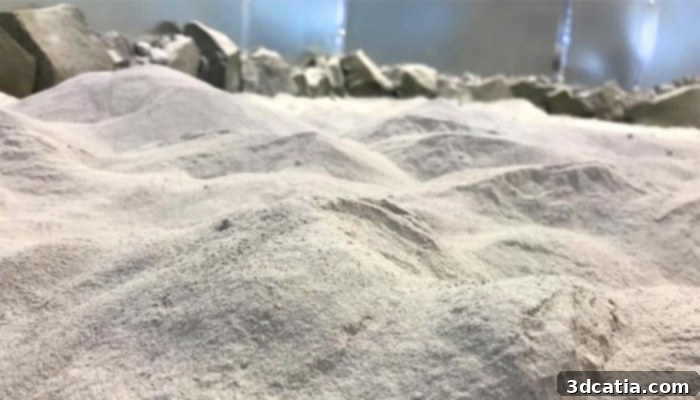
Lunar regolith can be found everywhere on the Moon (photo credits: TriasRnD)
Beyond the Moon, the potential of Martian regolith—the surface material found on Mars—is also under intense scrutiny. While international space agencies have not yet been able to physically retrieve samples of this extraterrestrial substance, scientists are diligently studying its potential through simulants for various ambitious aerospace projects. Researchers are combining these Martian regolith simulants with strong materials like titanium alloys, with the ultimate goal of manufacturing vital tools, structural elements, or even critical rocket parts directly on the Red Planet. Initial research results are highly promising, suggesting that components manufactured from this Martian composite material could offer superior strength and provide enhanced protection for equipment against the harsh Martian environment, including corrosive elements, dust, rust, and damaging radiation. Although both lunar and Martian regolith share some similar properties, lunar regolith currently remains the more extensively tested and understood material due to its relative proximity and easier accessibility for sample collection and analysis. A profound advantage of leveraging these in-situ materials is the ability to directly manufacture components on-site, effectively eliminating the colossal logistical and financial challenges associated with transporting raw materials, tools, and spare parts from Earth. Furthermore, the vast reserves of regolith on both the Moon and Mars represent an inexhaustible source of building materials, addressing concerns about material shortages and fostering a sustainable approach to future space endeavors. This innovative strategy is pivotal for long-duration missions and establishing permanent off-world outposts.
Diverse Applications of 3D Printing in Space Technology
The versatility of 3D printing technology translates into a wide spectrum of applications within the aerospace industry, with specific processes tailored to distinct manufacturing needs. For instance, the laser melting powder bed process (L-PBF) is exceptionally well-suited for creating highly detailed, short-run parts that require precision and intricate geometries. This includes critical components like custom tooling systems, jigs, fixtures, and on-demand space spares, which can be produced rapidly to meet unforeseen mission requirements. A compelling example of this capability comes from Launcher, a California-based startup, which significantly enhanced their E-2 Liquid rocket engine by utilizing Velo3D’s advanced Sapphire metal 3D printing technology. Velo3D’s sophisticated process was employed to manufacture the inductor turbine, a vital component responsible for rapidly accelerating and driving Liquid Oxygen (LOX) into the combustion chamber. The turbine and its inductor were meticulously printed as separate, optimized parts using 3D printing and then seamlessly assembled. This innovative approach resulted in a component that provides vastly improved fluid flow dynamics and, crucially, generates more thrust for the rocket, positioning it as an indispensable element of the engine’s overall performance and efficiency.
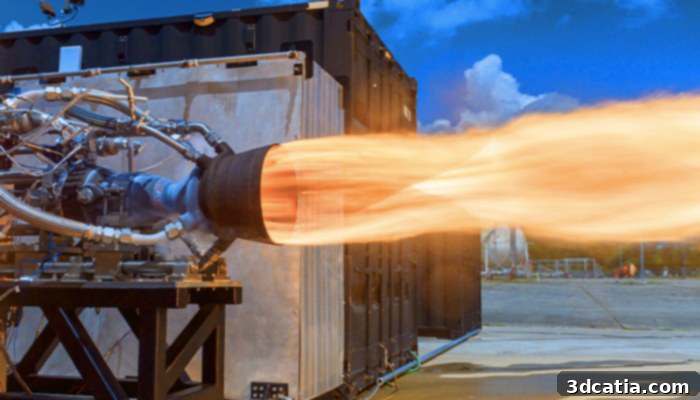
Velo3D contributed to the manufacturing of the E-2 Liquid engine using PBF technology (photo credits: Launcher)
Additive manufacturing’s capabilities extend far beyond small, intricate components to encompass the production of both small and large-scale structures, fundamentally altering the landscape of rocket construction. Relativity Space, a trailblazer in this domain, has developed its proprietary Stargate solution, the world’s largest metal 3D printer, which can construct massive parts such as rocket tanks, fairings, and propeller blades from base to completion. Relativity Space famously demonstrated this with the production of Terran 1, a revolutionary rocket that was almost entirely 3D printed, including its expansive fuel tank, measuring several meters in size. This groundbreaking launch, which occurred on March 23, 2023, marked an industry first, powerfully showcasing the remarkable efficiency, structural integrity, and reliability achievable through large-scale metal additive manufacturing processes for primary launch vehicles. This capability drastically reduces part count and manufacturing lead times, making rocket production faster and more streamlined than ever before.
Extrusion-based 3D printing technology, particularly when utilizing high-performance materials like PEEK (Polyether Ether Ketone), also opens up a wealth of possibilities for space applications. Components made from this advanced thermoplastic have already undergone rigorous testing in the harsh environment of space. For example, PEEK parts were successfully integrated into the Rashid rover as part of the ambitious Emirates Lunar mission. The primary objective of this deployment is to meticulously evaluate PEEK’s resistance and performance under the extreme conditions prevalent on the Moon’s surface, including drastic temperature swings, vacuum, and radiation exposure. If these tests prove successful, PEEK could emerge as a viable and superior alternative to metal parts, especially in scenarios where metal components might fail due to fatigue, or where access to traditional metallic materials is scarce. Furthermore, PEEK’s inherent lightweight nature offers a substantial advantage in space exploration, where every kilogram of launch mass has significant cost implications. Its ability to maintain structural integrity while being considerably lighter than many metals makes it an ideal candidate for future robotic missions, satellites, and even crewed spacecraft components, contributing to overall mission efficiency and payload capacity.
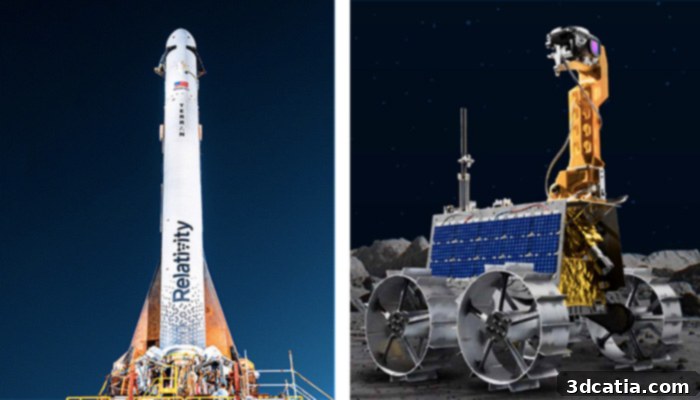
3D printing makes it possible to create many parts for the aerospace industry
The Unparalleled Benefits of Additive Manufacturing in Aerospace
3D printing, or additive manufacturing, presents a compelling technological advantage over conventional manufacturing techniques, particularly evident in the superior characteristics and performance of the resulting parts. Johannes Homa, CEO of the Austrian 3D printer manufacturer Lithoz, succinctly articulates a key benefit: “This technology makes parts lighter.” This weight reduction is crucial for space applications, where the cost of launching mass into orbit is extraordinarily high. Printed products are inherently more efficient, requiring fewer raw resources and enabling complex, optimized designs that are impossible with traditional methods. This design freedom allows for topology optimization and the creation of intricate lattice structures, maximizing strength while minimizing material usage, thereby significantly enhancing the environmental impact profile of part production by reducing waste.
Relativity Space has dramatically showcased another transformative advantage: the ability of additive manufacturing to significantly consolidate the number of components required to manufacture a spacecraft. In the groundbreaking case of their Terran 1 rocket, 3D printing enabled a reduction of 100 times the number of parts compared to traditionally manufactured rockets. This radical part consolidation not only simplifies the supply chain and assembly process but also drastically reduces potential points of failure, enhancing overall reliability. Furthermore, this technology offers an extraordinary advantage in terms of production speed; the Terran 1 rocket was famously completed in less than 60 days from raw material to launch readiness. In stark contrast, building a rocket using traditional methods, which involves numerous suppliers, complex tooling, and extensive assembly lines, can often take several years.
In terms of resource management, 3D printing inherently leads to substantial material savings due to its additive nature, building parts layer by layer only where material is needed, rather than cutting away from a larger block as in subtractive manufacturing. In many cases, it also facilitates the recycling of waste materials, further boosting sustainability. Critically for space exploration, additive manufacturing is a valuable asset in reducing the overall weight of rockets during take-off, thereby increasing payload capacity or reducing fuel consumption. The ultimate goal, especially for long-duration missions and establishing permanent off-world bases, is to maximize the utilization of local, in-situ materials—such as lunar and Martian regolith—and minimize the need to transport heavy raw materials from Earth. This revolutionary approach envisions a future where only the compact 3D printer itself needs to be transported, capable of fabricating everything required on-site, after the journey is complete, fostering self-sufficiency and unprecedented operational flexibility in deep space.
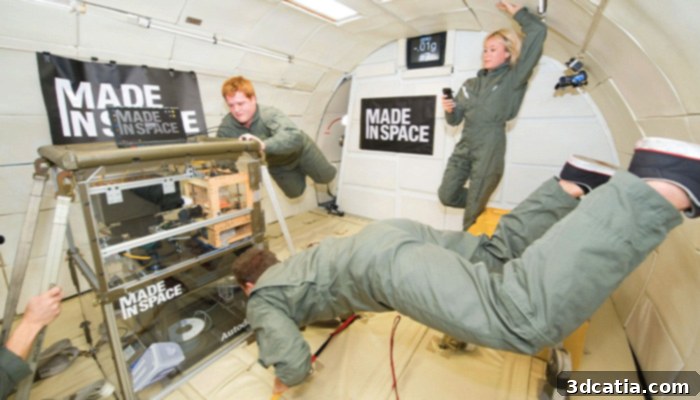
Made in Space has already sent one of its printers into space for testing (photo credits: Made in Space)
Addressing the Limitations and Challenges of 3D Printing in Space
While 3D printing offers an abundance of advantages for aerospace, the technology is still relatively nascent and presents its unique set of limitations and challenges that require diligent innovation. Advenit Makaya highlights a critical concern: “One of the main issues with additive manufacturing in the aerospace sector is the control and validation of the process.” In terrestrial manufacturing, engineers have access to sophisticated laboratories where each 3D printed part undergoes exhaustive testing for strength, reliability, material properties, and micro-structure before final validation. This rigorous process, known as Non-Destructive Inspection (NDI), is vital for ensuring flight safety and performance. However, NDI can be incredibly time-consuming and expensive, prompting a concerted effort within the industry to streamline and reduce the necessity for these extensive post-production tests. To address this, NASA has recently established a dedicated center focused on the rapid certification of metal parts produced with additive manufacturing. This center aims to significantly improve and leverage computer models of products, particularly through the use of digital twins. These advanced virtual replicas will enable engineers to gain a much deeper understanding of the capabilities and limitations of 3D printed components, including their stress tolerance and failure points, thereby accelerating the validation process. By doing so, this NASA initiative is expected to dramatically promote the broader adoption and competitiveness of 3D printing within the aerospace industry, allowing it to more effectively rival traditional manufacturing techniques.
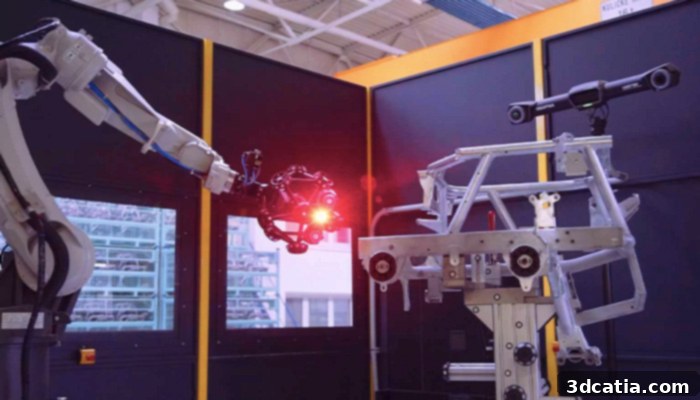
The parts are thoroughly tested for reliability and strength (photo credits: Creaform)
The verification process for manufacturing conducted directly in space introduces additional layers of complexity and necessitates innovative solutions. Advenit Makaya of ESA explains, “There is a technique that consists of analyzing the part while it is being printed.” This real-time, in-situ monitoring method is crucial for identifying potential defects or deviations during the printing process, allowing for immediate assessment of whether a printed product will be suitable for its intended use or if it needs to be scrapped or reprinted. Complementing this, advanced research is underway on developing self-correction systems for 3D printers operating in space, particularly for metal additive manufacturing machines. These intelligent systems are designed to detect potential errors or inconsistencies during the fabrication process autonomously. Upon identification, the machine can automatically adjust its printing parameters—such as laser power, print speed, or material deposition rates—to correct any emergent defects in the part, ensuring high-quality output even without direct human intervention. Both of these sophisticated systems are poised to significantly improve the reliability and trustworthiness of 3D printed products manufactured in the challenging environment of space, making on-orbit and off-world manufacturing a safer and more practical reality.
To ensure the robust validation of 3D printed solutions for space-grade applications, leading agencies like NASA and ESA have proactively developed comprehensive standards. These rigorous standards consist of detailed lists of tests and criteria that a 3D printed part must successfully pass to be deemed reliable and safe for deployment. Initially, these standards predominantly focused on powder bed fusion technologies, given their widespread use. However, they are continuously being updated and expanded to encompass other emerging additive manufacturing processes, ensuring that evolving technologies can also meet the stringent requirements for spaceflight. Furthermore, major players in the materials industry, including Arkema, BASF, Dupont, and Sabic, are contributing to this ecosystem by offering advanced traceability and quality assurance protocols for their aerospace-grade 3D printing materials. This collaborative effort across agencies and industry leaders is vital for building confidence in additive manufacturing and propelling its full integration into the future of space exploration.
Building Our Future: The Vision of Living in Space with 3D Printing
The rapid advancements in 3D printing technology have not only transformed industrial manufacturing but also demonstrated remarkable capabilities in terrestrial construction, with numerous successful projects showcasing 3D printed houses and infrastructure. This progress naturally leads to a profound question: could this same process be leveraged in the near or distant future to construct habitable structures directly in space? While permanent human habitation in space is not yet a widespread reality, the prospect of building houses and support structures, particularly on the Moon, holds immense benefits for astronauts embarking on long-duration space missions. The European Space Agency (ESA) is actively pursuing ambitious plans to construct domes on the Moon using lunar regolith. This readily available lunar dust can be processed by 3D printers to create durable walls or bricks, offering crucial protection for astronauts against the harsh space environment, including harmful radiation, micrometeorites, and extreme temperature fluctuations. According to Advenit Makaya of ESA, lunar regolith, composed of approximately 60% metal and 40% oxygen, represents an invaluable and inexhaustible source of oxygen if effectively extracted—a critical resource for sustaining life in an off-world habitat.
Recognizing this immense potential, NASA has invested significantly in pioneering lunar construction initiatives. The agency has awarded $57.2 million to ICON, a leading construction technologies company, to develop a robust 3D printing system specifically designed for lunar surface construction. This strategic partnership extends to a collaborative effort to create a simulated Martian home on Earth, known as Mars Dune Alpha. The primary objective of Mars Dune Alpha is to rigorously test and evaluate living conditions in a high-fidelity Martian environment. Volunteers are housed within this 3D printed habitat for a full year, simulating the challenges and experiences of living on the Red Planet. These ambitious efforts by both ESA and NASA, in collaboration with industry partners, represent monumental steps towards not only building 3D printed structures directly on the Moon and Mars but also, crucially, paving the way for sustainable human colonization of space. This vision involves creating self-sufficient outposts that can provide shelter, generate resources, and ultimately support a long-term human presence beyond Earth, marking a new era in humanity’s cosmic journey.
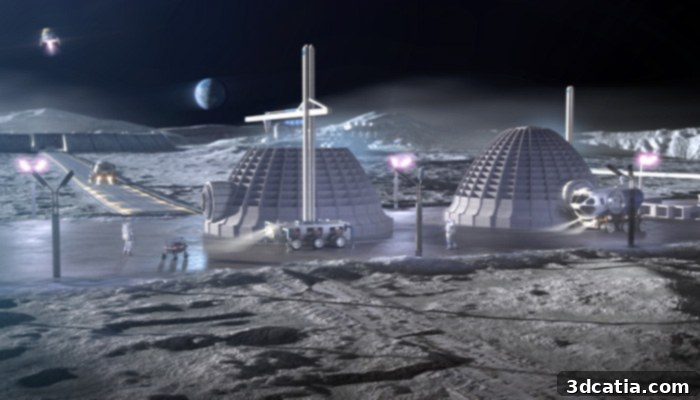
In a distant future, these houses could allow life on space (photo credits: ICON)
3D printing stands as an undisputed game-changer in the realm of space exploration, offering unprecedented capabilities for design, manufacturing, and sustainability. From fabricating intricate rocket engine components and robust satellites to conceptualizing entire off-world habitats from extraterrestrial regolith, its impact is profound and ever-expanding. While challenges related to process validation and in-space quality control persist, ongoing innovations and strategic collaborations are steadily overcoming these hurdles. The journey towards a future where humanity lives and thrives beyond Earth is long and complex, but with additive manufacturing as a cornerstone technology, the possibilities for space exploration and colonization are becoming increasingly tangible and exciting.
What do you think of the use of 3D printing in space exploration? Let us know in a comment below or on ourLinkedIn,Facebook, andTwitter pages! Don’t forget to sign up for our free weeklyNewsletter here, the latest 3D printing news straight to your inbox! You can also find all our videos on ourYouTube channel.
*Cover photo credits: SEArch+