
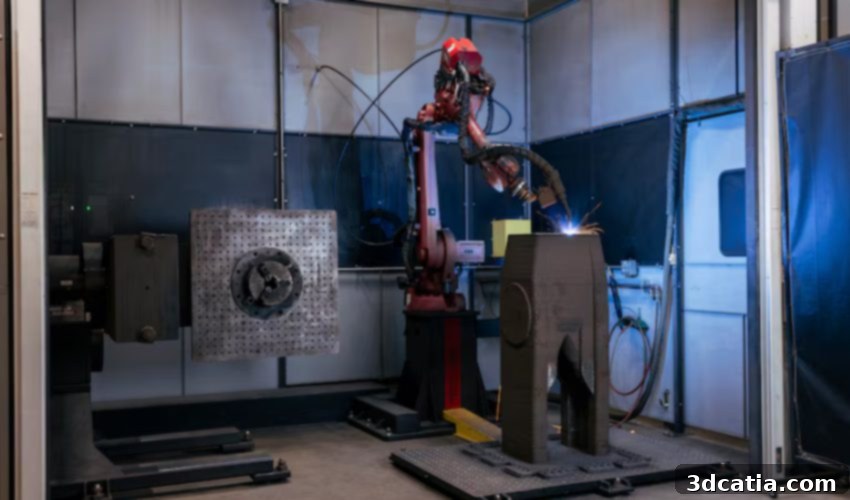
USACE Revolutionizes Infrastructure Maintenance: 3D Printing the Largest Civil Works Component for Soo Locks
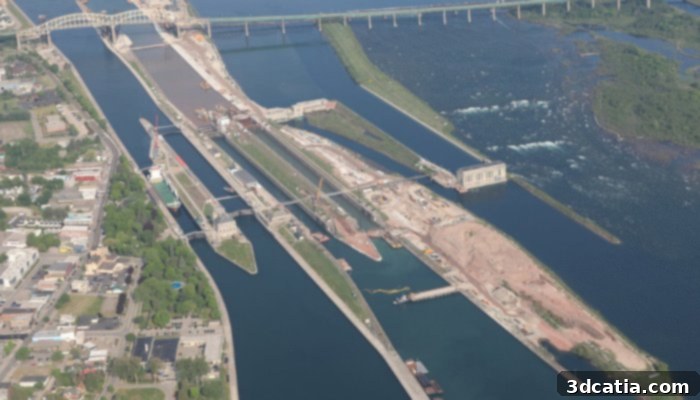
The Soo Locks, an indispensable gateway for maritime commerce connecting Lake Superior to the lower Great Lakes, typically faces a mandatory annual closure during the harsh winter months. This period is critical for essential maintenance, and this year, it has become the stage for a groundbreaking demonstration of innovation. The U.S. Army Corps of Engineers (USACE) has achieved a significant milestone in civil engineering by successfully 3D printing the largest U.S. civil works component ever created. This monumental achievement showcases the power of additive manufacturing (AM) in fabricating a crucial part for the Poe Lock’s ship arrestor system, thereby ensuring the continued safety, reliability, and uninterrupted flow of one of North America’s most vital shipping arteries.
At the heart of this urgent project was the imperative to replace aging infrastructure components, specifically the lever arm for the Poe Lock’s ship arresting system. This system plays a pivotal role in safeguarding the lock’s massive gates from potential damage caused by runaway vessels or accidental collisions, which could have catastrophic economic and environmental consequences. The original lever arms, having served faithfully for over 60 years, had developed critical structural cracks. Such deterioration posed an unacceptable risk to operational integrity and the smooth passage of maritime traffic, making a swift, robust, and effective replacement an absolute necessity to prevent prolonged closures and significant disruptions to the supply chain.
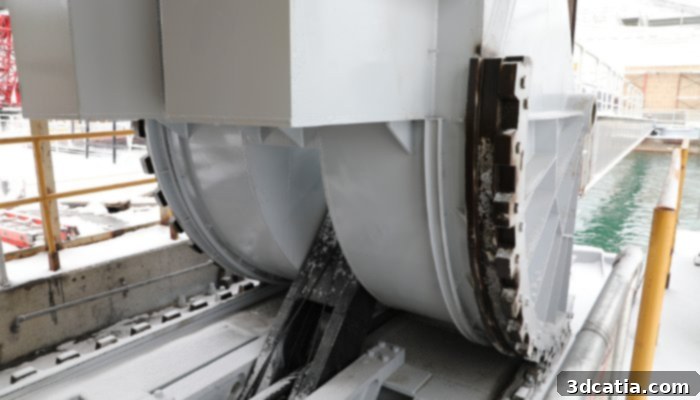
The 12-foot-long 3D printed metal part installed within the arresting system of the Poe Lock. (Photo Credits: USACE)
Solving Critical Infrastructure Challenges with Cutting-Edge Additive Manufacturing
Confronted with an extremely demanding timeline and the inherent complexities of fabricating such a unique, large-scale, and high-stress component, the USACE Detroit District wisely sought collaborative solutions. They teamed up with a consortium of leading experts, leveraging years of extensive research and development conducted by the U.S. Army Engineer Research and Development Center (ERDC). After careful consideration, the decision was made to harness the transformative power of 3D printing technology. This innovative approach promised to drastically accelerate the production schedule, a crucial factor given the seasonal constraints of the Soo Locks, while simultaneously meeting – and even exceeding – the project’s stringent quality and structural performance requirements, a challenge that traditional manufacturing methods would struggle to overcome efficiently.
The success of this project was built on a remarkable partnership that brought together an impressive array of industry leaders and academic institutions. Beyond their core involvement, USACE collaborated with key players such as Eaton Corporation and academic researchers from the University of Toledo. Central to the manufacturing process was the expertise of Lincoln Electric, a world-renowned leader in advanced welding solutions technology. Lincoln Electric played a pivotal role in the rapid and precise fabrication of the new lever arm, employing Wire Arc Additive Manufacturing (WAAM). WAAM is a sophisticated form of 3D printing that utilizes an electric arc to melt and deposit metallic wire feedstock, building up robust metal parts layer by layer. This particular additive manufacturing method is exceptionally well-suited for producing large, durable, and structurally sound metal components, making it the ideal choice for the demanding specifications of the Poe Lock project, where both size and strength were paramount.
The Unrivaled Advantages of 3D Printing for Large-Scale Infrastructure Repairs
The decision to pivot to 3D printing for the critical Soo Locks repair project was a testament to its compelling advantages over conventional manufacturing processes. Traditional methods for producing a component of this magnitude and bespoke complexity would typically entail lead times stretching up to an estimated 18 months. Such a prolonged production period would inevitably lead to extended downtime for the locks, causing significant economic repercussions and extensive disruptions to vital maritime shipping lanes that serve critical industries across the continent. Additive manufacturing, however, offered a revolutionary alternative, fundamentally transforming the project timeline and delivering unparalleled benefits in terms of speed, efficiency, and enhanced material properties.
By strategically implementing advanced additive manufacturing technology, USACE achieved a dramatic reduction in the production timeline for the new lever arm, shortening it to an astonishing 12 weeks. This expedited process not only significantly cut down repair times but also drastically minimized the potential for widespread interruptions to maritime traffic, ensuring that the Soo Locks could resume full operations much faster than any traditional approach would allow. Furthermore, the 3D printed lever arm did not merely meet the performance standards of its aged predecessor; it unequivocally surpassed them. Rigorous testing revealed that the new component exhibited superior strength characteristics, proving to be approximately 20-30% stronger than the original. This enhanced durability translates directly into extended longevity, improved operational reliability, and heightened safety for the critical ship arrestor system, promising years of secure service.
The economic implications of this accelerated production schedule are profound. The Soo Locks are instrumental in facilitating the transit of billions of dollars worth of vital cargo annually, including vast quantities of iron ore, coal, grain, and manufactured goods. Any extended closure or significant delay directly impacts a wide array of industries across the Great Lakes region, the Midwest, and beyond. By compressing the manufacturing time from a potential year and a half to just three months, USACE successfully mitigated substantial potential economic losses, safeguarded supply chains, and demonstrated a forward-thinking, proactive strategy for maintaining essential infrastructure without compromising national economic continuity. This level of responsiveness is unprecedented for such large-scale civil engineering projects.
Innovating for the Future of Aging Infrastructure and National Security
Lt. Col. Brett Boyle, commander of the USACE Detroit District, eloquently articulated the broader strategic vision underpinning this pioneering undertaking. He emphasized, “We secure our nation and energize our economy by operating, maintaining, and preserving strategic water resources and infrastructure. That is a challenge as our infrastructure continues to age. These challenges are opportunities to deliver our program in new, innovative ways that make us more efficient. The Poe Lock ship arrestor project has been one such opportunity for our team to work with ERDC researchers to harness existing 3D printing technology in a way that safely delivers superior quality, while cutting through the extended lead times of today’s environment.”
His powerful statement underscores a critical national imperative: to find sustainable, resilient, and economically efficient solutions for modernizing and maintaining an aging infrastructure network that is foundational to national security and economic prosperity. The unequivocal success of deploying 3D printing in the Poe Lock project stands as a compelling testament to how advanced manufacturing technologies can effectively address these complex and pressing challenges head-on. It vividly illustrates the immense potential for federal agencies to forge strong collaborations with cutting-edge research institutions and innovative private industries, thereby leveraging transformative technologies to achieve more resilient infrastructure, significantly reduce long-term operational costs, and dramatically accelerate project completion timelines, ushering in a new era of infrastructure management.
The Broader Impact of Additive Manufacturing in Civil Works and Beyond
As USACE continues its strategic initiative to expand operational capabilities while simultaneously striving to reduce costs through the adoption of innovative manufacturing processes, the transformative potential of 3D printing within the broader civil engineering and infrastructure sector becomes increasingly undeniable and critical. This remarkable project at the Soo Locks is far more than an isolated success story; it establishes a powerful precedent for how large-scale, structurally critical components can be fabricated with unprecedented speed, precision, and enhanced material properties. It provides a clear blueprint for countless future infrastructure projects, not just across the United States but potentially globally.
Ongoing, rapid advancements in additive manufacturing techniques, alongside the development of new and improved materials, are continually broadening the scope of what is technologically feasible. For the civil works sector, 3D printing offers a multitude of profound benefits that are set to redefine maintenance and construction practices: it significantly enhances the resilience and robustness of critical structures by enabling the rapid, on-demand creation of high-strength replacement parts; it substantially reduces both immediate and long-term expenses associated with emergency repairs and routine maintenance by drastically shortening lead times, optimizing material utilization, and minimizing human labor; and crucially, it dramatically accelerates project completion timelines, thereby reducing economic disruption and maximizing the operational output of essential infrastructure assets.
The applications extend across a vast spectrum of civil infrastructure. From bespoke bridge components and specialized parts for dam infrastructure to custom-engineered elements for flood control systems and unique architectural features, the ability to rapidly produce tailored, high-strength metal, concrete, or composite components using additive manufacturing heralds a future where infrastructure maintenance is not only more agile and cost-effective but also inherently more sustainable. This technological shift ensures the enduring integrity and operational efficiency of existing structures and, more importantly, unlocks new possibilities for designing and constructing more complex, efficient, and environmentally friendly infrastructure from the ground up, pushing the boundaries of what is possible in modern engineering.
A New Era for Infrastructure Development, Modernization, and Resiliency
The successful 3D printing and deployment of the Poe Lock’s lever arm by USACE represents a pivotal and historic moment in the ongoing modernization of civil infrastructure. It powerfully demonstrates how strategic collaboration between forward-thinking government agencies, cutting-edge research institutions, and innovative private industries can effectively harness transformative technologies to overcome what once seemed like insurmountable engineering and logistical challenges. This landmark project serves as an exemplary case study, unequivocally proving that additive manufacturing is no longer a niche or experimental technology but a practical, impactful, and indispensable solution for maintaining, enhancing, and future-proofing the critical arteries of our economy and society.
The implications of this achievement extend far beyond the geographical confines of the Soo Locks, offering a compelling and actionable vision for how infrastructure development, maintenance, and long-term resiliency can be fundamentally revolutionized across the United States and, indeed, on a global scale. By proactively embracing and investing in such innovation, USACE is not merely performing a repair; it is actively paving the way for a more resilient, efficient, and technologically advanced future for civil engineering, setting a new standard for governmental agencies worldwide.
To delve deeper into the intricate details and comprehensive scope of this groundbreaking project, further information is readily available by clicking here.
What are your thoughts on USACE’s pioneering utilization of 3D printing at the Soo Locks and its potential impact on future infrastructure projects? We warmly invite you to share your valuable insights and comments below or connect with our vibrant community on our LinkedIn, Facebook, and Twitter pages! For the very latest breaking news, exclusive interviews, and essential updates from the dynamic world of 3D printing, remember to sign up for our free weekly newsletter here, conveniently delivered straight to your inbox! Additionally, you can explore all our engaging and informative videos on our dedicated YouTube channel.
*Cover Photo Credits: US Army Corps of Engineers