
Advancements in 3D Printing: FDM for Metals & Ceramics, Formlabs Innovations, Sustainable Construction, Battery Tech & Expert Training
The world of additive manufacturing continues its rapid evolution, pushing boundaries and opening new avenues for innovation across diverse industries. From groundbreaking material developments to transformative applications in construction and energy, 3D printing is consistently proving its potential to redefine manufacturing processes and product design. This week, we delve into five pivotal advancements shaping the future of this dynamic technology. We’ll explore the often-misunderstood process of Fused Deposition Modeling (FDM) with advanced materials like ceramics and metals, discover Formlabs’ extensive material ecosystem, witness the construction of sustainable 3D printed homes, examine cutting-edge research into 3D printable batteries, and highlight crucial educational initiatives democratizing 3D printing knowledge. Join us as we uncover these exciting developments that are making additive manufacturing more accessible, efficient, and impactful than ever before.
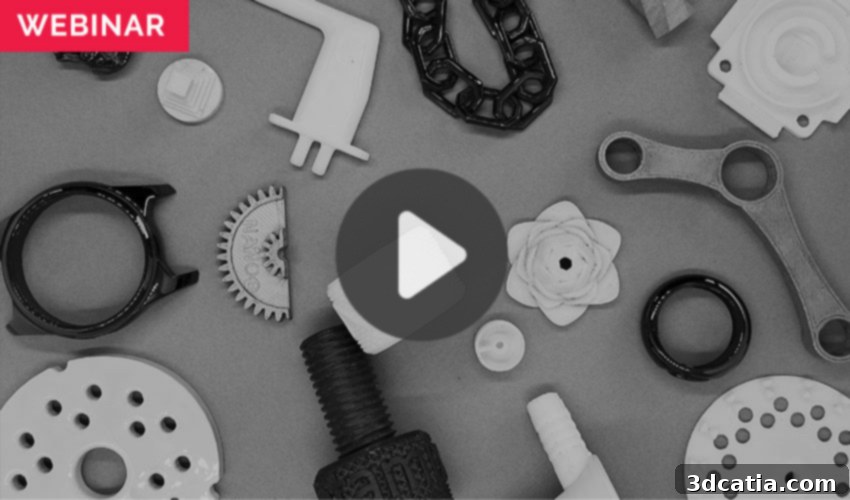
TOP 1: Demystifying FDM for Ceramic and Metal 3D Printing with Nanoe and Novadditive
While polymers have traditionally been synonymous with Fused Deposition Modeling (FDM) in the realm of 3D printing, a significant paradigm shift is underway. The industry is increasingly recognizing the immense potential of FDM for processing more robust and functional materials, specifically ceramics and metals. This evolution is driven by the growing demand for end-use parts with superior mechanical properties, thermal resistance, and durability, moving beyond the confines of mere rapid prototyping. Despite the increasing availability of ceramic and metal filaments, many users still face uncertainties regarding the precise requirements and processes involved in successfully printing with these advanced materials.
To address this knowledge gap, 3Dnatives recently hosted an insightful webinar featuring industry leaders Nanoe and Novadditive. These experts shed light on how FDM technology can be leveraged to produce high-quality ceramic and metal parts. The discussion covered everything from the selection of appropriate filaments and printer settings to the crucial post-processing steps such as debinding and sintering, which are essential for achieving the desired material density and strength. Nanoe, known for its innovative Zetamix filaments, and Novadditive, a specialist in material extrusion for advanced applications, provided practical insights into the capabilities and limitations of these materials, alongside real-world application cases. This collaborative effort helps to democratize the understanding of FDM for industrial ceramic and metal printing, empowering more manufacturers to harness its cost-effective and versatile advantages for functional components, tooling, and specialized industrial parts. The full webinar offers a comprehensive guide for anyone looking to integrate these advanced materials into their FDM workflow.
Top 2: A Deep Dive into Formlabs’ Diverse Material Families
Since its inception in 2011, Massachusetts-based Formlabs has rapidly ascended to become a recognized leader in the additive manufacturing sector. While widely celebrated for its innovative line of resin-based 3D printers, including the popular Form series, Formlabs’ true strength lies in its extensive and ever-expanding portfolio of advanced materials. Designed to cater to a vast array of industrial, medical, and consumer applications, these materials unlock the full potential of their stereolithography (SLA) and Low Force Stereolithography (LFS) technologies.
Formlabs meticulously develops its resins to offer specific properties tailored to various industries. For instance, their Engineering Resins are formulated for high-performance applications, offering features like toughness, flexibility, and heat resistance, making them ideal for functional prototypes, jigs, fixtures, and end-use parts in manufacturing. In the medical field, Formlabs provides a range of biocompatible materials for dental and medical device manufacturing, enabling the creation of custom surgical guides, prosthetics, and anatomical models with precision and patient safety in mind. Furthermore, their specialized resins for jewelry design allow for intricate details and smooth surfaces essential for casting patterns, while general-purpose resins provide excellent versatility for a broad spectrum of prototyping and aesthetic applications. This video presentation from Formlabs effectively showcases compelling application cases across diverse sectors, illustrating how their specialized materials are expertly adapted to meet the unique demands of industries from healthcare to art and design, solidifying Formlabs’ reputation as an all-encompassing solution provider in the additive manufacturing landscape.
TOP 3: Pioneering Affordable Housing with a 3D-Printed Home in Richmond, Virginia
The ambitious Printing for Affordable Concrete Housing and Training (PACT) project, located in Richmond, Virginia, is nearing its completion, marking a significant milestone in the application of 3D printing technology within the construction sector. Spearheaded by Virginia Tech’s esteemed Mayers Lawson School of Construction, this pilot initiative is designed to rigorously assess the tangible benefits, cost efficiencies, and logistical advantages of utilizing 3D concrete printing for residential construction. The ultimate goal of the PACT project is to identify viable and scalable solutions for addressing the critical need for more affordable and sustainable housing options throughout the state of Virginia, and potentially, nationwide.
For this groundbreaking endeavor, the Mayers Lawson team collaborated with Danish construction 3D printing specialist COBOD, employing their state-of-the-art BOD2 3D printer. This advanced technology allowed for the rapid and precise fabrication of a substantial 1,400-square-foot (approximately 425-square-meter) house. The use of 3D concrete printing offers numerous advantages over traditional building methods, including vastly reduced construction timelines, lower labor costs, minimized material waste, and enhanced design flexibility. By automating much of the construction process, these projects can significantly decrease overall expenses and accelerate the delivery of homes, making them more accessible to a wider demographic. The successful completion of this project in Richmond provides invaluable data and insights that will guide future efforts to integrate 3D printing into mainstream construction practices, paving the way for a new era of cost-effective, durable, and environmentally friendly housing solutions.
TOP 4: Photocentric’s Innovations in 3D Printed Battery Development
The potential for 3D printing to revolutionize the energy sector, particularly in battery manufacturing, has garnered significant attention, with companies like the American firm Sakuu already demonstrating the feasibility of fully 3D printed batteries. However, they are not alone in this pioneering field. Photocentric, a UK-based company founded in 2002 and renowned for its expertise in photopolymerization and LCD-based 3D printers, is also making substantial strides in 3D printed battery research and development. This innovative application of additive manufacturing promises to bring the typical advantages of 3D printing – customization, efficiency, and design freedom – directly to energy storage solutions.
According to Sarah Karmel, Head of Chemistry at Photocentric, leveraging 3D printing technology enables the production of batteries that are not only lighter and smaller but also boast a significantly higher energy density. This capability is critical for a wide range of modern applications, from enhancing the performance of electric vehicles and portable electronics to improving the efficiency of renewable energy storage systems. By precisely controlling the internal architecture of battery components, such as electrodes, additive manufacturing allows for optimized material distribution and intricate geometries that are impossible to achieve with conventional manufacturing methods. This precision leads to improved ionic transport, greater surface area for reactions, and ultimately, more powerful and efficient batteries. Photocentric’s ongoing research underscores the transformative impact that 3D printing can have on the energy industry, pushing the boundaries of what is possible in power storage and driving innovation for a more sustainable future. Discover more about their cutting-edge work in the insightful video provided below.
Top 5: Elevating 3D Printing Expertise with The BCN3D Academy
The rapid evolution and increasing adoption of 3D printing technologies across industries have created a pressing need for specialized skills and comprehensive training. A frequently cited barrier to wider investment and integration of additive manufacturing within companies is the significant lack of adequate training and understanding of these complex technologies. Recognizing this crucial gap, BCN3D, a leading Fused Filament Fabrication (FFF) desktop printer manufacturer based in Spain, has launched an invaluable resource: the BCN3D Academy.
The BCN3D Academy is designed to empower individuals and organizations with the foundational knowledge and practical skills necessary to effectively utilize 3D printing. This comprehensive educational platform offers a structured, four-part course that meticulously covers many of the essential basics of 3D printing. Participants will delve into critical topics such as 3D modeling for additive manufacturing, understanding the vast array of available materials and their specific properties, mastering the intricacies of slicing software to prepare models for printing, and gaining insights into printer operation and maintenance. By providing accessible and high-quality educational content, BCN3D aims to demystify the complexities of 3D printing and foster a deeper understanding of its capabilities. This initiative is particularly beneficial for engineers, designers, educators, and anyone looking to enhance their expertise in additive manufacturing, ultimately accelerating the broader adoption and successful implementation of 3D printing solutions in various professional and creative endeavors. Learn more about how the BCN3D Academy can elevate your 3D printing knowledge and skills in the video below.
These five diverse advancements underscore the relentless pace of innovation within the additive manufacturing landscape. From enabling the use of high-performance materials like ceramics and metals with accessible FDM technology, to developing specialized resins for highly demanding applications, building sustainable and affordable homes, pioneering next-generation battery solutions, and providing essential educational resources, 3D printing is continuously expanding its reach and impact. The future promises even more exciting breakthroughs as these technologies become more refined and widely adopted. Are you eager to explore the possibilities of FDM for ceramic and metal printing, or perhaps delve into the rich material science presented by Formlabs? Share your thoughts and interests in the comments section below or connect with us on our Facebook and Twitter pages. And for all the latest news, trends, and insights directly in your inbox, don’t forget to sign up for our free weekly newsletter!