
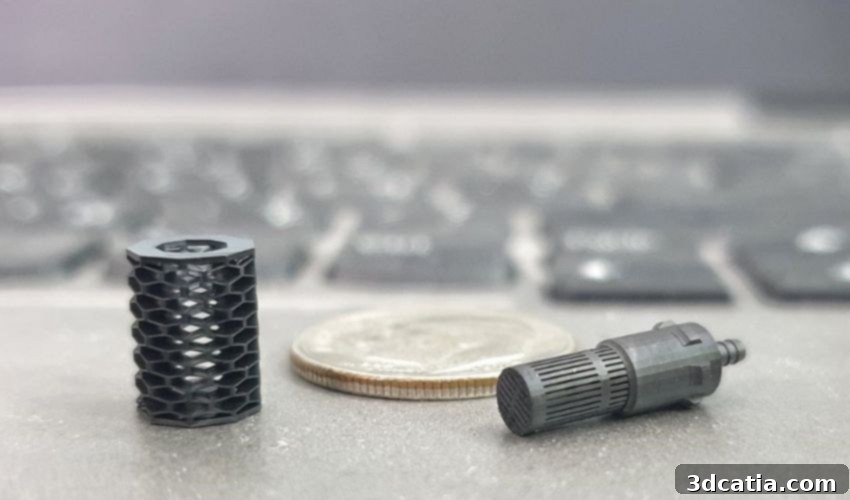
Advancing Microscale Additive Manufacturing: Fabrica Group’s Vision After Nano Dimension Acquisition
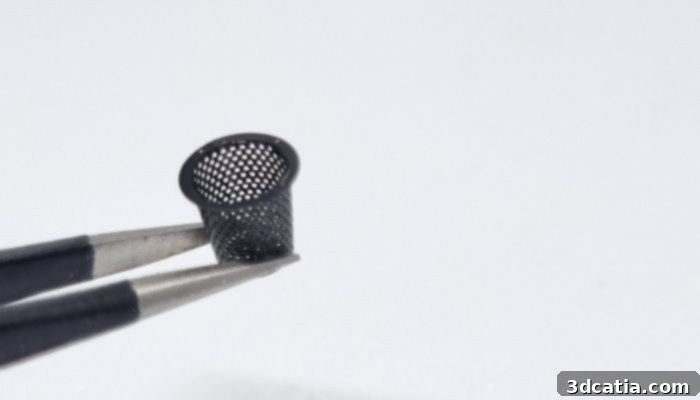
The landscape of additive manufacturing (AM) is in a constant state of evolution, marked by rapid innovation and strategic consolidations. Even amidst global challenges, AM manufacturers have remained exceptionally active, a trend clearly reflected in the numerous mergers and acquisitions sweeping through the industry. A prime example of this dynamic environment unfolded within the microscale additive manufacturing sector when Nano Dimension, a leader in additively manufactured electronics (AME), acquired Nanofabrica. This strategic move led to Nanofabrica’s rebranding as Fabrica Group, signaling a new chapter for precision manufacturing. To understand the profound implications of this corporate alignment, we engaged with Avi Cohen, EVP Global Sales for the newly formed Fabrica Group. Our discussion centered on how this merger is poised to redefine micro-AM, accelerate the global adoption of these groundbreaking technologies, and delve into the capabilities of their flagship product, the Fabrica 2.0 3D-Additive-Micro-Manufacturing-System, and its potential to revolutionize the production of micro plastic parts and components.
Strategic Restructuring: Nanofabrica Joins Nano Dimension

Avi Cohen, EVP Global Sales at Fabrica Group
Earlier this year, Nanofabrica, a pioneer in high-precision microscale 3D printing, was acquired by fellow additive manufacturing giant, Nano Dimension. Nano Dimension is renowned for its leadership in additively manufactured electronics (AME) and printed electronics (PE), particularly through its innovative DragonFly material jetting system. This acquisition represents a significant strategic alignment in the additive manufacturing space. Avi Cohen, now EVP Sales at Fabrica Group, elaborated on the immediate transformations stemming from this acquisition: “Following Nanofabrica’s acquisition by Nano Dimension, the entity was rebranded as Nano Dimension’s Fabrica Group. Simultaneously, our flagship micro-AM solution, previously known as the Tera 250, was renamed the Fabrica 2.0 3D-Additive-Micro-Manufacturing-System.” While Nano Dimension excels in micro-electronics, Nanofabrica has carved out a niche in diverse microscale additive manufacturing applications, spanning critical sectors like medical devices, micro-tooling, and precision components for various industries. The synergy between these two companies is clear: Nano Dimension’s expertise in electronics printing complements Fabrica Group’s prowess in ultra-high-resolution polymer and ceramic micro-manufacturing. This collaboration is expected to significantly accelerate advancements and widespread adoption within the nascent yet rapidly expanding micro-AM field, pushing the boundaries of what’s possible in miniature production.
Avi Cohen emphasized the profound impact of the acquisition, particularly on the commercialization strategy for their revitalized technology, the Fabrica 2.0. He stated: “Our primary focus post-acquisition, and a key area where Nano Dimension provides invaluable acceleration, is the expanded commercialization of the Fabrica 2.0. This machine is exceptionally beneficial for original equipment manufacturers (OEMs) across all industries that require the production of extremely small parts, or larger components demanding micron-level accuracy. Thanks to Nano Dimension’s robust organizational infrastructure and extensive global reach, we anticipate a significant fast-tracking of our sales initiatives, enabling us to introduce our cutting-edge micro-manufacturing technology into new international markets at an unprecedented pace.” This strategic integration provides Fabrica Group with enhanced resources, broader market access, and a strengthened global sales network, crucial elements for driving the widespread adoption of such specialized technologies.
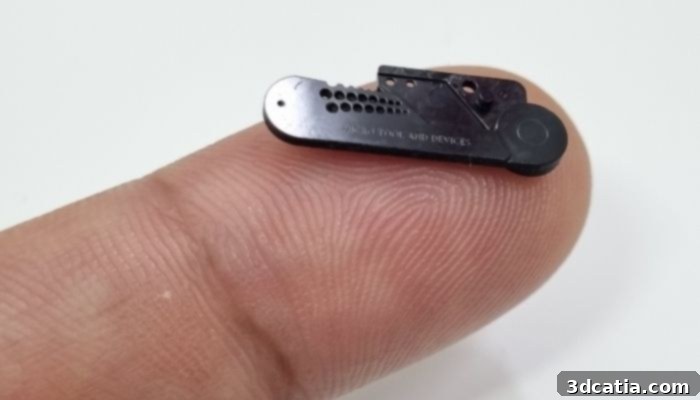
The benefits of this acquisition, of course, extend beyond Fabrica Group. Nano Dimension has significantly bolstered its market position in various segments of additive manufacturing, moving beyond its core focus on electronics. While Nano Dimension already holds a prominent leadership role in its specialized domain, its recent strategic acquisitions, including Deep Cube for AI integration and Nanofabrica for micro-precision AM, are expected to substantially expand the company’s comprehensive suite of solutions. This broader portfolio allows Nano Dimension to offer more integrated, high-value additive manufacturing platforms, addressing a wider range of industrial needs and solidifying its standing as an innovative force in the evolving global AM market.
Introducing the Advanced Fabrica 2.0 Micro 3D Printing System
One of the most anticipated outcomes of this corporate restructuring for Fabrica Group is the accelerated development and market reach of their cutting-edge micro-manufacturing technology. The Tera 250, now magnificently reborn as the Fabrica 2.0, was already a recognized pioneer in its field. What sets it apart is its utilization of Digital Light Processing (DLP) technology, a distinct advantage over other 3D printing processes like material jetting, which, while common in some microscale applications, often struggle to achieve the same level of resolution and surface finish required for true micro-manufacturing. The Fabrica 2.0 further distinguishes itself through its innovative application of adaptive optics – a groundbreaking advancement marking the first time this technology has been integrated into an AM system. This sophisticated optical system, incorporating an array of highly sensitive sensors, empowers the machine to attain what Avi Cohen describes as “unprecedented micro-resolution with ultra-accurate features, intricate details, exceptional accuracy, and unparalleled precision.” This capability ensures that parts produced on the Fabrica 2.0 exhibit fidelity and quality previously unattainable in additive manufacturing.
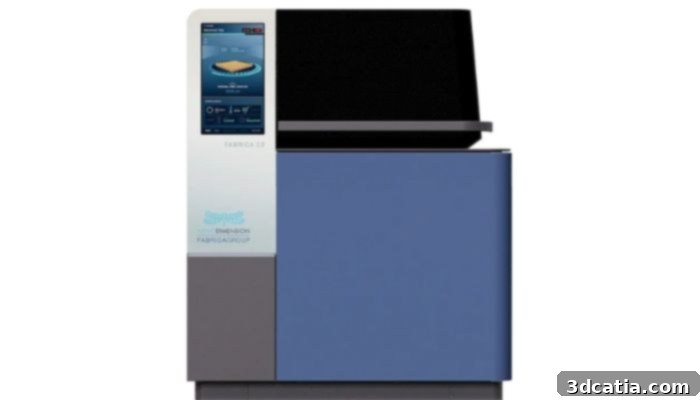
Beyond its foundational adaptive optics, the Fabrica 2.0 implements a sophisticated high-resolution printing strategy. This intelligent system dynamically adjusts its print speed based on the level of detailing required for different regions of a part. Essentially, areas demanding exquisite fine details are printed meticulously and slowly to guarantee utmost accuracy and surface quality. In stark contrast, less critical or less detailed sections of the same part can be printed at significantly faster speeds—up to 10 to 100 times quicker—drastically reducing overall print times without compromising precision where it matters most. This adaptive approach optimizes efficiency, delivering both speed and micron-level accuracy. Furthermore, the machine is powered by a comprehensive algorithm family dedicated to optimizing the entire printing workflow, from file preparation to parameter fine-tuning, including critical aspects like print angle and support structures. These combined features culminate in a machine renowned for its precise, highly optimized, and exceptionally reliable micro-additive manufacturing process, making the Fabrica 2.0 a benchmark in industrial micro 3D printing.
Crucially, one of the most significant advancements since the acquisition has been in the realm of material science. Fabrica Group has strategically invested in developing its own proprietary materials, specifically engineered to complement the Fabrica 2.0’s capabilities and ensure ultra-high resolution for printed parts. Emphasizing the critical importance of this research and development, Avi Cohen pointed out: “Until we developed our own materials, there were no commercially available options in the AM sector that could come close to achieving the micron-sized features and extreme precision that are inherently possible with the Fabrica 2.0 system.” This proprietary material development is not merely an enhancement; it’s a fundamental enabler, unlocking the full potential of the machine’s advanced optics and precision mechanics. Without materials capable of holding such fine detail, even the most precise hardware would be limited, highlighting Fabrica Group’s holistic approach to micro-manufacturing innovation.
Fabrica Group has successfully launched two foundational proprietary materials, each tailored for specific high-performance applications. The first is the Precision N-800 material, which closely mimics the desirable properties of ABS plastic, offering an exceptional balance of both strength and flexibility. According to the company, this combination makes it an ideal choice for a wide array of structural applications across diverse and demanding industries, including electronics, optics, automotive, and aerospace, among many others where durability and mechanical integrity are paramount. The second, the Performance N-900, represents a significant leap forward in ceramic additive manufacturing. This is a “ceramic-loaded material capable of achieving micron resolutions with a high concentration of ceramic particles.” Ceramics in additive manufacturing have garnered considerable interest due to their unique properties, such as high temperature resistance, excellent electrical insulation, and superior hardness, making them suitable for a vast range of applications. They are particularly invaluable in critical sectors like high-performance electronics and advanced aerospace components. Given the scarcity of truly 3D-printable ceramic materials on the market that can achieve micro-resolution, Fabrica Group’s strategic decision to develop the Performance N-900 underscores their commitment to addressing crucial industry needs and expanding the material palette for micro-AM.
The Future Landscape for Fabrica Group and Micro-Manufacturing
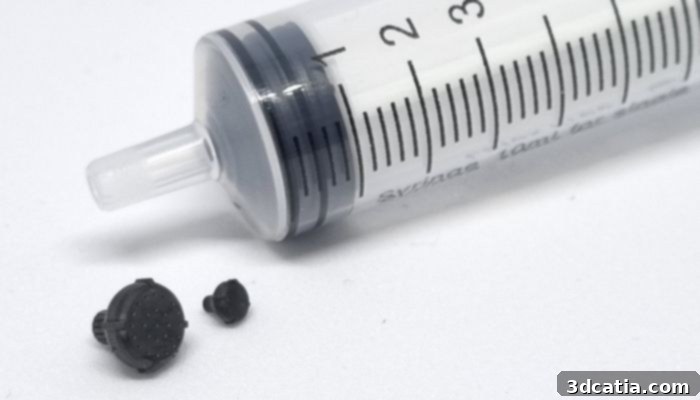
One thing is undeniably clear: the integration of Nano Dimension and Fabrica Group sets an ambitious trajectory for micro-scale 3D printing. With their combined expertise, the possibilities for innovation and application seem boundless, perhaps only limited by the atomic scale itself. Avi Cohen articulates a compelling vision for their solutions, foreseeing their availability and transformative impact across a multitude of industries. These include, but are certainly not limited to, “all sectors that are intensely pursuing miniaturization.” He specifically highlights critical areas such as micro-optics, semiconductors, microelectronics, Micro-Electro-Mechanical Systems (MEMS), microfluidics, precision casings for microelectronics, delicate micro springs, sophisticated microactuators, and sensitive microsensors. Furthermore, the medical field stands to gain immensely from micro-AM, with applications ranging from intricate microvalves and micro syringes to advanced micro implantable devices and specialized surgical instruments. The ability to rapidly prototype and produce such incredibly small, highly complex components opens up new frontiers for product development and functional innovation in these high-tech domains.
As with most advanced additive manufacturing processes, microscale printing offers significant advantages over traditional manufacturing techniques, particularly when producing miniature components. A primary benefit is the dramatically accelerated speed to market. Designers and engineers can rapidly iterate on designs and produce functional prototypes in days, not weeks or months, a stark contrast to conventional methods which often involve lengthy tooling and fabrication processes. Furthermore, micro-AM enables the creation of parts with geometric complexities and intricate internal structures that are simply impossible to achieve with conventional machining or molding. This unparalleled design freedom unlocks new functionalities and performance characteristics for micro-components. Beyond these technical advantages, combining faster development cycles with enhanced design capabilities translates into significant cost-effectiveness for manufacturers. By eliminating expensive tooling and reducing lead times, both Nano Dimension and Fabrica Group are confident that their AM technology not only compares favorably but can actively surpass traditional manufacturing methods in terms of efficiency, precision, and overall economic viability within the micro-manufacturing sector. This bold claim underscores the disruptive potential of Fabrica Group’s solutions, poised to redefine how miniature parts are conceived and produced.
Looking ahead, Avi Cohen outlined the strategic direction for Fabrica Group, emphasizing a customer-centric approach alongside relentless innovation. He concluded: “We are actively selling machines across the globe, and our paramount emphasis is on providing robust support to these customers, collaborating closely with them to refine and tailor the technology for their specific, often highly specialized, applications. Our dedicated R&D teams are continuously enhancing the Fabrica 2.0, focusing on both software and hardware advancements to push its capabilities further. Simultaneously, we are placing a huge emphasis on pioneering material innovation, recognizing that new materials are key to unlocking even greater potential. Direct Rapid Soft Tooling (DRST) is an incredibly exciting area for us; we are already demonstrating the successful production of robust DRST molds on the Fabrica 2.0. These molds can then be seamlessly integrated and utilized with traditional micro injection molding machines. This capability represents a massive leap forward in leveraging additive manufacturing as a true enabler for mass production, bridging the gap between bespoke 3D printing and high-volume manufacturing.” To explore more about the revolutionary Fabrica 2.0 Machine and the strategic advancements of Fabrica Group, you can visit their official website HERE.
What are your thoughts on the transformative changes occurring at Fabrica Group, particularly with their advanced solutions and proprietary materials? We invite you to share your insights and comments below, or engage with us on our Facebook and Twitter pages! Don’t miss out on the latest advancements in additive manufacturing—be sure to sign up for our free weekly newsletter to receive all the breaking 3D printing news directly in your inbox!
*All Image Credits: Nano Dimension’s Fabrica Group