

Empowering Consumers: The EU’s Push for the Right to Repair and the Role of 3D Printing
The European Union is grappling with an escalating crisis of waste, particularly from consumer goods that are prematurely discarded. For over a decade, the Internal Market and Consumer Committee (IMCO) of the EU Parliament has championed the “Right to Repair” in the EU, recognizing its immense potential to mitigate this environmental and economic burden. The sheer volume of waste generated annually – estimated by the European Commission at 35 million tons of discarded goods – leads to a significant negative environmental impact, contributing an alarming 261 million tons of CO2 emissions each year. This unsustainable consumption model not only harms our planet but also imposes a substantial financial cost on consumers, who collectively lose an estimated 12 billion euros annually on products that could have been repaired rather than replaced. The move towards a robust Right to Repair framework is therefore crucial for fostering a more sustainable, circular economy and empowering consumers.
Following a decisive 38-2 vote within the IMCO committee, the EU has officially commenced the legislative process to implement a comprehensive set of measures designed to make repairing products a more appealing and viable option than purchasing new ones. This initiative represents a significant step towards a circular economy, prioritizing product longevity and reducing waste. A pivotal element underpinning the feasibility and efficiency of these proposed right-to-repair measures is the advancement of additive manufacturing, commonly known as 3D printing. This innovative technology offers unparalleled flexibility in the production of spare parts, which is central to the committee’s argument for wider repair adoption. The IMCO’s proposed framework aims not only to extend the life cycle of consumer products but also to significantly bolster environmental protection efforts. The benefits of repairing rather than replacing goods have been a subject of extensive discussion, highlighting the shared responsibilities and requirements for both producers, who must design for repairability, and consumers, who must be given the tools and incentives to choose repair.
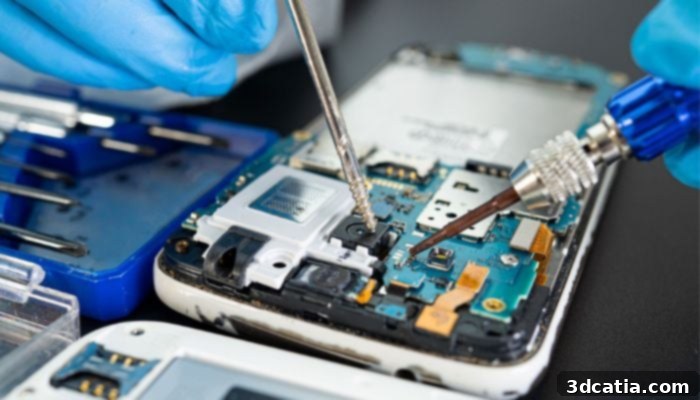
The Right to Repair initiative aims for longer device lifespans and significantly less waste, fostering a more sustainable future (photo credits: Euractiv)
In their most recent and critical vote, the IMCO committee solidified its position regarding the Right to Repair, outlining the specific proposals that will be presented for a full parliamentary vote in November. This detailed position includes crucial provisions, such as obliging retailers and producers to carry out repairs free of charge for products still within their statutory warranty period. This measure is intended to place a greater onus on manufacturers for the durability of their goods and to ensure consumers are not penalized for defects within a reasonable timeframe. However, the legislation acknowledges practical limitations, stipulating that repairs can be bypassed if the cost of a new product is demonstrably cheaper than the repair, or if the restoration process proves genuinely inconvenient for the consumer, allowing for a degree of flexibility. To further incentivize repairs and make them more attractive than purchasing new items, the IMCO proposes a variety of additional factors. These include extending the warranty period of repaired goods by an additional year, providing consumers with repair vouchers, and even requiring companies to cover the cost of repairs for a certain category of technical devices that are no longer covered by statutory warranties. Furthermore, to minimize disruption for consumers, companies may be required to lend goods as a temporary replacement service for the duration of the repair, ensuring continuity of use.
The implementation of the Right to Repair is poised to foster a dynamic new ecosystem of services centered around repair. This revolutionary shift will ensure that repair shops, independent technicians, and even individual consumers gain unfettered access to essential spare parts throughout the entire life cycle of a product, and crucially, without incurring exorbitant costs. This accessibility, currently a major barrier to repair, will be further enhanced by the creation of dedicated online platforms. These platforms are envisioned to serve as comprehensive hubs, providing vital information on repair conditions, available repair options, and the locations of certified and independent repair services across the EU. EU parliamentarians are optimistic that by breaking down these existing barriers, the Right to Repair will significantly drive down repair costs, stimulate healthy competition within the repair sector, and ultimately offer a much broader array of choices for customers. This holistic approach aims to make repair a convenient, affordable, and preferred option, moving away from our current disposable culture. The synergistic relationship with 3D printing, in particular, positions this technology as a key enabler for this repair revolution, providing innovative solutions for parts access and on-demand manufacturing that can truly transform the repair landscape.
3D printing, or additive manufacturing, is exceptionally well-suited to serve as a pivotal technology in facilitating the widespread adoption of repair initiatives. Its inherent flexibility allows for the on-demand production of single, specific broken parts within a complex assembly, eliminating the wasteful and often costly need to replace an entire product or a larger component when only a small piece is faulty. This capability is transformative, enabling repairs that might otherwise be impossible due to obsolete or unavailable parts. Beyond individual component replacement, 3D printing also offers the advanced ability to perform direct repairs on damaged surfaces, a technique already successfully deployed in demanding sectors like the aerospace and rail industries, where custom solutions are often required. The technology’s capacity for producing intricate, bespoke parts efficiently means that rare or custom components can be fabricated locally by repair shops, significantly reducing lead times and logistical complexities associated with traditional supply chains. This decentralization of parts production not only makes repairs more accessible and affordable but also drastically reduces the environmental footprint associated with manufacturing and transporting new goods. By enabling local, on-demand creation of parts, 3D printing empowers independent repairers, stimulates local economies, and directly supports the EU’s vision for a resilient, repair-centric circular economy.
René Repasi (S&D, DE), a distinguished committee member of the IMCO, eloquently underscored the profound importance and expansive scope of the Right to Repair legislation. He emphasized the groundbreaking nature of the committee’s work, stating, “Today we established direct repair obligations for producers and introduce new incentives for consumers to choose repair. We strengthened the role of independent repairers and place them at the [center] of improving repair in Europe. Through better access to relevant technical repair information and affordable spare parts for repairers, including promoting 3D printing for parts, more competition will drive down repair costs. We coupled this with an obligation on member states to establish financial incentives to kick-start the repair sector.” Repasi’s comments highlight several critical aspects of the proposed framework: the explicit transfer of responsibility to producers, the creation of tangible benefits for consumers, and the strategic empowerment of independent repair services. By ensuring that repairers have greater access to vital technical information and economically viable spare parts – a domain where 3D printing will play an increasingly crucial role – the legislation is designed to foster a competitive market that naturally leads to lower repair costs. The mandate for member states to introduce financial incentives further solidifies the EU’s commitment to cultivating a thriving and sustainable repair economy across the continent.
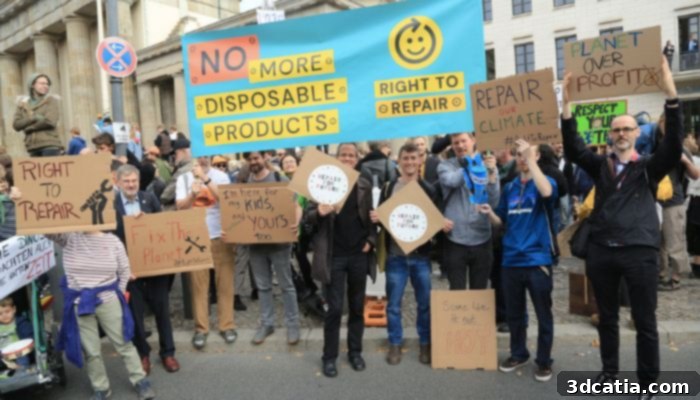
Embracing the Right to Repair can significantly reduce e-waste and promote product longevity (Photo credits: Kyle Wiens)
The journey towards a fully implemented Right to Repair in the EU is nearing its critical juncture. While significant progress has been made with the IMCO committee’s approval, the final version of this landmark legislation is still pending. Members of the European Parliament (MEPs) are scheduled to vote on the comprehensive draft mandate at the upcoming plenary session in November, which will be followed by extensive discussions to determine the definitive path forward. This pivotal vote will shape the future of consumer rights, environmental sustainability, and industrial responsibility across the continent. The widespread adoption of these measures is expected to not only reduce the colossal amount of waste generated but also to encourage product innovation towards greater durability and modularity. It will foster job creation within the repair sector and fundamentally shift consumer expectations, making repair a default choice rather than a last resort. For more detailed information regarding the EU Right to Repair legislation and its implications, interested parties can consult the official press room for updates HERE.
What are your thoughts on the European Union’s ambitious legislative efforts concerning the Right to Repair? Do you believe these measures go far enough to address waste and empower consumers, or are there further steps needed? Share your insights and opinions in a comment below or join the conversation on our LinkedIn, Facebook, and Twitter pages! Don’t forget to subscribe to our free weekly Newsletter here for the latest 3D printing news delivered straight to your inbox. You can also explore all our videos and discover more about additive manufacturing on our YouTube channel.
*Cover Photo Credits: European Commission / PhoneArena