
Revolutionizing Road Maintenance: How Dubai’s RTA Pioneers 3D Printing for Urban Infrastructure
While the innovative capabilities of additive manufacturing have found a growing foothold in various industrial sectors, its application within the rail industry for enhancing infrastructure, such as improving track conditions, is well-documented. However, the adoption of this transformative technology for road infrastructure maintenance has remained conspicuously rare. This long-standing paradigm, however, is on the cusp of a significant shift, largely thanks to groundbreaking initiatives spearheaded in the United Arab Emirates. In Dubai, a global hub for innovation and future-forward thinking, the Roads and Transport Authority (RTA) is boldly embracing 3D printing to elevate its road maintenance operations. This strategic move highlights a clear vision for integrating advanced technologies into critical urban services. To achieve this ambitious goal, the RTA forged crucial partnerships with three specialized additive manufacturing companies. Together, these entities have meticulously developed an advanced methodology for designing and producing essential spare parts and even pavement materials crucial for maintaining Dubai’s extensive road network. This pioneering solution not only offers a pathway to address maintenance challenges locally and rapidly but also promises unparalleled efficiency, setting a new benchmark for infrastructure management worldwide.
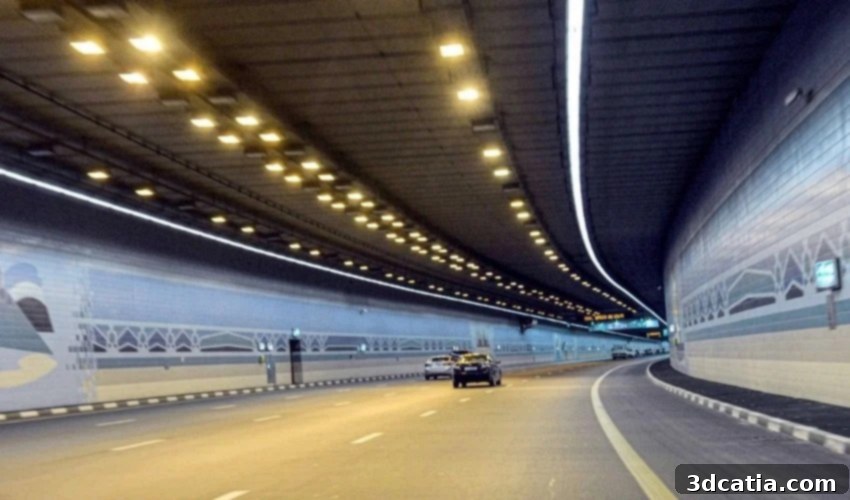
The RTA’s decision to pivot towards 3D printing, and more broadly, to embrace a suite of new digital technologies, underscores its unwavering commitment to integrating cutting-edge innovations into its operational framework. This forward-thinking approach is a testament to Dubai’s reputation as a city that consistently pushes the boundaries of urban development and smart infrastructure. Maitha bin Adai, the distinguished Executive Director of the Roads and Transport Authority, articulated the rationale behind this strategic choice, stating, “During the past few months, RTA developed a new initiative and conducted various studies and experiments to increase the availability of spare parts for roads maintenance systems, in cooperation with specialist 3D printing companies. The initiative has proved to be successful in extending the sources of spare parts such as propeller fans, control equipment, and cladding for tunnel walls in Dubai’s road facilities.” This statement not only validates the immediate success of the program but also illuminates the diverse array of components that are now being efficiently produced using additive manufacturing. From vital mechanical parts like propeller fans to intricate control equipment and even structural elements such as cladding for tunnel walls, 3D printing is demonstrating its versatility and reliability in supporting critical road infrastructure, ensuring uninterrupted service and enhanced safety for millions of commuters.
Photo Credits: Government of Dubai Media Office
Unlocking Efficiency and Savings: The Transformative Impact of 3D Printing in Road Infrastructure
The strategic integration of 3D printing into road maintenance operations has, as in countless other applications, yielded substantial benefits for the RTA, most notably in the realm of financial efficiency. The Authority proudly reports a remarkable 50 percent reduction in expenditures related to replacement parts, a significant saving that directly translates into more resources available for other vital infrastructure projects. This drastic cost reduction is primarily attributed to the ability to produce parts on-demand and locally, eliminating the high costs associated with traditional manufacturing, bulk purchasing, and complex international logistics. Furthermore, this innovative approach has successfully driven failure rates down to unprecedented lows, indicating enhanced reliability and durability of the 3D-printed components. The ability to design and produce these essential parts within Dubai itself has dramatically streamlined workflows and slashed overall project timelines. This localized production strategy bypasses the historically time-consuming and often expensive process of importing spare parts, which frequently involved lengthy lead times, customs delays, and considerable shipping costs. By creating a self-sufficient supply chain, the RTA can respond to maintenance needs with unprecedented speed and agility, minimizing road closures and disruption to traffic flow. Moreover, when it comes to the stringent safety measures and performance requirements for critical infrastructure components, the RTA confidently asserts its capability to 3D print parts that meet and exceed all necessary properties, including structural integrity, material resistance, and precise dimensional accuracy. This ensures that the advanced technology not only delivers economic advantages but also upholds the highest standards of safety and operational excellence.
Rigorous Testing and Validation: Ensuring Quality and Durability in Additive Manufacturing for Roads
The successful implementation of 3D printing for critical road maintenance applications was not an overnight achievement; it was the culmination of meticulous planning, extensive research, and rigorous testing. As one might anticipate with any pioneering technological deployment, particularly in an environment as demanding as road infrastructure, a comprehensive series of tests and qualification processes were indispensable. Before any 3D-printed part could be officially integrated into Dubai’s road network, project stakeholders embarked on an intensive phase aimed at continually refining the manufacturing process. This involved optimizing parameters such as material selection, print orientation, layer thickness, and post-processing techniques to ensure the highest quality and performance. Furthermore, exhaustive tests were conducted to rigorously verify the efficiency, durability, and most critically, the safety of these additive-manufactured spare parts. These tests likely included mechanical stress tests, environmental simulations to replicate Dubai’s extreme heat and sandy conditions, fatigue testing to assess long-term wear, and chemical resistance assessments to ensure resilience against common road contaminants. Only after these exhaustive trials demonstrated unequivocally that the 3D-printed components met or surpassed established industry standards, could they be officially approved for deployment. This stringent validation process underscores the RTA’s unwavering commitment to safety and excellence, ensuring that Dubai’s roads benefit from reliable, cutting-edge maintenance solutions. For those interested in delving deeper into the specifics of this groundbreaking initiative and the comprehensive testing protocols, further details can be accessed HERE.
Beyond Spare Parts: The Future of Additive Manufacturing in Urban Infrastructure
The success of Dubai’s RTA in leveraging 3D printing for road maintenance transcends the immediate benefits of cost savings and improved efficiency. It represents a significant milestone in the broader adoption of additive manufacturing within civil engineering and urban infrastructure. This initiative positions Dubai as a global leader in integrating smart technologies into the very fabric of its urban environment, setting a precedent for other cities worldwide to follow. The implications are far-reaching: imagine cities where essential infrastructure components, from drainage grates to specialized sensor housings for smart roads, can be printed on-demand, reducing waste, accelerating repairs, and enhancing overall urban resilience. This localized, on-demand manufacturing paradigm also has profound environmental benefits, including a reduced carbon footprint due to less transportation of goods and optimized material usage. Furthermore, the ability to rapidly prototype and iterate designs allows for continuous innovation, leading to more durable, functional, and even aesthetically pleasing infrastructure elements. The future could see 3D printing being used not just for maintenance parts, but for the direct construction of certain road features, specialized pedestrian walkways, or even custom urban furniture, seamlessly integrated with smart city technologies. The RTA’s pilot project serves as a compelling case study, illustrating how strategic partnerships between public authorities and private sector specialists can unlock the full potential of advanced manufacturing technologies to build more sustainable, efficient, and future-ready cities.
This innovative approach to infrastructure management is not merely about replacing broken parts; it’s about fundamentally rethinking how we design, build, and maintain our urban spaces. By embracing the flexibility and precision of 3D printing, authorities like Dubai’s RTA are paving the way for a new era of infrastructure development that is more responsive, resource-efficient, and capable of adapting to the evolving demands of modern cities. It’s a testament to the power of technological foresight and strategic investment in pioneering solutions that promise long-term benefits for urban populations and environments. The ongoing success in Dubai offers a tangible blueprint for other municipalities globally, demonstrating that the barriers to adopting such advanced methods are surmountable, and the rewards are substantial. This shift represents a paradigm change, moving from a reactive, repair-oriented maintenance model to a proactive, technologically-driven system that enhances the longevity and performance of critical infrastructure while delivering significant economic and environmental advantages.
What are your thoughts on the groundbreaking use of 3D printing for road maintenance in Dubai? Do you believe this will inspire other cities to adopt similar strategies? Let us know your insights in a comment below or share your views on our Linkedin, Facebook, and Twitter pages! Don’t forget to sign up for our free weekly Newsletter here, to receive the latest 3D printing news straight to your inbox! You can also find all our compelling videos on our YouTube channel, offering a visual dive into the world of additive manufacturing.
*Cover Photo Credits: WAM/Tariq alfaham