
Revolutionizing Coral Reef Restoration: archiREEF’s Innovative Use of 3D Printed Terracotta Tiles for Marine Ecosystem Revival
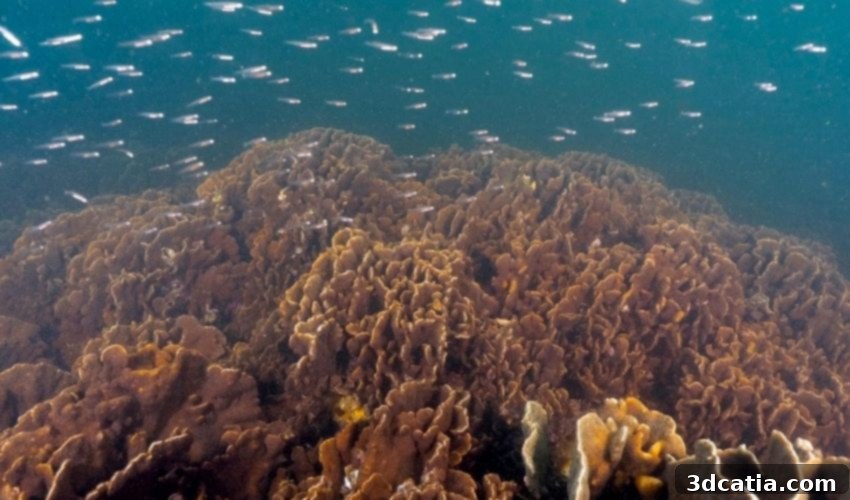
Coral reefs, vibrant underwater cities teeming with life, are among the most biodiverse ecosystems on Earth, yet they face an existential crisis. These crucial marine habitats are rapidly succumbing to environmental pressures, primarily driven by climate change, pollution, and unsustainable human activities. Scientists estimate that up to half of the world’s coral reefs have already been irreversibly damaged, and the current trajectory suggests a complete global annihilation within decades if drastic measures are not taken. The loss of these magnificent structures would not only signify a massive blow to marine biodiversity but also severely impact coastal protection, fisheries, and local economies worldwide. However, amidst this grim outlook, rays of hope emerge from innovative conservation efforts. Among these pioneering projects is archiREEF, a groundbreaking initiative originating from Hong Kong. This ambitious project harnesses the power of 3D printing technology to create specialized terracotta tiles, designed to provide a nurturing foundation for the regeneration of marine life and coral communities. To delve deeper into this innovative solution, we had the privilege of speaking with Vriko Yu, the co-founder and CEO of archiREEF, to understand the project’s inception, its operational mechanics, and how individuals globally can contribute to this vital ecosystem restoration.
Meet Vriko Yu: A Scientist’s Journey to 3D Printed Coral Restoration
My name is Vriko Yu, and I proudly serve as the co-founder and CEO of archiREEF. For over two years, our dedicated team has been at the forefront of developing and deploying 3D printed reef tiles specifically engineered for ecosystem restoration, with a particular focus on revitalizing struggling coral populations. My personal commitment to coral restoration, however, spans a much longer period – more than eight years of relentless research and hands-on efforts. Our primary operational base is Hong Kong, a region that, despite its natural beauty, presents significant challenges for coral growth. For many decades, Hong Kong’s coral communities have endured severe degradation from a relentless combination of anthropogenic threats, such as habitat destruction and pollution, and natural stressors, including disease outbreaks and extreme weather events. These pressures have led to a continuous decline in their health and abundance. My work has historically revolved around identifying the root causes of this degradation and, more recently, devising effective, immediate solutions. Despite four years of intensive efforts to restore coral communities in Hong Kong using conventional methods, we encountered very limited success, leading to a profound sense of desperation. This critical juncture compelled us to fundamentally rethink our approach. We realized that the existing market offered no suitable tools or technologies that aligned with our specific restoration goals. This profound gap inspired us to innovate our own solution, which ultimately led us to embrace the transformative potential of 3D printing technology.
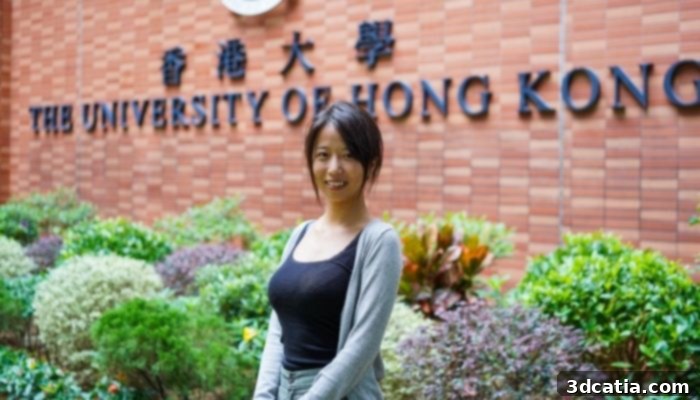
Vriko Yu, the co-founder and CEO of archiREEF (photo credits: Kin Ho)
archiREEF’s Vision: Democratizing Coral Restoration and Learning from Past Failures
As a scientist by training, I’ve observed that the field of coral restoration is relatively young, only gaining significant traction over the last two decades. Traditionally, it has largely been the domain of marine scientists and reef managers, fostering an isolated environment where only “relevant” stakeholders were perceived to have a role. However, when archiREEF’s innovative product began to garner global media attention, we were inundated with messages from individuals across the world, eagerly asking how they could contribute or implement similar solutions in their local reefs. This overwhelming response was a pivotal moment for me; it illuminated a crucial truth: coral reef restoration is not solely the responsibility of scientists, but rather a collective imperative that involves everyone. The fundamental challenge, I realized, was the lack of accessibility for the general public. This is precisely where archiREEF steps in. Our core mission is to democratize coral restoration, making it as straightforward and accessible as planting trees, empowering communities and individuals to actively participate in the revival of our oceans.
The importance of coral reef restoration cannot be overstated. Reef ecosystems are globally distributed and vital for countless reasons. Many regions worldwide are now investing heavily in such projects, particularly those heavily reliant on coral reefs for economic stability, such as coastal communities dependent on fisheries, and for their critical role as natural barriers against storm surges and erosion. Prominent examples of extensive investment in coral science and technology include Australia’s Great Barrier Reef and Florida’s reefs. However, the path to successful restoration has been fraught with challenges and costly lessons. A notable historical example in the US dates back to the 1970s, when an attempt was made to revitalize a degraded reef area using old tires. The intention was to create new habitats, but in reality, it amounted to little more than dumping trash into the ocean. Three decades later, scientists discovered that tires, as a material, were completely unsuitable for recruiting foundational species, resulting in no meaningful recovery. The subsequent effort to retrieve these structures required five times the initial budget and relied heavily on volunteers, primarily from the Navy and Army. This case serves as a stark reminder of the critical importance of careful design and material selection in coral restoration initiatives.
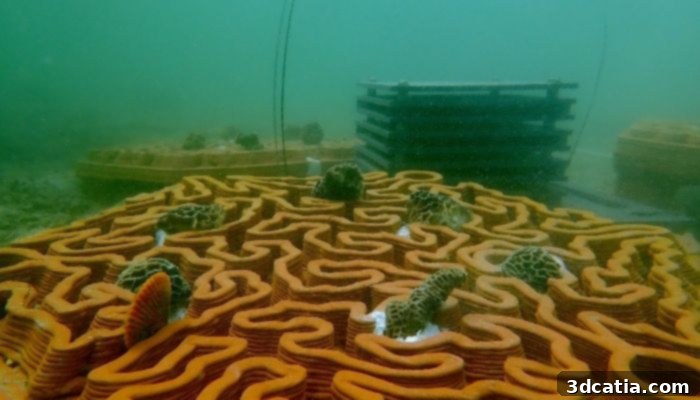
The 3D printed structures (photo credits: archiREEF)
Following these early setbacks, the restoration community began exploring alternative materials such as cinder blocks or metal bars, primarily to provide stable structures for coral regrowth. Yet, these materials introduced their own significant problems. Cement, for instance, possesses high alkalinity, a characteristic that makes it largely intolerable for many coral species, preventing their successful settlement and growth. Wild metal structures, when submerged, inevitably rust and leach toxic chemicals into the marine environment, further harming delicate ecosystems. While many artificial reef structures are designed to be complex, aiming to replicate the functional roles of natural reefs by providing habitats and structural complexity, our philosophy at archiREEF diverges. We firmly believe that coral reefs are living entities capable of recovery, rather than mere structures to be replaced. Therefore, our 3D printed terracotta tiles are specifically engineered not to substitute natural reefs, but to serve as a nurturing foundation. They provide the ideal substrate and initial complexity for new corals to settle and thrive, thereby initiating a natural regeneration process that encourages the return and flourishing of diverse marine species.
The Power of Additive Manufacturing: Why 3D Printing is Key for archiREEF
The decision to integrate 3D printing into the archiREEF project was driven by several compelling advantages, chief among them being its unparalleled adaptability. Our ambition was to develop a restoration solution that could be tailored to any coral species, thriving in any marine environment across the globe. The core of our design relies on an algorithmic approach, allowing for precise modifications to the tile’s structure by simply adjusting a few parameters. This inherent flexibility in design is absolutely critical given our ultimate goal of restoring corals in diverse ecological settings. To accommodate such a wide range of requirements, 3D printing proved to be the optimal solution. Beyond the ease of generating new designs with varied parameters, this technology also offers significant benefits in terms of time and cost-effectiveness compared to traditional manufacturing methods. These two factors – adaptability and efficiency – were paramount in our selection of 3D printing.
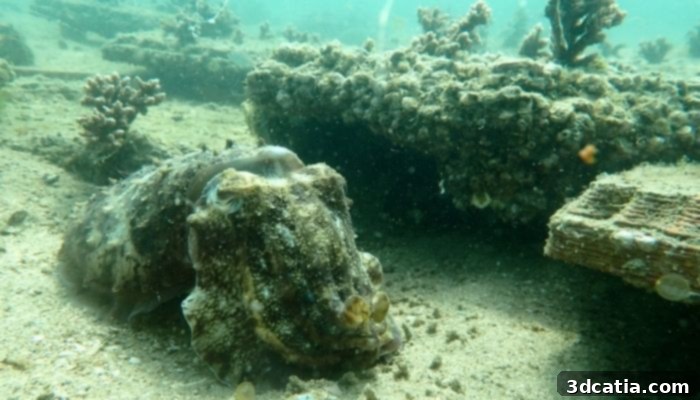
Already, the team at archiREEF is seeing progress with coral growth on the tiles (photo credits: archiREEF)
Furthermore, 3D printing unlocks the potential for significantly increased design complexity, a feature that traditional molding techniques simply cannot match. Observing our intricate designs, it becomes evident that 3D printing allows for an exceptionally high resolution in creating tiny, detailed structures. This capability is particularly vital in environments like Hong Kong, which boast remarkable marine diversity, often characterized by microorganisms and small invertebrate species that require specific, intricate shelters for survival. With additive manufacturing, we can fabricate structures with an unprecedented level of detail, providing precisely the micro-habitats necessary to foster greater biodiversity and support the entire marine food web. This precision is a game-changer for effective ecosystem restoration, offering a nuanced approach to creating ideal conditions for a wide array of marine organisms.
The Challenges and Advantages of Terracotta 3D Printing
Working with clay, especially for 3D printing, presents a unique set of challenges. Firstly, terracotta is a natural material, and its properties can vary significantly depending on its geological origin. Sourcing clay from different locations means contending with varying mineral compositions, particle sizes, and moisture absorption rates. This necessitates a deep understanding and considerable experience in manipulating clay mixtures to achieve the desired consistency and behavior for successful extrusion during the 3D printing process. Achieving optimal control over the material requires extensive experimentation to formulate a mix that flows smoothly and maintains its structural integrity. More specifically, you need the right type of clay, precisely controlled moisture levels, and impeccable maintenance of the material. It’s crucial to remove all air bubbles before the clay enters the extruder, as even small air pockets can lead to printing errors or structural weaknesses in the final product. This meticulous preparation and execution make it a complicated and demanding process.
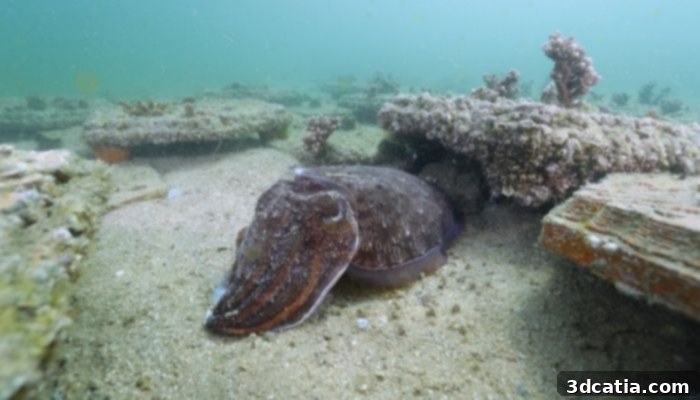
Marine life prefers materials like terracotta (photo credits: archiREEF)
Despite these significant technical hurdles, the ultimate reason for choosing terracotta is its inherent natural composition. Unlike synthetic materials, terracotta is benign and highly favored by marine life. Its porous structure provides an excellent surface for microbial films and algae to grow, which are essential food sources for many marine organisms, as well as an ideal substrate for coral polyps to settle and attach. This natural compatibility ensures that our restoration efforts are not only structurally sound but also biologically friendly, fostering a healthy and vibrant ecosystem from the ground up.
Remarkable Progress: archiREEF’s Success in Enhancing Marine Biodiversity
The journey of archiREEF began three years ago with an initial concept. The subsequent design and production phases, particularly in scaling up to full-sized production and finalizing the optimal tile design, spanned nearly a year. This period was characterized by intense collaboration among a multidisciplinary team of marine biologists, architects, and designers – individuals who, as you can imagine, often “speak very different languages.” The challenge lay in conceptualizing and creating a product that had no existing precedent, demanding a continuous dialogue of ideas. I might describe a biological requirement, and it would be interpreted in an entirely different structural or aesthetic manner by a designer, leading to a dynamic yet lengthy iterative process. This multidisciplinary exchange, a “bombardment of ideas,” was not only challenging but also immensely rewarding and fun, ultimately shaping our innovative product.
Once the designs were finalized and production established, we deployed the 3D printed terracotta tiles into marine parks in Hong Kong, with crucial support from the government. Since then, we have rigorously monitored their performance, focusing not only on coral growth but also on the structural stability of the tiles, a vital consideration in a region prone to frequent typhoons. It has been incredibly encouraging to observe how resilient these structures are, successfully weathering significant environmental challenges. Beyond mere survival, our primary focus is on the ecological impact – specifically, the enhancement of biodiversity. In this aspect, we have witnessed remarkable success. The coral survivorship rates on our tiles have been exceptionally high, reaching an impressive 98%. This figure is four times higher than what is typically observed with conventional coral restoration methods, underscoring the superior efficacy of our innovative approach. This progress is not just about growing corals; it’s about rebuilding entire marine ecosystems.
Global Aspirations: archiREEF’s Role in the Decade of Ecosystem Restoration
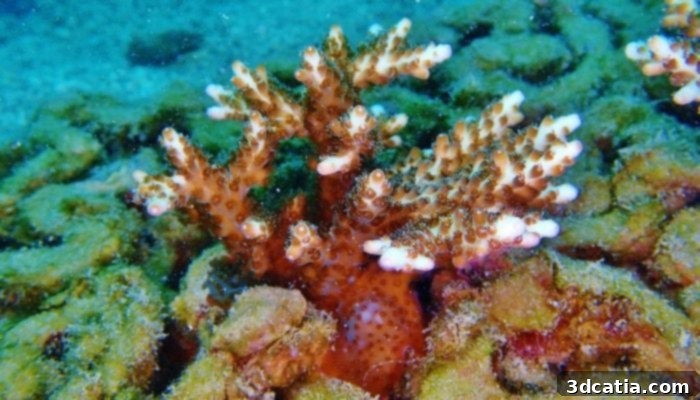
Photo Credits: Phil Thompson
We are living in a truly critical period for coral reef restoration. The urgency of this global challenge has been recognized at the highest levels, with the United Nations incorporating ecological restoration into its Sustainable Development Goals (SDGs 13 and 14). Building on years of dedicated effort, the UN took an even more decisive step in 2021, declaring this decade as the “Decade on Ecosystem Restoration.” This is not necessarily our absolute last chance, but it is undeniably a critical window. If we fail to act effectively within the next nine years, even if we were to later deploy the same, or even tenfold more, resources for ecosystem restoration, the outcomes would be drastically different and far less impactful. This decade represents a pivotal moment for us to not only mitigate the damages already inflicted by climate change but also to actively work towards fixing the underlying problems. archiREEF, while a powerful solution, is not presented as the only answer. Rather, it stands as a testament to what is possible in an era increasingly empowered by technological advancements. 3D printing technology has provided us with a far more effective and efficient approach to coral restoration than previously imagined, offering a scalable and impactful solution. Ultimately, our deepest hope is to inspire and engage everyone, from scientists to everyday citizens, to contribute actively to the overarching mission of global ecosystem restoration. This collective effort is essential for safeguarding our planet’s vital marine habitats for future generations.
A Call to Action: Your Role in Marine Conservation
We find ourselves in an incredibly interesting and challenging era. The technological tools, the scientific understanding, and the skilled individuals are all within our reach. What is truly needed now is for us to unite, to come together and leverage these resources in a more inclusive and collaborative manner. It is crucial to recognize that everyone has a role to play; no one should feel that they cannot contribute or that this problem does not concern them. The devastation of coral reefs and the broader ecological crisis are not isolated issues – they are OUR COLLECTIVE PROBLEM. If you are inspired by archiREEF’s innovative work and wish to learn more about how you can support or engage with their mission, please visit their official website HERE.
What are your thoughts on archiREEF’s revolutionary solution? Would you consider initiating a project to foster coral restoration in your local marine areas? Share your insights and opinions with us by leaving a comment below or by connecting with us on our LinkedIn, Facebook, and Twitter pages! To stay abreast of the latest innovations and news in 3D printing, don’t forget to subscribe to our free weekly Newsletter here, delivered directly to your inbox! You can also explore all our insightful videos on our YouTube channel.
*Cover Photo Credits: David Poon