
3D Printed Concrete Houses Demonstrate Exceptional Earthquake Resistance in Landmark China Study
In a pioneering effort to enhance construction safety and resilience, a dedicated team of researchers in China has conducted a significant experiment to assess the earthquake-resistant capabilities of 3D printed concrete houses. This groundbreaking trial, meticulously carried out at the Institute of Engineering Mechanics of the China Earthquake Administration in Sanhe, Hebei Province, involved subjecting a scaled model of a genuine 3D printed home to a rigorous series of progressively powerful simulated seismic events. The findings from this comprehensive investigation offer compelling insights into the future potential of additive manufacturing in creating structures that can withstand nature’s most formidable forces.
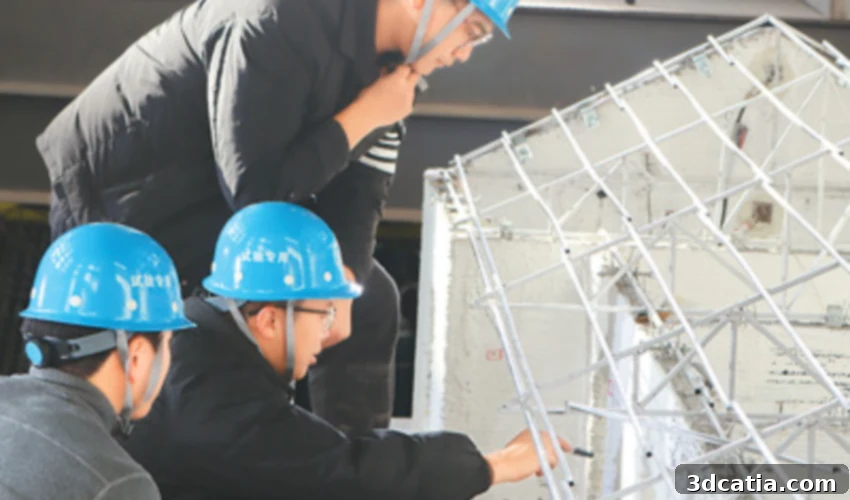
The inspiration for this critical research stemmed from an actual house constructed using cutting-edge 3D printing technology in Hebei’s Gucheng County. This unique dwelling has already garnered considerable attention, establishing itself as a local architectural landmark. Its innovative construction method naturally raised pertinent questions within the engineering and construction communities, particularly regarding the structural integrity and long-term durability of such printed structures when faced with the frequent seismic activity common to the region. To address these vital concerns, an interdisciplinary collaboration was formed, bringing together expert researchers from Zhejiang University and Dalian University of Technology, alongside the Institute of Engineering Mechanics, and industrial partner Lingtong Technology. Together, this consortium aimed to put the 3D printed design through the most rigorous testing protocols imaginable.
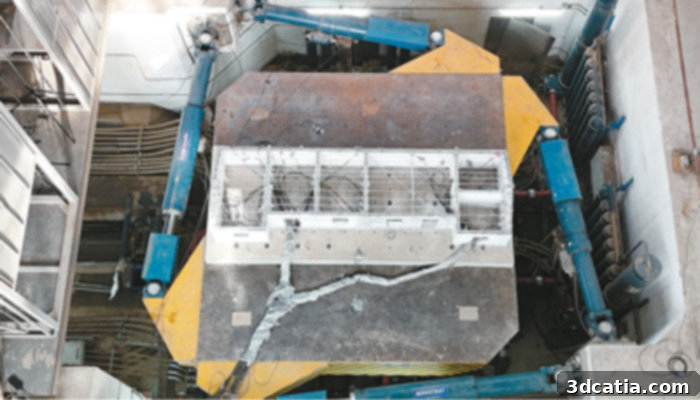
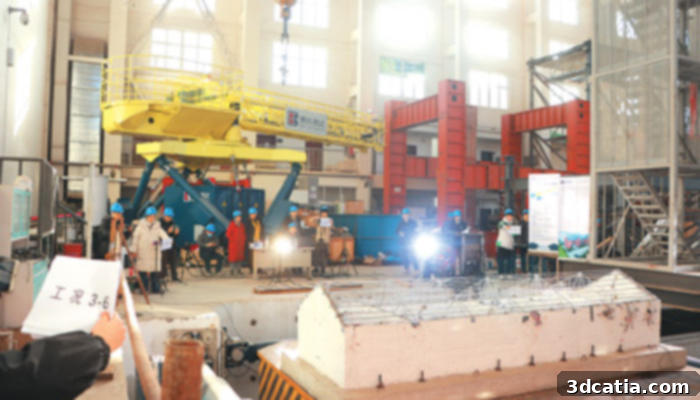
Given the logistical impossibility of transporting the full-sized house to the testing facility, a meticulously crafted five-meter-long scaled model was constructed. This model, representing a precise scaled replica of the original Gucheng County house, was then mounted onto a sophisticated vibration table – a specialized apparatus designed to simulate the complex ground motions associated with earthquakes. The research team implemented a comprehensive testing regimen comprising six distinct sets of conditions, with each set encompassing seven individual tests. These tests systematically increased the seismic intensity, starting from a moderate level six and escalating to a formidable level nine, which corresponds to the most severe earthquake scenarios. Throughout every phase of this demanding process, an array of advanced monitoring equipment, including high-resolution drones, high-speed cameras, and an intricate network of sophisticated sensors, meticulously recorded every minute detail, capturing every crack, shift, and structural response within the foundation and superstructure of the model. This extensive data collection ensured a comprehensive understanding of the material and structural behavior under extreme stress.
The results of these rigorous tests were nothing short of impressive, providing robust evidence of the inherent strength and resilience of the 3D printed concrete structure. During the simulated quakes at lower seismic intensity levels, the main body of the house model exhibited absolutely no discernible damage, demonstrating its capability to withstand common seismic events without compromise. As the intensity was escalated to simulate stronger quakes, minor, superficial cracks began to appear. Crucially, these cracks were consistently observed to be confined to the non-structural elements and did not in any way compromise the core structural framework of the building. Even under the most extreme test levels, corresponding to catastrophic seismic scenarios, the 3D printed house model steadfastly refused to collapse, retaining its structural integrity. To further push the limits, an additional ton of excess weight was applied to the model, simulating heightened loads that might occur in a real-world scenario; astonishingly, the structure continued to hold firm, exceeding expectations for its performance under stress. This remarkable performance underscores the potential of 3D printing to create highly resilient and safe housing solutions.
Associate Professor Sun Xiaoyan of Zhejiang University, who spearheaded this ambitious project, emphasized the immense value of the data collected during the trials. She noted that these findings will be instrumental in further refining the design principles and material compositions of 3D printed concrete structures, pushing the boundaries of what is achievable in earthquake-resistant construction. Professor Sun vividly compared 3D printing technology to a “transformer,” highlighting its multifaceted advantages: unparalleled speed of construction, remarkable flexibility in design, and, critically, superior earthquake resistance. She elaborated on the transformative potential of this technology, particularly for rural areas. In regions often plagued by labor shortages and a demand for durable, affordable housing, 3D printed houses offer a compelling solution. They not only streamline the construction process but also significantly enhance the safety and longevity of homes, contributing to improved living standards and resilience against natural disasters. The ability to rapidly deploy structurally sound, customized homes can be a game-changer for communities in need.
While the nascent technology of 3D printed construction still necessitates further certification, regulatory frameworks, and more extensive real-world trials before widespread adoption, the resounding success of this experiment provides powerful and persuasive evidence. It strongly suggests that 3D printed housing is poised to play a practical and pivotal role in the future of the global construction industry. With earthquakes posing a constant and recurring challenge across numerous parts of China and many other regions worldwide, innovative tests like this are not merely academic exercises. They demonstrably prove how advanced 3D printed construction techniques can deliver safer, more resilient, and potentially more sustainable housing solutions for communities facing seismic risks. The implications extend beyond just safety, encompassing efficiency, reduced material waste, and the ability to create bespoke architectural forms previously thought impossible or too costly. This landmark study marks a significant step towards a future where housing is not only innovative but also inherently safer and more adaptable to environmental challenges.
What are your thoughts on the groundbreaking advancements in 3D printed houses and their potential for earthquake resistance? We invite you to share your perspectives and engage in the conversation by leaving a comment below or by connecting with us on our LinkedIn or Facebook pages! Moreover, ensure you stay at the forefront of additive manufacturing news by signing up for our free weekly Newsletter, delivering the latest 3D printing developments directly to your inbox. For a visual exploration of this exciting technology, you can also find all our compelling videos on our YouTube channel. We look forward to hearing from you and sharing the future of 3D printing!
*All Photo Credits: China Earthquake Administration