
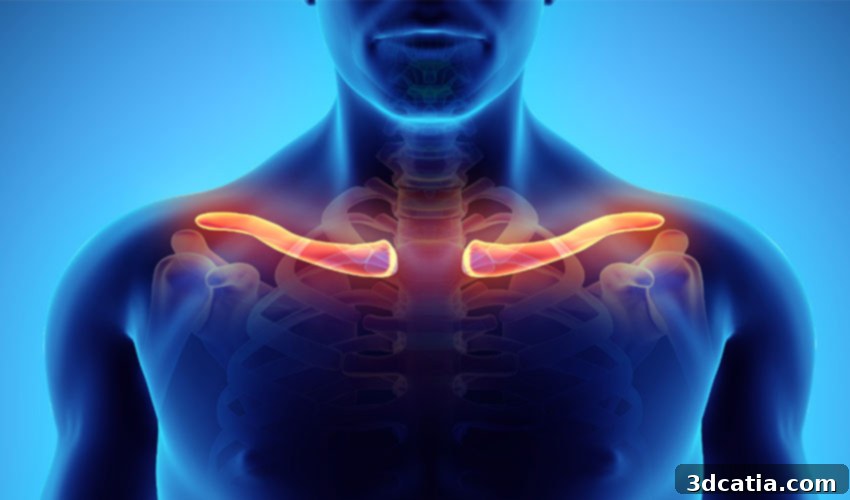
Revolutionizing Orthopedics: The First 3D Printed PEEK Clavicle Implant Marks a New Era in Patient-Specific Care
A groundbreaking achievement in medical science has recently unfolded at Kunming Medical University Hospital in China. In a remarkable collaboration with the innovative company IEMAI 3D, a medical team has successfully transplanted the world’s first clavicle (collarbone) fabricated entirely using 3D printing technology with PEEK material. This monumental milestone is set to reshape the landscape of orthopedic surgery and biomaterial applications, opening new avenues for patient treatment and recovery. But what exactly does this achievement signify for the broader medical sector, and why is the judicious use of advanced thermoplastic materials becoming increasingly crucial?
For several months, materials like PEEK, ULTEM, and other advanced thermoplastics have been generating significant buzz within various industries, particularly in high-performance sectors such as aerospace, automotive, and increasingly, medicine. These materials are highly valued for their exceptional properties, which often bridge the gap between high-performance plastics and traditional metals. A key reason for their growing prominence in additive manufacturing is their compatibility with Fused Deposition Modeling (FDM) technologies. FDM offers a relatively more affordable and accessible method for manufacturing complex components, making the production of medical implants with these advanced materials economically viable. Furthermore, these sophisticated thermoplastics provide mechanical strength and resistance comparable to some metals, yet at a considerably lower cost and with unique biological advantages that metals often lack. This combination of strength, cost-effectiveness, and biocompatibility makes them ideal candidates for next-generation medical devices, pushing the boundaries of what’s possible in personalized healthcare.
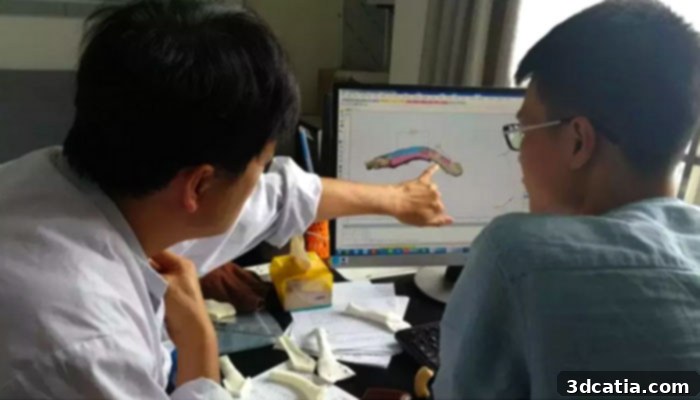
While the concept of 3D printed implants might seem revolutionary, it is not entirely new to the medical industry. Indeed, it has been over a decade since the successful implantation of the first 3D printed hip prosthesis in a patient, demonstrating the long-term potential of additive manufacturing in orthopedics. Since then, an increasing body of research and clinical studies has consistently highlighted the profound benefits of integrating additive manufacturing into the development of medical devices. These studies have been instrumental in revealing that the strategic use of high-performance plastics, such as PEEK, can lead to remarkably faster patient recovery times and significantly better acceptance rates of the implant by the human body. Unlike many traditional metal implants, PEEK’s mechanical properties, including its modulus of elasticity, are much closer to that of natural bone. This similarity minimizes issues like stress shielding, where a much stiffer implant absorbs mechanical stress, leading to bone degradation around the implant. PEEK’s radiolucency also allows for clearer post-operative imaging without the artifacts commonly associated with metal implants, enabling better monitoring of healing and potential complications. These factors collectively contribute to improved patient outcomes and a more seamless integration of the implant within the body.
The Pioneering Procedure: How a 3D Printed PEEK Clavicle was Successfully Implanted
The decision to utilize a 3D printed PEEK clavicle implant in this specific case at Kunming’s First Hospital was driven by the unique and critical needs of the patient. The medical team faced the challenge of treating a male patient with advanced cancer who required a clavicle replacement. Conventional surgical procedures involving metal implants were deemed unsuitable due to the potential adverse effects on his ongoing chemotherapy treatment. Metal implants can sometimes interfere with radiation therapy or complicate MRI scans, which are vital for cancer monitoring and treatment. Recognizing these significant limitations, the doctors, in close collaboration with expert engineers, meticulously selected the PEEK thermoplastic material for the patient’s implant. After extensive research, rigorous testing, and the development of various design iterations, they successfully finalized the optimal patient-specific clavicle model. This multidisciplinary approach underscored the commitment to leveraging advanced technology for personalized medical solutions.
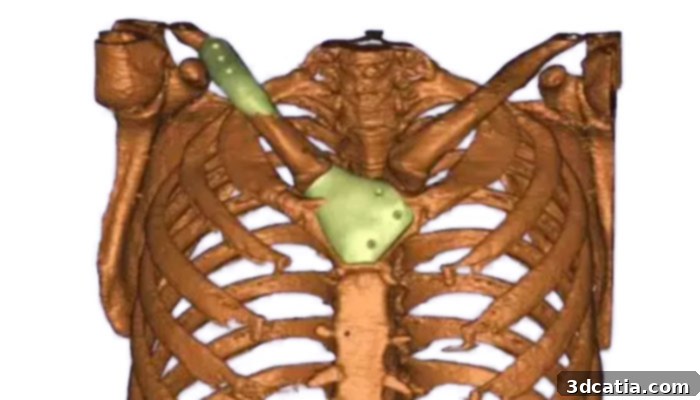
The entire development and manufacturing process of this bespoke clavicle was facilitated by IEMAI 3D, a leading Asian company specializing in high-performance 3D printing solutions. They utilized their advanced MAGIC-HT-M 3D printer, a machine renowned for its capability to print with high-temperature materials like PEEK. IEMAI 3D, having recently expanded its presence in the European market, has garnered a strong reputation for its expertise in PEEK 3D printing, enabling the creation of intricate, durable, and biocompatible medical devices. The precision and customization offered by this FDM printer allowed for the exact replication of the patient’s anatomical structure, ensuring a perfect fit and optimal functionality. This level of personalization is a cornerstone of modern medicine, allowing surgeons to address individual patient needs with unprecedented accuracy and care, ultimately improving surgical outcomes and long-term prognosis. The ability to tailor an implant specifically to a patient’s anatomy and medical condition represents a significant leap forward from off-the-shelf solutions.
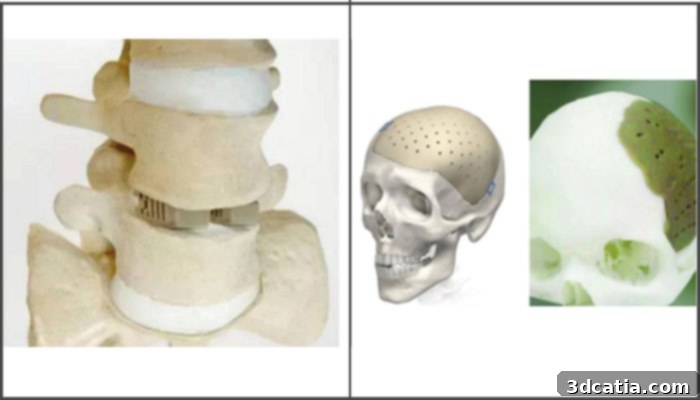
Other examples of successful 3D printed prostheses highlight the versatility of additive manufacturing in medicine.
The successful transplantation of a metal-free, 3D printed clavicle crafted from PEEK represents a profound breakthrough with far-reaching implications for the medical field. The elimination of metal from 3D prostheses significantly broadens the eligibility criteria for a multitude of patients who previously faced contraindications. Patients undergoing chemotherapy, radiation therapy, or those with metal allergies can now consider implant surgery without the added concern of their prosthesis negatively impacting future critical treatments or causing allergic reactions. This paradigm shift not only increases patient access to life-changing surgical interventions but also cultivates a much greater interest and investment in advanced thermoplastic materials and the specialized 3D printing machines capable of manufacturing them. It underscores a growing trend towards patient-centric medicine, where material science and advanced manufacturing converge to deliver highly customized, safer, and more effective medical solutions. The implications extend beyond just individual patient cases, potentially leading to widespread adoption of PEEK and similar materials for a variety of orthopedic and other medical implants.
The advantages of PEEK and other high-performance thermoplastics in medical applications are numerous and diverse. Their inherent biocompatibility ensures minimal adverse reactions within the human body. Their high strength-to-weight ratio allows for the creation of robust yet lightweight implants, which can reduce patient discomfort and improve mobility. Furthermore, PEEK’s radiolucency is a critical feature, enabling clearer imaging via X-rays, CT scans, and MRIs, which is invaluable for post-operative monitoring and diagnosis. This contrasts sharply with metal implants, which often create artifacts that obscure imaging results. The ability to sterilize PEEK at high temperatures without degradation is another significant benefit, ensuring aseptic conditions for implant procedures. This innovation is not just about replacing bone; it’s about optimizing the entire patient journey, from pre-surgical planning to long-term recovery, and improving the quality of life for individuals facing complex medical challenges. As research continues, the integration of osteoconductive or osteoinductive coatings onto PEEK implants could further enhance bone regeneration and implant integration, pushing the boundaries even further.
This landmark achievement in 3D printed PEEK clavicle transplantation serves as a powerful testament to the transformative potential of additive manufacturing and advanced materials in modern healthcare. It highlights the collaborative spirit between medical professionals and technology innovators like IEMAI 3D in addressing complex patient needs with innovative, personalized solutions. As we move forward, the lessons learned from this successful procedure will undoubtedly catalyze further research, development, and clinical applications of 3D printed thermoplastic implants, ushering in a new era of highly effective and accessible medical treatments worldwide. This is a clear indicator that personalized medicine, powered by 3D printing, is not just a concept but a rapidly evolving reality that will continue to redefine the standards of care in orthopedic and reconstructive surgery.
For more detailed information regarding IEMAI 3D’s pioneering work in high-performance 3D printing and advanced materials, you are encouraged to visit their official website HERE.
What are your thoughts on this incredible leap forward in medical technology and the prospect of having a clavicle 3D printed in PEEK? We invite you to share your insights and comments below, or engage with us on our Facebook and Twitter pages! Don’t miss out on the latest advancements in additive manufacturing – remember to sign up for our free weekly Newsletter, delivering all the essential 3D printing news directly to your inbox!