
RUSAL America Expands Additive Manufacturing Portfolio with Sustainable, High-Performance Aluminum Powders
RUSAL America, a long-standing leader in the global aluminum industry with over a century of experience, has recently made a significant announcement regarding the expansion of its product offerings. The company is now officially including additive manufacturing (AM) powders in its portfolio, marking a strategic move into the rapidly growing sector of industrial 3D printing. This expansion introduces a comprehensive range of advanced aluminum powder solutions designed to meet the rigorous demands of various high-tech industries.
The newly launched suite of AM powders features a total of nine distinct alloys. This includes four traditional Al-Si (aluminum-silicon) based casting alloys, which are renowned for their excellent casting properties and widespread use in conventional manufacturing. Additionally, RUSAL America is introducing five specialized alloys meticulously engineered for critical applications within the aerospace and automotive industries, as well as for general industrial uses requiring superior material performance. A cornerstone of RUSAL’s operations is its unwavering commitment to sustainability; more than 90% of the electricity used in its aluminum production processes is sourced from clean, renewable hydroelectric power, positioning the company as the world’s leading manufacturer of low-carbon aluminum powder. This focus on environmentally responsible production extends directly to its new line of AM powders, providing a greener choice for advanced manufacturing.
Aluminum is celebrated for its exceptional combination of lightness and strength, making it an indispensable material across countless applications. It rarely appears in its pure elemental form for industrial use; instead, it is typically alloyed with other metals such as silicon, copper, magnesium, and scandium to significantly enhance its physical, mechanical, and thermal properties. These alloys unlock tailored performance characteristics like increased tensile strength, improved fatigue resistance, better corrosion resistance, or superior thermal conductivity, depending on the specific application requirements. As metal additive manufacturing continues its accelerated trajectory towards industrialization and mass production, aluminum is increasingly recognized as one of the most pivotal materials for this technological revolution. Its versatility and performance advantages are perfectly aligned with the need for high-performance, lightweight components in sectors like aerospace, automotive, and consumer electronics. To proactively address this anticipated surge in demand and facilitate wider adoption, RUSAL America’s expanded portfolio is strategically designed to provide high-performance aluminum solutions, thereby making advanced material capabilities accessible to a broader spectrum of AM applications.
RUSAL America’s Comprehensive AM Powder Portfolio for Diverse Applications
While RUSAL America’s powder segment is now significantly focused on additive manufacturing, the company maintains its extensive global supply chain, providing various aluminum and aluminum alloy powders to numerous other industries worldwide. For its AM powders, a primary optimization target has been achieved for Powder Bed Fusion (PBF) applications. This optimization ensures critical powder characteristics such as superior flowability, excellent packability, and ultimately, high final part quality after the printing process. Optimal flowability is crucial for consistent layer deposition, preventing clumping or uneven distribution within the powder bed. Packability ensures dense and uniform layers, which directly impacts the mechanical properties and surface finish of the printed part. Together, these properties are vital for achieving reliable and repeatable results in PBF processes like Selective Laser Melting (SLM) and Electron Beam Melting (EBM).
Understanding that the additive manufacturing landscape is diverse, RUSAL America also offers significant flexibility. Customized Particle Size Distributions (PSDs) for their powders are available upon request. This bespoke approach caters to the specific requirements of other prominent AM technologies, such as Binder Jetting or Directed Energy Deposition (DED), each of which has unique demands for powder characteristics. Binder Jetting, for instance, requires powders with specific flow and packing densities to ensure the binder can effectively penetrate and bond particles, while DED processes often benefit from coarser, spherical powders for stable melt pool formation. Furthermore, customized PSDs can be supplied to meet highly specific in-house specifications developed by customers for their proprietary AM systems or specialized applications. This adaptability underscores RUSAL America’s commitment to being a comprehensive and responsive material partner in the evolving additive manufacturing ecosystem.
Uncompromising Quality and Sustainability: The ALLOW Advantage
A hallmark of RUSAL America’s new additive manufacturing portfolio is the uncompromising quality and meticulous composition of its materials. All powders within this portfolio are 100% pre-alloyed and consist solely of fully metallic particles, completely excluding any ceramic- or nano-inclusions. This purity ensures superior performance and consistency in the additive manufacturing process, leading to parts with predictable mechanical properties and excellent structural integrity. The absence of non-metallic inclusions is particularly important for critical applications where material homogeneity and freedom from defects are paramount. Furthermore, these high-purity powders are atomized exclusively from ALLOW feedstock, which is RUSAL’s pioneering low-carbon-footprint aluminum brand. The use of ALLOW underscores RUSAL’s dedication to environmental stewardship and offers a tangible benefit to customers seeking sustainable manufacturing solutions.
The environmental advantages of using ALLOW feedstock are substantial and independently verifiable. ALLOW boasts a carbon footprint that is an impressive 75% less than the global industry average for primary aluminum production, specifically considering smelter Scope 1 and Scope 2 emissions. This significant reduction is primarily achieved through RUSAL’s reliance on hydroelectric power, a clean and renewable energy source, for the vast majority of its aluminum production. To promote unparalleled transparency and accountability, every batch of RUSAL’s AM powders comes with a 3rd-party certified carbon certificate. This certification provides customers with verifiable proof of the low environmental impact of the materials they are utilizing, empowering them to make more sustainable choices for their additive manufacturing projects. By combining cutting-edge material science with robust environmental practices, RUSAL America is setting a new standard for sustainable innovation in the AM industry.
Spotlight on Innovative Alloy Solutions: RS-230 and RS-553 for Demanding Applications
Among the advanced alloys introduced in RUSAL America’s new AM powder portfolio are two particularly innovative solutions designed to address specific industrial challenges. The RS-230 material is a novel aluminum-copper (Al-Cu) alloy engineered with superior hot-crack resistance. Hot cracking, a common issue in additive manufacturing of certain alloys, can compromise the integrity and performance of printed parts. RS-230’s unique composition effectively mitigates this challenge, allowing for more robust and reliable production of complex geometries. Beyond its printability, RS-230 exhibits high-strength stability, maintaining its impressive mechanical properties even at elevated temperatures, specifically up to 250°C. This makes it an ideal candidate for applications in demanding environments where components are exposed to significant thermal stress, such as certain parts in automotive engines, heat exchangers, or industrial machinery.
Another standout alloy is RS-553, a novel aerospace-grade aluminum-magnesium-scandium (Al-Mg-Sc) alloy. Scandium is known for its remarkable ability to refine grain structure and enhance the strength and weldability of aluminum alloys, making it highly desirable for high-performance applications. RUSAL’s RS-553 has been meticulously developed with an optimized scandium content, striking a critical balance between performance and cost-effectiveness. This optimization ensures that the alloy delivers comparable or superior properties to other high-performance Al-Sc AM alloys currently on the market, but at a significantly lower cost. This breakthrough makes advanced, lightweight, and high-strength aluminum solutions more accessible for aerospace components, satellite structures, and other applications where weight reduction and structural integrity are paramount, without incurring the prohibitive costs typically associated with scandium-rich alloys. Both RS-230 and RS-553 exemplify RUSAL America’s commitment to pushing the boundaries of material science for additive manufacturing, providing solutions that meet the stringent requirements of modern industrial applications.
Leveraging Decades of Expertise for AM Innovation
RUSAL’s unique position in the global aluminum industry stems from its integrated capabilities and profound expertise, enabling it to provide unrivaled aluminum products to the additive manufacturing sector. This strong foundation is built upon two pillars: institutional aluminum alloy development expertise and world-class manufacturing facilities. The company benefits immensely from the Rusal Light Materials and Technology Institute (LMTI), a dedicated research and development hub that has decades of experience in innovating aluminum alloys for diverse applications. The LMTI houses a team of leading metallurgists, material scientists, and engineers who continuously push the boundaries of alloy design, tailoring compositions and processing parameters to achieve specific performance characteristics required by advanced industries. Their deep understanding of aluminum metallurgy ensures that RUSAL’s AM powders are not just produced, but intelligently designed from the ground up to excel in 3D printing environments.
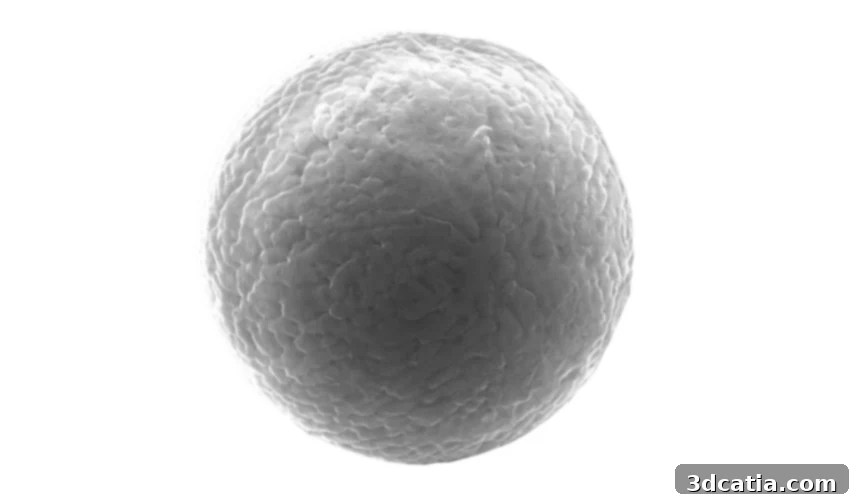
Complementing this robust R&D capability are RUSAL’s world-class inert gas powder atomization facilities. Atomization is a critical process in producing high-quality metal powders for additive manufacturing, where molten metal is broken down into fine, spherical particles under controlled atmospheric conditions. RUSAL’s state-of-the-art facilities ensure that the powders produced are of exceptional purity, consistent particle size distribution, and optimal morphology for flowability and packability – all essential attributes for reliable and high-performance additive manufacturing. The use of inert gas prevents oxidation and contamination, preserving the intrinsic properties of the alloys. This combination of advanced metallurgical research and cutting-edge manufacturing technology allows RUSAL to control every aspect of the powder production, from the initial alloy formulation to the final powder characteristics, guaranteeing superior quality and performance that sets their AM products apart in the competitive market. This holistic approach reinforces RUSAL’s commitment to driving innovation and delivering high-value solutions to the additive manufacturing industry.
The expansion of RUSAL America into additive manufacturing powders represents a significant advancement for the 3D printing industry. By offering a diverse range of high-performance, low-carbon aluminum alloys backed by extensive metallurgical expertise and state-of-the-art production, RUSAL is poised to accelerate the industrial adoption of aluminum AM. These developments provide manufacturers with the materials needed to create lighter, stronger, and more sustainable components for aerospace, automotive, and general industrial applications, pushing the boundaries of what’s possible with additive manufacturing. What do you think of these latest material developments in additive manufacturing? We invite you to share your thoughts in a comment below or join the conversation on our Facebook and Twitter pages! Don’t miss out on the latest advancements – sign up for our free weekly Newsletter to get all the news in 3D printing delivered straight to your inbox!