
Revolutionizing the Seas: Advanced 3D Printing Applications Driving Maritime Innovation
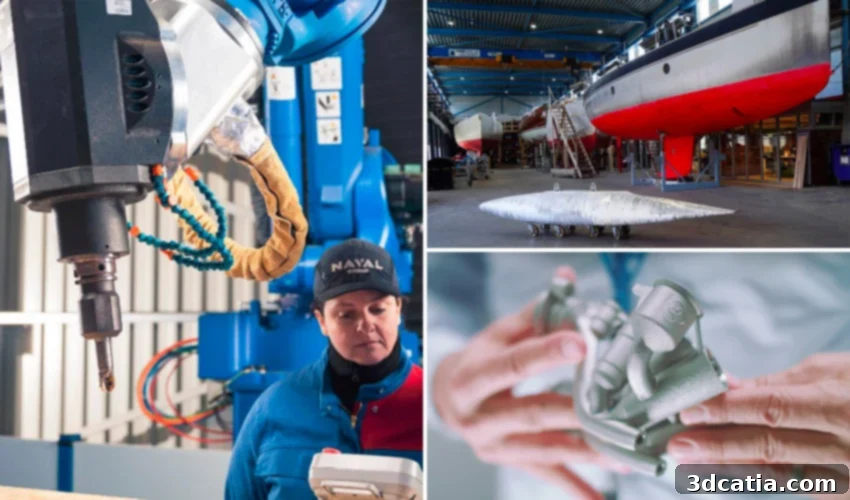
While additive manufacturing is widely recognized for its pivotal role in the conquest of space, its profound impact extends far beyond Earth’s atmosphere, deeply penetrating our vast oceans. From highly optimized boat propellers and essential submarine components to robust metal keels, the applications of cutting-edge 3D printing technologies within the maritime sector are incredibly diverse and continually expanding. Modern vessels are even being equipped with onboard 3D printers, empowering crews to rapidly design and fabricate critical components on demand, even in the most remote areas of the ocean. This revolutionary capability significantly enhances operational efficiency and minimizes downtime. In this comprehensive exploration, we will delve into a selection of groundbreaking projects that leverage 3D technologies to develop innovative solutions for the broader maritime industry, deliberately excluding the fascinating realm of fully 3D printed ships to focus on specific component and infrastructure advancements.
The US Navy and 3D Printing for Submarine Spare Parts
One of the most significant and transformative applications of additive manufacturing lies in its ability to produce spare parts efficiently and reliably. The US Navy, a global leader in naval operations, has keenly recognized and embraced the immense benefits of integrating this technology into its supply chain. In February 2022, the Navy announced a strategic initiative to mitigate bottlenecks and alleviate the strain on its conventional supply chain. This involved strategically partnering with 3D printing companies to supplement traditional suppliers, particularly for the critical Columbia-class ballistic missile submarine program. The primary focus of this initiative is currently on manufacturing parts related to castings, forgings, and fittings, areas where traditional supply chains often experience significant delays and reduced demand for older processes. By adopting additive manufacturing, the Navy can ensure a steady and responsive supply of crucial components, enhancing fleet readiness and operational continuity.
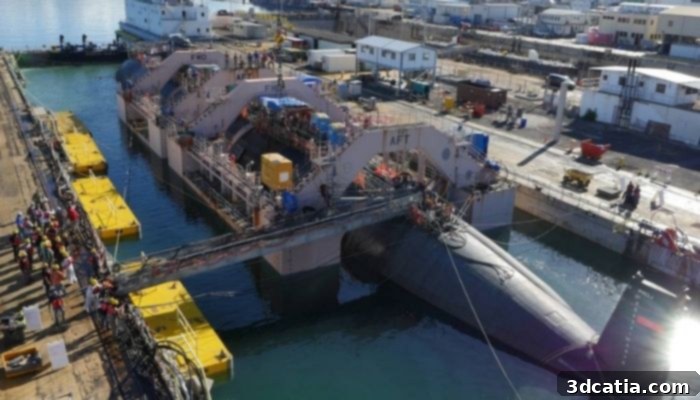
The attack submarine Chicago receives repairs (photo credits: Dave Amodo/U.S. Navy)
Mapping the Arctic Seafloor with Advanced AM
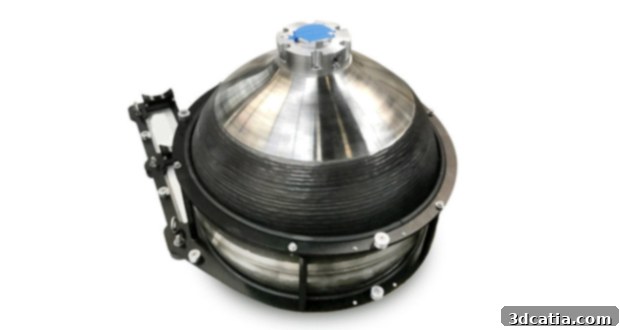
The Canadian company, International Submarine Engineering (ISE), is at the forefront of Arctic exploration, leveraging Sciaky’s advanced 3D Electronic Beam Additive Manufacturing (EBAM) technology. This sophisticated process is being utilized to produce a vital Titanium Variable Ballast (VB) tank for their autonomous underwater vehicles (AUVs). This innovative approach dramatically reduces both the time and cost associated with the arduous and complex process of mapping the challenging Arctic seafloor. Traditional manufacturing methods for such specialized components are often protracted and expensive, making the efficiency gained through AM crucial for scientific and exploratory missions in extreme environments.
By embracing 3D technologies, ISE successfully slashed the production time for this critical titanium ballast tank from an estimated 16 weeks to a mere 8 weeks – a remarkable 50% reduction. This autonomous underwater vehicle is specifically designed for rigorous Arctic exploration, tasked with meticulously charting the ocean floor beneath the permanent, thick layer of ice. The Variable Ballast (VB) system is indispensable, enabling the vehicle to precisely control its buoyancy and maintain its position either on the seabed or directly beneath the ice. The combination of speed, material efficiency, and cost reduction offered by EBAM 3D printing has proven invaluable for ISE’s pioneering efforts in one of the world’s most challenging environments, facilitating more frequent and detailed data collection.
3D Printed Chain Mail for Enhanced Ship Protection
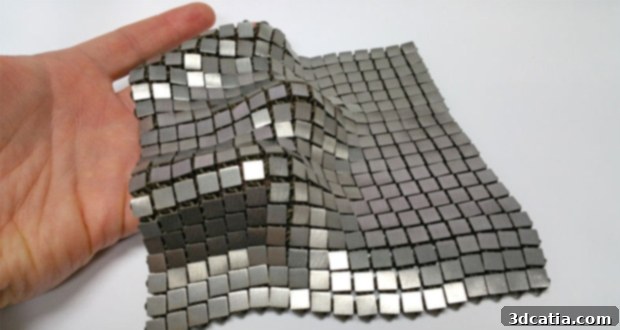
While chain mail traditionally evokes images of medieval knights, this ancient protective concept is undergoing a remarkable resurgence, reimagined through the lens of modern additive manufacturing, thanks to NASA. Initially conceived for rigorous applications in outer space, particularly for safeguarding spacecraft and rockets, researchers are now discovering its potential for equally significant use in nautical environments. This innovative 3D printed chain mail represents a new frontier in material science and protective design, demonstrating the versatility of additive manufacturing beyond its initial intended scope.
Engineered with advanced 3D printing technologies, this metallic chain mail boasts a unique dual-sided functionality. One side is expertly designed to reflect light and dissipate heat, crucial for managing thermal loads, while the other side is optimized to absorb heat and provide effective insulation. This high-strength, flexible metal fabric could offer superior protection in a multitude of scenarios, from demanding space explorations to various applications here on Earth. In the maritime context, it presents a novel solution for protecting ships and their critical systems against diverse environmental conditions encountered at sea, including potential impacts, extreme temperatures, and corrosive elements. Its adaptive nature allows for custom configurations, providing a versatile layer of defense that traditional materials struggle to match.
Innovating Underwater Inspection, Maintenance, and Repair with AM
The journey of the Norwegian company Kongsberg Ferrotech commenced in 2014 with an ambitious objective: to fundamentally redefine and innovate the processes of underwater inspection, maintenance, and repair. To achieve this challenging goal, Kongsberg Ferrotech is strategically leveraging additive manufacturing, specifically in conjunction with advanced robotics, to maintain and construct vital subsea infrastructure. This includes critical pipelines, offshore wind turbines subjected to the harsh conditions of the open sea, and essential power cables laid deep within the ocean’s abyssal depths. The integration of AM allows for on-demand production and repair of components, significantly enhancing the longevity and reliability of these underwater assets.
Kongsberg Ferrotech’s innovative approach not only streamlines and accelerates the entire inspection and repair workflow but also promises substantial economic advantages. The company asserts that its advanced underwater robotics, powered by additive manufacturing capabilities, can reduce operational costs by an impressive 30% to 50%. This significant cost saving, coupled with increased efficiency and improved safety, makes their solutions particularly attractive for industries reliant on extensive subsea infrastructure, such as oil and gas, renewable energy, and telecommunications. By minimizing the need for costly and time-consuming dry-docking or specialized repair vessels, Kongsberg Ferrotech is setting new benchmarks for the sustainment of our underwater industrial footprint.

Photo Credits: Kongsberg Ferrotech
Developing Maritime 3D Printing in Singapore
Singapore, a pivotal global maritime hub, is actively fostering the adoption of 3D printing within its expansive maritime industry. The Maritime and Port Authority of Singapore (MPA) has strategically selected the Wilhelmsen Consortium to lead a significant 3D printing project. This consortium comprises a powerful alliance of renowned additive manufacturing and maritime industry players, including Kawasaki Heavy Industries, Wartsila, Hamworthy Pumps, and DNV GL. This collaborative effort underlines Singapore’s commitment to innovation and its understanding of additive manufacturing’s potential to revolutionize port operations and shipbuilding.
This specific project is one of eleven initiatives generously funded by the MPA, with a substantial total investment of approximately $1.63 million. Its core objectives are multifaceted: to maximize the safe uptime of ships by enabling quicker repairs and maintenance, and crucially, to significantly enhance the availability of spare parts, especially in critical emergency scenarios. By localizing and expediting the production of essential components through 3D printing, Singapore aims to bolster its maritime resilience, reduce logistical complexities, and solidify its position as a forward-thinking global maritime leader. The initiative is a testament to the nation’s proactive approach in integrating advanced technologies to secure a competitive edge and ensure operational excellence across its vital shipping lanes and port facilities.
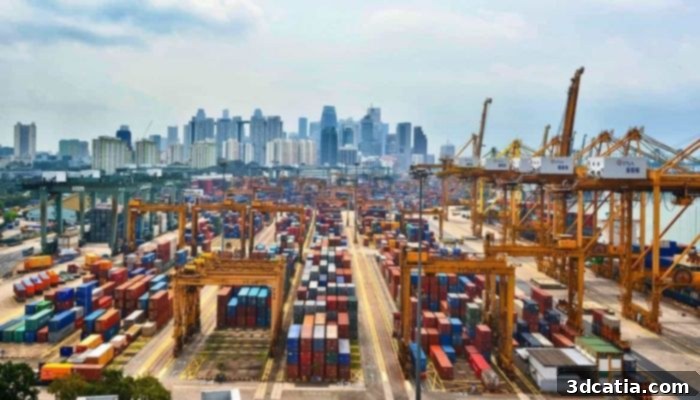
Photo Credits: Maritime Industry Foundation
AM Certifications in the Shipbuilding Industry: Ensuring Safety and Reliability
The stringent requirements for safety and property preservation at sea necessitate a distinct set of criteria compared to those found in the automotive or aerospace industries. Consequently, an entirely new framework of standards and rules must be meticulously defined and rigorously applied to accommodate the unique challenges of the maritime environment. This critical role is fulfilled by DNV, a prestigious classification society headquartered in Norway. DNV is instrumental in verifying that the processes, materials, and equipment employed in the manufacture of critical ship components consistently meet the highest applicable class requirements, thereby ensuring the integrity and safety of vessels and their operations.
A prime example of DNV’s pioneering work in this domain is the recent issuance of a verification statement for a two-meter diameter ship propeller, innovatively produced through an additive manufacturing process by SY Metal in South Korea. This milestone signifies a major step forward in recognizing the viability and reliability of large-scale 3D printed components for demanding marine applications. Furthermore, DNV’s comprehensive efforts extend to evaluating various advanced production processes, including Wire Arc Additive Manufacturing (WAAM), Powder Bed Fusion (PBF), and Blown Powder Technology (BPT). Through extensive testing and the establishment of robust standards, DNV actively works to ensure the safe, efficient, and reliable integration of additive manufacturing across the entire shipbuilding industry, paving the way for future innovations.
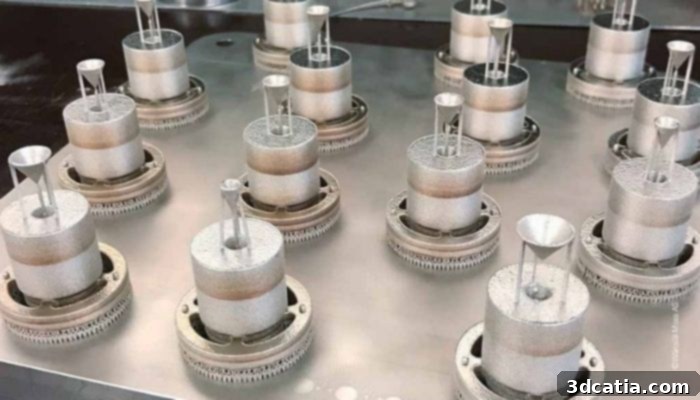
Photo Credits: DNV
MX3D’s Innovative 3D Printed Aluminum Boat Keel
Metal 3D printing solutions manufacturer MX3D, renowned for its large-scale additive manufacturing capabilities, recently forged a strategic partnership with Dutch custom yacht builder KM Yachtbuilders. This collaboration led to the pioneering design and production of a 3D printed aluminum keel. This entirely custom-made component serves as a compelling demonstration of the extraordinary possibilities offered by WAAM (Wire Arc Additive Manufacturing) technology, showcasing its potential for complex, high-performance maritime parts. The ability to create such intricate, optimized geometries opens new avenues for naval architecture and design, moving beyond the constraints of traditional fabrication.
The demand for additive manufacturing within the maritime industry is becoming increasingly pronounced, driven by several factors. A significant challenge is the growing scarcity of experienced welders, which impacts traditional shipbuilding methods. Furthermore, conventional manufacturing processes often do not allow for the high degree of customization and design freedom that modern yacht builders and naval architects desire. WAAM technology, as demonstrated by MX3D, directly addresses these issues, enabling rapid prototyping and the production of bespoke parts tailored to specific performance requirements. Beyond this initial 3D printed boat keel, the two Dutch partners are ambitious, aiming to soon expand their capabilities to 3D print a wider range of spare parts for various types of boats, as well as complex finished components, thereby revolutionizing the repair and construction paradigms in the nautical sector.
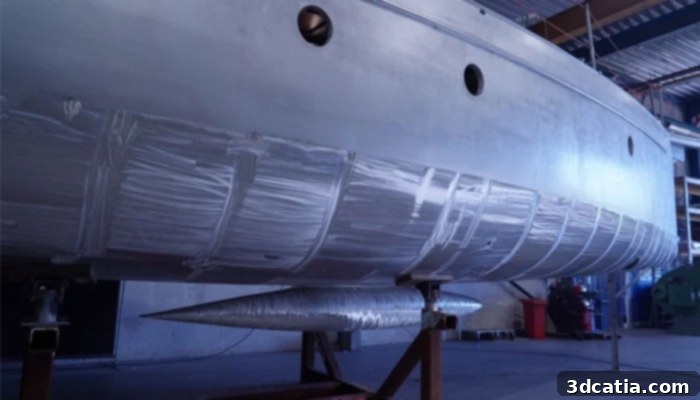
Photo Credits: MX3D
ThyssenKrupp Pioneers Certified 3D Printed Parts for the Maritime Industry
In a landmark achievement for the maritime sector, DNV GL, a leading classification society specializing in marine and offshore assurance, has granted certification to ThyssenKrupp for its advanced 3D printed metal parts. This prestigious approval positions ThyssenKrupp as the first company worldwide to obtain such a comprehensive certification, marking a significant milestone in the industrial adoption of additive manufacturing for critical marine applications. This certification underscores that components produced using ThyssenKrupp’s additive manufacturing processes achieve the same high level of quality and meet the stringent performance requirements as conventionally manufactured parts, ensuring reliability and safety at sea.
This groundbreaking accomplishment was made possible through a vital collaboration with EOS, a prominent partner of ThyssenKrupp and a leading supplier of industrial 3D printers to their TechCenters. The synergy between ThyssenKrupp’s engineering expertise and EOS’s advanced additive manufacturing technology has enabled them to jointly offer innovative solutions for submarines and ships. By integrating certified 3D printed components, these companies are not merely developing new products but are actively setting new benchmarks for the navies of the future. Their work signifies a paradigm shift in how naval vessels are designed, built, and maintained, promising enhanced capabilities, reduced lead times, and optimized performance for global maritime defense and commerce.
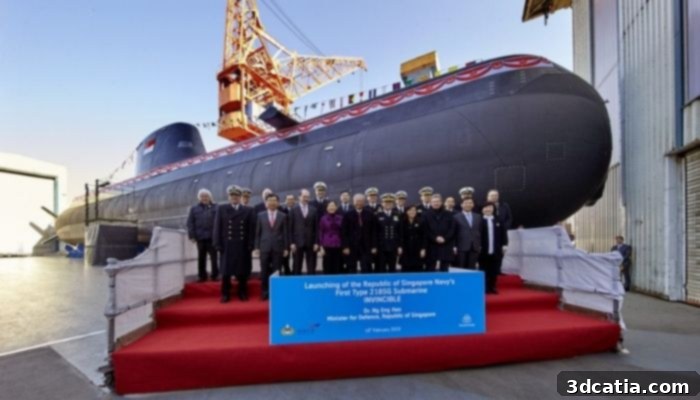
3D Printing for Affordable Deepwater Missions with ecoSUB Robotics
Another compelling application of additive manufacturing is in the creation of highly specialized underwater equipment, making deepwater exploration and monitoring more accessible. ecoSUB Robotics, a forward-thinking marine technology company, has masterfully leveraged 3D printing for this very purpose. The company is dedicated to developing projects that are not only technologically advanced but also remarkably affordable, capable of performing demanding deep monitoring missions, and tailored to meet the diverse needs of both its commercial and military clientele. This focus on cost-effectiveness without compromising performance is a game-changer for many ocean industries.
To realize these ambitious objectives, ecoSUB Robotics has strategically integrated 3D printing into its prototyping and component manufacturing workflows. This alternative manufacturing method allows them to achieve substantial cost savings during the production of their parts, critically without sacrificing the quality or functional integrity of their final products. The ability to rapidly iterate designs and produce complex geometries economically positions 3D printing as a transformative technology in the development of sophisticated underwater vehicles. If additive manufacturing continues to make such a profound difference in lowering the barriers to entry for creating these specialized vehicles, it holds the potential to be a true game-changer for a wide array of professionals and researchers across various ocean-related industries, from environmental monitoring to subsea exploration and defense.
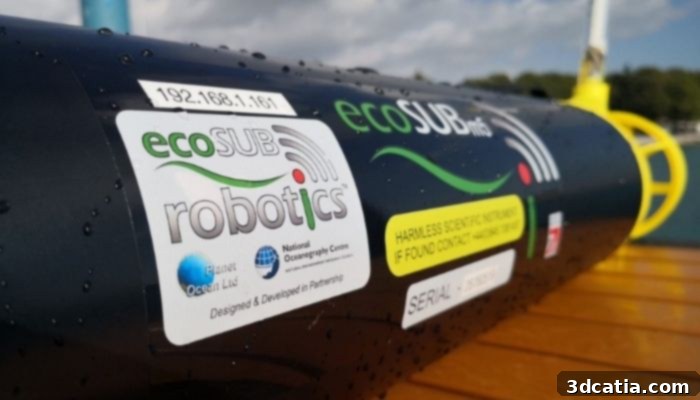
Photo Credits: Ecosub
Innovating with Metal Alloys for Marine Applications
In a significant development for the maritime industry, leading additive manufacturing firm 3D Systems has partnered with Huntington Ingalls Industries’ Newport News Shipbuilding division. This powerful collaboration is focused on the groundbreaking delivery of new 3D printed metal materials specifically engineered for demanding marine applications. Their joint efforts are centered on developing and optimizing corrosion-resistant copper-nickel (CuNi) and nickel-copper (NiCu) alloys for use with advanced powder bed fusion technology. These particular alloys are of paramount interest to the maritime sector due to their inherent resistance to the corrosive effects of saltwater, a critical factor for the longevity and reliability of marine components.
The strategic alliance between these two industry giants promises numerous advantages. Crucially, the integration of additive manufacturing in the production of these parts is projected to significantly reduce lead times in the supply chain by an impressive 75%. This massive efficiency gain can drastically cut maintenance and repair times for naval vessels and commercial ships. 3D Systems plays a pivotal role in this partnership, contributing expertise in selecting the optimal composition for these specialized alloys, designing precise process parameters for robust manufacturing, and rigorously qualifying the resulting 3D printed parts. The advanced alloys and 3D printing technology will be utilized to create a diverse range of essential components, from vital spare parts for castings to high-performance valves, durable housings, and essential brackets, setting new standards for material science and manufacturing in the marine environment.
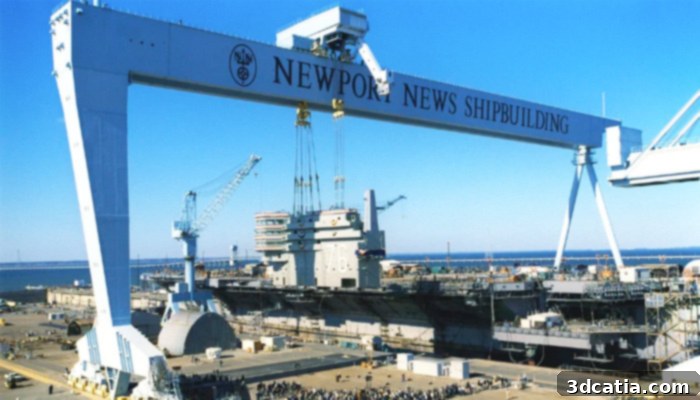
Photo Credits: 3D Systems
More Eco-Friendly Cargo Ships Thanks to 3D Printing
Earlier this year, Thomas Dahmen, an innovative young researcher at the Technical University of Denmark (DTU), unveiled a groundbreaking advancement: a 3D printed injection nozzle designed to enhance the fuel efficiency of ship engines. Employing the Quality Function Deployment (QFD) matrix, a robust analytical method used to evaluate the potential benefits of additive manufacturing, Dahmen meticulously identified and developed an optimized solution for injection nozzles. This component is essential for ship engines, as it precisely injects fuel into the combustion chamber, playing a critically important role in overall fuel consumption and, consequently, the long-term durability and environmental footprint of the engine.
Through the power of advanced computational modeling and rapid 3D printing, Dahmen discovered that by introducing a curved design to the injection nozzle, the fuel flow could be significantly improved. This optimized flow pattern leads to more efficient combustion, resulting in a substantial reduction in fuel consumption and lower emissions. The ability of 3D printing to create such complex, organically shaped geometries, which are challenging or impossible with traditional manufacturing methods, was key to this innovation. This project exemplifies how additive manufacturing can drive sustainability in the maritime sector, contributing to greener shipping practices and helping the industry meet increasingly strict environmental regulations by making cargo ships more eco-friendly and economically viable.
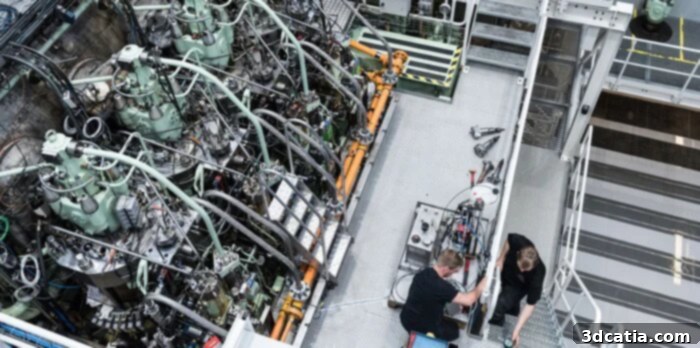
Photo Credits: DTU
The Evolution of 3D Printed Propellers: Performance and Efficiency
The field of 3D printed propellers has seen remarkable advancements, building upon foundational successes. Back in 2017, the Rotterdam Additive Manufacturing Fieldlab (RAMLAB) in the port of Rotterdam successfully designed and fabricated a prototype ship propeller with a substantial diameter of 1,350 mm. This early achievement showcased the feasibility of using additive manufacturing for large, critical maritime components. Since then, the technology has continued to evolve at a rapid pace, leading to even more impressive and functional designs.
A prime example of this evolution came in early 2021 when Naval Group unveiled a sophisticated propeller specifically designed for the mine-hunting ship Andromeda. This impressive component, boasting a wingspan of 2.5 meters, was manufactured using advanced Wire Arc Additive Manufacturing (WAAM) technology. Comprising five individually printed blades, each weighing approximately 200kg, this 3D-printed propeller demonstrated characteristics that were equivalent to, or even superior to, those of traditionally manufactured propellers. Furthermore, the WAAM process allowed for significantly faster design and production cycles, along with a more efficient use of material, highlighting the profound benefits of additive manufacturing for naval applications. These advancements underscore how 3D printing is not just replicating but enhancing the performance and manufacturing efficiency of vital ship components.
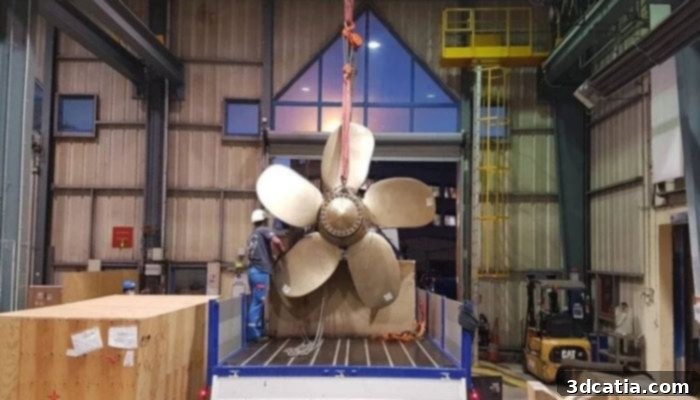
Photo Credits: Naval Group
AMAZEA’s Underwater Scooter: Personalizing Ocean Exploration
To conclude our exploration of additive manufacturing’s diverse applications in the maritime sector, let’s turn our attention to a particularly refreshing and engaging project: the AMAZEA underwater scooter. This innovative personal watercraft was meticulously designed by JAMADE Germany, making extensive use of large-format 3D printing technology. A remarkable 75% of the scooter’s individual parts are 3D printed on a BigRep machine, showcasing the incredible potential of large-scale additive manufacturing for consumer products and personalized experiences.
This advanced manufacturing approach allows JAMADE Germany to offer a highly customizable product, providing customers with options for both size and color, ensuring a truly personalized underwater experience. The AMAZEA is powered by an efficient electric motor, capable of propelling users through the water at speeds of up to 20 kilometers per hour, and can descend to an impressive depth of 18 meters. This fusion of speed, depth capability, and personal customization makes the AMAZEA an exciting new tool for recreational divers and ocean enthusiasts. So, are you ready to dive in and explore the mesmerizing ocean floor with the power of 3D printing guiding your adventure?
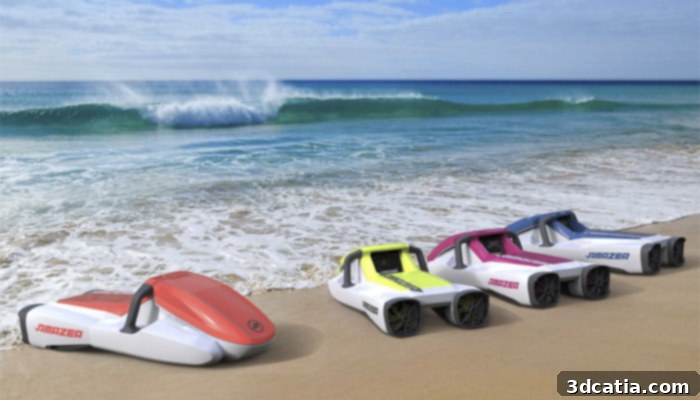
Photo Credits: Amazea
As we’ve seen, additive manufacturing is rapidly transforming the maritime industry, offering solutions that enhance efficiency, improve sustainability, bolster supply chain resilience, and unlock new possibilities for design and performance. From critical military applications and deep-sea exploration to eco-friendly cargo ships and personalized underwater scooters, the impact of 3D printing is undeniable and continues to grow. These innovations are not just incremental improvements; they represent a fundamental shift in how we design, build, and maintain our vessels and infrastructure at sea. The future of the maritime sector is increasingly linked to the advancements in 3D printing technologies, promising a more agile, cost-effective, and sustainable approach to navigating and utilizing our planet’s oceans. What do you think of our list of 3D printing applications in the maritime sector? Let us know in a comment below or on our Facebook and Twitter pages! Don’t forget to sign up for our free weekly Newsletter, with all the latest news in 3D printing delivered straight to your inbox!