
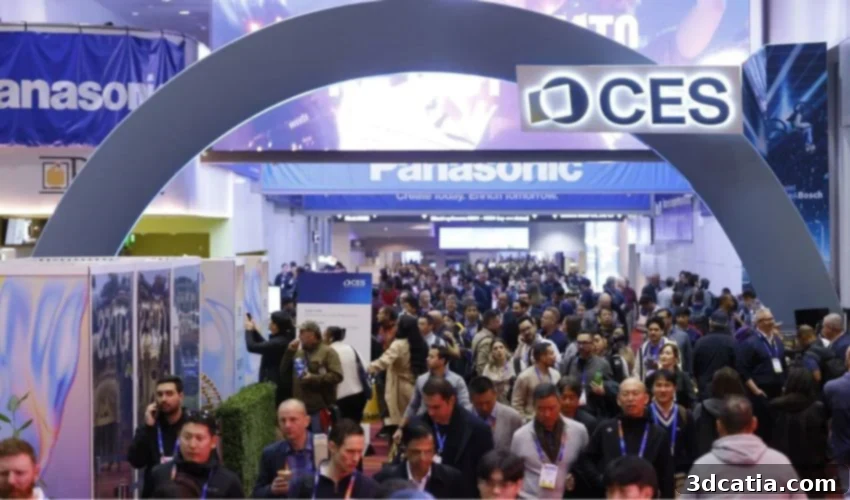
Top 6 Cutting-Edge 3D Printing Innovations Unveiled at CES 2026
The Consumer Electronics Show (CES), renowned as a global launchpad for groundbreaking technology, once again took center stage in Las Vegas from January 6th to 9th, 2026. This year’s event attracted over 148,000 attendees and 4,100 exhibitors, bringing together a diverse group of technology experts, decision-makers, media representatives, and buyers from across the entire tech ecosystem. The exhibition showcased a vast array of innovations, spanning from next-generation computing and immersive sound systems to advanced humanoid robots and cutting-edge safety technologies. As anticipated, 3D printing made a significant impact on the show floor, demonstrating its continued evolution and expanding applications. Let’s delve into six remarkable additive manufacturing innovations that captured our attention at CES 2026.
AtomForm’s Revolutionary 12-Nozzle 3D Printer: The Palette 300
AtomForm made a bold statement with the introduction of the Palette 300, a groundbreaking 3D printer featuring an impressive 12-nozzle design. Boasting a remarkable maximum print speed of 800 mm/s and promising up to 90% filament savings, the Palette 300 has the potential to revolutionize additive manufacturing if it delivers on its claims. The machine incorporates a unique OmniElement automatic nozzle switching system, enabling the use of up to 36 colors or 12 different materials in a single print. According to AtomForm, this innovative system results in a 50% increase in material changing efficiency, significantly reducing downtime and waste. The Palette 300 is equipped with a 350°C hotend and a chamber that can reach 65°C when actively heated. These advanced heating capabilities minimize warping and ensure strong layer adhesion, contributing to the production of high-quality, durable parts. The Palette 300 is slated for release in early Q2 2026, with pre-orders commencing in Q1, generating considerable excitement within the 3D printing community.
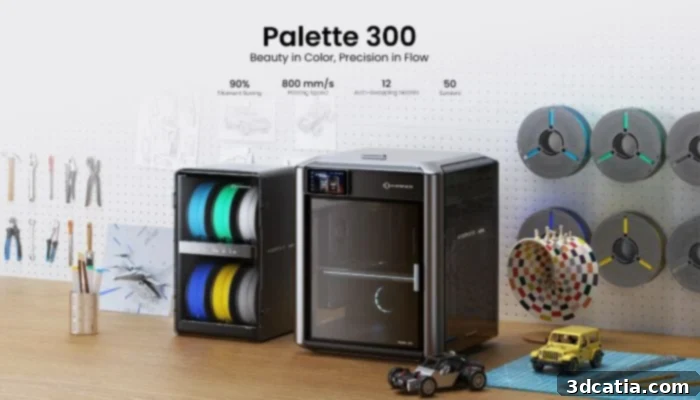
The Palette 300’s multi-material capabilities allow for printing with up to 36 colors. (Photo Credit: Atomform)
Mastrex Democratizes Metal 3D Printing with Sub-$40K LPBF Printer
Mastrex, a newly established brand resulting from the merger of two well-established American manufacturers, Vulcan and Burgmaster, made its debut at CES with the MX Series. This innovative lineup of laser powder bed fusion (LPBF) metal 3D printers is designed to make industrial metal printing more accessible and scalable. Historically, LPBF technology has been associated with expensive, highly specialized systems, limiting its adoption by smaller businesses and research institutions. Mastrex aims to disrupt this paradigm by offering an alternative with its tiered portfolio, which ranges from compact machines for precision parts to large-format platforms engineered for volume production. The MX100, the entry-level model in the series, starts at an attractive price of $39,000, significantly lowering the barrier to entry for metal additive manufacturing. Mastrex positions the MX Series as a growth path, allowing customers to seamlessly upgrade and expand their capabilities within a unified platform as their needs evolve. This approach fosters long-term partnerships and provides a cost-effective solution for businesses looking to incorporate metal 3D printing into their operations.
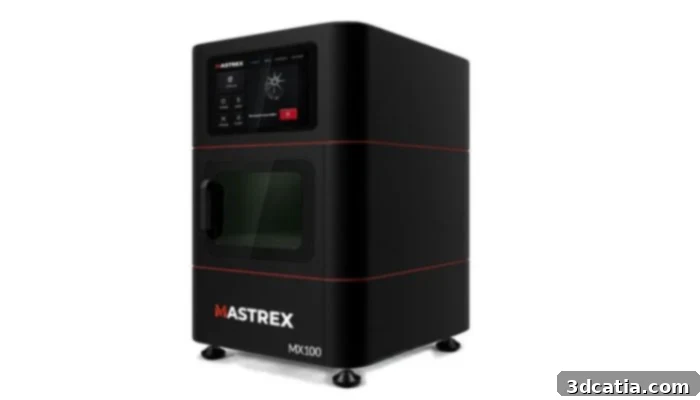
The MX100 offers an affordable entry point into the world of metal LPBF 3D printing. (Photo Credit: Mastrex)
Protopasta’s Quantum Dot Filament: Illuminating the Future of 3D Printing
Protopasta collaborated with artist Olga Alexapoulou of Quantum Light, the pioneer behind Quantum pigment, to create a visually stunning new material: Quantum Dot filament. This unique PLA-based filament is infused with quantum dots, microscopic semiconductor crystals that emit specific wavelengths of light when exposed to blacklight. Quantum dots are already utilized in a wide range of applications, including TV displays, medical imaging, and advanced solar cells, demonstrating their versatility and potential.
When incorporated into filament, the effect is truly remarkable, producing 3D prints that appear to glow from within. This captivating visual effect opens up exciting possibilities for artistic creations, decorative objects, and functional parts that require enhanced visibility. Quantum Dot filament is part of Protopasta’s experimental, limited-edition lineup, adding to its exclusivity and appeal. Makers interested in acquiring a sample or a few spools can subscribe to the company’s Endless Exploration program before February 28, 2026, securing their access to this innovative material.
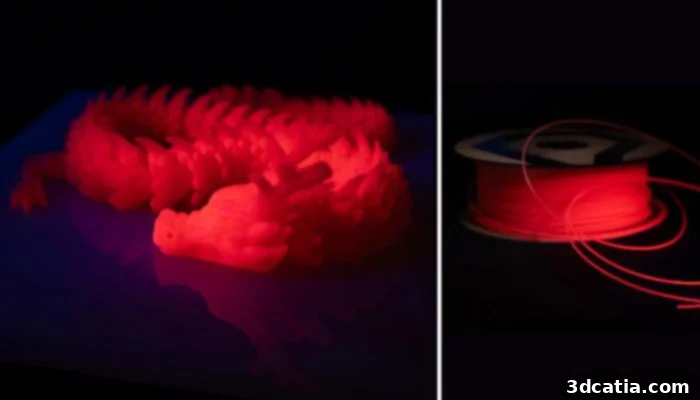
Quantum Dot filament produces 3D prints that appear to glow under blacklight. (Photo Credits: Protopasta)
Creality SPARKX i7: Smart Features and Multi-Color Printing for Beginners
Creality unveiled the SPARKX i7, a new 3D printer designed to appeal to beginners while offering a range of playful and intelligent features. An integrated RGB light bar provides real-time feedback on print progress, adding a touch of visual appeal and functionality. The innovative CubeMe tool enables users to generate a 3D model from a portrait in a matter of seconds, opening up possibilities for personalized creations and unique keepsakes. The printer also incorporates AI-powered error detection, proactively identifying and addressing potential issues as they arise, ensuring a smooth and reliable printing experience. The SPARKX i7 supports up to four colors simultaneously, allowing for vibrant and multi-colored prints with ease. Creality claims that the printer’s advanced color mixing system reduces material waste by up to 50% compared to traditional multi-color systems, promoting sustainability and cost-effectiveness. With a build volume of 260 × 260 × 255 mm, the SPARKX i7 is well-suited for producing gaming models, home decor items, and various hobbyist prints. The machine is currently available for pre-order, making it an attractive option for newcomers to the world of 3D printing.
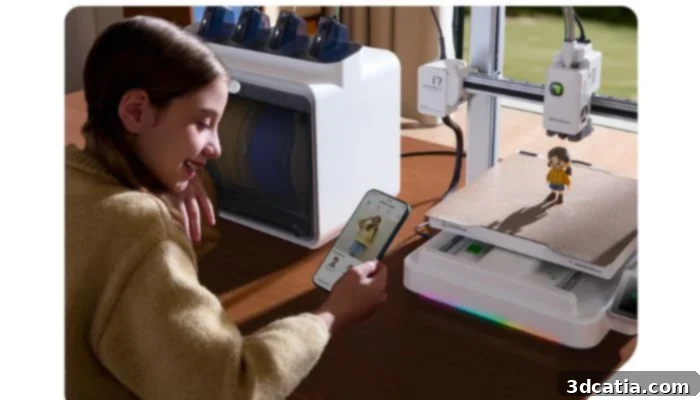
The CubeMe feature allows users to easily print miniature 3D models of themselves. (Photo Credit: Creality)
MeshyAI Creative Lab: Streamlining the Path from AI-Generated Design to Physical Product
MeshyAI, a widely used AI-powered 3D model generator, leveraged CES to launch Meshy AI Creative Lab, a new AI-native platform designed to transform generative 3D models into premium, full-color, print-ready files. The system automatically repairs and optimizes geometry to meet product and manufacturing constraints, ensuring that designs are suitable for 3D printing. It also recommends appropriate materials, finishes, and print settings, including colorization and slicing parameters, based on the model’s shape and intended use. This comprehensive approach simplifies the 3D printing process and empowers users to achieve high-quality results. To further streamline the workflow, MeshyAI provides real-time pricing and fulfillment options through its network of manufacturing partners, creating a direct path from AI-generated design to physical product. This seamless integration eliminates the need for manual intervention and accelerates the time-to-market for new products.
This innovative tool empowers users to go from “prompt to product” without requiring extensive CAD expertise. According to Ethan Hu, founder and CEO of Meshy, “We’ve automated the hardest parts of the process – from mesh repair to full-color manufacturing. Now, anyone who can type a prompt can hold a professional-grade collectible in their hand. It’s the easiest way to bridge the gap between digital imagination and physical reality.” MeshyAI Creative Lab represents a significant step towards democratizing 3D printing and enabling broader adoption across various industries.
MetalPrinting Gauss MT90: Safe and Accessible Metal Paste 3D Printing
The Korean company MetalPrinting introduced the Gauss MT90, a compact metal paste 3D printing solution. The technology is based on paste-based metal extrusion (PME), a method known for its safety and suitability for office and laboratory environments. Traditional metal 3D printing technologies, such as powder-based and welding-based methods, pose potential hazards due to dust, explosion risks, and high-temperature processes. PME offers a safer alternative, eliminating these concerns and making metal 3D printing more accessible to a wider audience. The Gauss MT90 is designed with new users in mind, featuring a Quick Start mode that automatically configures process parameters, enabling printing to commence within minutes. The machine also incorporates a built-in HEPA filter to capture emissions and an LED signaling system to provide real-time status feedback. The Gauss MT90 is compatible with a range of metals, including SUS 316L, copper, titanium, and aluminum, offering versatility in material selection. Thanks to a precision dispensing algorithm, the machine can fabricate high-precision parts such as heat sinks and electronic components. Furthermore, the Gauss MT90 consumes less energy compared to traditional metal 3D printing systems, as it does not rely on high-power lasers or extensive heating.
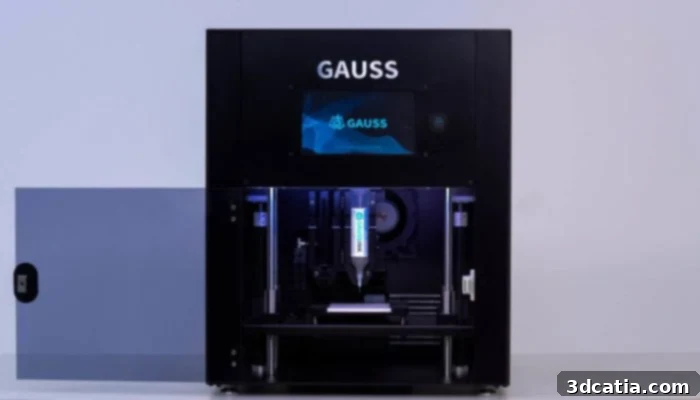
The Gauss MT90 offers a safe and accessible solution for metal paste 3D printing. (Photo Credit: MetalPrinting)
What are your thoughts on these exciting innovations from CES 2026? Share your opinions in the comments below or connect with us on LinkedIn or Facebook! Stay up-to-date with the latest 3D printing news by subscribing to our free weekly Newsletter. You can also find all our videos on our YouTube channel.