
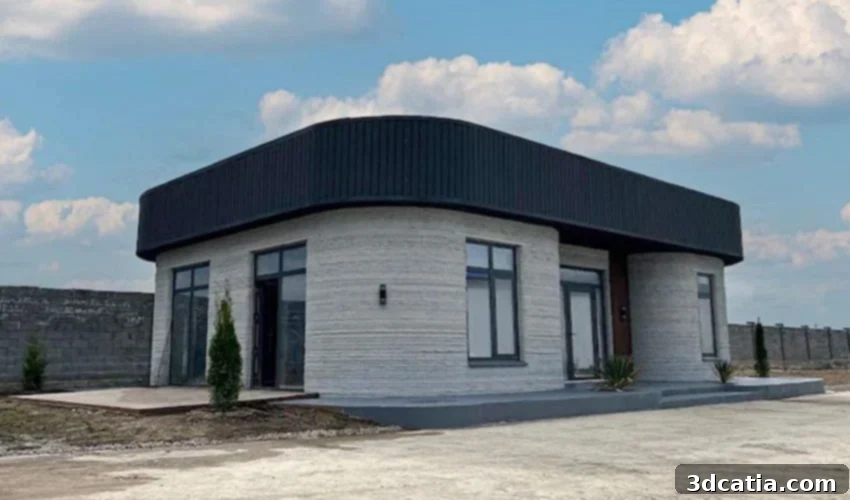
Central Asia’s First Earthquake-Resistant 3D Printed House Revolutionizes Construction in Kazakhstan
The global construction landscape is undergoing a profound transformation, with 3D printing technology leading the charge in revolutionizing traditional building methods. In a significant leap forward for Central Asia, the unveiling of the region’s first 3D printed house in Almaty, Kazakhstan, marks a pivotal moment. This groundbreaking project is the culmination of an innovative partnership between local construction pioneers BM Partners and global 3D printing manufacturers COBOD International. Their collaboration not only introduces cutting-edge technology to the heart of Central Asia but also addresses critical needs within Kazakhstan’s construction industry, particularly in regions susceptible to natural disasters.
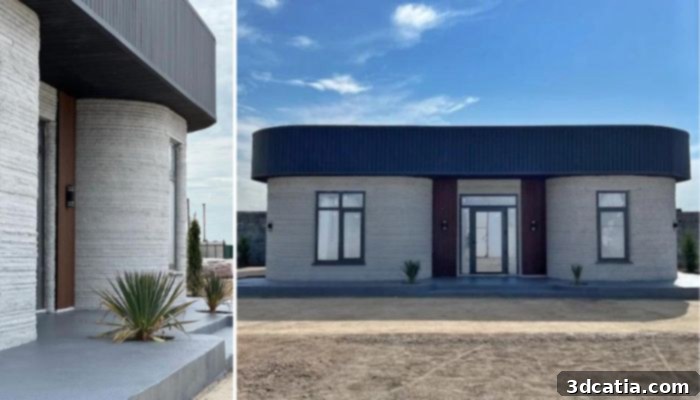
Situated in Almaty, Kazakhstan’s largest and most vibrant city, this 100-square-meter dwelling stands as a testament to engineering ingenuity. Almaty is notably prone to intense seismic activity, making the requirement for robust, earthquake-resistant structures paramount. The house seamlessly integrates advanced 3D printing technology with rigorous seismic regulations, setting a new benchmark for structural integrity. BM Partners, at the forefront of 3D construction printing in Kazakhstan, has expertly spearheaded this initiative, driving significant advancements within the nation’s construction sector and contributing to the modernization of its architectural landscape. This project highlights a strategic move towards adopting innovative solutions that promise both efficiency and enhanced safety for residents.
Unprecedented Speed and Efficiency in Construction
One of the most compelling aspects of this pioneering project is the remarkable speed of its construction. The entire building process, from the initial setup of the 3D printer on-site to the meticulous completion of interior detailing, was accomplished within an astonishing span of just two months. This expedited timeline dramatically reduces traditional construction durations, offering significant advantages in project delivery and resource allocation. More impressively, the structural walls of the house were printed in a mere five days. This rapid fabrication capability vividly demonstrates the unparalleled efficiency and transformative potential that 3D construction printing brings to the building sector, promising a future where homes can be erected faster and more cost-effectively than ever before, without compromising on quality or safety.
Engineering Resilience: Withstanding Seismic Challenges
A cornerstone of this innovative 3D printed house is its exceptional resilience, specifically engineered to brave the intense seismic activity characteristic of the Almaty region. To achieve this superior structural integrity, BM Partners employed a specially formulated reinforced concrete mix boasting an impressive compression strength of 60MPa. This figure significantly surpasses the capabilities of traditional building materials commonly used in the region, which often do not exceed 10MPa, illustrating a six-fold improvement in material strength. This ultra-high-strength concrete, crucial for earthquake resistance, was developed with an innovative D.fab admixture, a result of the fruitful collaboration between COBOD International and Cemex. This advanced material forms the robust backbone of the house’s foundation and walls, ensuring durability under extreme conditions. Furthermore, in strict adherence to local building codes and seismic regulations, a reinforced concrete seismic beam belt was expertly installed around the structure in just two days, providing an additional layer of support and significantly enhancing the house’s ability to withstand powerful tremors. This meticulous attention to material science and structural design ensures the safety and longevity of the dwelling, setting a new precedent for resilient construction in earthquake-prone areas.
Beyond Structural Strength: Enhancing Liveability and Sustainability
The benefits of this 3D printed house extend far beyond its impressive structural integrity and rapid construction. Recognizing the extreme climate fluctuations prevalent in Kazakhstan, which range from scorching summers to harsh winters, engineers have thoughtfully incorporated expanded polystyrene concrete insulation. This strategic addition is designed to significantly enhance the building’s thermal efficiency, ensuring a stable and comfortable indoor environment regardless of external conditions. The insulation also contributes to superior acoustic performance, creating a quieter and more peaceful living space. Beyond these immediate advantages, the adoption of 3D printing in construction offers a pathway to greater sustainability. The precise nature of additive manufacturing reduces material waste compared to conventional methods, and the potential to utilize locally sourced materials minimizes transportation costs and carbon footprint. This forward-thinking approach aligns with global efforts to create more energy-efficient, environmentally friendly, and comfortable living spaces, addressing both ecological concerns and the practical needs of modern inhabitants.
Visionary Leadership: Quotes from Industry Pioneers
The project’s significance is powerfully underscored by the statements from its key leaders. Marat Oshakhtiev, CEO of BM Partners, emphasized the critical role of adopting modern technologies to effectively meet Kazakhstan’s evolving housing needs. He stated, “Embracing modern technologies is essential in today’s world. Our company is committed to staying at the forefront of technological advancements with 3D construction printing within our country. With this project, our company has confidently stepped into the future, addressing Kazakhstan’s urgent need for earthquake-resistant, modernized, efficient, and resilient housing solutions.” His words highlight BM Partners’ dedication to innovation and their vision for a future where advanced construction methods provide safer, more sustainable, and rapidly deployable housing for the nation’s populace. This commitment extends beyond a single project, aiming to reshape the entire national approach to construction.
Echoing Oshakhtiev’s visionary sentiments, Henrik Lund-Nielsen, founder and general manager of COBOD International, reinforced the inherent resilience of 3D printed buildings, particularly in high-risk seismic zones. He proudly asserted, “This project once again demonstrates that 3D printed buildings are built to last, also when made in earthquake high-risk areas. We are proud to have developed the solution that enabled BM Partners to complete this project fully within just two months and using extra strong 3D printable concrete made from locally sourced materials.” Lund-Nielsen’s statement not only validates the structural superiority of COBOD’s technology but also emphasizes the sustainability aspect of using local resources, which reduces logistics and environmental impact. Their combined perspectives illuminate a shared commitment to pioneering solutions that are not only technologically advanced but also contextually relevant and environmentally responsible. This success story serves as a compelling case study for other nations facing similar challenges in housing and infrastructure development.
The Future of Construction: A Blueprint for Global Adoption
The successful completion of Central Asia’s first earthquake-resistant 3D printed house in Almaty represents more than just a local triumph; it offers a compelling blueprint for the future of construction worldwide. This project eloquently demonstrates how 3D printing technology can effectively address some of the most pressing challenges facing the global building industry, including the urgent need for affordable, resilient, and sustainable housing solutions in rapidly urbanizing areas and regions vulnerable to natural disasters. The combination of rapid deployment, material efficiency, and enhanced structural integrity positions 3D construction printing as a viable and transformative alternative to conventional methods. As climate change increases the frequency and intensity of seismic events and extreme weather, the ability to quickly construct robust, climate-adaptive homes will become increasingly vital. This project provides invaluable insights and proof-of-concept for its widespread adoption, paving the way for a new era of construction that prioritizes safety, speed, environmental responsibility, and cost-effectiveness on a global scale.
Engage with the 3D Printing Community
What are your thoughts on this revolutionary 3D printed house developed by BM Partners and COBOD International? We invite you to share your insights and comments below, or connect with us on our social media platforms: LinkedIn, Facebook, and Twitter. Don’t miss out on the latest advancements and news in the additive manufacturing world; make sure to sign up for our free weekly newsletter here, delivered directly to your inbox. For a visual exploration of innovative 3D printing projects, you can also find all our compelling videos on our YouTube channel.
*All Photo Credits: COBOD