
BMW’s Additive Manufacturing Prowess: Revolutionizing Winter Sports Equipment for Olympic Gold
Since the early 1990s, BMW has consistently championed the integration of 3D printing technology, also known as additive manufacturing (AM), into its core design and production processes. This forward-thinking approach has allowed the premium automotive manufacturer to develop vehicles more efficiently, reduce lead times, and achieve lighter, structurally optimized components. From initial conceptualization of a new car or motorcycle to the rapid prototyping of intricate parts and the eventual production of finished spare parts, additive manufacturing offers an expansive array of applications, particularly within the demanding automotive sector. Recognizing the transformative potential of this technology, BMW officially launched its dedicated 3D printing hub, the BMW Additive Manufacturing Campus, in 2019. However, the company’s innovation in AM extends far beyond the sleek automobiles for which it is renowned. A remarkable beneficiary of BMW’s advanced 3D printing capabilities has emerged in the world of elite sports: the German bobsleigh, skeleton, and luge teams. These national winter athletes are now leveraging custom-produced, 3D-printed sports equipment, a partnership that has already seen significant results on the global stage, including at the recent Winter Olympics in Beijing.
BMW’s deep-rooted expertise in 3D printing, honed over decades in high-performance automotive engineering, is now directly enhancing the competitive edge of Germany’s top winter athletes. The German Bobsleigh and Sledding Association (BSD) athletes have experienced tangible benefits from BMW’s innovative ideas and technological prowess. Bobsled and skeleton competitors have been outfitted with revolutionary new spikes, meticulously designed and 3D-printed to optimize traction and initial acceleration. Meanwhile, luge teams have celebrated significant improvements in their specialized sports equipment, leading to enhanced control, aerodynamics, and overall performance. The success of this collaboration is already evident: a number of athletes utilizing BMW-engineered equipment have achieved notable medal counts at the Winter Olympics, a testament to the crucial role advanced manufacturing plays in modern sports.
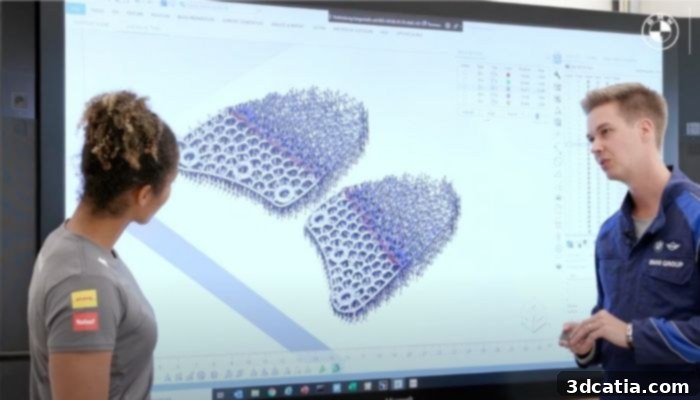
BMW incorporates the individual wishes of the athletes (photo credits: BMW Germany)
BMW Leverages 3D Printing for Unparalleled Equipment Enhancement
In a collaborative effort with the BSD team, BMW embarked on an ambitious mission to scrutinize and refine every conceivable detail of the sports equipment, aiming for peak performance. Both organizations recognized that even the slightest innovation, no matter how small, could be the decisive factor in securing a gold medal at the Winter Olympics. Consider the sport of skeleton, where athletes hurtle down an ice track head-first at speeds approaching 145 km/h. In such a high-stakes environment, the paramount focus extends beyond mere lightness and speed to encompass the critical safety of the athlete. BMW, demonstrating its foresight and engineering acumen, presented a groundbreaking solution developed with 3D printing as early as 2010: the improved skeleton trestle. This component, acting as the crucial connecting spar between the athlete’s recumbent tub and the sled’s runners, was radically re-engineered. Through additive manufacturing, BMW engineers achieved an astonishing material reduction, effectively halving the total weight of the trestle. Crucially, this significant weight saving was accomplished without compromising other essential properties such as the structural stability or overall functionality of the toboggan, providing athletes with a lighter yet equally robust foundation for their high-speed descent.
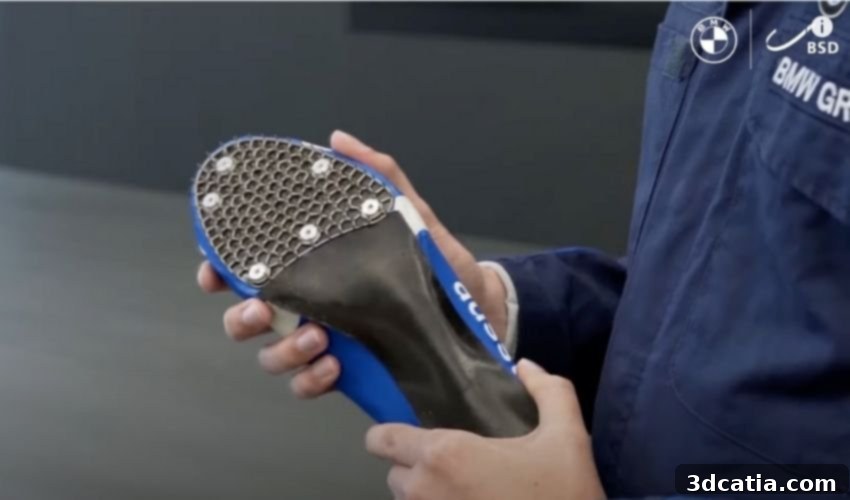
The impact of BMW’s 3D printing technology has also been profoundly felt by bobsled and skeleton athletes in the form of a completely novel spike attachment system. These specialized spikes, strategically positioned between the ice and the athlete’s boot, are engineered to deliver superior grip and enable significantly greater acceleration during the critical initial push-off phase. In these sports, a powerful and rapid start is not merely advantageous; it is a fundamental determinant of the race’s outcome. Understanding this, BMW’s team of engineers and designers, leveraging their rapid prototyping capabilities, developed and manufactured the advanced shoe sole, integrated with the custom 3D-printed spikes, in an extraordinarily short timeframe. This agile development process, a hallmark of additive manufacturing, allowed for swift iterations and optimizations, ensuring that the athletes received equipment perfectly tuned for maximum performance on the ice. The ability to quickly design, test, and produce these intricate components provides a significant competitive edge, directly translating into precious milliseconds gained at the start line.
A Paradigm Shift: Sustainable and Affordable Sporting Goods Manufacturing
The development journey for these innovative spike attachments began with a meticulous process of creating a precise digital copy of a standard skeleton shoe, followed by comprehensive analysis and extensive testing. BMW’s engineers conducted numerous experiments, exploring a multitude of spike geometries and configurations to identify the optimal shape for maximum traction. The ultimate objective was to pinpoint the exact design that would yield the greatest grip on ice, allowing for the precise 3D printing of these optimal spikes. Thanks to the inherent advantages of additive manufacturing, the resulting shoe was not only made lighter overall but also achieved a dramatically improved distribution of grip across the entire forefoot area. This enhanced grip translates directly into more efficient power transfer and greater control for the athlete. Crucially, BMW’s approach also prioritized the individual needs and preferences of each athlete during the production phase. The capacity of 3D printing to facilitate bespoke customization means that equipment can be tailored to an athlete’s unique biomechanics and comfort requirements, optimizing performance potential.
Beyond performance enhancements, the Bavarian automaker’s deployment of 3D printing in sports equipment manufacturing showcases a significant leap forward in both cost-effectiveness and sustainability. Traditionally, manufacturing specialized sporting goods can be an expensive and material-intensive process, often involving complex molds and lengthy production cycles. Additive manufacturing offers a lean alternative, reducing material waste by building components layer by layer, only using the necessary amount of material. Furthermore, its economic viability is evident in its repairability: if, for instance, a few spikes become damaged during intense training or competition, only the broken spikes need to be replaced, rather than necessitating the costly and wasteful replacement of the entire shoe. This targeted repair capability significantly extends the lifespan of the equipment, reduces operational costs for sports associations, and minimizes environmental impact. BMW’s commitment to additive manufacturing therefore not only pushes the boundaries of athletic performance but also champions a more responsible and efficient manufacturing paradigm for specialized sporting goods. For those interested in delving deeper into BMW’s pioneering applications of 3D printing across various sectors, comprehensive information is available on their official website HERE.
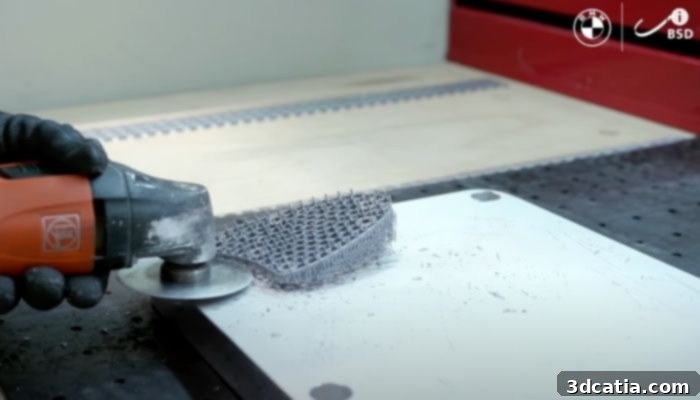
BMW has been supporting the German lugers with 3D-printed sports equipment since 2010 (photo credits: BMW Germany)
BMW’s strategic integration of 3D printing for elite sports equipment underscores a growing trend where advanced manufacturing technologies are becoming indispensable tools for achieving marginal gains in competitive athletics. The ability to rapidly prototype, iterate designs, and produce highly customized, lightweight, and robust components offers an unprecedented advantage. This collaboration between automotive engineering prowess and athletic ambition serves as a compelling model for future innovation across the entire sports industry, demonstrating how precision engineering can directly contribute to breaking records and securing victories on the world stage. As additive manufacturing technologies continue to evolve, their impact on the design, functionality, and accessibility of high-performance sports equipment is set to become even more profound, democratizing access to tailored gear for athletes at all levels.
Do you believe BMW’s innovative application of 3D printing will fundamentally revolutionize the entire sports industry, fostering new levels of performance and customization? We invite you to share your thoughts and insights in a comment below or join the conversation on our Linkedin, Facebook, and Twitter pages! For the very latest news and updates from the world of 3D printing, don’t forget to sign up for our free weekly Newsletter here, delivered straight to your inbox. You can also discover a wealth of insightful videos and content on our dedicated YouTube channel.
*Cover Photo Credits: BMW Germany