
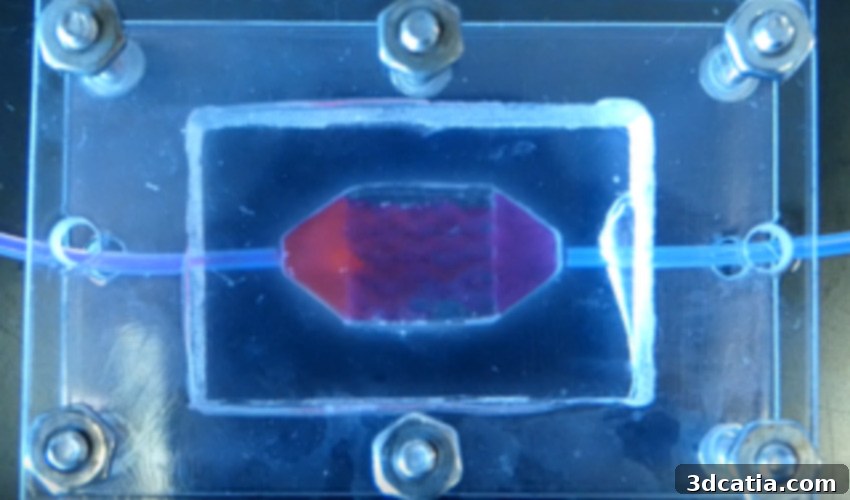
NASA Challenge Winners Pioneer 3D Printed Liver Tissues for Medical Breakthroughs on Earth and in Space
In a monumental stride for regenerative medicine and biomanufacturing, two pioneering teams from the Wake Forest Institute for Regenerative Medicine (WFIRM) in Winston-Salem, North Carolina, have emerged as the first and second-place winners in NASA’s prestigious Vascular Tissue Challenge. Their groundbreaking achievement involves the successful creation of 3D printed, lab-grown human liver tissues, a feat that holds immense implications for healthcare on Earth and the future of human exploration in space. Utilizing advanced bioprinting techniques, these scientists were able to engineer cube-shaped tissue structures capable of sustained function for an impressive 30 days within a laboratory environment. Team Winston, the first-place recipient, not only secured a substantial $300,000 prize but also earned the invaluable opportunity to advance their transformative research aboard the International Space Station (ISS). This unique platform promises to unlock unprecedented insights into how challenging conditions such as radiation and microgravity impact human cells and organs, potentially revolutionizing our understanding of human biology.
The Vascular Tissue Challenge is a cornerstone initiative within NASA’s Centennial Challenges program, which was established in 2005 to foster public engagement and accelerate the development of cutting-edge technologies vital for space exploration and Earth-based applications. The specific, ambitious goal of the Vascular Tissue Challenge was to inspire and support the creation of thick, metabolically-functional human vascularized organ tissue in a meticulously controlled setting. This particular objective presented formidable scientific and engineering hurdles, primarily due to the inherent difficulty in replicating a functional network of artificial blood vessels within engineered tissues. Vascularization – the process of forming blood vessels – is critical for nutrient and oxygen delivery and waste removal in any living tissue. Without it, tissues thicker than a few cell layers quickly die. While the competition did not explicitly mandate the use of 3D printing, it is entirely logical that bioprinting proved to be the winning methodology, given its unparalleled ability to manage the intricate structural complexity and precision required for such an endeavor.
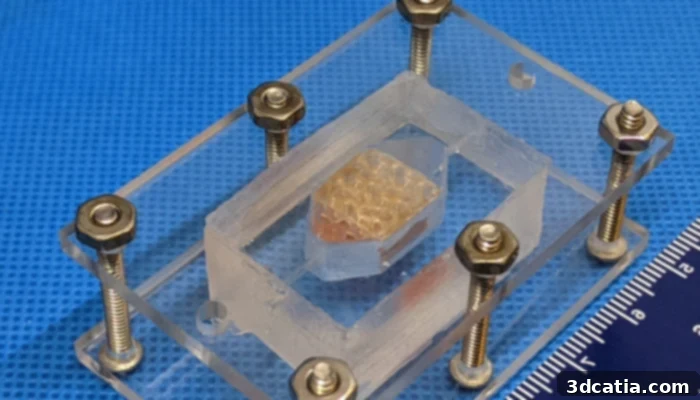
The 3D printed liver tissues from Team Winston (photo credits: Wake Forest Institute for Regenerative Medicine)
Bioprinting, a revolutionary additive manufacturing technique, has steadily gained prominence in scientific and medical communities over recent years. It operates by precisely depositing “bioinks” – sophisticated formulations containing living cells suspended within biocompatible materials – to construct a vast array of biological structures, ranging from complex human organs to bone tissues. In this latest, remarkable accomplishment, both Team Winston and Team WFIRM (securing second place) successfully engineered lab-grown human liver tissues that exhibited two critical characteristics: they were robust enough to survive for a full 30 days in the laboratory, and crucially, they performed metabolic functions analogous to those found in native human liver tissue. The 30-day mark is exceptionally significant in tissue engineering, as it represents a critical viability threshold where engineered tissues often fail due to insufficient oxygen and nutrient supply. Achieving this milestone unequivocally demonstrates the potential for future research to develop and maintain thick, three-dimensional tissues for a wide spectrum of research and therapeutic applications, moving beyond simple cell cultures to more physiologically relevant models.
Jim Reuter, NASA associate administrator for space technology, underscored the magnitude of this achievement, stating, “I cannot overstate what an impressive accomplishment this is. When NASA started this challenge in 2016, we weren’t sure there would be a winner. It will be exceptional to hear about the first artificial organ transplant one day and think this novel NASA challenge might have played a small role in making it happen.” Reuter’s sentiment highlights the sheer difficulty of the challenge and the extraordinary innovation demonstrated by the WFIRM teams. In the short term, this breakthrough is poised to significantly accelerate pharmaceutical testing and disease modeling. In an era where understanding drug efficacy and disease progression is more critical than ever, especially in light of recent global health crises, these lab-grown liver tissues offer a more accurate and ethical alternative to animal testing, allowing for personalized drug screening and a deeper understanding of human diseases at a cellular level.
The success of the winning teams hinged on their ingenious application of 3D printing technologies to fabricate intricate scaffolds. These scaffolds were meticulously designed with an integrated network of channels that precisely recreated the critical biological process of perfusion – the delivery of blood (or in this case, a nutrient-rich solution) to the tissue. This sophisticated architecture was key to ensuring sufficient levels of oxygen and essential nutrients reached the cells within the engineered tissues, thereby enabling their sustained viability throughout the rigorous 30-day trials. While both teams employed distinct 3D-printed designs and utilized different material compositions, they consistently achieved the same vital outcome: the production of live tissues harboring the diverse array of cell types characteristic of functional human livers. This consistency validates the core principles behind their bioprinting approaches.
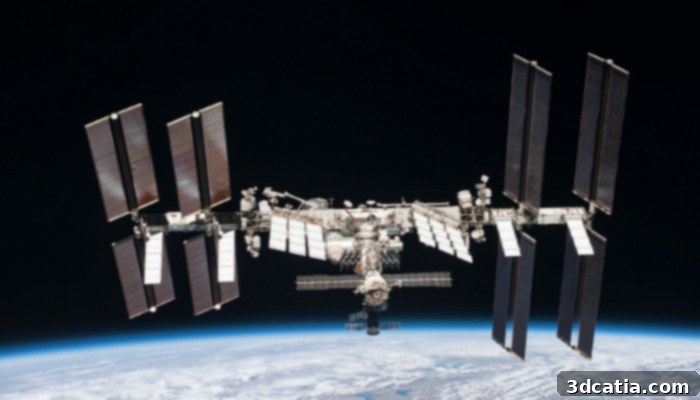
The winning team’s work may be sent to the International Space Station (ISS) (photo credits: NASA)
Looking ahead, Team Winston will collaborate closely with the ISS U.S. National Laboratory to adapt their sophisticated bioprinting strategy for deployment in the unique environment of space. The potential implications of this collaboration are vast and multifaceted. Ultimately, these 3D bioprinted tissues could be developed on the International Space Station itself, enabling a profound advancement not only in tissue engineering research on Earth but also pioneering the field of biomanufacturing in space. Studying tissue development and function in microgravity offers unparalleled insights into fundamental biological processes, free from the constraints of Earth’s gravity. It can help us understand how organs respond to radiation exposure, a crucial factor for long-duration space missions, and may even facilitate the creation of personalized medical countermeasures for astronauts. The ability to biomanufacture tissues and organs in space could provide on-demand solutions for medical emergencies far from Earth, a critical capability for future deep-space exploration. This synergy between terrestrial research and space-based innovation promises to unlock new frontiers in medicine and expand the horizons of human biological capability.
The successful development of vascularized, functional liver tissues through bioprinting marks a pivotal moment in regenerative medicine. This achievement not only addresses a significant challenge posed by NASA but also paves the way for a future where organ shortages could be mitigated, and personalized therapies become a reality. Imagine a world where diseased organs could be repaired or replaced with bioengineered tissues, or where specific drug treatments could be tested on patient-specific models before administration, significantly reducing adverse effects and improving efficacy. The knowledge gained from these studies, particularly those conducted on the ISS, will have reciprocal benefits, accelerating drug discovery, disease modeling, and the development of new treatments for patients worldwide. This convergence of advanced manufacturing, biology, and space exploration holds the promise of fundamentally transforming human health and our capability to thrive beyond Earth.
What are your thoughts on these revolutionary 3D printed liver tissues and their potential impact on medicine and space exploration? Let us know in a comment below or on ourFacebook,Twitter andLinkedIn pages! Sign up for our free weeklyNewsletter here, the latest 3D printing news straight to your inbox!
*Thumbnail Photo Credits: Wake Forest Institute for Regenerative Medicine