
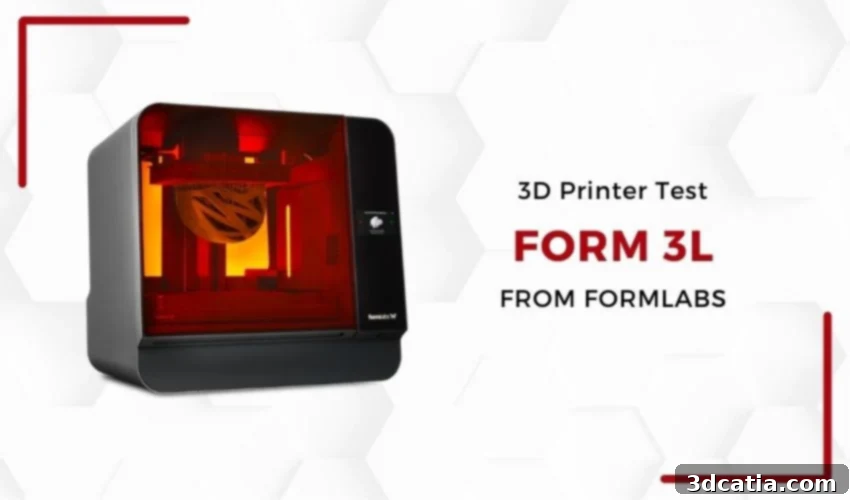
Formlabs Form 3L Review: A Deep Dive into Large-Format Low Force Stereolithography
Formlabs has established itself as a leading innovator in the 3D printing industry for over a decade. In late 2019, the Boston-based manufacturer unveiled the Form 3, representing the third generation of its highly acclaimed desktop SLA (Stereolithography) 3D printers. Building on this success, Formlabs has since expanded its lineup with several derivatives, including the Form 3L, Form 3B, Form 3BL, and more recently, the enhanced Form 3+ and Form 3B+. A pivotal development accompanying the Form 3’s launch was the introduction of Formlabs’ proprietary Low Force Stereolithography (LFS) technology. This innovative approach moves beyond traditional SLA, promising users superior detail, exceptionally smooth surface finishes, simplified print support removal, and enhanced precision and reproducibility, setting a new benchmark for resin 3D printing.
Following our comprehensive evaluation of the Fuse 1 SLS 3D printer, the 3Dnatives Lab is thrilled to put the Form 3L through its paces. The Form 3L is a standout desktop resin 3D printer, distinguished by offering one of the most generous build volumes available in its category. Priced at $10,999.00 for the standalone unit, or $16,399.00 for a complete package that includes two essential post-processing units—the Wash L and Cure L—it represents a significant investment for professionals seeking high-quality, large-scale resin prints. To give you an immediate insight into this unique machine, we invite you to watch our detailed video review of the Form 3L. For an in-depth written analysis, continue reading our full review below.
Unboxing and First Impressions: The Imposing Formlabs Form 3L
Upon unboxing, the Form 3L immediately makes an impression with its substantial size. For a desktop resin 3D printer, its external dimensions of 770 x 520 x 740 mm (30.3 x 20.5 x 29.1 inches) and a total weight of 54.4 kg (120 lb) truly distinguish it as an imposing machine. This robust build hints at its capability to handle larger projects that typically require industrial-grade equipment. Aesthetically, the printer perfectly aligns with Formlabs’ signature design philosophy, featuring sleek rounded edges, a durable anthracite aluminum chassis, and a translucent orange polycarbonate cover that allows users to monitor prints while blocking harmful UV light. The integrated 5.5-inch touch screen offers an intuitive interface for operation.
Ergonomic design is evident in the Form 3L’s large butterfly door, which provides unrestricted access to the expansive build tray, simplifying print removal and maintenance. The machine’s interior is thoughtfully illuminated by LED strips, enhancing visibility during operation. Located conveniently on the side of the printer are two dedicated slots for Formlabs’ proprietary resin cartridges, emphasizing the integrated ecosystem. These design choices collectively contribute to a professional appearance and a user-friendly experience, critical for long-term use in demanding environments.
The Form 3L arrives with a comprehensive set of components and accessories designed to support the entire printing workflow. Essential items include the build plate and the resin tank (VAT), alongside a suite of post-processing tools. These include metal trays, an electric pump for efficient resin management, flush cutters for support removal, non-reactive nitrile gloves for safety, and a rinse station. For machine maintenance and detaching finished prints, Formlabs provides a scraper, a specialized build platform jib to secure the platform, and a dedicated removal tool. This thoughtful inclusion of accessories ensures users have everything needed to get started and maintain the printer effectively, reinforcing Formlabs’ commitment to a seamless user experience.

The Form 3L is easily accessible thanks to its large butterfly door (photo credits: 3Dnatives)
At the heart of the Form 3L’s superior performance lies the Low Force Stereolithography (LFS) process, a technology shared with its smaller sibling, the Form 3. LFS operates by utilizing a flexible film at the bottom of the resin tank and a Light Processing Unit (LPU) equipped with a UV-A laser. What sets the Form 3L apart is its incorporation of *two* LPUs, working in tandem. These LPUs operate independently along the Y-axis but are linked on the X-axis, enabling faster printing speeds across a significantly larger build surface. This dual-LPU system dramatically reduces print times for large models and allows for simultaneous production of multiple parts, boosting productivity for professional applications. This fundamental difference is key to its large-format capabilities and efficiency.
The technical specifications of the Form 3L are truly impressive, affirming its position as a top-tier large-format desktop SLA 3D printer. It boasts an exceptionally generous build volume of 335 x 200 x 300 mm (13.2 x 7.9 x 11.8 inches), making it ideal for prototyping large components, producing batches of smaller parts, or creating functional models that demand high precision. For print quality, the Form 3L leverages two powerful 250 mW Class 1 UV-A lasers, each with a wavelength of 405 nm and an 85-micron diameter. On paper, these specifications translate to an impressive X/Y resolution of 25 microns, coupled with a versatile layer thickness range from 25 to 300 microns. This wide range allows users to prioritize either ultra-fine detail or faster production times, adapting to diverse project requirements while consistently delivering high-fidelity prints.
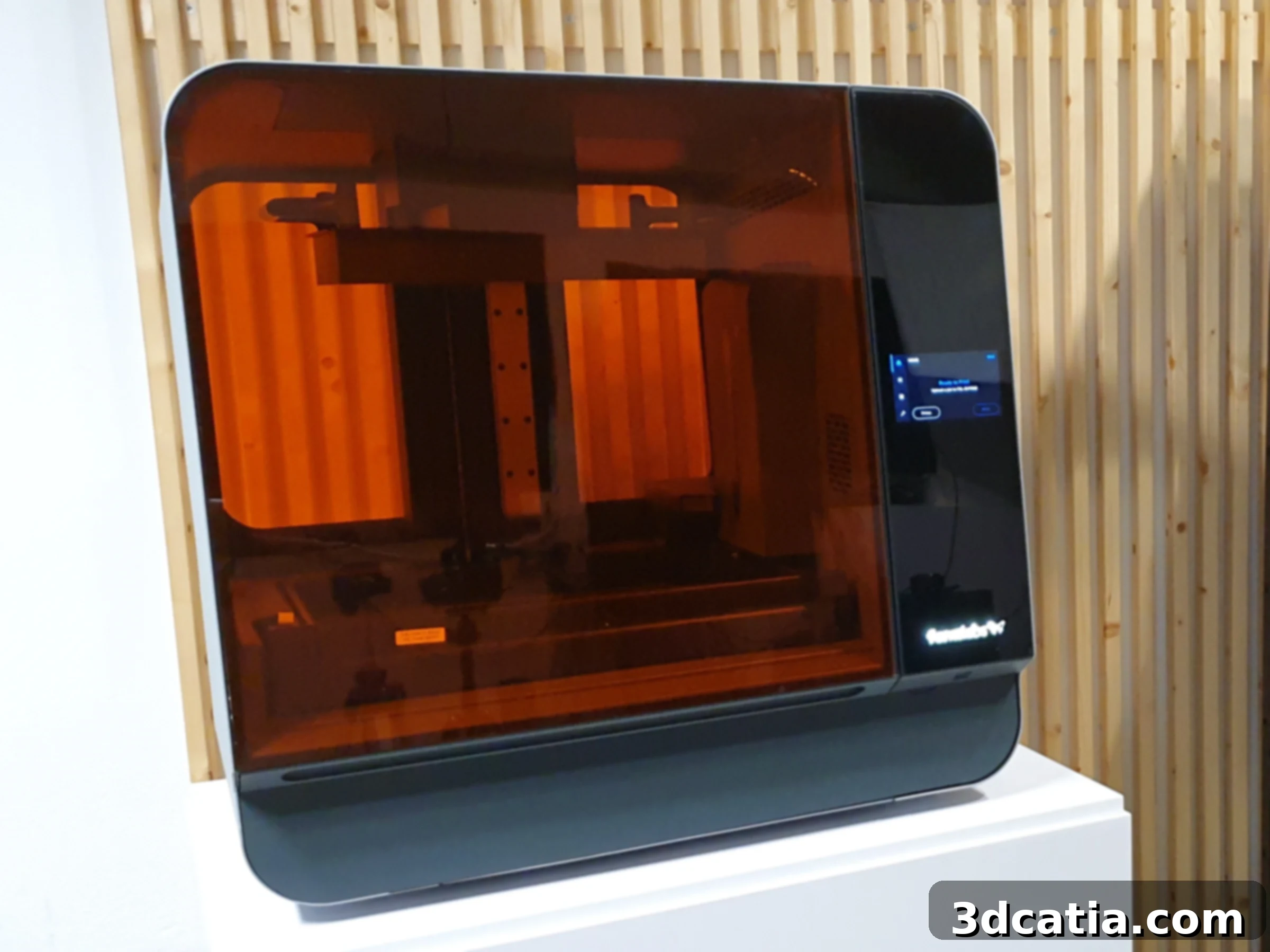
The Form 3L has a large print volume and a 5.5″ touch screen with a complete and intuitive interface (photo credits: 3Dnatives)
Seamless Setup: Installing the Form 3L 3D Printer
One of the Form 3L’s most appealing features is its remarkably straightforward installation process. As the machine arrives fully pre-assembled, users can quickly transition from unboxing to operational readiness. The initial setup involves a few simple, guided steps. These include securely screwing on the Wi-Fi antenna, connecting the printer to a power source, and establishing an internet connection via the intuitive touch screen interface. A crucial step for optimal print quality is ensuring the printer is perfectly level. The Form 3L assists with this by featuring a virtual spirit level on the screen, guiding users to adjust the height of each foot with an integrated disc until perfect calibration is achieved. Finally, the printing plate is easily secured in its designated position, completing the initial hardware setup.
Material preparation is equally user-friendly. Users simply install the resin container and mixer provided with the Form 3L. For expediting the initial “Prime” stage—a critical step we will elaborate on—it is recommended to manually pre-fill the tank with some resin. Following this, two Formlabs proprietary resin cartridges are inserted into the dedicated slots on the side of the machine. The Form 3L is equipped with an ultrasonic level sensor that intelligently monitors the resin supply, enabling fully automatic resin replenishment throughout the printing process. It’s important to note, however, that both installed cartridges must contain the identical material to ensure consistent printing, and resin cartridges are typically not included as standard accessories.
Formlabs has integrated intelligent sensor technology into the Form 3L, providing robust error prevention and maintaining material integrity. These sensors precisely determine whether the resin tray is correctly installed and if the specified resin type, along with the correct resin tray, has been properly inserted. A key feature is the printer’s ability to associate a particular resin tray with a specific material. This ingenious system prevents cross-contamination between different resins, which is vital for maintaining material properties and print quality. However, a practical consequence of this association is that the resin tray must be exchanged whenever a different resin is used, necessitating a dedicated tray for each material type the user plans to work with. While this adds to the initial investment for multiple materials, it guarantees uncompromised print quality and material purity over time.
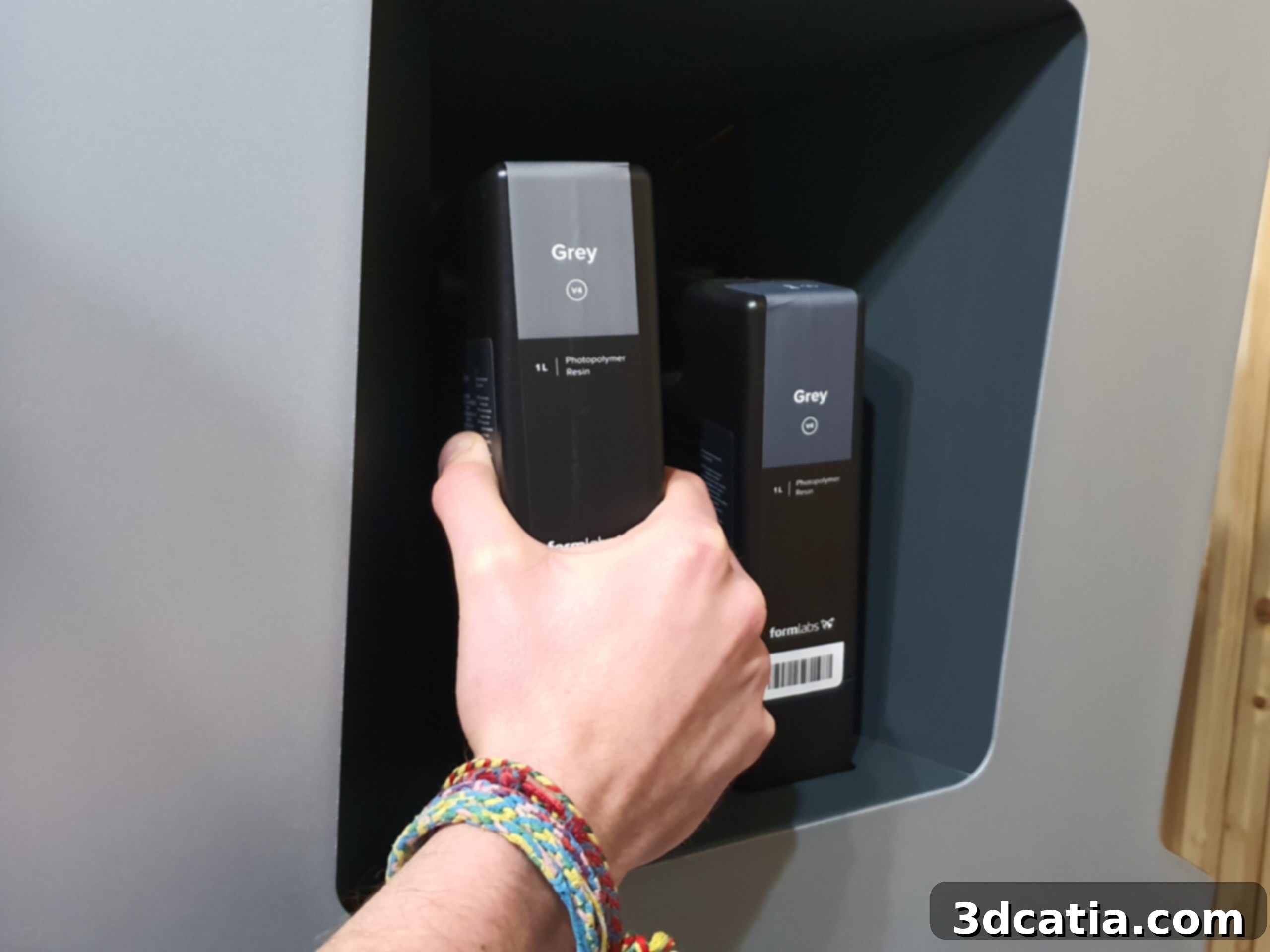
The Form 3L has two slots for its proprietary resin cartridges (photo credits: 3Dnatives)
Once the initial hardware and material setup steps are complete, activating the “prime” function of the 3D printer is a highly recommended preparatory measure before initiating the first print. This essential operation serves to thoroughly mix the resin within the tank, ensuring a uniform consistency, and verifies that a sufficient quantity of material is present for the upcoming print job. This pre-print conditioning is crucial for preventing print failures and ensuring optimal material performance from the very first layer.
The final step in preparing the Form 3L for use involves linking it to a Formlabs account through the Dashboard, a powerful cloud-based management platform we will delve into further. Connectivity is flexible, with the option to connect the machine to the internet via Wi-Fi or directly through the RJ45 port located at the rear of the unit, providing reliable network access. With the initial setup complete and connectivity established, the only remaining task is to download PreForm, Formlabs’ proprietary slicing software, which is the gateway to preparing and launching your first high-quality 3D prints.
Mastering the Workflow: PreForm and Formlabs Dashboard Software
Formlabs distinguishes itself by developing its entire software ecosystem, including both the printer’s operating system and its dedicated slicing software. PreForm, Formlabs’ powerful slicer, has been an integral part of their offerings since the debut of the original Form 1 in 2012. Over the years, Formlabs has continuously refined PreForm, integrating new features and enhancing its user experience to make it more intuitive and efficient for both novice and experienced users. This commitment to in-house software development ensures seamless integration between hardware and software, optimizing the entire 3D printing workflow.
Beyond standard functionalities such as model scaling, precise part orientation, and the selection of printer, material, and print parameters, PreForm offers a suite of intelligent features designed to streamline the printing process. A standout example is “one-click 3D printing.” As the name suggests, this innovative feature allows users to prepare a 3D model for printing with minimal effort. Simply import your 3D model, select your chosen printer and resin type, and activate this feature. PreForm then automatically optimizes the part’s orientation and generates robust support structures, ensuring optimal printability and reducing the learning curve for complex resin printing.
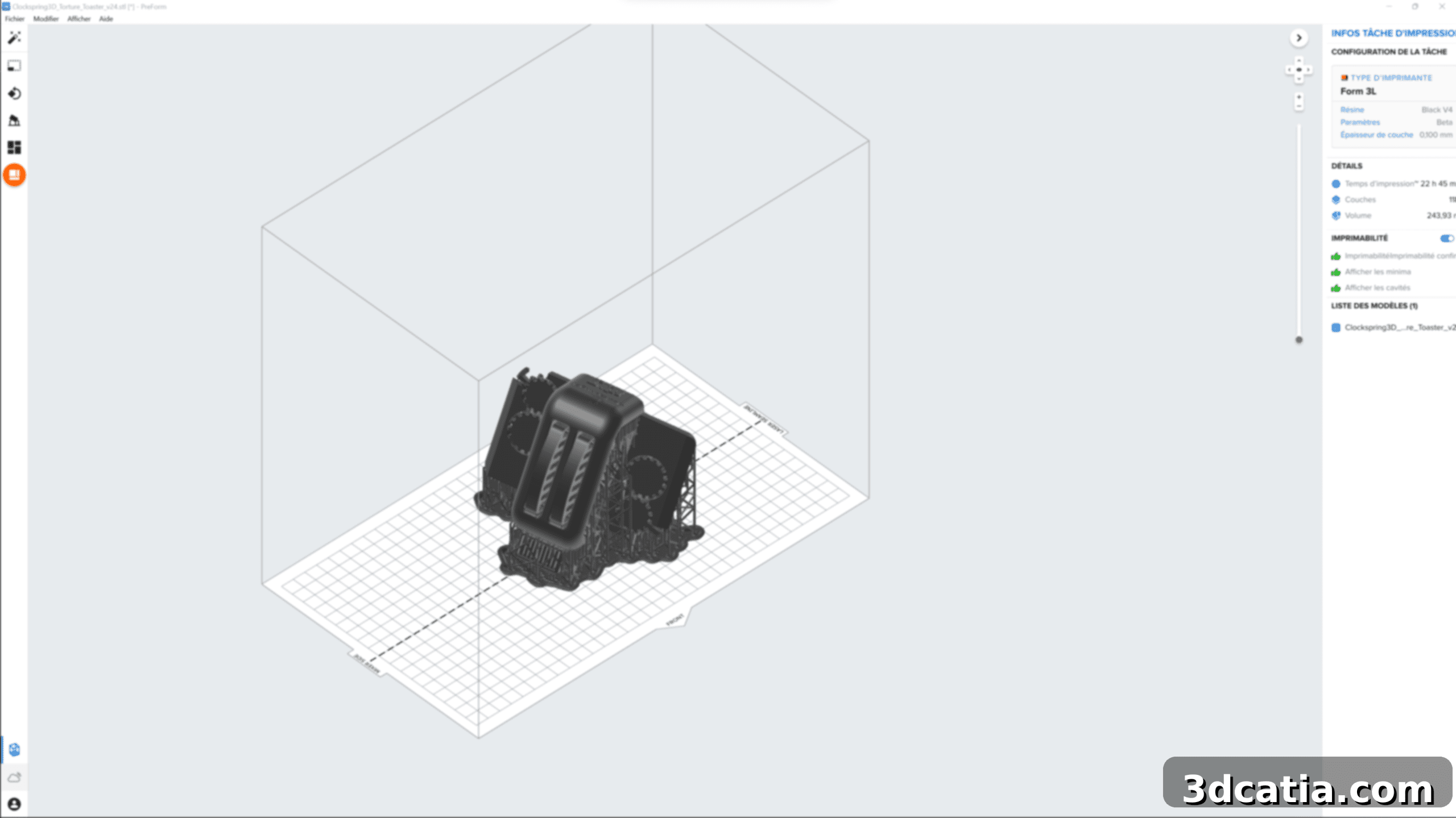
PreForm is the slicer developed and used by Formlabs for all its printers. It offers advanced features such as “one-click printing”
While “one-click 3D printing” simplifies the preparation process, it doesn’t limit experienced users. All automatically generated settings remain fully customizable, allowing for fine-tuning and expert control when needed. During our extensive testing, a particularly valuable feature was the integrated printability indicator. This intelligent tool analyzes the loaded 3D model in conjunction with the selected print settings, providing an estimated likelihood of a successful print. This proactive feedback helps users identify potential issues before commencing a print, saving valuable time and costly resin by preventing failures. This blend of automated convenience and expert control makes PreForm a powerful and versatile tool for all skill levels.
Despite PreForm’s numerous advanced capabilities, we did encounter a few minor limitations during our review. At the time of testing, the software did not support 3MF files, which could be a drawback for users who frequently work with this increasingly popular 3D file format. Another point to consider, as mentioned in our unpacking section, is that the Form 3L utilizes two LPUs to cover its expansive print surface. While this dual system significantly enhances speed and capacity, the laser beams from these optical units converge at the center of the printing area. This convergence can, in rare instances, result in a subtle, undesirable visible line on the finished prints. To proactively address this, PreForm visually represents this potential artifact as a dotted line on the virtual build plate, allowing users to adjust part placement if critical surface quality is required in that specific area. This transparency, while acknowledging a physical characteristic, helps users manage expectations and optimize print layouts.
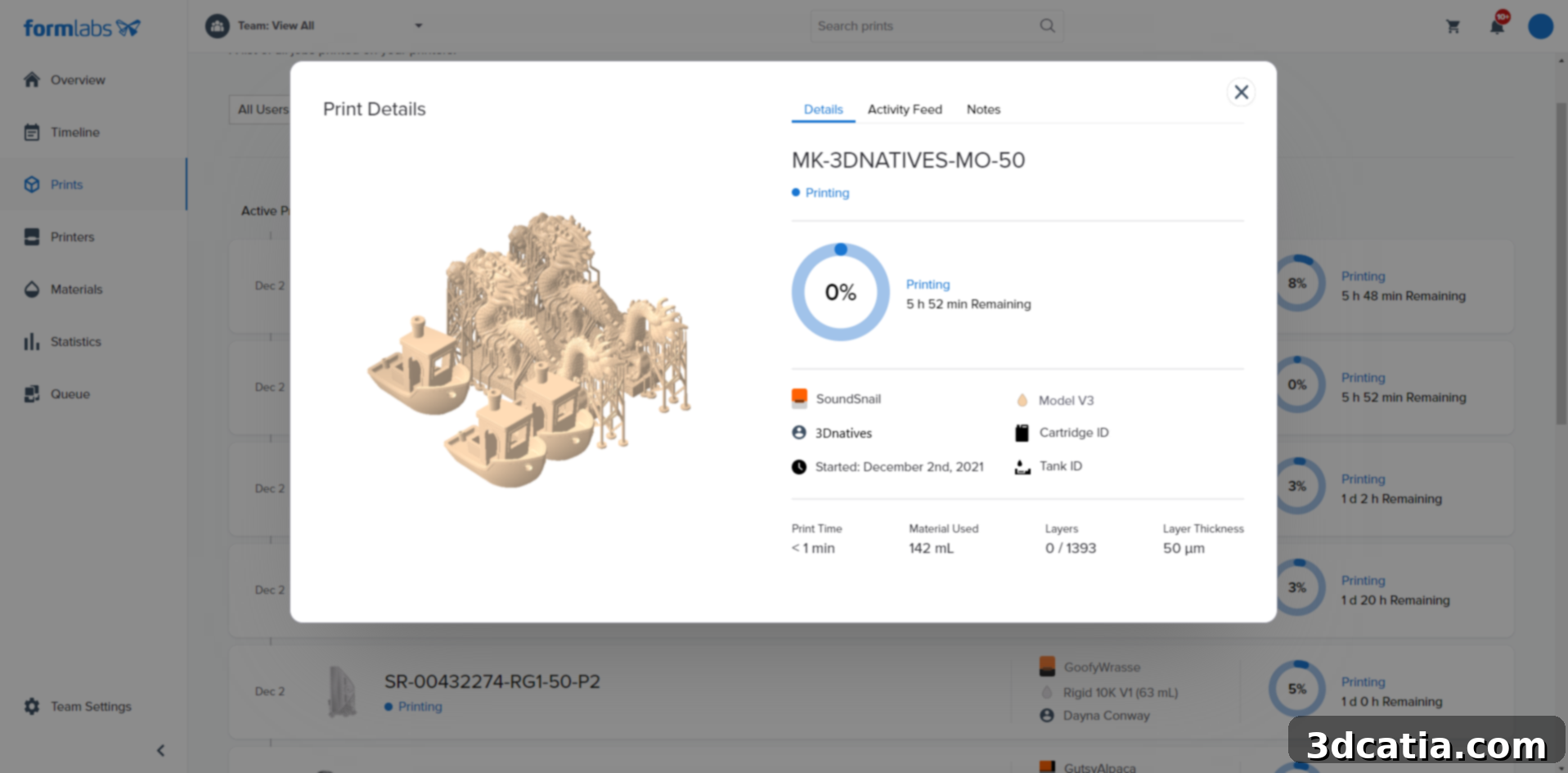
Dashboard allows you to quickly consult the status of your printers as well as their printing history
Complementing PreForm is Formlabs Dashboard, a sophisticated cloud-based print management software. Dashboard proved incredibly useful, allowing us to effortlessly launch prints remotely, either directly via the web application or through its native integration within PreForm. This functionality is particularly beneficial for managing multiple printers or overseeing print jobs from a different location, significantly enhancing workflow flexibility. Furthermore, Dashboard provides a comprehensive history of past print jobs, allowing users to review previous settings and performance data. This detailed logging is invaluable for optimizing future prints, troubleshooting, and maintaining consistent results across various projects and materials, making it an indispensable tool for professional users.
Unleashing Creativity: First Prints and Essential Post-Processing with Wash L & Cure L
To kick off the practical phase of our Form 3L evaluation, we began with the standard gray resin, which was already installed following the printer’s initial setup. Our first print was a detailed model of the Leaning Tower of Pisa, utilizing the default profiles provided by PreForm. With a layer height of 100 microns, the print job completed successfully in approximately 16 hours. The results were impressive: once removed from the printer, cleaned thoroughly in the Wash L, detached from the build plate, and finally post-cured in the Cure L, the model stood as a faithful and highly accurate reproduction, showcasing the Form 3L’s capability for intricate detail.
Throughout our extensive testing, the Wash L and Cure L units were indispensable for post-processing all our prints. It’s crucial to understand that unlike FDM (Fused Deposition Modeling) technology, resin 3D printing inherently requires a few additional, yet vital, post-processing steps. Immediately after a model emerges from the printer, it is enveloped in liquid, uncured resin. This excess resin must be meticulously cleaned from the surface to prevent it from solidifying and compromising the model’s final aesthetics and dimensional accuracy. Formlabs has designed its post-processing ecosystem to streamline these steps, making them as efficient and user-friendly as possible.
The most conventional method for cleaning resin prints involves immersing the model in an isopropyl alcohol (IPA) bath. To significantly simplify and improve this often-messy process, Formlabs engineered the Wash L. This dedicated washing station is specifically designed to accommodate the large print plate of the Form 3L, ensuring that even large-scale prints can be cleaned effectively. The Wash L securely contains the alcohol, preventing splashes and spills, thereby enhancing workplace safety and cleanliness. Furthermore, it accelerates the cleaning process with customizable profiles that agitate the alcohol, thoroughly removing uncured resin from intricate details and large surfaces alike, ensuring consistent and optimal results every time.
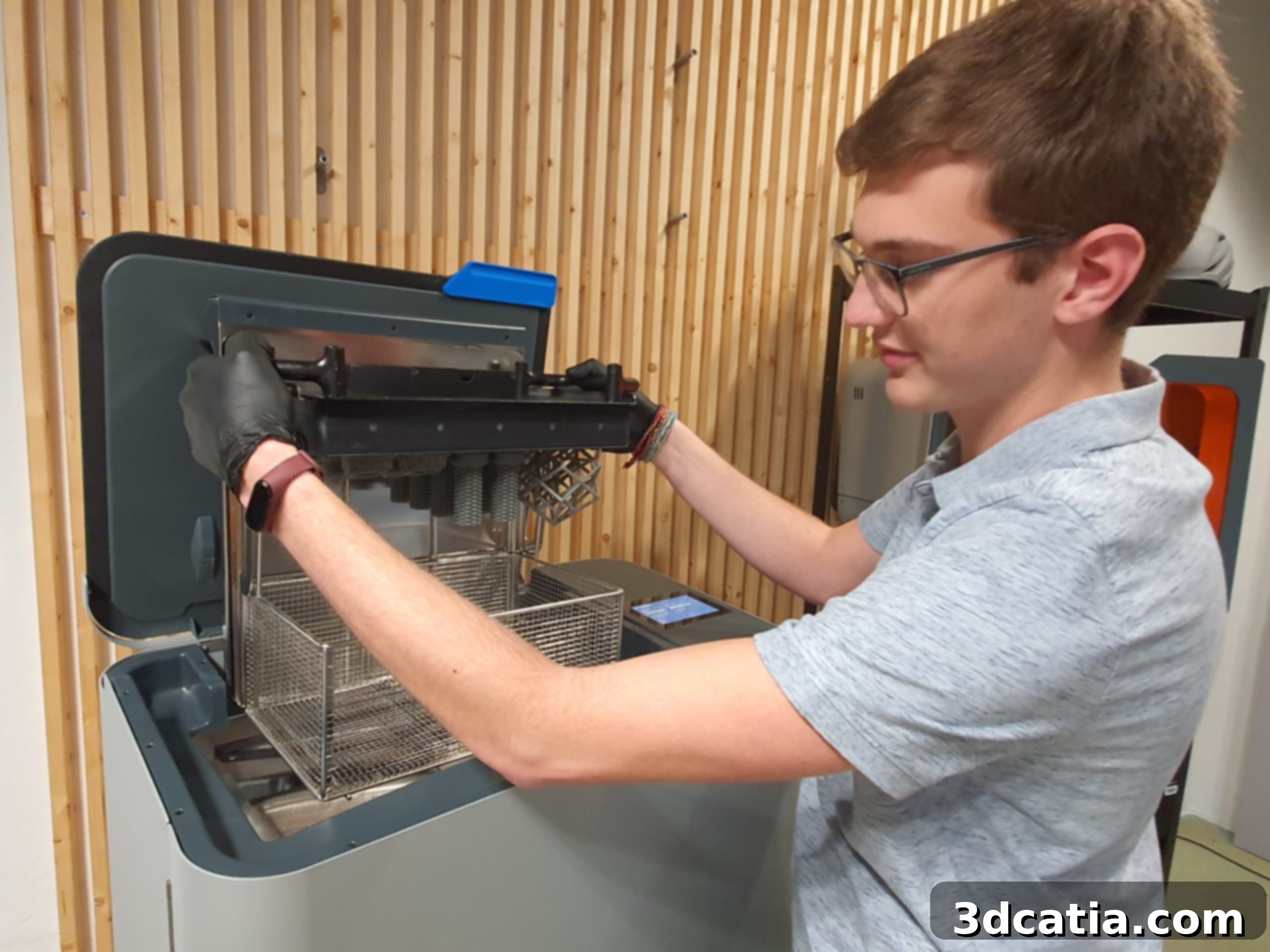
The Wash L makes it easy to clean small as well as large parts produced by the Form 3L (photo credits: 3Dnatives)
Beyond cleaning, the second critical post-processing step for resin prints is curing. During the 3D printing process, the UV light from the printer polymerizes the liquid resin, transforming it into a solid form. However, this polymerization is not always 100% complete upon print completion. To achieve the material’s full mechanical properties, optimal strength, and long-term stability, it is strongly recommended to finalize this process using an external UV light source. While natural sunlight can partially cure parts, it offers inconsistent results and can lead to uneven curing.
To ensure an optimal and uniformly cured part, Formlabs developed the Cure L. This dedicated post-curing machine functions as a sophisticated “UV oven,” meticulously designed to accommodate the substantial print volume of the Form 3L. The Cure L utilizes precisely controlled UV light and heat to thoroughly and evenly post-cure printed parts, maximizing their mechanical performance, enhancing their surface finish, and ensuring they meet the stringent requirements of professional applications. This integrated solution guarantees that Form 3L users can achieve the highest possible quality and durability from their resin prints.
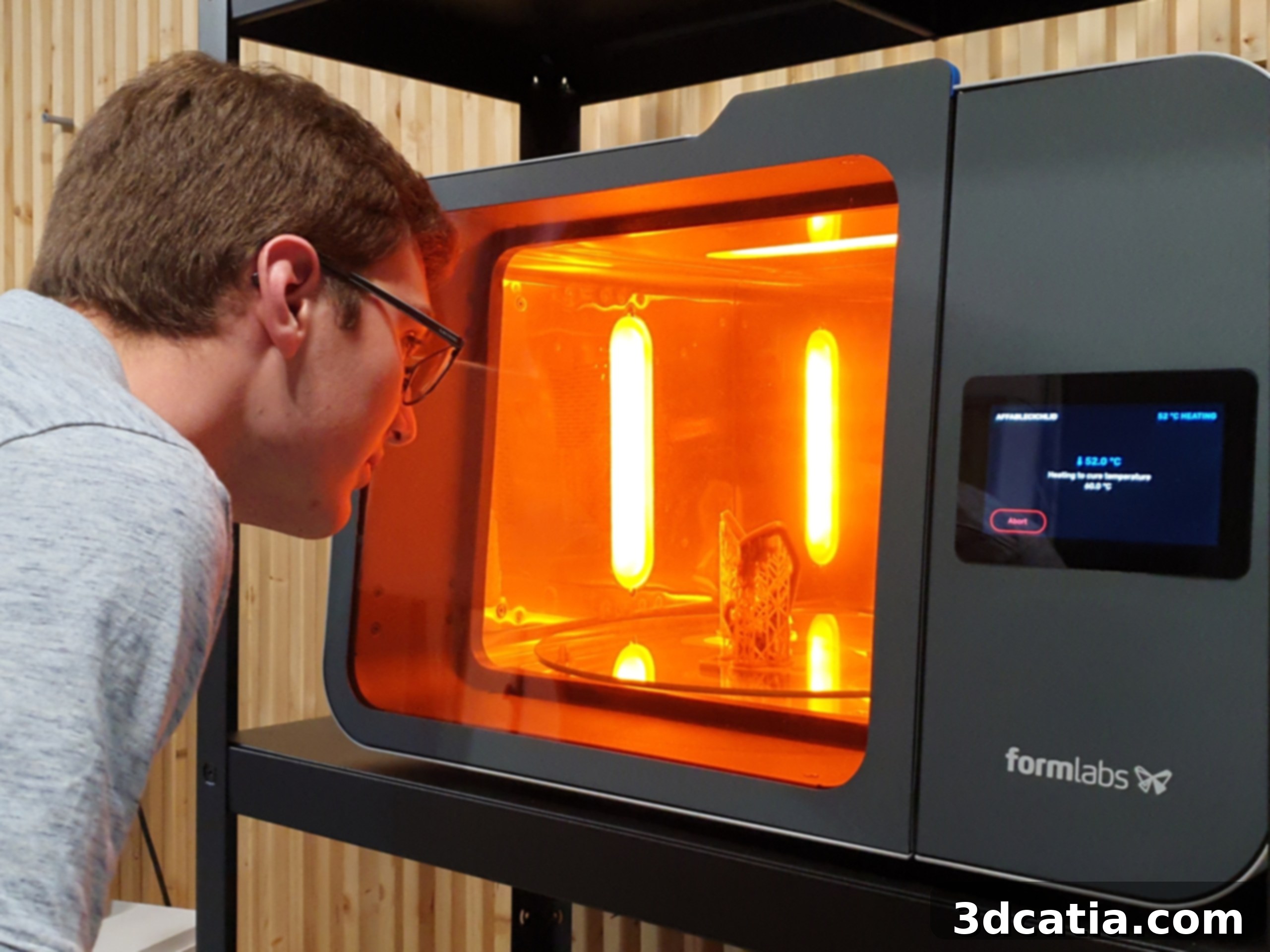
The Cure L ensures a uniform and optimal “post-polymerization” while offering a volume adapted to that of the Form 3L (photo credits: 3Dnatives)
Following our successful Leaning Tower of Pisa print, we expanded our testing to explore the versatility of Formlabs’ extensive resin library. The Form 3L is compatible with an impressive range of 17 different proprietary resins, each offering unique mechanical properties and aesthetic finishes. Our subsequent experiments included the “Model V3” dental resin, renowned for its high precision. With this resin, we successfully printed intricate benchy models and a complex dragon figure, both featuring numerous fine details that demanded exceptional accuracy, which the Form 3L delivered flawlessly at a 50-micron layer height. The prints demonstrated excellent surface fidelity and accurate feature reproduction, underscoring the printer’s suitability for demanding applications like dental prosthetics and highly detailed prototypes.
We also had the opportunity to evaluate several other specialized resins, highlighting the Form 3L’s adaptability for various professional needs. The “Tough 1500” resin delivered printed parts with enhanced solidity and durability, ideal for functional prototypes or end-use components requiring mechanical resilience. The “Castable Wax” resin proved its value for investment casting processes, enabling the creation of intricate patterns that can be burned out cleanly to produce precise metal parts, a crucial capability for jewelry and dental industries. For aesthetic applications, the “Clear V4” resin yielded stunning translucent impressions, perfect for light-guides, fluidic models, or clear prototyping. Furthermore, when printing a benchy with the “Draft” resin, we observed a remarkable reduction in printing time—approximately half compared to the same print with “Grey” resin. Impressively, this significant time saving did not come at the expense of print quality, demonstrating the Form 3L’s ability to balance speed with fidelity for rapid prototyping needs.
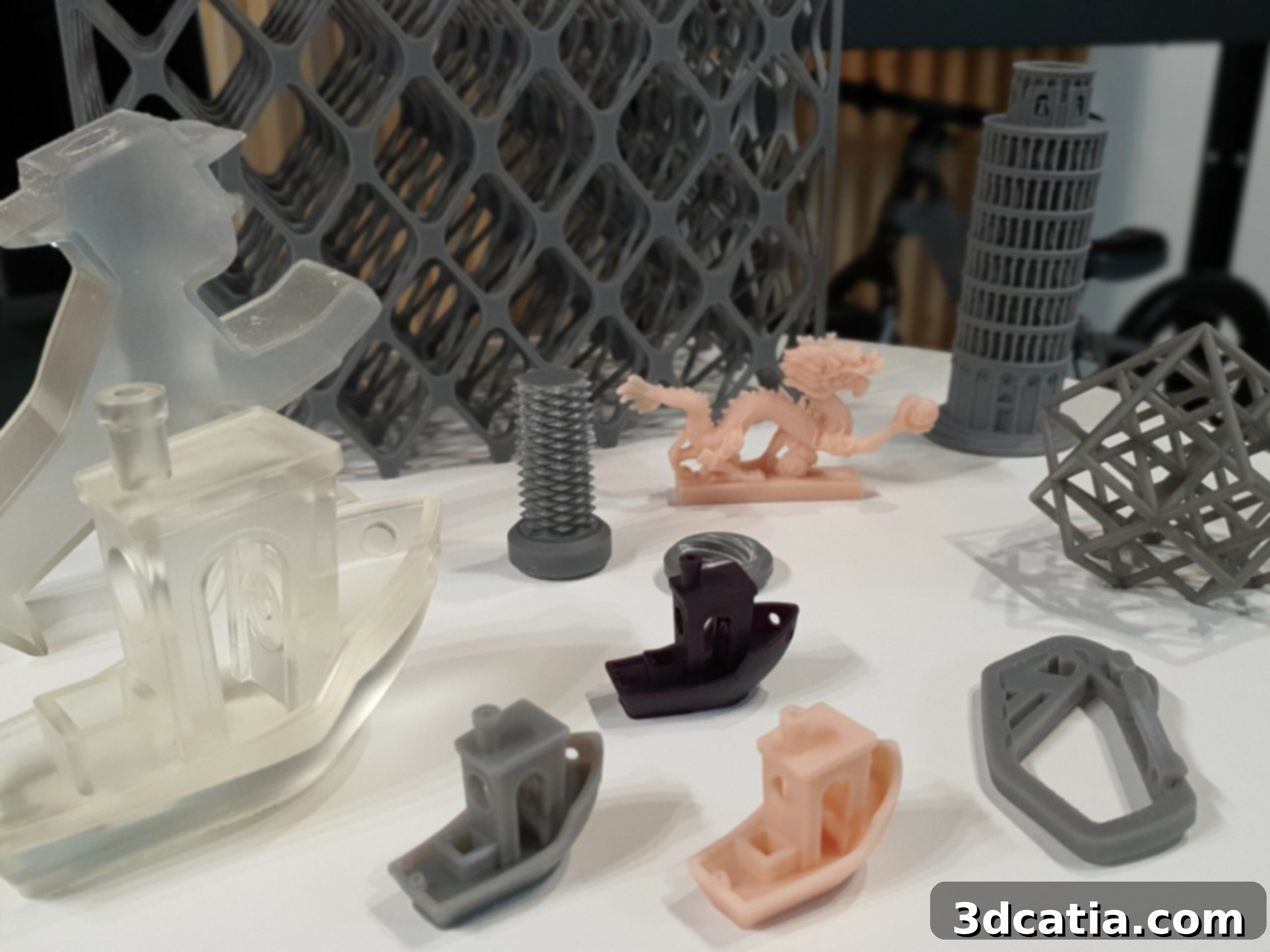
During our test, we were able to print different parts of any size with the Form 3L
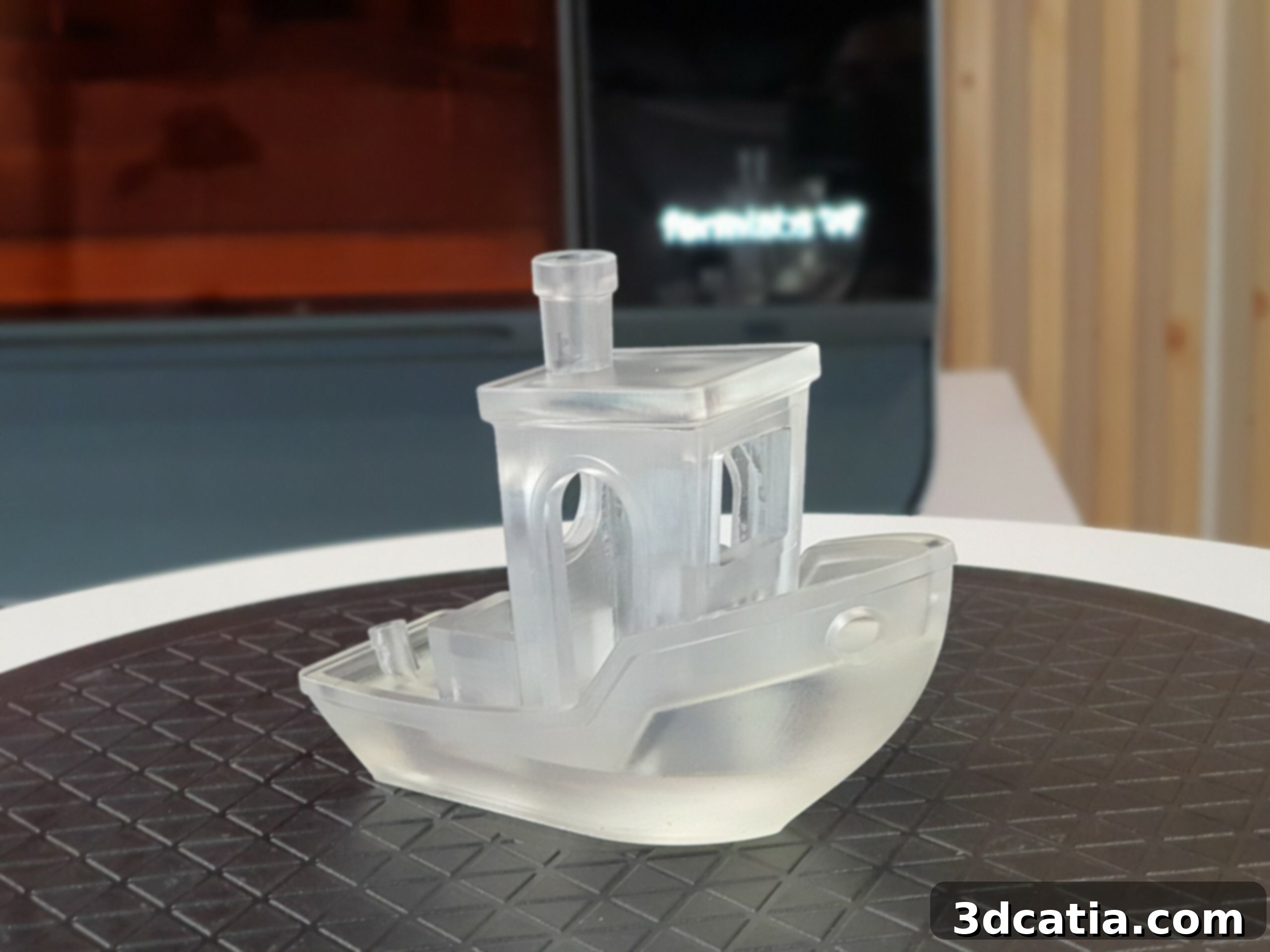
The different layers are invisible to the naked eye on this large translucent Benchy
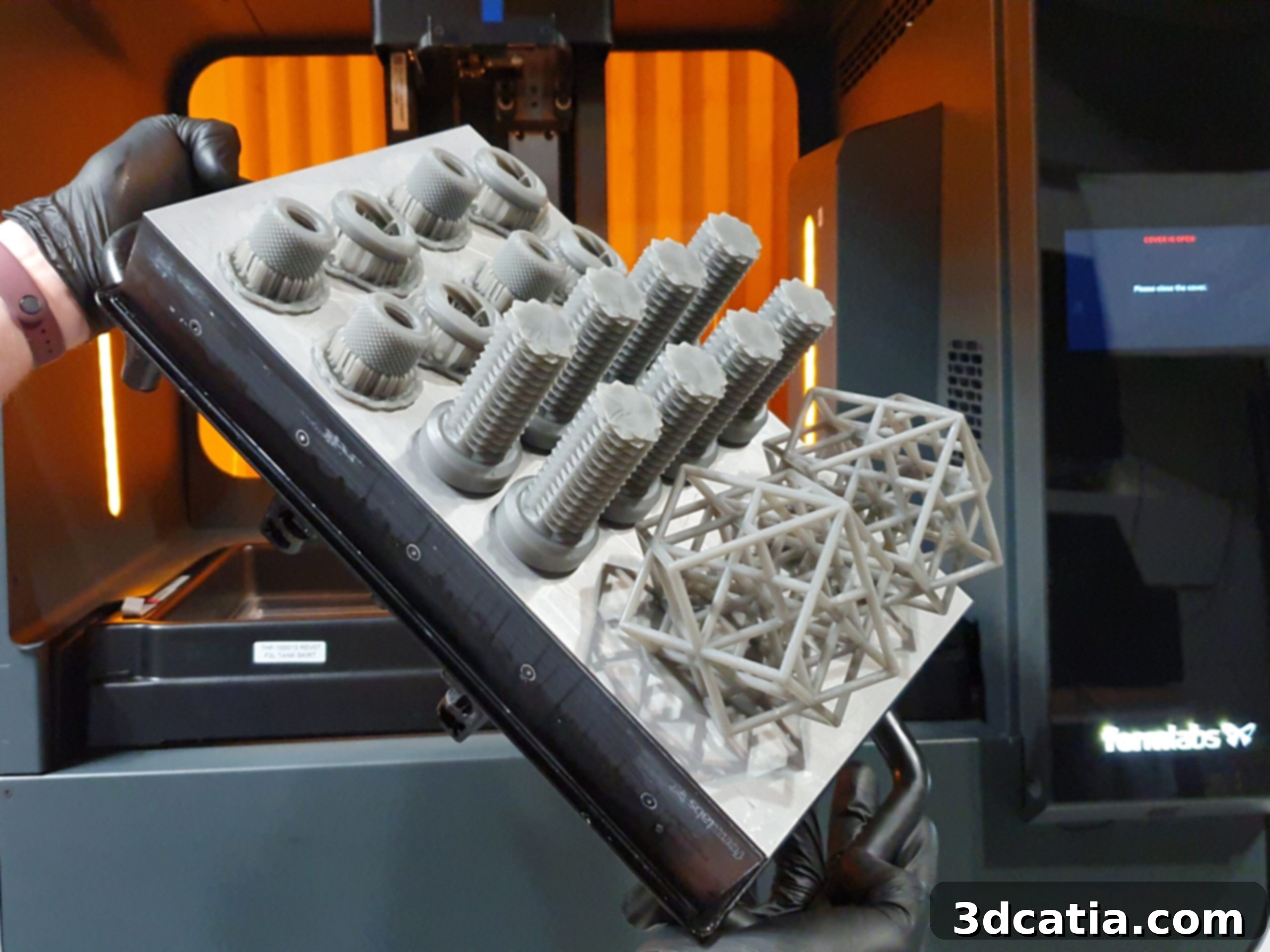
The large printing plate can also be useful when producing smaller parts simultaneously
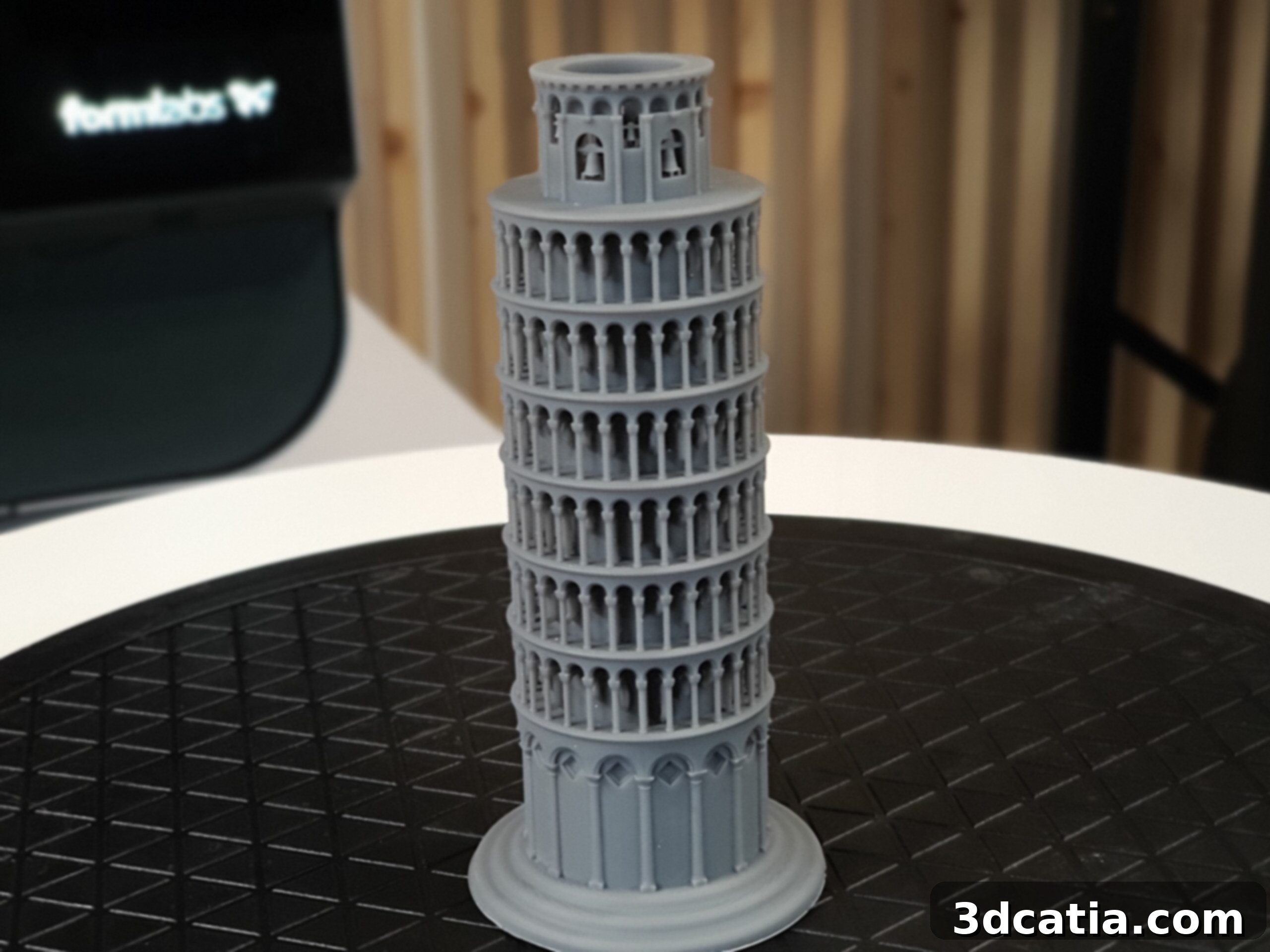
All details of the Leaning Tower of Pisa are faithfully reproduced in the print
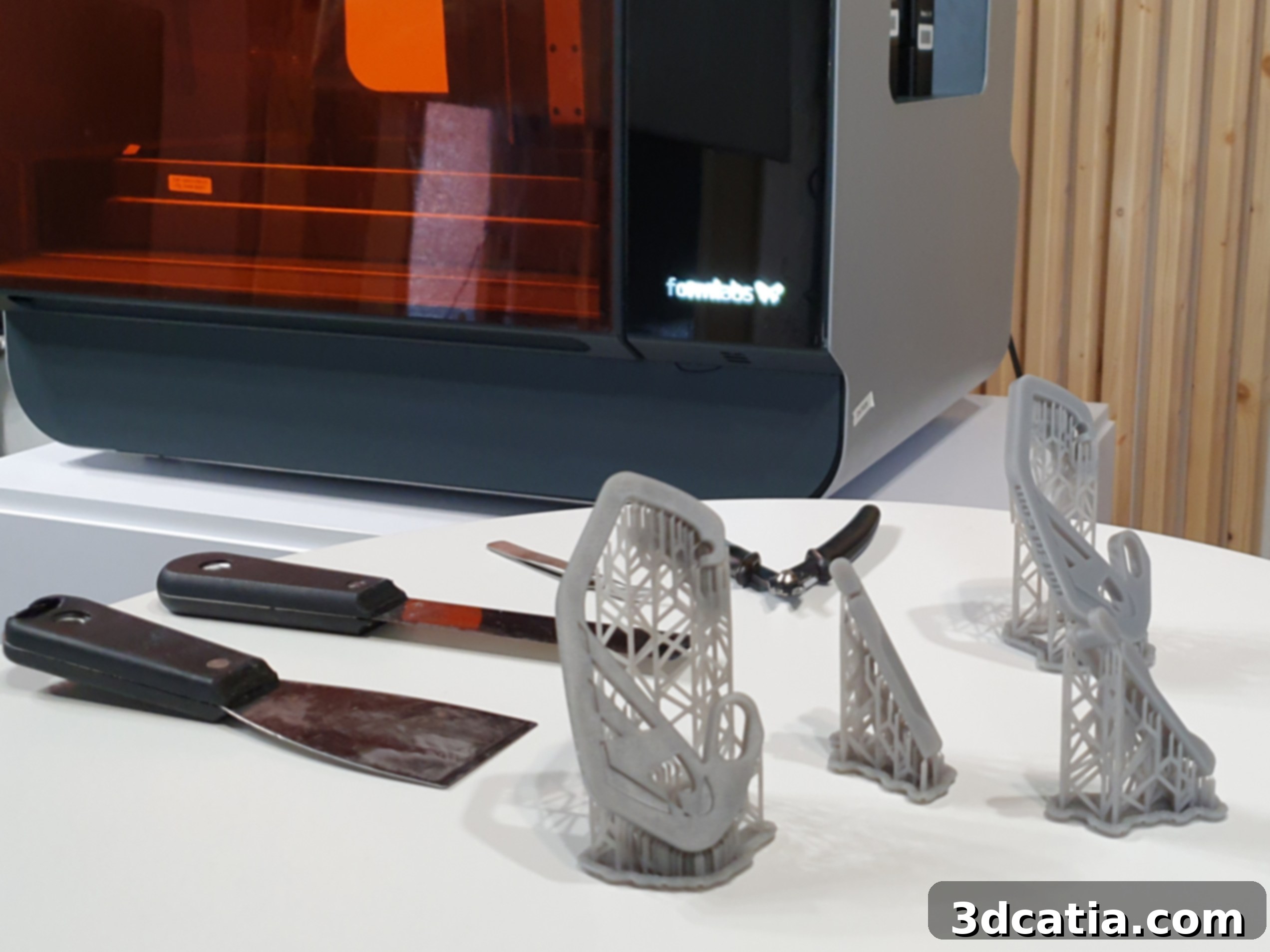
Thanks to the Tough resin, our carabiners are very resistant
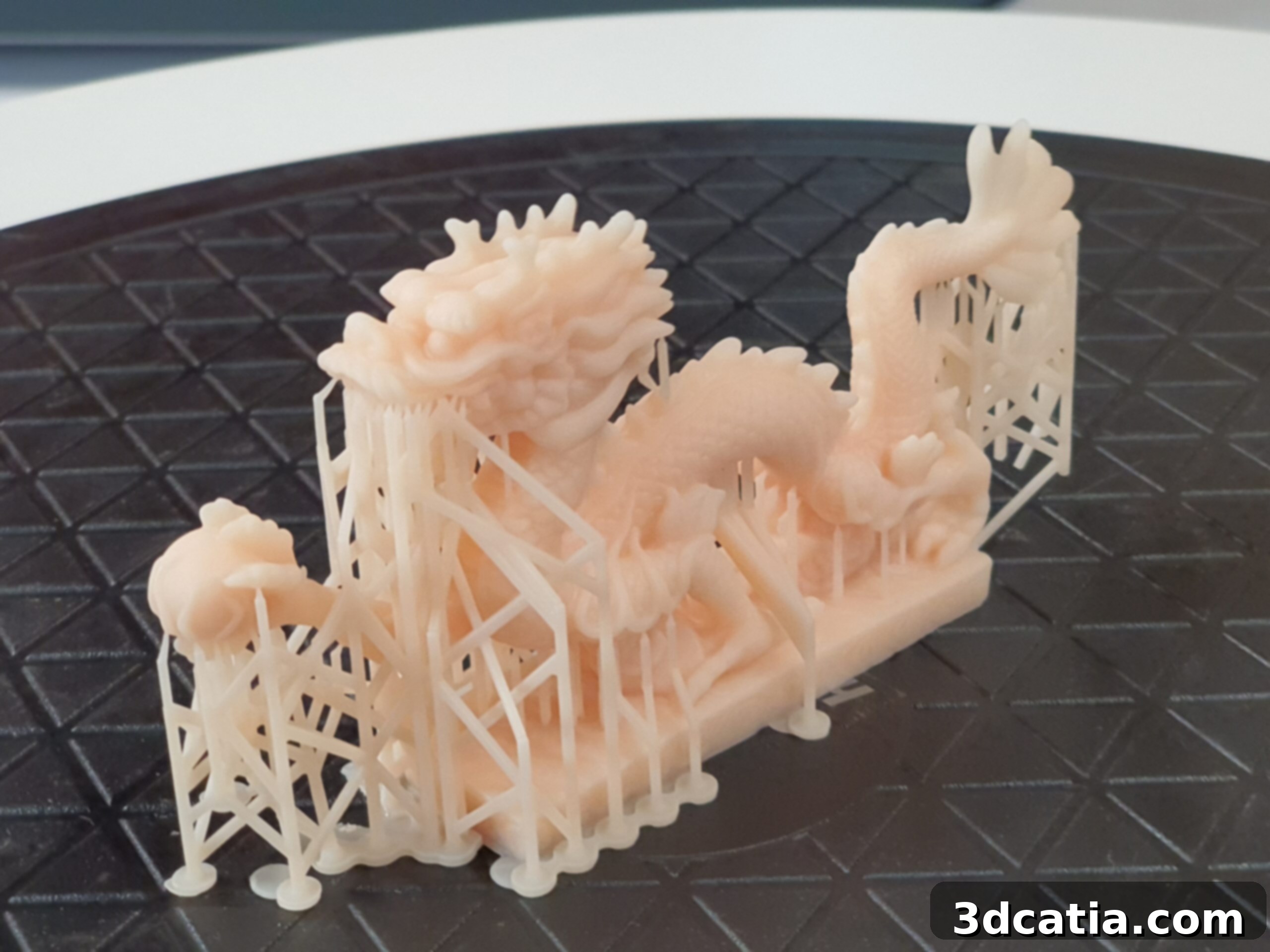
Despite a shift in the layers at the beginning of the printing process, all the details of this dragon were successfully printed
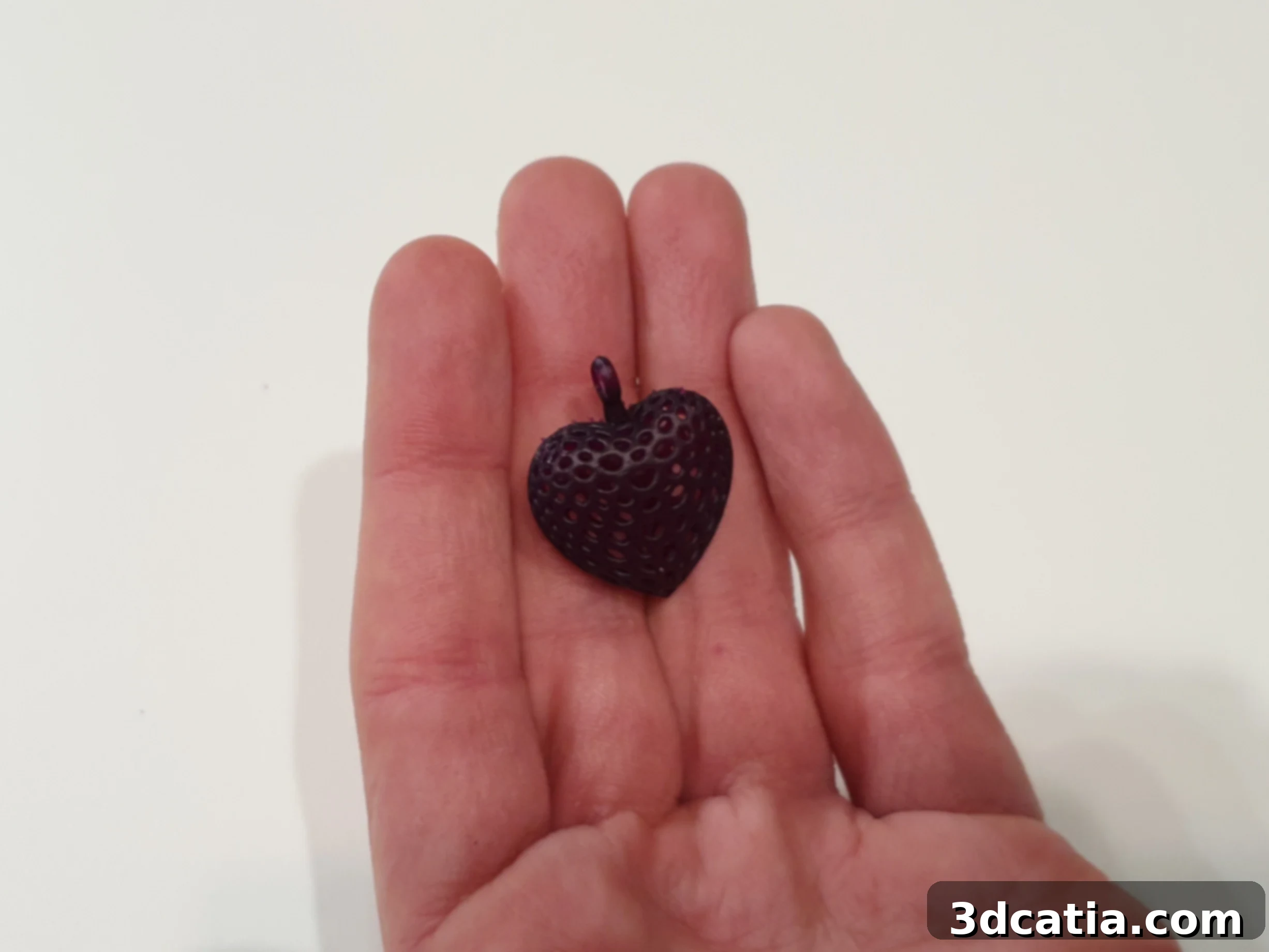
The Form 3L is also capable of printing very small parts
Conclusion and Final Verdict on the Formlabs Form 3L
The Formlabs Form 3L stands out as a formidable contender in the professional resin 3D printing market, particularly for users demanding both large build volumes and exceptional print quality. Our extensive review highlights its many strengths, beginning with its robust and aesthetically pleasing design that aligns with Formlabs’ established brand identity. The dual Light Processing Units (LPUs) employing Low Force Stereolithography (LFS) technology are central to its success, delivering intricate details, remarkably smooth surface finishes, and the capacity for significantly faster large-scale production compared to single-LPU systems.
The user experience with the Form 3L is further enhanced by its seamless setup process and the intuitive Formlabs software ecosystem. PreForm, with its “one-click 3D printing” and printability indicator, simplifies complex model preparation, making high-quality resin printing accessible even for those less experienced. The cloud-based Dashboard provides invaluable remote management capabilities and print history tracking, optimizing workflows for busy professionals. The integrated post-processing solutions, Wash L and Cure L, are not just accessories but essential components that streamline what can often be a messy and time-consuming stage of resin printing, ensuring consistent, high-quality results from start to finish.
The Form 3L’s compatibility with Formlabs’ extensive library of 17 proprietary resins is another significant advantage. This wide array of materials, from general-purpose Grey to specialized Dental Model, Tough, Castable Wax, Clear, and high-speed Draft resins, empowers users across diverse industries—including product design, engineering, dental, jewelry, and manufacturing—to achieve specific mechanical and aesthetic properties for their applications. Our tests confirmed that whether producing highly detailed prototypes, functional parts requiring durability, or rapidly iterating designs, the Form 3L consistently delivers on its promises of precision and versatility.
While the Form 3L presents an impressive package, there are a couple of minor considerations. The current lack of 3MF file support in PreForm might be a slight inconvenience for some users. Additionally, while the dual LPU system offers speed benefits, the potential for a subtle visible line at the convergence point of the lasers, though mitigated by PreForm’s visual indicators, requires careful part placement for critical surface areas. Lastly, the proprietary resin system and dedicated trays, while ensuring quality and preventing contamination, represent an ongoing investment for users working with multiple material types.
In conclusion, the Formlabs Form 3L is an outstanding large-format desktop SLA 3D printer that excels in delivering high-resolution, high-quality parts with impressive efficiency. Its robust hardware, innovative LFS technology, comprehensive software suite, and integrated post-processing stations make it an ideal solution for professionals, engineers, designers, and manufacturers who require precision, versatility, and the ability to produce larger parts or batches of smaller components. Despite a few minor software and hardware nuances, the Form 3L represents a powerful and reliable investment for anyone looking to leverage advanced resin 3D printing capabilities in a demanding professional environment. It confidently earns its place as a top-tier solution in the rapidly evolving landscape of additive manufacturing.