
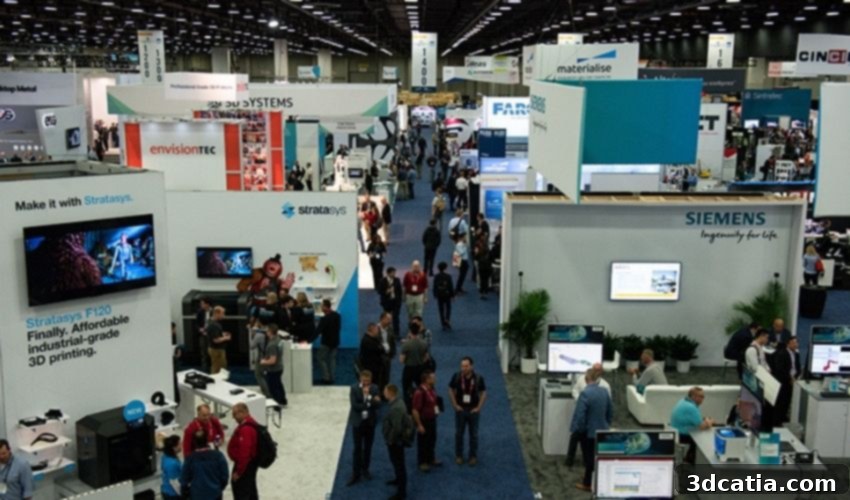
Rapid + TCT 2021 Highlights: Unveiling Key Innovations and Strategic Advancements in Additive Manufacturing
After more than a year of exclusively virtual interactions, the additive manufacturing (AM) industry rejoiced as in-person 3D printing conferences slowly but surely made their return. One of the most anticipated events, Rapid + TCT, triumphantly reopened its doors this week (September 13-15th, 2021) in Chicago. Recognized as one of North America’s premier Additive Manufacturing gatherings, the event had been on hiatus since 2019 due to global health concerns. Its comeback marked a significant milestone, offering companies a vital platform to reconnect, forge new partnerships, and unveil groundbreaking innovations that have been in development. The sheer volume of announcements emanating from this vibrant event, however, meant that many significant developments might have been overlooked amidst the excitement. To ensure you stay informed, we’ve compiled a comprehensive recap of the most impactful news from Rapid + TCT 2021, featuring major players like Stratasys, DyeMansion, Essentium, and other leading innovators shaping the future of AM.
Arkema’s Cutting-Edge UV Curing Formulations for Advanced 3D Printing
Arkema, a global chemical company and a recognized leader in high-performance materials tailored for 3D printing, made a significant impression at Rapid + TCT 2021. Their presence allowed attendees to explore their latest material science breakthroughs at their interactive booth. The company proudly introduced five new UV-curing formulations, essential for technologies such as Stereolithography (SLA) and Digital Light Processing (DLP), which rely on photopolymerization. These new resins are designed to push the boundaries of performance and application diversity in the AM sector.
Among the new offerings were four distinct resins, each engineered for specific industrial needs:
- HT-511: This tough, high-temperature resin is formulated to withstand demanding conditions, making it ideal for applications requiring exceptional thermal stability and mechanical strength. Its robustness opens doors for functional prototypes and end-use parts in challenging environments where typical resins would falter.
- DMT-303: A high-performance resin specifically developed for accurate dental models. In the dental industry, precision is paramount, and DMT-303 delivers the necessary detail and dimensional stability to create highly accurate impressions and models, streamlining workflows for orthodontists and prosthodontists.
- IC-163: This casting resin is perfect for producing high-resolution, high-detail parts. Its properties make it suitable for intricate jewelry, industrial casting patterns, and other applications where fine features and smooth surface finishes are critical for success.
- LF-053: An all-acrylic 355nm SLA resin, LF-053 is optimized for small to medium prototype parts. Acrylic resins are known for their clarity and stiffness, making this material excellent for visual prototypes, functional models, and parts where transparency might be an advantage.
Additionally, Arkema unveiled the N3D-TOUGH 784, a high-strength material boasting an impressive combination of good tensile strength and flexibility. This versatility makes it a valuable asset for applications requiring both durability and a degree of elastic recovery, suitable for components that need to bend or absorb impact without fracturing. These innovations from Arkema underscore the continuous evolution of materials in 3D printing, enabling broader adoption and more sophisticated applications across various industries. You can delve deeper into Arkema’s material innovations HERE.

Arkema has released new resins (photo credits: Arkema/Exton Center of Excellence)
DyeMansion’s Breakthrough Process Innovations for Enhanced Post-Processing
For German post-processing powerhouse DyeMansion, Rapid + TCT 2021 presented a prime opportunity to showcase their ongoing commitment to refining additive manufacturing workflows. The company introduced significant innovations, including ready-to-use parameters for varying “Levels of Smoothing” for their Powerfuse S system, alongside the pivotal announcement that their VaporFuse Surfacing process now complies with crucial FDA food contact regulations. These advancements underscore DyeMansion’s role in making 3D printed parts suitable for broader, more sensitive applications.
The Powerfuse S, known for its ability to deliver chemically sealed and perfectly finished surfaces, received an upgrade that enhances its versatility and user-friendliness. DyeMansion has developed three ready-to-use parameter sets for different “Levels of Smoothing” strengths. This means users can now achieve specific surface finishes with greater consistency and ease, without extensive trial-and-error. From a light smoothing that maintains fine details to a deep smoothing for truly injection-molded-like surfaces, these parameters empower manufacturers to precisely tailor the aesthetic and tactile properties of their 3D printed parts. This level of customization further solidifies the Powerfuse S’s reputation as one of the most reliable and adaptable vapor polishing systems in the additive manufacturing industry, enabling a wider range of applications across sectors.
Perhaps the most impactful announcement from DyeMansion concerned the FDA food contact compliance for their VaporFuse Surfacing process when applied to sealed surfaces. This is a monumental step forward for the additive manufacturing industry, particularly as efforts intensify to integrate 3D printing into sectors like food processing, packaging, and medical devices. Achieving FDA compliance alleviates a significant hurdle, as it confirms that parts post-processed with VaporFuse Surfacing can safely come into contact with food products. This opens up entirely new markets and applications, from customized kitchenware and food-grade components to innovative packaging solutions. The long-term implications are profound: thanks to advanced post-processing solutions like these, 3D printed parts are poised to become an increasingly common and accepted element within the stringent regulatory landscape of the food and consumer goods industries, moving beyond mere prototyping to critical end-use applications.
Essentium and VIRTEX Partner for Groundbreaking Electronics Additive Manufacturing
A compelling collaboration that captured significant attention at Rapid + TCT 2021 was between Essentium, Inc., an American manufacturer of industrial additive manufacturing solutions, and VIRTEX, a leading electronics manufacturer. This partnership highlights the increasing sophistication and burgeoning interest in applying AM to the electronics sector, an area traditionally viewed as underdeveloped for 3D printing but now experiencing rapid growth thanks to advancements in technology and materials.
VIRTEX sought to leverage 3D printing to overcome persistent challenges related to speed and agility in producing large volumes of custom fixtures. These fixtures are critical for accurately positioning and securing circuit boards and other electronic components within plastic enclosures during the manufacturing and assembly processes. Traditionally, creating such fixtures involved lengthy lead times and high costs, often relying on conventional manufacturing methods like CNC machining which can be slow and expensive for one-off or low-volume custom parts.
The collaboration showcased impressive results, demonstrating the transformative power of AM. Essentium and VIRTEX successfully printed a set of these custom fixtures in under two hours. This remarkable speed drastically reduced the lead time by almost two weeks compared to traditional methods. Furthermore, the cost savings were equally dramatic, with the 3D printed fixtures costing approximately $30, representing a staggering 99% reduction from the $5,000 typically required for a fixture order made through conventional means. This case study powerfully illustrates how industrial 3D printing can provide manufacturers with unparalleled speed, flexibility, and cost-efficiency for customized production tooling and components. The ability to rapidly iterate and produce highly specific fixtures on demand not only accelerates product development cycles but also significantly lowers operational expenses, making high-volume customization a viable and economically attractive option. This collaboration serves as a potent example of AM’s potential to revolutionize supply chains and manufacturing processes in the electronics industry. You can learn more about Essentium’s innovative solutions HERE.
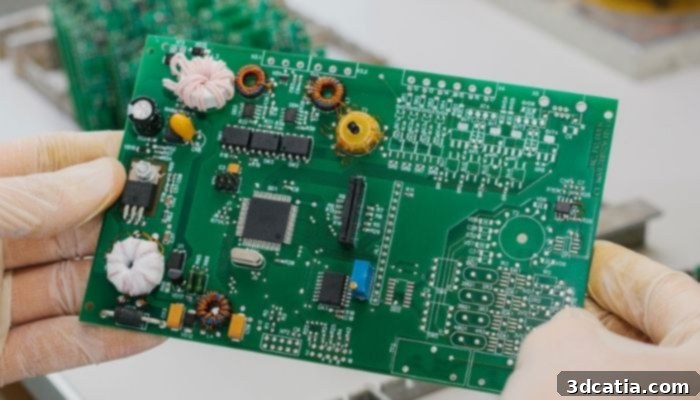
Optomec Introduces Advanced Metal AM and 3D Printed Electronics Solutions
Shifting focus from software innovations, Optomec, a renowned manufacturer specializing in production solutions for metal additive manufacturing and 3D printed electronics, unveiled two groundbreaking AM machines at Rapid + TCT 2021. These new systems, the HC-TBR and the Aerosol Jet HD2 3D Electronics Printer, represent significant advancements in their respective fields, offering enhanced capabilities for industrial applications.
The HC-TBR is a cutting-edge, all-in-one metal AM machine engineered for both building and repairing metal parts. It utilizes Directed Energy Deposition (DED) technology, a sophisticated process that uses a focused energy source (like a laser or electron beam) to melt and fuse powdered metal material as it’s deposited. This method allows for the creation of new parts from scratch or the precise repair of existing components, often restoring them to original specifications. A key highlight of the HC-TBR is its capability to work with a wide variety of alloys, including highly reactive metals such as titanium and aluminum. These materials are crucial in demanding industries like aerospace, medical, and automotive, where high strength-to-weight ratios and corrosion resistance are essential. The machine’s versatility in handling such diverse and challenging materials positions it as a powerful tool for advanced manufacturing and maintenance applications.
The second innovation, the Aerosol Jet HD2 3D Electronics Printer, is specifically designed for the burgeoning field of 3D printed electronics. This printer harnesses Optomec’s patented Aerosol Jet printing technology, a unique process that precisely combines conductive inks and aerosol mists. This technique is reminiscent of material jetting but optimized for depositing functional materials to create intricate electronic circuits and components directly onto 3D surfaces. The ability to print circuits on non-planar surfaces opens up vast possibilities for creating lighter, more compact, and uniquely shaped electronic devices, integrating functionality directly into the structure of a part. This printer is poised to accelerate the development of innovative sensors, antennas, medical devices, and other advanced electronic systems, further blurring the lines between structural and functional additive manufacturing.
Markforged Launches Eiger Fleet to Revolutionize AM Scaling and Management
At Rapid + TCT 2021, software solutions arguably stole the spotlight, and Markforged, a company celebrated for its integrated metal and carbon fiber additive manufacturing platform, The Digital Forge, was at the forefront of this trend. Markforged unveiled Eiger Fleet, a new cloud-based software solution meticulously crafted to accelerate the scaling of additive manufacturing operations for industrial users. This development marks a significant step towards making AM more accessible and efficient for large-scale production.
Eiger Fleet is uniquely designed to address the challenges manufacturers face when transitioning from small-scale prototyping to a globally connected, distributed manufacturing fleet. Its cloud-based architecture offers several key advantages, including real-time data access, collaborative capabilities, and centralized management from any location. The software provides users with a secure, cloud-connected, and unified source of control over all their Markforged printers. This centralized control is crucial for managing diverse operations, ensuring consistency, and optimizing resource allocation across multiple facilities.
Essentially, Eiger Fleet functions much like an advanced workflow automation software, delivering “enterprise-level features to manage users, devices and data with greater control and efficiency to print parts on demand at the point of need.” This means that organizations can seamlessly manage user permissions, monitor printer performance, track material consumption, and coordinate production schedules across their entire network of AM machines. By providing a comprehensive ecosystem for managing an AM fleet, Eiger Fleet empowers manufacturers to embrace the agility and resilience offered by distributed manufacturing. It enables them to rapidly respond to demand fluctuations, produce parts closer to the point of use, and dramatically streamline their additive manufacturing workflows, ultimately accelerating their journey towards widespread industrial adoption of 3D printing. More details can be found in the official press release HERE.
Roboze Unveils Prometheus: A Powerful New Slicing Software
Another prominent manufacturer revealing significant software innovations at Rapid + TCT 2021 was the Italian-American company Roboze, known for its high-performance FFF 3D printers and super polymers. Building on their recent advancements, which included the launch of their production workflow software, Roboze Automate, in April, the company continued its software evolution by introducing an entirely new slicing software named Prometheus.
The name Prometheus, drawn from the Titan in Greek mythology who bestowed fire upon humanity, symbolizing enlightenment and civilization, reflects Roboze’s ambitious vision for their software. According to Roboze, Prometheus is positioned as “a robust slicing software that dramatically increases the productivity of its customers.” While the initial announcement at the event was light on intricate technical details, the core message resonated strongly: Prometheus is designed to unlock new levels of efficiency and performance for Roboze users.
A critical emphasis from Roboze was that Prometheus was developed specifically and meticulously in consideration of Roboze’s unique machines and advanced materials. This tight integration between hardware, software, and materials is paramount in additive manufacturing, ensuring optimal print quality, reliability, and part performance. By tailoring the slicing algorithms to their proprietary systems, Roboze aims to provide an unparalleled user experience where the software works quickly and effectively to generate precise 3D printing code. This synergy promises to translate into faster print times, superior part accuracy, enhanced material utilization, and a more streamlined workflow for users producing “Strong Like Metal” parts. Prometheus signifies Roboze’s dedication to providing a complete ecosystem that maximizes the potential of high-performance additive manufacturing, empowering engineers and manufacturers to push the boundaries of what’s achievable with advanced polymer 3D printing. Further information is available HERE.

Stratasys Drives Full-Scale Additive Manufacturing with New Materials and Software Ecosystem
Stratasys, a global leader in polymer 3D printing solutions, made a series of impactful announcements at Rapid + TCT 2021, underscoring its strategic pivot towards enabling full-scale industrial additive manufacturing. These new initiatives focus on expanding its material portfolio and strengthening its software partner ecosystem, aiming to provide comprehensive solutions that seamlessly integrate 3D printing into existing production workflows.
On the materials front, Stratasys unveiled several new additions designed to broaden the capabilities and applications of its H350™ and Origin One™ 3D printers. For the Stratasys H350, the company introduced PA11 and PA12, two high-performance nylon materials renowned for their excellent mechanical properties, durability, and resistance to chemicals. These materials are crucial for producing robust end-use parts, functional prototypes, and manufacturing aids across diverse industries. For the Stratasys Origin One, Stratasys announced a new Origin® Open Material License (OML). This is a significant move towards an open materials ecosystem, allowing customers greater flexibility to use third-party resins with their Origin One printers, fostering innovation and potentially reducing material costs. Additionally, Stratasys expanded its partnership with Henkel, introducing two new materials specifically developed for the Origin One: Stratasys Dura56 by LOCTITE® and LOCTITE® 3D IND405 Clear. Dura56 offers exceptional durability and impact resistance, while IND405 Clear provides optical clarity combined with robust mechanical properties, opening up new possibilities for transparent and high-strength applications.
Beyond materials, Stratasys heavily emphasized the expansion of its software ecosystem. The GrabCAD Software Partner Program has seen substantial growth, adding eight new software partners in 2021 alone. This initiative aims to foster greater interoperability and provide customers with a wider array of integrated tools for design, simulation, and manufacturing. A particularly noteworthy announcement was the partnership with AMFG, a leading provider of Manufacturing Execution System (MES) and workflow automation software. This collaboration is set to deliver advanced AM solutions by combining AMFG’s expertise in production management and workflow optimization with Stratasys’ cutting-edge 3D printers and the GrabCAD software platform. The goal is to create a seamless, end-to-end additive manufacturing workflow that enhances efficiency, reduces manual intervention, and provides greater control over the entire production process, thereby accelerating the adoption of AM at scale for industrial applications. These strategic advancements reinforce Stratasys’ commitment to providing integrated, comprehensive solutions that empower manufacturers to fully leverage the potential of additive manufacturing. Learn more about Stratasys’ shift towards additive manufacturing at scale HERE.

A scooter printed with Stratasys Dura56 by LOCTITE (Photo: Business Wire)
Rapid + TCT 2021 unequivocally showcased the vibrant innovation and accelerating maturity of the additive manufacturing industry. From advanced materials that unlock new applications to sophisticated software solutions that streamline production and powerful new machines that redefine manufacturing capabilities, the event provided a comprehensive snapshot of the industry’s forward momentum. The return to an in-person format reignited critical discussions, fostered invaluable connections, and underscored the collective drive to integrate 3D printing more deeply into global manufacturing ecosystems. This recap has aimed to highlight some of the most compelling news, but the energy and sheer volume of developments signal a bright and dynamic future for AM.
Did we miss any other significant news or key announcements from Rapid + TCT 2021 that caught your attention? We’d love to hear your thoughts! Were you fortunate enough to attend the event and experience these innovations firsthand? Let us know your insights and observations in a comment below, or engage with us on our Facebook and Twitter pages. And don’t forget to sign up for our free weekly newsletter, ensuring you receive all the latest news and essential updates in 3D printing delivered directly to your inbox!
*Thumbnail Photo Credits: Rapid TCT