
Inside a Modern 3D Printing Factory: A Deep Dive into BQ’s Manufacturing Hub
Have you ever pondered the intricate workings behind the production of cutting-edge 3D printers? What does it truly take to conceptualize, design, and manufacture these innovative machines that are revolutionizing industries worldwide? If the history and future of 3D printer manufacturing intrigue you, then this article offers an exclusive look into the process. We were granted unparalleled access to BQ’s state-of-the-art factory in Noáin, Navarra, Spain, providing us with a unique opportunity to witness firsthand the sophisticated operations of one of Europe’s largest 3D printer manufacturing facilities. This visit illuminated not only the technical complexities but also the strategic decisions that position BQ at the forefront of the additive manufacturing revolution.
BQ stands as a prominent name in the realm of consumer electronics and, more specifically, 3D printing. Their expansive product line demonstrates remarkable versatility, producing an impressive average of 414 products every single day. This vast output encompasses a diverse range, from their engaging educational robot, Zowi, to their highly acclaimed series of 3D printers. Their notable 3D printer models include the robust Witbox 2, a machine we extensively tested and reviewed, the open-source friendly Hephestos 2, and the innovative Witbox Go! The Witbox Go! holds a significant distinction as the world’s first 3D printer to integrate the Android Operating System, a pioneering move aimed at enhancing user accessibility and simplifying the 3D printing experience. This strategic embrace of user-friendly technology has propelled BQ into a leading market position, now recognized as one of the bestselling 3D printer brands globally. With an astounding annual sales figure of 50,000 3D printers, BQ has successfully expanded its reach across more than 50 countries, solidifying its reputation as a major player in the global additive manufacturing landscape.
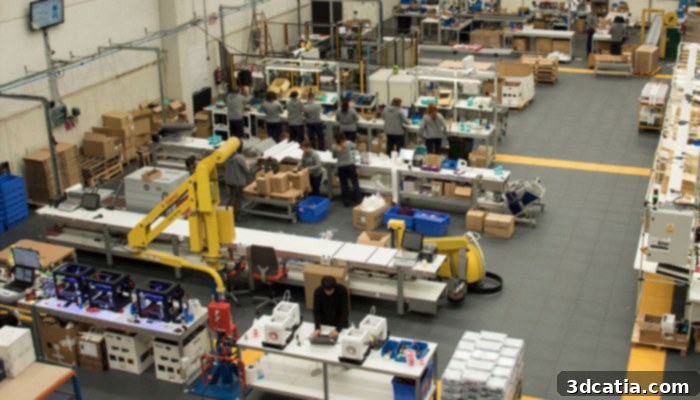
BQ factory in Navarra, Spain.
The Anatomy of a 3D Printing Production Line: From Concept to Consumer
The journey of a BQ 3D printer begins long before it reaches the assembly line. Years of dedicated study, intensive research, and relentless experimentation form the bedrock of their innovation. BQ’s engineers, a team of highly skilled and visionary professionals, are responsible for developing the initial prototypes of their advanced 3D machines. This rigorous research and development phase involves countless hours of iterative design, material testing, software integration, and performance optimization. Each prototype undergoes extensive evaluation and adaptation, refining its functionality, reliability, and user experience until it meets the stringent standards required for commercial production. These early concepts gradually evolve into the sophisticated models that are now readily available on the market, embodying BQ’s commitment to pushing the boundaries of 3D printing technology.
Upon entering BQ’s expansive manufacturing facility, the operational efficiency becomes immediately apparent through its thoughtfully segmented layout. The factory is intelligently organized into two distinct yet interconnected spaces, each optimized for its specific function. The first area serves as the central storage and logistics hub, a vast repository housing all the essential components, raw materials, and finished products necessary for the seamless assembly of their diverse range of 3D printers. This section is meticulously managed to ensure an uninterrupted supply chain, crucial for maintaining high production volumes. The second, equally vital area is dedicated to production and development. This is where the core manufacturing processes take place, staffed by an expert team of technical engineers and skilled workers. Here, innovation truly comes to life, as these professionals meticulously assemble, calibrate, and test each machine, guided by precise specifications and an unwavering commitment to quality. The integration of these two areas under one roof allows for streamlined communication and efficient resource allocation, minimizing bottlenecks and maximizing output.
Efficiency in Assembly: Varied Processes for Diverse Machines
A fascinating aspect of BQ’s production methodology is the variation in assembly times for each of their 3D printer models, reflecting their unique designs and manufacturing complexities. The Witbox Go!, designed for maximum accessibility and ease of use, boasts an impressively quick assembly time, typically completed within a rapid 10 to 12 minutes. This efficiency is a testament to its streamlined design and modular components. In contrast, the Witbox 2, a more robust and feature-rich printer, requires a slightly longer but still highly efficient assembly period, reaching a maximum of 20 minutes. The Hephestos 2, known for its open-source lineage and build-it-yourself spirit, surprisingly holds the record for the fastest assembly time, clocking in at an astonishing 7 minutes. This remarkable speed is achieved through the integration of a highly advanced robotized system, which precisely handles and positions components, significantly streamlining the assembly process and demonstrating BQ’s investment in automation to boost productivity and consistency. These varied assembly times highlight BQ’s commitment to optimized production workflows tailored to the specific requirements of each printer model, ensuring both speed and quality.
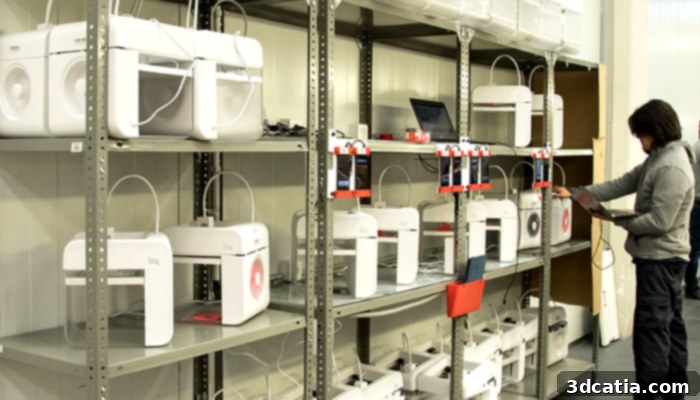
Review of the production of 3D printers Witbox Go!
Fostering Innovation: The RepRap Philosophy and Rigorous Quality Control
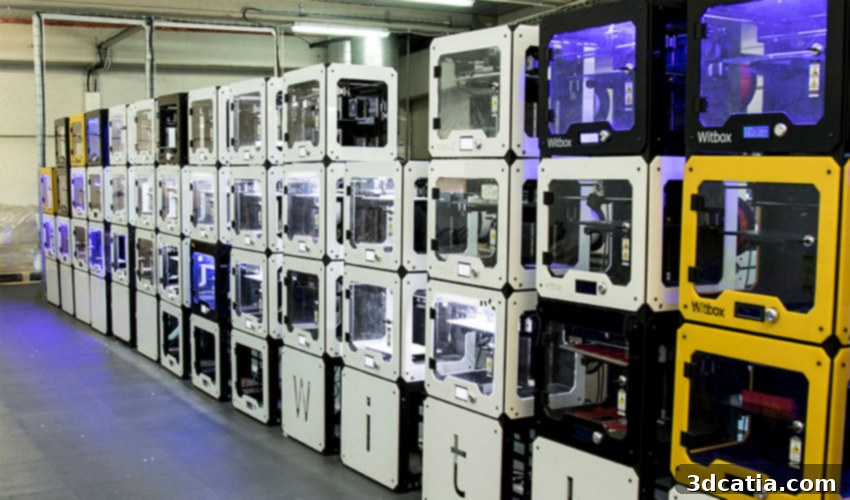
BQ’s commitment to the advancement of 3D printing extends beyond just manufacturing; it’s deeply rooted in promoting the open-source RepRap movement. The RepRap (Replicating Rapid Prototyper) project advocates for 3D printers that can print most of their own components, enabling widespread self-replication and fostering a community-driven approach to innovation. BQ actively champions this philosophy, evidenced by a dedicated section within their factory. Here, a large room is outfitted with numerous 3D printers operating continuously, year-round, specifically tasked with creating various plastic components for other BQ 3D printers. This not only embodies the spirit of self-sustainability but also allows for internal flexibility in production and a deep understanding of the capabilities and limitations of their own machines. It’s a living testament to their belief in democratizing access to 3D printing technology and encouraging further development within the community.
Maintaining an exceptionally high standard of quality is paramount at the BQ factory. Every 3D printer undergoes a series of stringent checks and comprehensive tests before it is deemed ready for market. A team of highly skilled experts meticulously inspects each machine, ensuring compliance with the most rigorous quality standards. This includes not just visual inspections but also a suite of functional tests. For instance, they perform extensive printing tests to evaluate the performance of critical components such as the extruder, ensuring flawless material extrusion. The machine’s speed and precision are thoroughly assessed across various print settings, guaranteeing consistent and reliable operation. Furthermore, the quality of the printed models themselves is scrutinized in detail, checking for dimensional accuracy, surface finish, and overall structural integrity. This multi-faceted quality assurance process is crucial for upholding BQ’s reputation for reliability and ensuring that every customer receives a product that meets, or even exceeds, expectations. It’s an investment in customer satisfaction and brand trust.
Meeting Demand: Preparing for Seasonal Peaks and Market Trends
The dynamics of consumer demand often dictate production cycles, and the 3D printing industry is no exception. At BQ’s factory, production volumes experience a significant surge between November and February each year. This period of heightened activity is largely driven by increased consumer demand, particularly during the holiday season, where 3D printers become popular gifts for hobbyists, educators, and technology enthusiasts alike. This seasonal spike necessitates meticulous planning and operational scalability. The arrival of new and highly anticipated products, such as the Witbox Go!, further amplifies this demand. The Witbox Go! was specifically engineered with the vision of making 3D printing profoundly more accessible to the masses, simplifying what was once a complex process. Its user-centric design allows individuals to create sophisticated 3D models with remarkable ease, often requiring just a single click. Moreover, the Witbox Go revolutionizes the user experience through its integration of Android’s Operating System, offering an intuitive interface that mirrors the familiarity of a smartphone or tablet. This combination of ease of use and advanced technology has been a major driver behind its popularity and contributed significantly to the increased production demands during peak seasons.
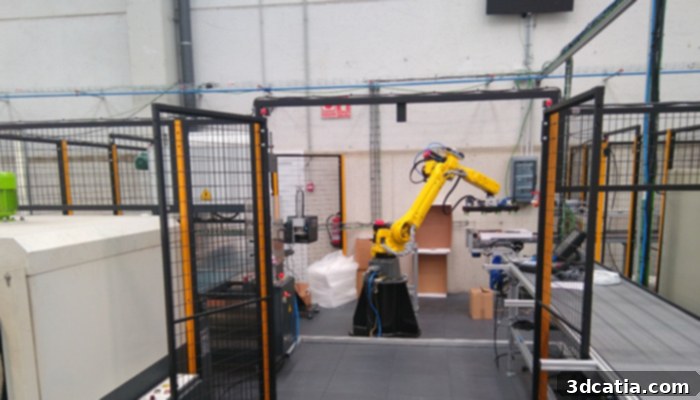
Robotic system for the preparation of 3D printer kits
BQ’s Vision: Democratizing 3D Printing and Shaping the Future
Through countless hours of dedicated production, meticulous development, and relentless innovation within their Navarra 3D printing factory, BQ has made significant strides in bringing 3D technologies to a global audience. Their unwavering focus on user experience and accessibility has been instrumental in democratizing additive manufacturing, transforming it from a niche industrial tool into a technology within reach for educational institutions, small businesses, and even individual consumers. This commitment has not only broadened the market but also empowered countless creators and innovators worldwide.
As we look to the horizon, the future trajectory of BQ and its role in the evolving 3D printing landscape remains an exciting subject of speculation. What strategic directions will BQ pursue regarding new 3D printer models? Perhaps they will intensify their focus on capturing an even larger share of the consumer market by introducing an ultra-affordable model, further lowering the barrier to entry for aspiring makers. Alternatively, BQ might leverage its manufacturing expertise and technological prowess to venture into the more demanding industrial 3D printing sector, developing robust machines capable of rivaling some of the established giants in additive manufacturing. Such a move would require significant investment in research for specialized materials and larger-scale, higher-precision systems. Regardless of their chosen path, BQ’s past achievements clearly demonstrate their capacity for innovation and their potential to continue influencing the global adoption and development of 3D printing technology, ensuring that additive manufacturing remains an accessible and powerful tool for everyone.
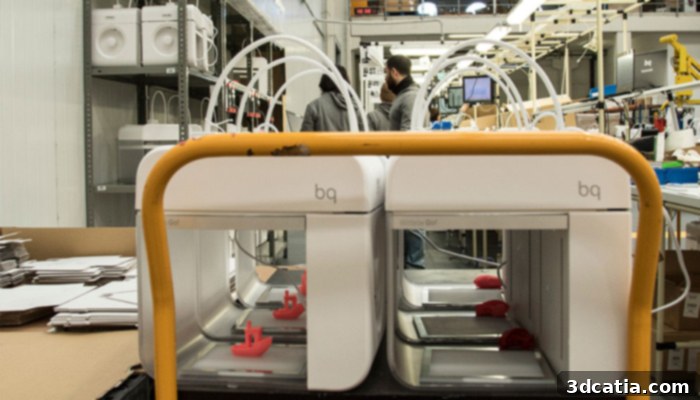
Assembled and tested BQ printers.
For those interested in exploring BQ’s full range of innovative 3D printers, you can visit their official website here.
What are your thoughts on BQ’s impressive 3D printing factory and their commitment to making 3D technology accessible? We’d love to hear your insights! Share your comments below or engage with us on our Facebook and Twitter pages. Don’t miss out on the latest advancements and news in the 3D printing world—sign up for our free weekly Newsletter and get all the essential updates delivered straight to your inbox!