

Avi Reichental: A Visionary’s Blueprint for the Future of Additive Manufacturing and 3D Printing
Additive Manufacturing (AM), commonly known as 3D printing, is a transformative force continually reshaping industries across the globe. Its rapid evolution and burgeoning adoption by professionals and businesses alike underscore its profound impact on modern production. In a landscape characterized by constant innovation and dynamic growth, it is essential to highlight the pivotal figures who have not only witnessed this evolution but have actively shaped it. This article initiates a special series dedicated to such influential leaders, focusing on individuals who have significantly contributed to the industry’s trajectory over the past two decades.
Our inaugural feature spotlights Avi Reichental, a titan in the additive manufacturing sector. Formerly the esteemed CEO of 3D Systems, Reichental is now the visionary founder of XponentialWorks, an innovative venture, advisory, and product development firm. Beyond his leadership at XponentialWorks, he is deeply involved in a multitude of groundbreaking projects that are pushing the boundaries of 3D printing technology. We recently had the privilege of sitting down with Avi Reichental to delve into his unparalleled experience, explore his insights into the technological advancements that have propelled AM forward, and understand his strategic vision for the market’s future. His journey offers a unique perspective on how 3D printing has transitioned from a niche prototyping tool to a mainstream industrial solution, promising even greater disruption in manufacturing processes worldwide.
3DN: You’ve come a long way in the additive manufacturing industry, could you tell our readers about your various experiences?

Indeed, my immersion in the additive manufacturing industry spans nearly two decades, a period marked by extraordinary technological leaps and market maturation. My journey commenced in 2003 when I assumed the role of CEO at 3D Systems. This was a truly formative experience, allowing me to work closely with the legendary Chuck Hull, the very inventor of 3D printing and the pioneering founder of 3D Systems. Under my leadership for twelve transformative years, 3D Systems significantly expanded its global footprint, diversified its portfolio of 3D printing technologies, and played a crucial role in bringing additive manufacturing to a broader industrial audience. We focused on democratizing access to 3D printing, enabling countless businesses to integrate these advanced capabilities into their operations, from rapid prototyping to sophisticated end-use part production.
Following my tenure at 3D Systems, in 2015, I embarked on a new endeavor by establishing XponentialWorks. This firm was conceived with a clear mission: to accelerate the advancement and broaden the adoption of additive manufacturing through a truly distinctive business model. At our state-of-the-art innovation lab nestled in Ventura, California, we orchestrate a unique “collision” strategy. We bring together agile, early-stage companies specializing in cutting-edge fields such as 3D printing, Artificial Intelligence (AI), robotics, and machine learning. These innovative startups are then paired with more established, traditional enterprises that possess significant market presence and robust infrastructure but require an infusion of advanced technologies to maintain their competitive edge and relevance in an increasingly digital and fast-paced global economy. This symbiotic relationship fosters unprecedented innovation, allowing startups to scale rapidly while traditional companies gain access to disruptive technologies without the inherent risks of internal R&D from scratch. It’s a powerful ecosystem designed to propel the entire industry forward.
3DN: What about your current works in the AM industry?
My involvement in the additive manufacturing industry today is more diverse and dynamic than ever, largely channeled through my leadership at XponentialWorks. Beyond advising and guiding a myriad of companies, I am directly engaged in shaping the future of several innovative additive manufacturing ventures. This hands-on approach allows me to directly influence the technological advancements and market strategies of these pioneering firms. For instance, I am a cofounder of Nexa3D, ParaMatters, and NXT Factory, each addressing distinct yet critical aspects of the AM ecosystem. Additionally, I serve as the Executive Chairman of Nano Dimension, a leader in additively manufactured electronics, and as the CEO of Techniplas Digital, which focuses on advanced digital manufacturing solutions. These companies collectively form a robust and synergistic part of the XponentialWorks ecosystem, driving innovation across various facets of 3D printing.
Let me provide a closer look at some of the key 3D printing venture portfolio companies within our ecosystem:
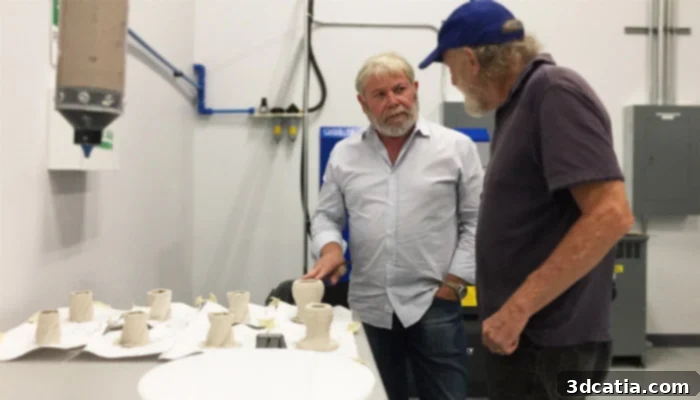
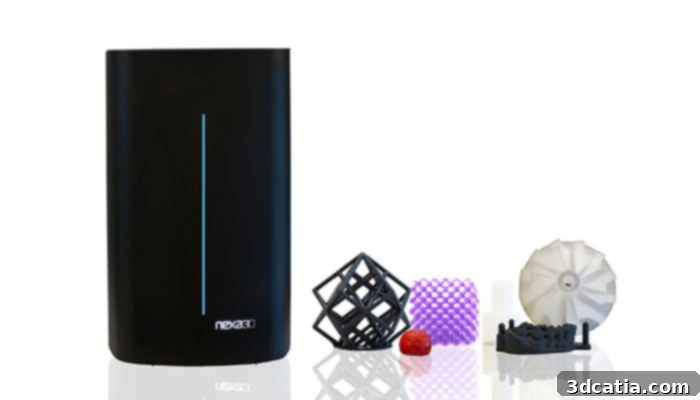
First, there’s Nexa3D, a company that is fundamentally democratizing access to ultrafast industrial-grade stereolithography 3D printers. Their mission is to make these advanced systems affordable and accessible to professionals and businesses of all scales, from small design studios to large manufacturing enterprises. Nexa3D’s printers are powered by their proprietary Lubricant Sublayer Photo-curing (LSPc) technology, complemented by a patented structured light matrix. This combination enables unprecedented printing speeds, capable of reaching up to 1 centimeter per minute. The impact of this speed is profound: Nexa3D’s machines drastically reduce the 3D printing cycles for precision functional parts from what traditionally took hours to mere minutes. This leap in speed significantly enhances productivity, lowers per-part costs, and opens up new possibilities for serial production in demanding industries like automotive, consumer electronics, and medical devices, effectively transforming additive manufacturing from a prototyping tool to a viable end-part production method.
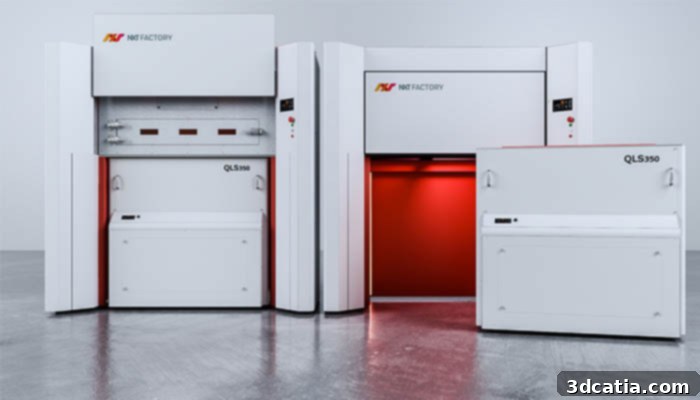
NXTFactory stands at the forefront of additive manufacturing for thermoplastics, pioneering the development of Quantum Laser Sintering (QLS™) technology. This innovative approach is designed to produce additively manufactured thermoplastic parts with convincing speed and scalability, directly addressing one of the long-standing challenges in the industry. The company is strategically leveraging QLS™ technology to create its first generation of industrial-grade, high-speed 3D printing systems. NXTFactory’s ambitious mandate is to directly compete with and ultimately replace traditional injection molding for large-scale production of plastic parts. By offering comparable speeds, improved design flexibility, and reduced tooling costs, QLS™ technology promises to unlock new efficiencies and design possibilities for manufacturers seeking high-volume production of complex thermoplastic components, thereby disrupting established manufacturing paradigms and accelerating the transition to digital factories.
ParaMatters is revolutionizing the design phase of additive manufacturing with its sophisticated cloud-based cognitive design platform. This platform specializes in autonomous topology optimization and generative light-weighting design, representing a significant advancement in engineering methodology. ParaMatters’ technology can automatically generate additive manufacturing-ready, high-performance, lightweight structures. This capability is particularly critical for industries like aerospace, automotive, and other sectors where every gram of weight saved translates into substantial performance gains, fuel efficiency, and cost reductions. By leveraging advanced algorithms and AI, the platform optimizes designs for material efficiency and structural integrity, creating complex geometries that are impossible to achieve with traditional design methods, thus pushing the boundaries of what is manufacturable and achievable in performance.
UNYQ is transforming the field of orthotics and prosthetics by harnessing the power of 3D printing to create innovative, mass-customized products. The company is reimagining traditional orthopaedic devices, moving beyond purely functional designs to incorporate aesthetics and personalization. UNYQ leverages emerging technologies to craft next-generation products that are simultaneously aesthetically beautiful, allowing users to express their individuality, yet entirely practical and highly functional. This personalized approach dramatically improves user comfort, fit, and psychological well-being, providing solutions that are tailored to each individual’s unique anatomy and lifestyle. UNYQ exemplifies how additive manufacturing can deliver truly patient-centric solutions, enhancing quality of life through individualized design and production.
And last but certainly not least, Supercraft3D is dedicated to advancing healthcare and medical applications through 3D printing. This company specializes in providing highly accurate medical models for a diverse range of end-users within the healthcare ecosystem. These users include surgeons who utilize models for pre-surgical planning and rehearsal, educational institutes for anatomical study and training, patients undergoing complex CranioMaxilloFacial (CMF) procedures for better understanding and custom implant design, and diagnostic centers for precise visualization. Supercraft3D’s models enhance diagnostic accuracy, improve surgical outcomes by allowing for precise planning, and facilitate clearer communication between medical professionals and patients, ultimately contributing to better, more personalized patient care.
In addition to these dynamic venture portfolio companies, XponentialWorks fosters strong collaborations with several established corporate partners within the additive manufacturing industry. These strategic alliances include Hyperganic, known for its AI-driven algorithmic engineering platform; NanoDimension, a leader in additively manufactured electronics; Sharebot, a prominent desktop 3D printer manufacturer; Techniplas, a global provider of advanced plastic component solutions; and XYZPrinting, a well-known name in accessible 3D printing solutions. These partnerships amplify our collective impact, allowing us to leverage diverse expertise and resources to drive even greater innovation and market penetration across the entire additive manufacturing value chain.
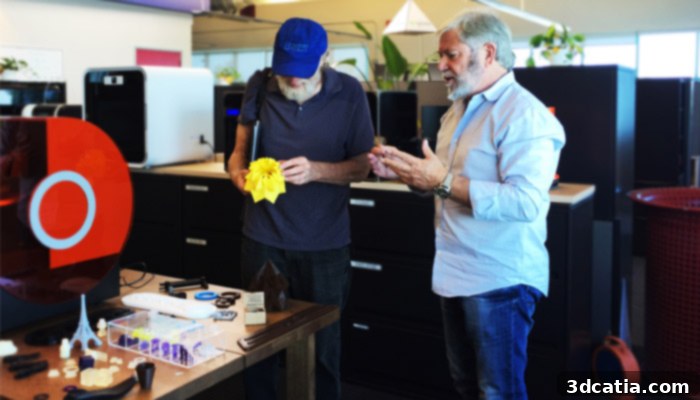
3DN: How has the AM industry changed from the time you were the CEO of 3D Systems to today?
The transformation within the additive manufacturing industry since my early days as CEO of 3D Systems, especially looking back just ten years, is nothing short of revolutionary. When I first deeply engaged with additive manufacturing in 2003, the technological landscape was fundamentally different. We simply didn’t have the boundless capabilities of cloud computing that are ubiquitous today, nor the pervasive connectivity that now links devices and systems globally. Chip sensors, essential for precise monitoring and control, were nascent or prohibitively expensive for widespread integration into manufacturing. Artificial Intelligence, though a subject of intense academic study in institutions like MIT, lacked the practical, real-world applications we see dominating industrial processes today. Robotics, too, was largely out of reach for most manufacturers due to exorbitant costs and limited performance. The very concept of generative design – where algorithms autonomously create optimized geometries – was not even on the technological radar. It was a vastly different era for 3D printing, primarily confined to prototyping and specialized, low-volume production.
Fast forward to today, and the entire ecosystem has shifted dramatically. These foundational technological developments – AI, cloud computing, ubiquitous connectivity, advanced sensors, and sophisticated robotics – have converged to create an entirely new paradigm for additive manufacturing. Cloud computing now provides immense processing power for complex simulations, design optimization, and data analytics, enabling designers to explore millions of design iterations instantaneously. Ubiquitous connectivity, powered by the Internet of Things (IoT), allows for real-time monitoring of 3D printers globally, facilitating remote operations, predictive maintenance, and the creation of highly efficient, distributed manufacturing networks. Advanced chip sensors are integrated into every aspect of the printing process, ensuring unprecedented levels of precision, quality control, and adaptive printing capabilities, reacting to environmental variables or material inconsistencies in real time.
The practical application of AI and machine learning has truly been a game-changer. Beyond generative design, AI is now employed for material development, predicting optimal printing parameters, automating quality inspection, and even customizing post-processing steps. Robotics are no longer confined to isolated tasks; they are seamlessly integrated into additive manufacturing workflows for automated material handling, part removal, and sophisticated post-processing operations like surface finishing and assembly. Generative design has moved from concept to reality, allowing engineers to create lightweight, high-performance structures with geometries previously impossible to imagine or manufacture, optimizing parts for strength, weight, and material usage simultaneously. These synergies have fundamentally reshaped the capabilities of 3D printing. Our machines are now significantly faster, more affordable, and capable of handling a wider array of advanced materials. As a direct consequence of these integrated developments, what was once considered an impossible feat a mere decade ago – such as printing complex, high-strength end-use parts on demand for aerospace or medical applications – has now become a standard and expected capability within our dynamic industry.
3DN: What do you think are the remaining challenges to the global adoption of AM across the industry?
While the additive manufacturing industry has made monumental strides, several critical challenges persist that, if addressed effectively, will unlock even broader global adoption across diverse industrial sectors. I believe our industry’s foremost historical hurdle has been the restrictive barriers related to speed, size, and volume – essentially, the inability to print materials at a truly industrial scale and speed comparable to traditional manufacturing methods. For many years, 3D printing was synonymous with slow, small-batch production or prototyping, limiting its application in high-volume industries.
However, after extensive research, development, and groundbreaking engineering, we are witnessing significant breakthroughs in this area. We are now beginning to see 3D printers that can achieve production floor volumes and throughputs that are increasingly competitive with established processes like injection molding and die-casting. This remarkable progress is largely attributed to innovations in printer hardware and software, alongside a strategic shift: adapting 3D printing to seamlessly integrate into existing traditional manufacturing workflows. This involves managing design constraints proactively to enhance part performance, drastically reduce material usage, and yield products that are inherently more sustainable and cost-effective than those produced by conventional processes. For instance, companies like Nexa3D, with its LSPc technology, are directly tackling the speed barrier, offering print speeds that were unimaginable just a few years ago, fundamentally changing the economics of using AM for production.
Beyond speed and scale, significant advancements are also required on the material science front. We have certainly progressed in developing and curing parts faster with newer chemical systems, leading to stronger, more robust materials in the final product. Yet, there’s a continuous need for a wider spectrum of high-performance materials – including advanced polymers, metals, ceramics, and composites – that can meet the rigorous demands of various industrial applications, such as extreme temperatures, high stress, and specific biocompatibility requirements. The expansion of the materials palette, coupled with better understanding and control over material properties at the micro-level during printing, will be crucial for unlocking new applications and expanding market reach.
Another pervasive challenge hindering widespread global adoption is the glaring absence of universally accepted and understood standards. Unlike mature industries with decades of established benchmarks for quality, performance, and interoperability, the 3D printing industry still operates with a fragmented set of guidelines. The lack of cohesive standards prevents an “apples-to-apples” comparison between different technologies, machines, and materials, making it difficult for manufacturers, resellers, and end-users to make informed and intelligent decisions. This transparency gap necessitates that the industry adopts a more responsible and transparent language when articulating performance capabilities, material properties, and operational parameters. Developing common standards for material qualification, process validation, post-processing, and part certification is paramount to building trust, fostering consistency, and accelerating industrial integration.
Furthermore, in terms of machine and material performance communication, the additive manufacturing industry could greatly benefit from emulating the practices of more mature and traditional manufacturing sectors. These industries have robust frameworks for educating the public and their customers about the precise performance characteristics and limitations of their technologies. By adopting similar rigorous methodologies and transparent communication strategies, AM can demystify its capabilities, build greater confidence among potential adopters, and accelerate its integration into mainstream manufacturing. This includes clear documentation, certified data, and verifiable performance metrics that resonate with industrial buyers.
Lastly, and perhaps most critically, I firmly believe this industry would experience exponential growth through the proliferation of more collaborative ecosystems, akin to the model we champion at XponentialWorks. Such ecosystems facilitate a dynamic interplay where early-stage startups and established, mature companies can collaborate, share knowledge, and collectively pool resources to build a stronger, more resilient industry. While healthy competition remains absolutely vital for innovation, the ability for companies to learn how to work better together – through strategic partnerships, joint ventures, and open innovation platforms – acts as a powerful force multiplier. Creating these “colliders” and fostering environments where synergistic partnerships can flourish will undoubtedly accelerate the adoption of additive manufacturing across a myriad of industries, from healthcare and aerospace to automotive and consumer goods, truly unleashing its full potential.
Avi Reichental’s pioneering spirit and strategic vision continue to drive significant advancements and collaborations within the additive manufacturing landscape. His insights provide a compelling roadmap for the future of 3D printing, highlighting both the remarkable progress achieved and the exciting opportunities that lie ahead as the industry matures and expands its global footprint.
What are your thoughts on Avi Reichental’s impactful projects and his vision for the future of additive manufacturing? We invite you to share your perspectives in a comment below or join the conversation on our Facebook and Twitter pages! Don’t forget to sign up for our free weekly Newsletter to receive all the latest news and insights in 3D printing delivered straight to your inbox, keeping you at the forefront of this rapidly evolving industry!