
Revolutionizing Aerospace: Australia’s Multi-Metal 3D Printing Powers Next-Gen Space Missions
The aerospace industry stands at the forefront of innovation, relentlessly pursuing lighter, stronger, and more durable materials for aircraft and spacecraft components. This crucial quest is fundamental for enhancing fuel efficiency, extending operational range, and significantly boosting the overall performance of both terrestrial and extraterrestrial vehicles. In a groundbreaking development, Australia has recently distinguished itself as a global leader in this critical domain with the introduction of a novel multi-metal 3D printing technology. This ambitious initiative, spearheaded by iLAuNCH’s Trailblazer program, is poised to fundamentally transform future space missions and aerospace manufacturing by dramatically improving both the efficiency and affordability of producing essential components. This pioneering work is taking place within the state-of-the-art facilities of Lab22 at CSIRO, Australia’s National Science Agency, cementing the nation’s role in the global advanced manufacturing landscape.
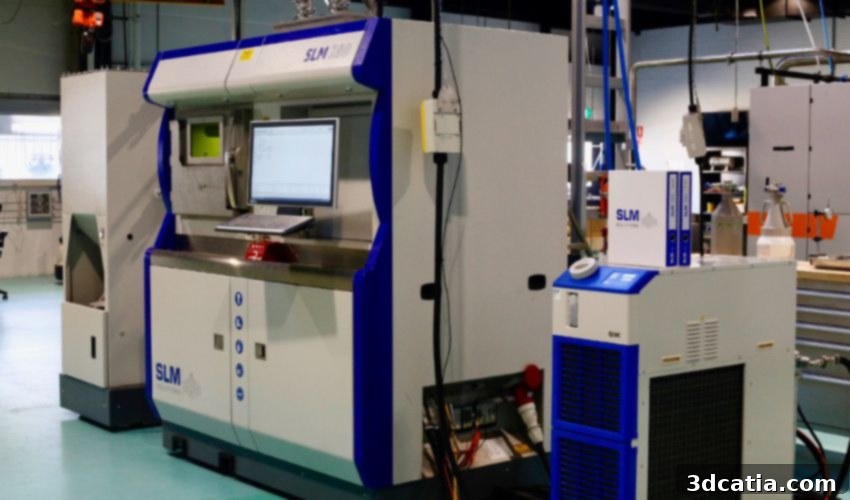
At the very core of this transformative development is the recent commissioning of the Nikon SLM-280 (Selective Laser Melting) 3D printer at CSIRO’s Lab22 facility in Melbourne. This cutting-edge additive manufacturing system represents a significant leap forward, being the very first of its kind not only in Australia but also across the entire Southern Hemisphere. Its standout feature is its unparalleled capability to print disparate metals side-by-side in a single, continuous process, opening up a realm of possibilities previously unattainable with conventional methods. This advanced multi-metal technology is exceptionally well-suited for the demanding requirements of aerospace applications, where the imperative for lightweight yet supremely high-performance materials has intensified exponentially over recent years. The ability to combine the unique properties of various metals within a single, integrated component promises to unlock new levels of functionality, resilience, and efficiency for critical aerospace parts, ranging from engine components to structural elements.
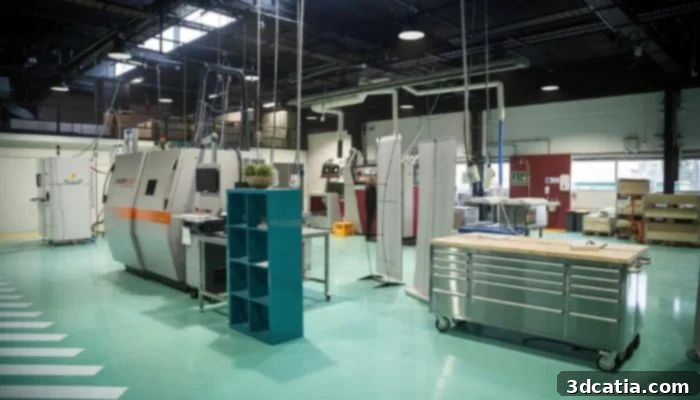
CSIRO’s Lab 22 is a significant large-scale 3D printing hub for Australia, driving innovation in additive manufacturing.
The Dawn of a New Era in Australian Aerospace Manufacturing
The excitement surrounding this technological milestone resonates deeply within industry circles and among innovators. Dr. Joni Sytsma, Chief Technology Officer of iLAuNCH Trailblazer, articulated this enthusiasm, emphasizing the profound potential impact of the Nikon SLM-280 on Australia’s manufacturing capabilities and its global standing. Dr. Sytsma stated, “This capability is the first of its kind as a production machine in Australia, in fact, the Southern Hemisphere, and iLAuNCH is pleased to open up new manufacturing possibilities for locally made products.” This powerful statement underscores not just the sheer technical prowess of the printer but also its immense strategic importance for national sovereignty, economic growth, and the fostering of a self-sufficient advanced manufacturing sector. By hosting such a pioneering facility, Australia is actively cultivating an ecosystem where innovation can flourish, enabling local businesses to design, develop, and produce components that meet the most stringent global aerospace standards right on their home soil. This represents a pivotal step towards establishing Australia as a significant and indispensable player in the international aerospace and defense supply chains, contributing to global technological progress while boosting domestic capabilities.
Unlocking Unprecedented Design Freedom and Performance
The advent of multi-metal 3D printing empowers Australian companies with an unparalleled degree of design freedom and manufacturing agility. This revolutionary capability allows engineers to transcend the limitations of traditional manufacturing methods, enabling the creation of intricate geometries and optimized structures that were previously impossible or prohibitively expensive to produce. By leveraging this sophisticated additive technology, manufacturers can achieve significant advancements across multiple critical fronts, directly impacting the functionality and cost-effectiveness of aerospace components:
- Optimized Designs: Engineers can now design components with highly complex internal lattice structures, intricate cooling channels, and organic, bionic shapes that mimic nature’s efficiency. This holistic approach to design reduces material usage while maintaining or even enhancing structural integrity and performance. The result is inherently stronger, lighter, and more efficient parts with optimized mechanical properties.
- Part Consolidation: Multi-metal 3D printing facilitates the consolidation of multiple components into a single, integrated part, dramatically simplifying complex assemblies. For instance, a conventional heat exchanger might involve dozens of brazed or welded pieces; with multi-metal printing, it can be produced as a single, seamless unit with integrated corrosion-resistant layers or internal fluidic pathways precisely tailored for optimal thermal management. This reduction in part count directly translates to less assembly time, simplified supply chains, minimized potential failure points, and improved overall reliability.
- Reduced Mass and Costs: The ability to precisely place different materials where they are most needed means that engineers can strategically lighten components without compromising structural integrity or performance. For example, a high-strength, high-density alloy can be precisely deposited in areas requiring extreme load bearing, while lighter, less dense metals can form the bulk of the structure. This precision dramatically reduces overall mass, which directly translates into lower fuel consumption for aircraft and spacecraft, extended range, and consequently, reduced operational costs throughout the lifecycle of the vehicle.
- Improved Overall Performance: Beyond mere weight and cost savings, multi-metal printing profoundly enhances the functional performance of parts. By combining materials with distinct thermal, electrical, or mechanical properties, engineers can create components with localized performance characteristics precisely where needed. Imagine a part that needs to conduct heat efficiently in one section while being electrically insulating in another, or a component requiring specific wear resistance on its surface and enhanced ductility in its core – all achievable within a single, seamlessly printed component. This level of functional grading opens up new possibilities for advanced system design.
This capability grants engineers unprecedented strategic control over material distribution and properties, allowing them to make critical weight and performance decisions while simultaneously ensuring the structural integrity, durability, and operational effectiveness of the final components. It represents a profound paradigm shift from designing for manufacturability with limited, monolithic materials to designing for optimal, multi-functional performance with a diverse and customisable material palette.
The Science Behind Multi-Metal Additive Manufacturing
Selective Laser Melting (SLM), the core technology of the Nikon SLM-280, operates by utilizing high-powered lasers to selectively melt and fuse metallic powders layer by layer, meticulously guided by a 3D digital design. What elevates the multi-metal capability to truly groundbreaking status is its sophisticated ability to precisely switch between different metallic powders within the same build chamber during the printing process. This is achieved through advanced powder delivery systems that can dispense distinct material compositions as required by the complex design file. The laser then fuses these specific powders in designated areas, creating a seamless, metallurgical bond between dissimilar metals. This meticulous control over material deposition at a microscopic level allows for the creation of “functionally graded materials,” where properties can transition smoothly or abruptly from one region of a component to another, tailored precisely to the application’s unique requirements. This avoids the weak interfaces often associated with traditional joining methods.
Pushing Material Boundaries: Superalloys and Beyond
This technological advancement is not merely incremental; it paves the way for a revolutionary new era of material science, particularly within aerospace, defense, and numerous other demanding sectors. By enabling the creation of previously impossible material combinations and microstructures, multi-metal 3D printing has fundamentally unlocked the potential for engineering advanced “superalloys.” These materials are specifically designed to withstand the most extreme operating conditions, such as the ultra-high speeds, immense temperatures, and severe stresses encountered during hypersonic flight – an area of critical importance for future defense capabilities and advanced space exploration. Traditional manufacturing struggles to create alloys that offer both high-temperature strength and thermal shock resistance simultaneously, but additive manufacturing of multi-metals can strategically grade these properties within a single component, addressing these critical challenges.
Furthermore, the inherent versatility and high customizability offered by this multi-metal additive manufacturing technology extend far beyond the immediate challenges of hypersonic endeavors. Its immense opportunities for innovation span a broad spectrum of applications, promising transformative impacts:
- Satellite Assembly and Performance: For satellite manufacturers, creating lighter, more integrated components directly translates into reduced launch mass and significant cost savings, while simultaneously improving overall mission efficiency and longevity. Multi-metal printing can facilitate the embedding of sensors, antennae, or advanced cooling channels directly into structural elements, leading to more compact, robust, and reliable spacecraft. This integration reduces the need for complex assembly processes and bolsters performance in the harsh space environment.
- Enhanced Radiation Shielding: For long-duration space missions, whether to the Moon, Mars, or beyond, effective radiation shielding is absolutely paramount for the safety of astronauts and the protection of sensitive electronics. Multi-metal printing allows for the strategic layering of materials with different atomic numbers and densities to optimize radiation absorption and deflection, creating lightweight yet highly protective structures for crew habitats and critical instrumentation. This offers unprecedented control over protective designs.
- Advancements in High-Performance Ground Vehicles: While the primary focus is aerospace, the benefits of multi-metal 3D printing readily trickle down to other demanding sectors. High-performance ground vehicles, such as Formula 1 racecars, luxury sports cars, or advanced military vehicles, can leverage multi-metal printing for components like lightweight suspension parts, optimized engine components, custom braking systems, or structural elements that integrate disparate material properties for superior performance, enhanced durability, and significant weight savings. This can push the limits of speed, efficiency, and safety.
- Energy Sector Innovation: The ability to print intricate, corrosion-resistant layers alongside high-strength structural elements could revolutionize components used in extreme environments within the energy sector, such as advanced turbine blades, components for nuclear reactors, or next-generation energy storage systems. This improves both operational safety and long-term efficiency by extending component lifespan and reducing maintenance.
- Advanced Medical Implants: In the biomedical field, multi-metal printing could enable the creation of highly customized implants with tailored mechanical properties that better mimic natural bone, or integrate bioactive surfaces for improved compatibility, faster osseointegration, and reduced risk of rejection. This precision manufacturing can lead to better patient outcomes and more effective treatments.
Global Impact and Proven Successes
The multi-metal SLM-280 printer’s exceptional capabilities have already garnered significant international recognition, demonstrating its readiness and effectiveness for real-world, high-stakes applications. It has been instrumental in a series of collaborative projects with leading global entities, consistently showcasing tangible and impressive results across diverse engineering challenges:
- CellCore GmbH: In a pivotal partnership with CellCore GmbH, the printer was utilized to create monolithic thrust chambers for advanced rocket propulsion engines. Unlike traditional rocket engine construction, which often involves the complex and failure-prone assembly of multiple brazed or welded parts, these monolithic designs offer superior structural integrity, enhanced thermal management, and significantly improved performance. By eliminating weak points at joints and allowing for highly optimized internal cooling channels, these 3D printed thrust chambers are critical for achieving the extreme conditions of modern rocket flight with greater reliability and efficiency.
- ASCO: Collaboration with ASCO, a key and respected player in the global aerospace industry, led to the successful development of advanced hydraulic valve blocks. Through the power of multi-metal additive manufacturing, ASCO achieved substantial reductions in both the size and weight of these critical components. This is profoundly significant for aircraft, where every gram saved contributes directly to increased fuel efficiency, extended range, and greater payload capacity. Furthermore, the ability to integrate complex internal channels with optimized fluid dynamics improves overall system reliability and responsiveness, which are paramount in aerospace applications.
- The VTT Technical Research Centre of Finland: Working alongside the renowned VTT Technical Research Centre of Finland, the technology was expertly applied to produce highly optimized gooseneck brackets. This resulted in substantial decreases in the critical “buy-to-fly ratio.” The buy-to-fly ratio is a fundamental metric in aerospace manufacturing, representing the amount of raw material purchased compared to the final weight of the installed part. By significantly reducing this ratio through efficient design and additive manufacturing, multi-metal 3D printing minimizes material waste, substantially lowers production costs, and accelerates manufacturing lead times, making the entire production process far more sustainable, economical, and responsive to demand.
These highly successful collaborations collectively underscore the immediate and far-reaching benefits of multi-metal 3D printing, emphatically proving its viability and superior performance for complex, high-stakes aerospace components. They set an impressive new benchmark for manufacturing efficiency, material innovation, and structural integrity across the industry.
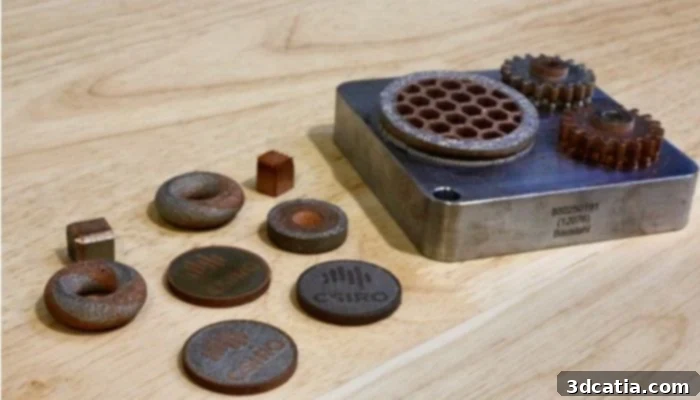
SLM-280 multi-metal 3D printed parts showcasing the intricate possibilities of advanced additive manufacturing.
A Paradigm Shift in Material Bonding
Donald Godfrey, Global Director of Business Development for Aviation and Defence at Nikon SLM Solutions, provided profound insight into the monumental significance of this technological leap. He eloquently highlighted the inherent limitations of previous methods, stating, “For decades, the technology used to bond dissimilar metals was predominantly Hot Isostatic Pressure (HIP) or the actual welding or brazing of two unique metals into one component.” These traditional techniques, while effective for certain applications, often presented significant challenges. These included the introduction of thermal stresses, potential material degradation at interfaces, and severe restrictions on design complexity. Crucially, they typically involved joining pre-manufactured parts, fundamentally limiting the ability to create truly integrated, functionally optimized structures with seamless transitions.
Godfrey continued, emphasizing the revolutionary nature of the SLM-280’s capabilities and its unprecedented deployment: “Delivering Laser Powder Bed Fusion technology to generate a truly functionally graded material component to CSIRO marks the first time the technology has been taken out of Germany. This technology sets a new cornerstone in the aerospace and defense and space industry for what is possible.” This statement is incredibly significant for several compelling reasons. Firstly, it acknowledges that the proprietary Laser Powder Bed Fusion (LPBF) technology, especially when applied to the creation of functionally graded materials, has historically been confined primarily to Germany. Its strategic deployment in Australia signifies a crucial global transfer of cutting-edge additive manufacturing expertise and intellectual property, elevating Australia’s technological standing.
Secondly, the concept of a “functionally graded material component” is absolutely central to this profound paradigm shift. Unlike merely bonding two distinct metals together, LPBF allows for a seamless, gradual, and precisely controlled transition of material properties across a single component. This means engineers can design parts where the composition, microstructure, and even density change precisely along a gradient, optimizing performance for varying stresses, temperatures, corrosion resistance, or other environmental factors within a single, continuous structure. For example, a part could gradually transition from a tough, ductile metal to a hard, wear-resistant ceramic-like material, all within a continuous structure, thereby eliminating the weak points and delamination risks traditionally associated with conventional welds or mechanical joints. This advanced capability is paramount for the extreme and highly variable demands of aerospace, where localized, tailored performance is crucial for the survival and optimal efficiency of critical components.
Australia’s Ascendancy in Advanced Manufacturing
The integration of the Nikon SLM-280 at CSIRO’s Lab22 is a powerful testament to Australia’s strategic commitment to becoming a global leader in advanced manufacturing, particularly within the burgeoning space, defense, and high-tech sectors. This significant investment, driven by visionary programs like iLAuNCH, robustly positions Australia at the very forefront of material science and additive manufacturing innovation. It serves multiple strategic objectives: fostering local research and development, stimulating deeper collaboration between industry and leading academic institutions, and crucially, building robust domestic capabilities that reduce reliance on international supply chains for critical components. By nurturing and expanding a sophisticated advanced manufacturing ecosystem, Australia is not only attracting invaluable international partnerships but also inspiring and empowering a new generation of engineers and scientists to push the boundaries of what is achievable in aerospace and beyond, contributing significantly to the nation’s economic growth, technological independence, and global competitiveness.
The future of aerospace and space exploration is undoubtedly tethered to continuous advancements in material science and innovative manufacturing processes. Australia’s bold and strategic step in adopting multi-metal 3D printing with the Nikon SLM-280 at CSIRO’s Lab22 marks a pivotal moment, promising a future where aircraft and spacecraft are not only lighter, stronger, and more fuel-efficient but also designed with an unprecedented level of innovation, functional integration, and strategic precision. This cutting-edge technology is set to redefine the limits of what is possible in engineered components, propelling humanity further into the cosmos and enhancing critical capabilities on Earth for generations to come.
What do you think of the adoption of this multi-metal 3D printer within CSIRO’s Lab22 and its transformative implications for the future of aerospace? We invite you to share your insights in a comment below or connect with us on our LinkedIn, Facebook, and Twitter pages! Don’t forget to sign up for our free weekly newsletter here to receive the very latest 3D printing news straight to your inbox! You can also find all our compelling videos on our YouTube channel.
*All Photo Credits: CSIRO