
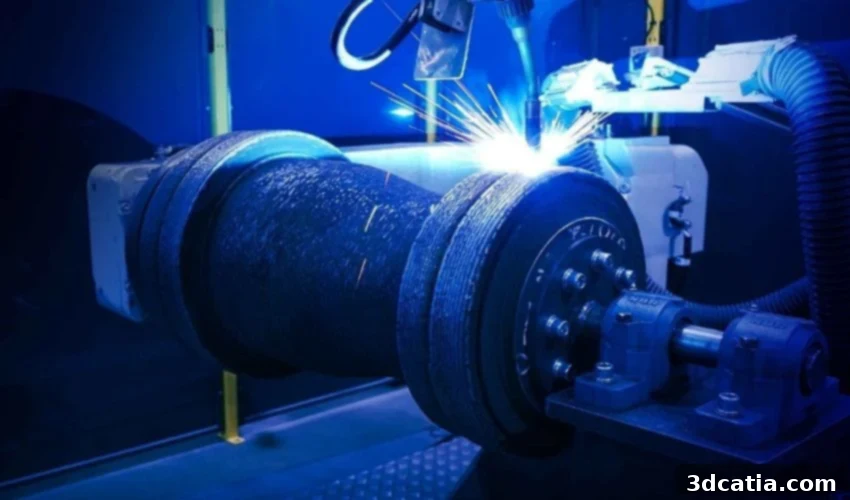
Revolutionizing Oil & Gas: AML3D Achieves World’s Largest Metal 3D Printed High-Pressure Piping Component
The rapid evolution of additive manufacturing (AM) is transforming various industrial landscapes, and its integration into the demanding oil & gas industry continues to accelerate. In a significant milestone for both sectors, AML3D has proudly announced the successful production of the largest, independently verified, metal high-pressure piping component for oil & gas applications, fabricated using 3D printing technology. This groundbreaking achievement was realized through AML3D’s proprietary Wire Additive Manufacturing (WAM®) process, a versatile technology that also finds critical applications in Aerospace, Defence, Maritime, General Manufacturing, and Mining sectors. A key aspect of this accomplishment is the rigorous adherence to safety; the component was meticulously designed and produced to meet the highest American standards for industrial parts, marking a pivotal moment for the qualification and adoption of additive manufacturing in safety-critical environments.
This monumental announcement from AML3D follows closely on the heels of similar advancements within the additive manufacturing community. Just weeks prior, MX3D utilized its own Directed Energy Deposition (DED)-derived technology, specifically Wire Arc Additive Manufacturing (WAAM), to create a safety-critical pipeline clamp for the oil & gas industry. That component, like AML3D’s, underwent independent verification by Lloyd’s Register, a testament to the industry’s unwavering commitment to quality assurance in additively manufactured parts. MX3D’s hybrid approach for their clamping part aimed to significantly reduce environmental, human, and operational safety risks. These parallel developments emphatically highlight the increasing strategic importance of advanced manufacturing techniques in sectors like oil & gas, particularly for complex and crucial subsea applications. Additive manufacturing has firmly established itself within the sector due to its unparalleled ability to quickly produce intricate, high-performance parts that meet exacting specifications, a capability that is reshaping the future of energy infrastructure.
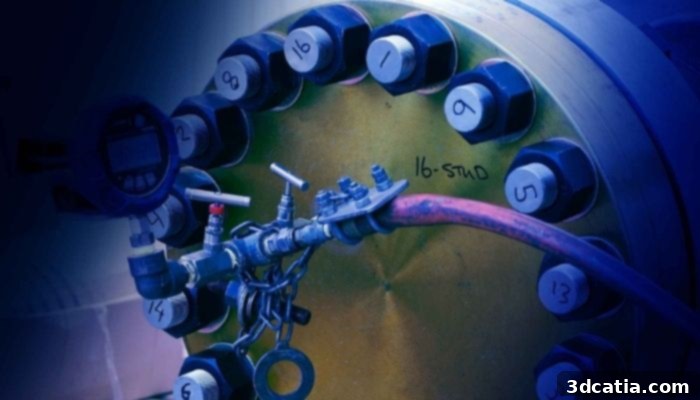
WAM® DN400 to DN300, Schedule 160 reducing spool undergoing testing with TruShape, witnessed and verified by Lloyds Register (photo credits: AML3D)
Unveiling AML3D’s Record-Breaking 3D Printed Oil & Gas Component
The innovative high-pressure component, which represents a new benchmark for additive manufacturing in the energy sector, was meticulously fabricated utilizing AML3D’s patented WAM process. This advanced Wire Additive Manufacturing technique leverages an electric arc in conjunction with certified welding wire within a sophisticated Directed Energy Deposition (DED) framework. AML3D highlights the exceptional capability of WAM to produce substantial metal parts within an open, free-form fabrication environment. This groundbreaking approach circumvents the traditional need for a confined, often size-limiting and costly chamber, which is a common constraint for many other metal additive manufacturing systems. The strategic use of localized inert gas during the printing process is critical in ensuring the material’s integrity and superior quality. This particular high-pressure component, vital for the strenuous demands of oil & gas operations, was printed as a single, monolithic unit. Beyond its impressive scale, the part exhibited significantly improved material properties, including enhanced strength and durability, compared to components manufactured through conventional methods. Furthermore, the WAM process drastically reduced manufacturing lead times, offering substantial efficiency benefits and signaling a new era for rapid deployment of critical infrastructure parts.
Adherence to Elite Safety and Quality Standards: A Non-Negotiable Imperative
For a component destined for the rigorous environments of the oil & gas industry, safety and unwavering reliability were not merely design considerations but foundational principles throughout every stage of its development and manufacturing. The formidable 940kg monolithic “piping spool” component was conceived and produced in strict adherence to the stringent and recently promulgated American Petroleum Institute (API) Standard 20S. This specific standard provides a comprehensive and rigorous framework for the qualification and acceptance of additively manufactured parts intended for critical oil and gas applications. Furthermore, the component demonstrated its exceptional integrity by successfully passing acceptance testing for ASME B31.3, another universally recognized and extensively applied American standard governing process piping systems. This dual certification underscores an extraordinary level of confidence in the part’s ability to perform flawlessly under extreme operational conditions. To validate its robustness, the component underwent exhaustive high-pressure testing, a process that was meticulously witnessed and independently verified by Lloyd’s Register, a global authority in engineering assurance and risk management. AML3D proudly asserts that this groundbreaking component is the first of its kind globally to be metal 3D printed and subsequently subjected to such independent, successful pressure testing, thereby establishing a new paradigm for additive manufacturing adoption in critical energy infrastructure.
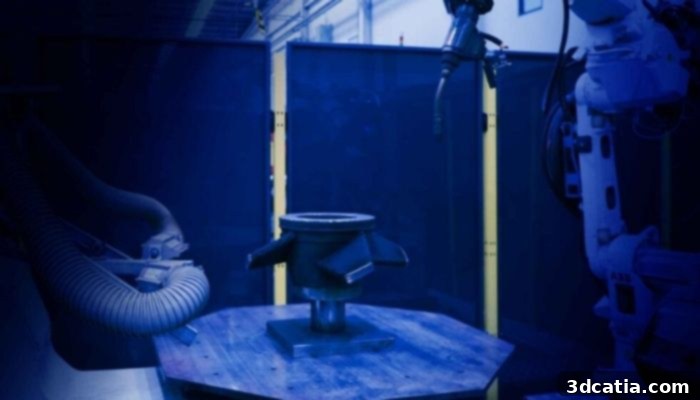
The part was made using AML3D’s patented WAM process, which allows for the creation of large, metal parts (photo credits: AML3D)
The Transformative Impact of Additive Manufacturing in the Oil & Gas Sector
The recent achievements by AML3D and MX3D are more than just individual company successes; they signify a profound paradigm shift. Additive manufacturing is emerging not merely as a supplementary technology but as a truly disruptive force poised to fundamentally redefine operational paradigms within the global oil & gas industry. This sector, inherently characterized by its incredibly demanding operational environments, intricate logistical challenges, and paramount safety and regulatory requirements, stands to gain immense strategic advantages from the thoughtful adoption of AM. One of the most compelling benefits is the unprecedented capability to produce highly complex geometries. These intricate designs are often either impossible or prohibitively expensive to achieve using conventional subtractive or formative manufacturing techniques. AM facilitates the consolidation of multiple components into a single, integrated part, leading to simplified assemblies, optimized fluid flow dynamics, and significant weight reduction without compromising essential structural integrity – a critical factor for both surface-level and subsea installations.
Beyond design complexity, additive manufacturing dramatically compresses lead times. In an industry where unexpected equipment failures can trigger colossal financial losses, severe environmental damage, and potential safety hazards, the capacity for rapid, on-demand production or repair of critical spare parts is priceless. This “print on demand” model profoundly enhances supply chain resilience, substantially reduces the need for extensive and costly inventory holding, and mitigates dependency on protracted global shipping routes, which is particularly advantageous for remote or offshore installations. Moreover, for legacy or obsolete parts where traditional manufacturing tooling may no longer exist, AM offers an elegant and swift solution through reverse engineering and immediate production.
The unparalleled customization potential inherent in AM represents another pivotal advantage. Components can be precisely engineered and tailored to meet highly specific operational requirements, unique well characteristics, or distinct environmental conditions, thereby leading to optimized performance, extended service life, and enhanced operational efficiency. Furthermore, advanced AM processes, such as AML3D’s WAM, are capable of processing a diverse array of high-performance metal alloys. These processes often yield parts with superior metallurgical properties, including enhanced strength, improved fatigue resistance, and increased corrosion resistance – attributes that are absolutely non-negotiable for equipment operating in the extraordinarily harsh and corrosive oil & gas environments. By creating components with superior material characteristics, AM contributes directly to elevating operational reliability and overall safety standards.
While initial capital investments in AM technology can be substantial, the long-term economic benefits are significant and multifaceted. Savings accrue from reduced material waste, as AM is inherently efficient by building objects layer by layer; lower tooling costs for complex geometries; decreased inventory and warehousing expenses; and, crucially, minimized operational downtime resulting from faster part replacement and repair cycles. For deep-sea and subsea applications, the ability to rapidly produce robust, custom-engineered components closer to the point of use dramatically simplifies and reduces the logistical complexities and prohibitive costs traditionally associated with deep-sea operations, unequivocally positioning AM as an ideal candidate for advanced exploration and production equipment.
AML3D’s Vision and the Evolving Landscape of Additive Manufacturing in Energy
Andrew Sales, AML3D’s Managing Director, succinctly captured the essence of this breakthrough and its far-reaching implications: “AML3D is thrilled with the results from the high-pressure testing witnessed and verified by Lloyd’s Register. We now have a high level of interest already shown by participants in the Oil & Gas sector and are in discussions with several opportunities. The ability to demonstrate to this sector the capabilities and outstanding test results of our patented Wire Additive Manufacturing (WAM®) process opens the door for far greater applications.” This statement reflects not merely a corporate triumph but a watershed moment for the broader industry. The independent verification by a reputable body like Lloyd’s Register is absolutely critical, as it instills confidence and fosters trust, which are indispensable prerequisites for the widespread adoption of new, transformative technologies in inherently risk-averse sectors such as oil & gas.
The immediate and palpable interest expressed by key stakeholders and participants in the oil & gas sector strongly indicates a growing readiness and eagerness to embrace these innovative manufacturing solutions. Beyond the immediate application of high-pressure piping, the rigorously validated performance of AML3D’s WAM process could fundamentally pave the way for a myriad of other critical applications. These include, but are not limited to, highly complex valve bodies, specialized pump components, advanced subsea connectors, robust structural elements for offshore platforms, and bespoke tooling solutions. The prospect of establishing localized or near-site additive manufacturing facilities holds the potential to revolutionize maintenance and repair operations, drastically curtailing the time and exorbitant costs traditionally associated with sourcing, manufacturing, and shipping parts across global supply chains. Furthermore, this localized production model intrinsically contributes to enhanced environmental sustainability by minimizing transportation-related emissions and significantly reducing material waste.
While challenges undoubtedly persist – particularly concerning the further scaling of production capabilities, the continuous refinement of material qualification processes for an even broader spectrum of advanced alloys, and the navigation of intricate global regulatory frameworks – the trajectory for additive manufacturing within the oil & gas industry appears exceptionally promising. The industry is actively and aggressively seeking innovative solutions that demonstrably enhance operational efficiency, bolster safety protocols, and advance sustainability objectives. Additive manufacturing consistently delivers on all these critical fronts. As more pioneering companies achieve similar validating milestones and as regulatory standards evolve to more fully incorporate AM, we can anticipate a rapid and profound acceleration in its integration into the energy sector’s core operational fabric, fundamentally transforming every aspect from initial design and prototyping to complex supply chain management and critical field maintenance.
What are your insights and perspectives on this pioneering oil & gas piping component from AML3D and its broader implications for the future of industrial 3D printing in critical sectors? We warmly invite you to share your valuable thoughts and engage in discussion by leaving a comment below, or by connecting with us on our LinkedIn, Facebook, and Twitter pages! To ensure you stay abreast of the very latest 3D printing news, groundbreaking innovations, and exclusive insights, don’t forget to subscribe to our free weekly Newsletter here – delivered straight to your inbox! Additionally, you can explore all our insightful videos and in-depth content on our dedicated YouTube channel for a deeper dive into the dynamic world of additive manufacturing.