

Revolutionizing Metal Additive Manufacturing: AdditiveLab’s Simulation Software Empowers Engineers
To kick off the year with a focus on groundbreaking innovation, we journey to Belgium to introduce AdditiveLab, a pioneering #3Dstartup that is reshaping the landscape of additive manufacturing. Renowned as the winner of the prestigious Start-Up Challenge 2019, an event orchestrated by Formnext, AdditiveLab has engineered sophisticated software solutions designed to meticulously simulate the entire additive manufacturing process. Their particular expertise lies in addressing the complexities of metal 3D printing, a domain known for its intricate challenges and high stakes. The company’s innovative software platforms are democratizing access to powerful simulation capabilities, allowing engineers of all experience levels to predict and prevent potential failures during production. This not only significantly streamlines the additive manufacturing workflow but also translates into invaluable time and cost savings. We recently had the opportunity to sit down with Mariam Mir, one of AdditiveLab’s visionary co-founders, to delve deeper into the mechanics and profound benefits of their transformative software.
Unveiling AdditiveLab: A Game-Changer for Metal AM Simulation
AdditiveLab emerges as a dynamic young startup, strategically headquartered in Belgium, with a singular focus on providing cutting-edge simulation solutions for metal Additive Manufacturing (AM), commonly known as metal 3D printing. At its core, AdditiveLab offers a unique, highly efficient, and remarkably scalable AM process simulation solution. This advanced platform is meticulously crafted to meet the diverse needs of a broad spectrum of users, enabling them to confidently tackle AM production challenges, irrespective of their complexity. From optimizing build parameters to predicting residual stresses and distortions, AdditiveLab’s software empowers manufacturers to achieve unprecedented levels of precision and reliability in their metal 3D printing operations. By simplifying what was once a highly specialized and often opaque process, AdditiveLab is paving the way for wider adoption and more successful applications of metal AM across various industries.
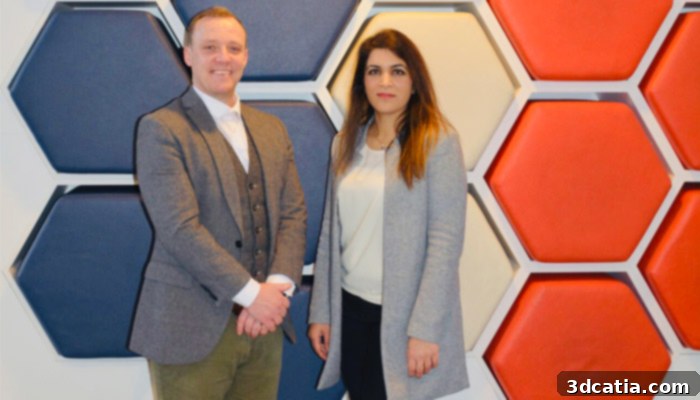
Mariam Mir and Christian Rossmann, co-founders of AdditiveLab, are at the forefront of AM simulation innovation.
The Vision Behind AdditiveLab: Empowering Every Engineer
The inception of AdditiveLab was rooted in a profound understanding of the challenges faced in the additive manufacturing sector. Our founders bring over a decade of dedicated experience within the AM field, united by a shared passion for this transformative manufacturing technology. Throughout their extensive careers, they have worked intimately with professionals who grapple daily with the inherent difficulties in accurately predicting build behaviors and outcomes. This firsthand experience illuminated a critical gap in the market: the need for accessible, reliable simulation tools that could empower a wider audience beyond specialized simulation experts.
The driving force behind establishing AdditiveLab was a clear and powerful vision: to truly empower users with robust simulation capabilities and enable them to achieve their production objectives successfully, regardless of their prior simulation expertise or background. This foundational vision is meticulously woven into every aspect of our product lines, shaping our product positioning, feature development, and pricing strategies. We are firm believers in making our advanced technology broadly available to production users, equipping them with the tools to accurately predict production behavior without needing an extensive simulation background. Concurrently, AdditiveLab liberates simulation experts, providing them with the flexibility and power to craft their own sophisticated simulation models and seamlessly share these insights with other teams within their organizations. Our overarching goal is to render simulation universally accessible, making it an indispensable and standard component of the industry’s workflow, thereby accelerating the industrialization of additive manufacturing.
Unpacking the Main Features of AdditiveLab’s AM Software
At AdditiveLab, we pride ourselves on offering truly novel Additive Manufacturing simulation software that pushes the boundaries of what’s possible. Our AdditiveLab software stands out as the only platform currently available that provides users with the unique capability to create highly customized models for AM process simulation. This unparalleled flexibility allows engineers to tailor simulations precisely to their specific materials, machine parameters, and part geometries, ensuring more accurate and relevant predictive insights. Recognizing the diverse needs within the AM ecosystem, our company strategically offers two distinct versions of AdditiveLab, each meticulously designed to cater to different user profiles and their respective requirements.
The first offering is AdditiveLab RESEARCH, a premium product engineered for advanced simulation engineers. This version grants comprehensive access to an array of in-depth simulation functionalities, allowing researchers and experts to explore the most intricate aspects of the AM process. With AdditiveLab RESEARCH, users can conduct multi-scale simulations, ranging from highly detailed micro-scale scanning path analyses to extensive simulations of entire build configurations. This comprehensive approach enables a deeper understanding, more accurate prediction, and optimal optimization of manufacturing outcomes. Furthermore, researchers are empowered to develop their own bespoke simulation applications and automate complex workflows through the integration of Python scripts. This capability allows them to customize and streamline their research, sharing these powerful tools with design teams, manufacturing departments, test labs, and even external customers, fostering collaborative innovation.
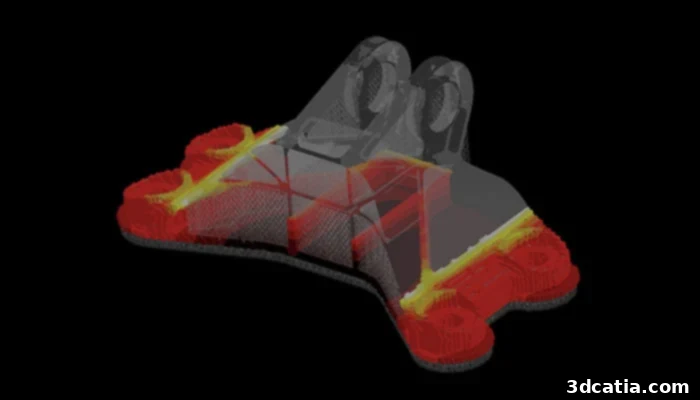
The AdditiveLab LITE version provides an intuitive, minimalistic interface dedicated to all engineers, including those with no prior experience in simulation, simplifying complex AM predictions.
Conversely, AdditiveLab LITE represents our commitment to accessibility and ease of use. This cost-effective and remarkably user-friendly product is specifically tailored to address the practical production needs of CAD and CAM engineers who may possess no prior background in simulation. AdditiveLab LITE features a minimalistic, intuitive interface coupled with highly automated model generation capabilities. This design philosophy ensures that AM engineers, regardless of their simulation experience, can effortlessly and accurately predict manufacturing outcomes, identify potential issues like warping or residual stress, and optimize their build strategies. By providing direct, actionable insights in an accessible format, AdditiveLab LITE accelerates design iterations, reduces costly trial-and-error processes, and ultimately enhances overall production efficiency for a broader range of users.
The Crucial Role of Simulation Software in Metal Additive Manufacturing
While simulating the AM process offers significant insights and value for production across all materials, its importance is amplified considerably in the realm of metal additive manufacturing. The underlying reasons are manifold and directly impact the economic viability and operational efficiency of metal AM. Firstly, metal materials themselves are inherently more expensive than their polymer counterparts. Coupled with the substantial investment in metal AM machines and the often lengthy build times required for complex parts, any production failure can lead to severe financial repercussions. These failures, which could range from part distortion and cracking to complete build failures, not only waste precious material and machine time but can, in extreme cases, even cause direct damage to the high-value AM machine itself. This is where simulation becomes indispensable. By accurately predicting potential failures and identifying root causes before a single part is printed, simulation software can prevent costly material waste, minimize machine downtime, and avert potential equipment damage, thereby ensuring significantly higher production success rates and substantial cost savings.
Furthermore, metal AM is the preferred technology for highly demanding, high-end applications spanning critical sectors such as aerospace, automotive, and medical domains. In these industries, the unwavering precision, structural integrity, and manufacturing reliability of produced parts are not merely desirable but absolutely integral for validation and certification. For traditional manufacturing methods like welding or forging, process simulation is often an obligatory technique mandated by industry standards and regulatory bodies to ensure product quality and safety. Similarly, in the rapidly evolving landscape of additive manufacturing, simulation is increasingly becoming a “must-have” tool. It provides the necessary predictive power and validation capabilities to elevate the reliability and repeatability of AM production, ensuring that metal 3D printed components meet the stringent performance and safety requirements of these advanced applications. Without robust simulation, the journey from design to certified, high-performance metal AM part would be far more protracted and expensive, if not impossible.
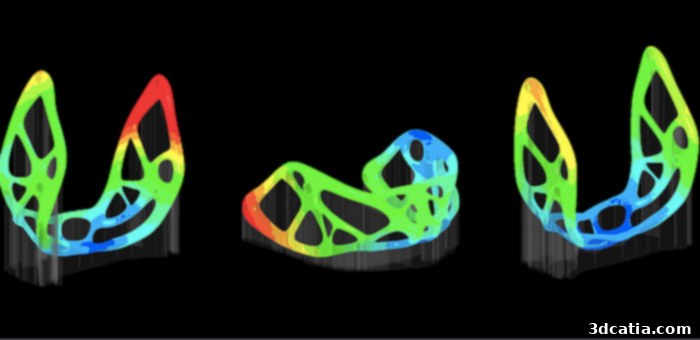
The software enables extensive simulations, providing critical insights to optimize additive manufacturing processes and prevent costly errors.
Identifying AdditiveLab’s Key Target Audiences
AdditiveLab has meticulously designed its software offerings to cater to distinct user needs within the additive manufacturing ecosystem, ensuring that both foundational and advanced requirements are met with tailored solutions. AdditiveLab, with its highly accessible LITE version, serves as an ideal solution for AM machine data preparers and CAD engineers who are actively involved in the design and preparation of AM parts. These professionals often require straightforward, intuitive tools to predict potential build issues such as distortion, residual stress, or support structure failures without needing a deep understanding of complex simulation algorithms. The LITE version empowers them to optimize their designs for additive manufacturing, make informed decisions on build orientation and support placement, and ultimately reduce the number of costly physical prototypes and failed builds.
In contrast, the AdditiveLab RESEARCH version is specifically targeted at a more specialized and demanding audience: researchers and advanced engineers. This includes individuals who perform in-depth analysis on the material properties of AM parts, work to optimize intricate machine parameters, or require a high degree of control and customizability over their simulation models. For these experts, the ability to delve into microscopic process details, develop custom material models, and script unique simulation workflows is paramount. AdditiveLab RESEARCH provides the granular control and powerful features necessary to push the boundaries of AM science, investigate novel materials, refine process parameters for unprecedented part quality, and develop entirely new applications for additive manufacturing, fostering innovation at the highest level.
AdditiveLab’s Future Projects: Advancing AM Technologies
The realm of Additive Manufacturing remains an incredibly fast-paced and relentlessly evolving field, witnessing innovations and breakthroughs on a daily basis. As dedicated software providers in this dynamic landscape, AdditiveLab is committed to continuously developing and delivering cutting-edge software solutions that will play a pivotal role in further advancing AM technologies and broadening their range of applications. Our strategic roadmap includes several key areas of focus, designed to address emerging needs and push the boundaries of what’s currently achievable in additive manufacturing simulation.
One of our major strategic focus areas is the robust development of Directed Energy Deposition (DED) simulation solutions. DED is a distinct additive manufacturing process that uses focused thermal energy (like a laser, electron beam, or plasma arc) to melt materials as they are deposited, allowing for the creation of new parts, repair of existing ones, or addition of features to components. Simulating DED processes presents unique challenges due to the complex thermal gradients, material deposition dynamics, and potential for residual stresses in large parts or repair operations. Recognizing the growing importance of DED in various industrial applications, we recently marked a significant milestone by launching our initial version of DED simulation capabilities. This first iteration is now available to early adopters, providing them with essential tools to optimize DED parameters, predict part quality, and prevent common issues such as distortion or cracking. This development underscores our commitment to supporting the full spectrum of additive manufacturing processes and empowering engineers with the predictive power needed to master these complex technologies.
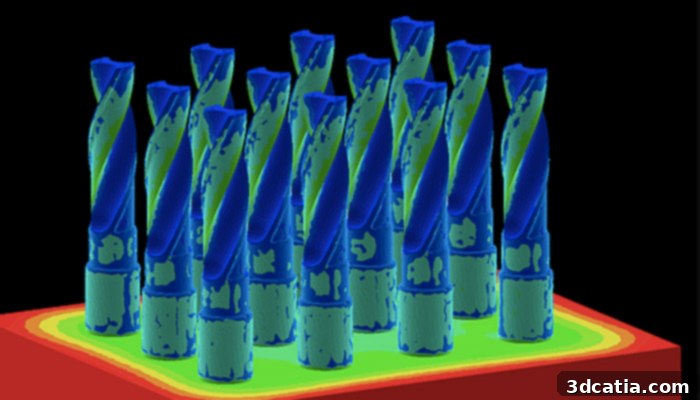
AdditiveLab’s simulations offer critical insights for optimizing and validating additive manufacturing processes, ensuring high-quality, reliable outcomes.
Forecasting the Future of Metal Additive Manufacturing
The adoption and utilization of metal AM technology have witnessed exponential growth over recent years, transforming various industrial sectors. At AdditiveLab, we are firm believers that this accelerating trend is not only sustainable but will continue to intensify. Several factors will fuel this expansion, including the increasing affordability of metal AM machines, making them accessible to a broader market, and the continuous development of highly streamlined workflows that simplify their operation and integration into existing production lines. This combination of cost-effectiveness and operational ease will significantly lower the barrier to entry for businesses looking to leverage metal 3D printing.
Looking ahead over the next decade, we anticipate that compact, small-sized metal AM machines will become a natural and ubiquitous addition to traditional metal workshops. In this scenario, engineers will possess the agile capability to create spare parts on demand, perform intricate repairs on damaged components using AM technology, and innovate by developing unique, customized solutions for specialized applications. This localized, on-demand manufacturing will revolutionize supply chains and empower local businesses. Simultaneously, in highly advanced industries such as aerospace, defense, and medical devices, metal AM is poised to transition from prototyping and limited-run production to large-scale serial manufacturing. This will be complemented by its continued role in supporting the creation of highly customized, patient-specific, or mission-critical parts where traditional manufacturing methods fall short. This dual evolution — widespread accessibility in workshops and sophisticated industrialization in high-tech sectors — underscores the profound impact metal AM is set to have on global manufacturing.
Crucially, this anticipated growth and widespread adaptation of metal AM within the industry will not solely be driven by significant leaps on the hardware side. Equally vital will be advancements on the software front, a domain where we at AdditiveLab are dedicated to playing a leading and transformative role. By providing intuitive, powerful, and accessible simulation software, we aim to accelerate the industrial adoption of metal AM, enabling more reliable, cost-effective, and innovative applications for this game-changing technology. Our contributions in software will ensure that the full potential of metal AM can be realized, bridging the gap between theoretical capabilities and practical, high-volume production.
A Final Word for Our Valued Readers
In the dynamic and rapidly evolving world of Additive Manufacturing, a common perception still persists: that simulation is a highly specialized task, exclusively the domain of dedicated simulation experts. Consequently, many AM engineers, despite their expertise in design and manufacturing, often feel hesitant or intimidated to directly utilize simulation tools themselves. This hesitation is frequently exacerbated by several factors, including the perceived high software acquisition costs and the often-complex, steep learning curve associated with traditional simulation software packages. These barriers frequently prevent engineers from fully exploring and harnessing the immense advantages that predictive AM simulations can offer, leaving valuable insights untapped and production processes less optimized than they could be.
We want our readers to understand that AdditiveLab was founded precisely to address and dismantle these common concerns. With our suite of AdditiveLab software products, we have meticulously tailored solutions to directly counter these challenges. Beyond our highly advanced simulation solutions designed for experts, we are also steadfastly committed to providing cost-effective solutions featuring incredibly intuitive workflows. These user-friendly platforms are specifically designed for everyday engineers who are eager to benefit from the powerful predictive capabilities of simulation without needing extensive prior experience. Our goal is to empower every engineer involved in additive manufacturing to confidently use simulation, enabling them to optimize designs, predict failures, reduce material waste, and accelerate innovation, making simulation an integral and accessible part of their daily workflow. By breaking down these traditional barriers, AdditiveLab is helping to unlock the full potential of additive manufacturing for a broader and more diverse user base.
What are your thoughts on AdditiveLab’s innovative approach to AM simulation? We invite you to share your feedback in a comment below or join the conversation on our Facebook and Twitter pages! Don’t forget to sign up for our free weekly Newsletter to receive all the latest news and developments in the world of 3D printing directly in your inbox!