
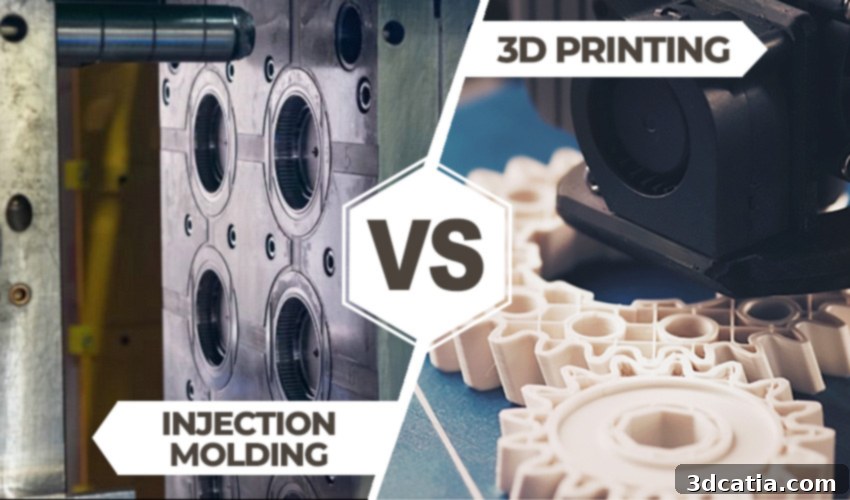
Injection Molding vs. Additive Manufacturing: A Comprehensive Guide to Modern Production Technologies
In modern manufacturing, selecting the right production technology is crucial for success. Two of the most prominent and versatile methods are undoubtedly injection molding and additive manufacturing (also known as 3D printing). While both processes are indispensable in various industries, they operate on distinct principles, offer unique advantages, and come with their own set of limitations. This comprehensive article delves into a detailed comparison of these two powerful manufacturing techniques, examining their fundamental principles, historical evolution, distinguishing features, diverse applications, material compatibility, post-processing requirements, cost implications, and overall benefits and limitations.
Historical Evolution of Manufacturing Powerhouses
Understanding the origins of these technologies provides valuable context for their current applications and future potential. Injection molding boasts a long and rich history, dating back to the 1860s. Its inception is often attributed to John Wesley Hyatt, who, along with his brother Isaiah, invented celluloid, one of the earliest synthetic plastic materials. The Hyatt brothers later patented a rudimentary injection molding system that utilized a piston to force molten celluloid into a mold cavity. Over the 20th century, the technology underwent significant advancements. A pivotal moment arrived in 1946 when James Watson Hendry introduced the rotary screw injection molding machine, a revolutionary design that efficiently melts and mixes plastics before injection. This innovation laid the groundwork for the modern injection molding machines that remain the industry standard today, capable of producing millions of parts with remarkable speed and consistency.
In contrast, additive manufacturing is a much more recent innovation, with its roots firmly planted in the 1980s. The pioneering efforts in this field led to the development of the stereolithography (SLA) technique by Chuck Hull, who commercially patented it in 1986. SLA marked a paradigm shift, enabling the creation of three-dimensional objects layer by layer from digital designs. Following this breakthrough, additive manufacturing rapidly diversified with the introduction of numerous new processes and technologies. These developments expanded the range of compatible materials and broadened the scope of applications, transforming 3D printing from a niche prototyping tool into a robust solution for various industrial practices. Today, additive manufacturing has become an extremely attractive option across different sectors, recognized for its flexibility and ability to create complex geometries.
Understanding the Core Manufacturing Processes
What Is Additive Manufacturing (3D Printing)?
Additive manufacturing, commonly known as 3D printing, is a transformative production process that constructs three-dimensional objects by progressively adding material, layer upon layer, directly from a digital design. This methodology provides unparalleled flexibility and precision, allowing for the creation of intricate geometries and complex internal structures that are often impossible or prohibitively difficult to achieve using traditional subtractive manufacturing methods, including injection molding. Additive manufacturing encompasses a diverse array of technology families, each distinguished by the types of materials it processes, the energy sources it employs, and the specific mechanisms for material deposition.
These technologies are generally categorized into seven major families: material extrusion (like FDM), vat photopolymerization (including SLA and DLP), binder jetting, material jetting, powder bed fusion (encompassing both metal and polymer variants such as SLS, SLM, and DMLS), directed energy deposition, and sheet lamination (though less commonly widespread today). Each family features specific variants that necessitate unique equipment, utilize distinct materials, and ultimately yield different part properties and surface finishes. Despite these variations, all additive manufacturing technologies adhere to a standardized digital workflow to produce the final physical part.
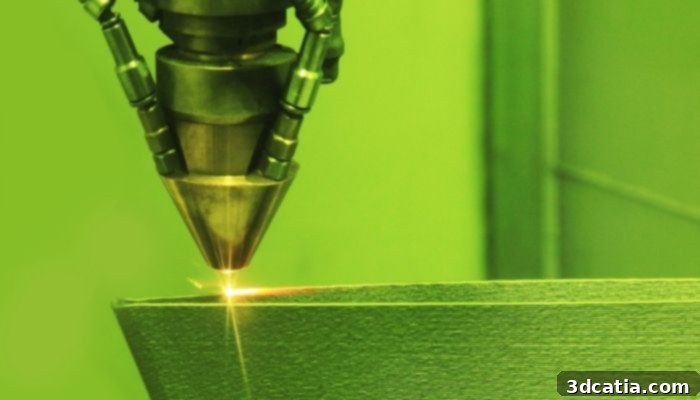
The additive manufacturing process begins with the creation of a detailed 3D design, typically using computer-aided design (CAD) software. Once the digital design is finalized, it is converted into a compatible file format for the 3D printer, such as STL, OBJ, or 3MF. This file is then loaded into specialized slicing software, which digitally dissects the 3D model into hundreds or thousands of horizontal layers. The slicing software also generates the G-code, a set of instructions that guide the printer’s movements and material deposition for each layer. The actual fabrication then proceeds based on the chosen 3D printing technology. Upon completion of the printing phase, the object may require post-treatment. This can involve removing support structures, sanding for smoother surfaces, curing for resin-based prints, or heat treatments for parts made from metals or high-performance polymers to enhance their mechanical properties.
What Is Injection Molding?
As its name implies, injection molding is a manufacturing process that involves injecting molten material into a precisely engineered mold cavity. Once inside the mold, the material cools rapidly and solidifies, taking on the exact shape of the mold to form the final part. The process initiates with the meticulous selection and preparation of the raw material, which typically comes in the form of pellets, granules, or sometimes powders and preforms. While thermoplastics are the most common materials used due to their ability to be repeatedly melted and solidified, injection molding can also process thermosets, elastomers, metals (via metal injection molding, or MIM), and even glass. These material considerations will be explored in more detail later.
Once the material is prepared, it is fed into a hopper, which gravity-feeds it into a heated barrel. Within this barrel, a reciprocating screw rotates, simultaneously conveying the material forward and subjecting it to intense heat and shear forces. This action efficiently melts the material, transforming it into a viscous and fluid state. Temperatures in the barrel can reach up to 200ºC or even higher, depending on the polymer. As enough molten material accumulates at the front of the screw, the screw rapidly moves forward, acting like a plunger, injecting the molten material at extremely high pressure through a nozzle and into the cold mold cavity. This injection phase is remarkably swift, often lasting between 0.1 and 2 seconds.
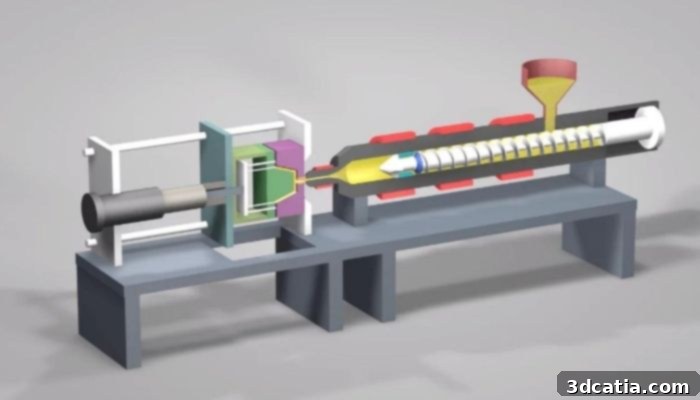
Anatomy of an Injection Molding Machine (Photo Credits: 3ERP)
As the molten plastic fills the mold, it begins to cool and solidify almost instantaneously due to the lower temperature of the mold itself. The mold is equipped with sophisticated cooling channels that circulate fluids to maintain a consistent temperature and accelerate the solidification process, significantly reducing cycle times. Once the material has fully solidified, the clamping unit – a powerful hydraulic or electric press – retracts, releasing the pressure and causing the mold halves to open. Ejector pins then gently push the now-solidified part out of the mold cavity. Finally, the mold closes, and the entire injection cycle repeats, enabling rapid, high-volume production. It’s important to note that while various mold types exist (e.g., multi-cavity, hot runner, two-shot), they all share a similar fundamental structure designed to accommodate this precise mechanical process. Post-processing for molded parts typically involves minor burr trimming, gate removal, and sometimes painting, surface texturing, or assembly into larger products.
Materials: A Comparative Overview
Both additive manufacturing and injection molding leverage a broad and diverse spectrum of materials, each carefully chosen to suit specific applications, industries, and performance requirements. In the realm of additive manufacturing, particularly for FDM 3D printing, thermoplastics such as PETG, PLA, and ABS are dominant. Their popularity stems from their excellent melt flow properties and ease of extrusion, making them ideal for both recreational and industrial 3D printing applications, from simple prototypes to functional end-use parts. However, the capabilities of additive manufacturing extend far beyond these common filaments. It also effectively processes thermosets (in vat photopolymerization), elastomers, and high-performance engineered resins like nylon and polycarbonate, which are frequently utilized in technologies such as Selective Laser Sintering (SLS) for producing robust, complex components.
Furthermore, advanced additive manufacturing techniques are capable of processing metals (including titanium, aluminum, stainless steel, and nickel alloys) through processes like Direct Metal Laser Sintering (DMLS)/Selective Laser Melting (SLM), Electron Beam Melting (EBM), and metal binder jetting. Ceramics can also be 3D printed using binder jetting, material jetting, and some powder bed fusion variants, significantly broadening AM’s application spectrum across demanding sectors. Despite this extensive material range, many industrial applications, especially in highly regulated sectors like aerospace and automotive, require materials to be certified. This certification ensures stringent quality and performance standards are met. While the certification process can add to development time and cost, the increasing use of industrial-grade pellets in AM can simplify this, as these materials are already widely used and certified in traditional technologies like injection molding.
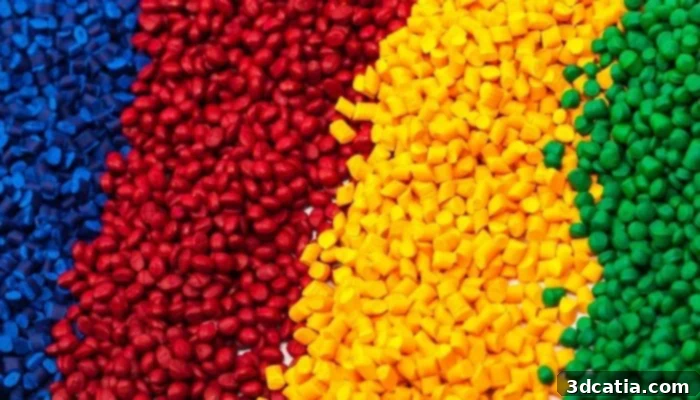
The material of choice in injection molding continues to be plastic.
Similarly, injection molding accommodates an extensive array of materials, often overlapping significantly with those used in AM. It readily processes a wide range of thermoplastics, thermosets, elastomers, and high-performance engineered resins such as nylon and polycarbonate. This broad material versatility enables the efficient production of everything from durable automotive components and robust consumer product housings to medical-grade silicone implants. Injection molding’s capability to consistently process high-density materials with superior flow characteristics makes it highly beneficial for manufacturing parts that demand exceptional structural integrity, precise dimensional accuracy, and consistent mechanical properties across large production runs. The material choice in injection molding is often driven by the required mechanical strength, chemical resistance, thermal properties, and aesthetic finish of the final part, all optimized for cost-effective mass production.
Post-Processing: Refining the Final Product
Finishing and post-processing are indispensable stages in both additive manufacturing and injection molding, crucial for enhancing the functional performance, aesthetic appeal, and overall quality of manufactured parts. The extent and nature of post-processing, however, differ significantly between the two technologies.
In additive manufacturing, achieving the desired surface finish often necessitates extensive post-processing techniques. This is primarily because 3D printed parts, particularly those produced with FDM, SLA, DLP, or certain powder-based methods, frequently exhibit rough textures, visible layer lines, or residual powder from the printing process. Common post-processing steps include sanding, polishing, bead blasting, chemical vapor smoothing, and painting to improve surface quality and aesthetics. For many 3D printing technologies, especially FDM, SLA, and Material Jetting, the removal of support structures is another critical step. Supports are temporary structures designed to prevent part deformation during printing, particularly for designs with complex geometries, overhangs, or intricate internal features. The method of support removal can range from manual breaking away to dissolution in chemical baths, impacting both labor costs and final surface finish. Overall, these post-processing techniques are vital for refining surface texture, improving part durability, achieving dimensional accuracy, and ensuring the parts meet the high aesthetic or functional demands of their intended applications. The specific post-processing techniques chosen are highly dependent on the 3D printing technology initially used, the material, and the desired end-use properties.
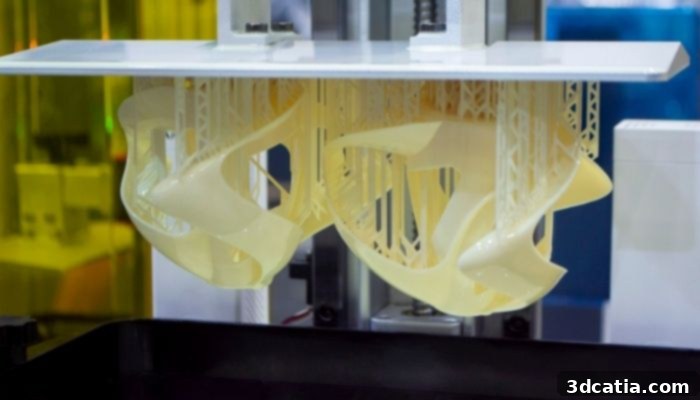
Resin 3D printed parts often require post-processing to remove supports and excess resin.
In stark contrast, post-processing for injection molding is generally much less extensive and labor-intensive compared to additive manufacturing. This is largely due to the inherent nature of the molding process itself: the highly polished and precise surfaces of the mold cavity directly transfer a superior surface finish to the final part, often eliminating the need for extensive aesthetic finishing. However, some post-processing steps are occasionally necessary to ensure the final product adheres to all desired specifications. One of the most common post-processing steps in injection molding is the removal of ‘flash,’ which is excess material that may seep out along the mold’s parting line or around ejector pins during the high-pressure injection process. Similar to support removal in 3D printing, flash removal is typically performed using trimming tools, cutting tools, or deburring processes. In high-volume production environments, automated systems, such as robotic trimmers or tumbling machines, are often employed to rapidly and efficiently remove flash, further optimizing the production cycle. Additionally, gate removal (the point where material entered the mold) is a common step. Sometimes, parts may undergo additional treatments like painting, plating, or assembly, but the core finishing is significantly less complex than for many 3D printed parts.
Diverse Applications in Modern Industry
Both additive manufacturing and injection molding are utilized extensively across a wide array of industries, with each technology leveraging its unique strengths to address specific manufacturing challenges, needs, and opportunities. While there can be some overlap, their primary use cases often diverge based on production volume, part complexity, and material requirements.
Additive manufacturing truly excels in industries that demand high levels of customization, complex geometries, and low-to-medium production volumes. Key sectors where AM shines include medical, aerospace, automotive, and consumer goods. Within the medical field, AM’s agility in prototyping and customization is evident in the production of personalized implants, custom prosthetics, and patient-specific surgical guides, all tailored to individual patient anatomy. This leads to significantly enhanced treatment outcomes, improved patient comfort, and faster recovery times. In aerospace, AM’s capabilities are transformative, with specific applications in hypersonic missiles, lightweight rocket engine components, and the development of stand-alone 3D printers for increased self-autonomy during deep space missions. Aerospace engineers exploit AM’s ability to produce incredibly lightweight yet durable parts with intricate internal lattice structures, which contribute to substantial weight reduction and optimized aerodynamic performance—features extremely challenging for traditional methods. Additionally, automotive manufacturers harness AM for rapid prototyping, design iteration, the creation of custom tooling and jigs, and the manufacturing of specialized, lightweight components. This allows for quick, affordable design changes and enhanced product customization before committing to expensive tooling for mass production.
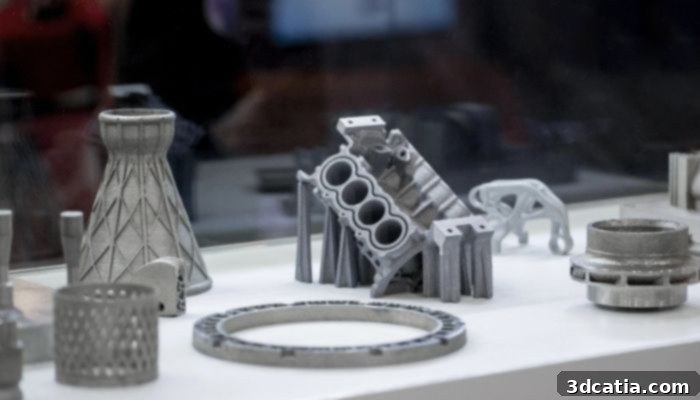
3D printing enables the production of parts with intricate designs.
Injection molding, conversely, plays a crucial and distinct role in industries that demand extremely high-volume production, exceptional part consistency, and precise quality. While it serves many of the same sectors as AM (automotive, consumer goods, medical devices), it does so for fundamentally different reasons—primarily its unparalleled efficiency in mass production. In automotive manufacturing, injection molding is indispensable for producing vast quantities of standardized components such as bumpers, interior trim, dashboards, door handles, and exterior body panels. Its ability to ensure uniformity across millions of parts helps manufacturers meet stringent industry standards for safety, durability, and aesthetics. In the consumer goods sector, injection molding is the backbone for manufacturing a myriad of plastic products, including containers, packaging, electronic enclosures, toys, and household items. It allows companies to produce millions of identical products quickly and cost-effectively, maintaining product consistency and meeting market demand at scale. Similarly, the medical sector benefits significantly from injection molding for producing high-volume medical devices such as disposable syringes, catheters, IV connectors, and various surgical instrument handles. Here, injection molding is advantageous because it enables healthcare professionals to use devices that not only meet strict regulatory requirements for biocompatibility and sterility but also possess exact dimensional precision for critical applications.
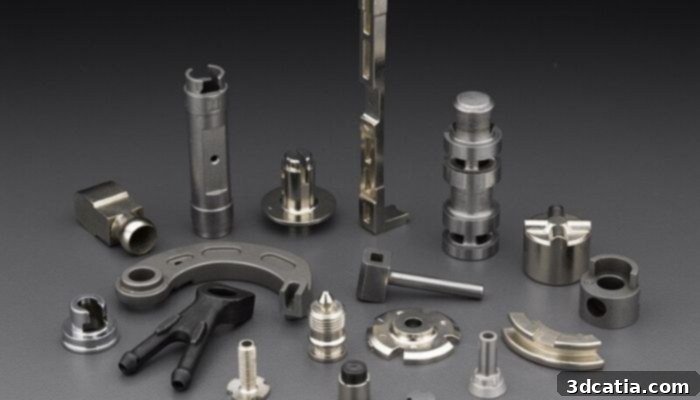
Parts manufactured by Metal Injection Molding (MIM)
Benefits and Limitations: A Critical Analysis
Injection Molding
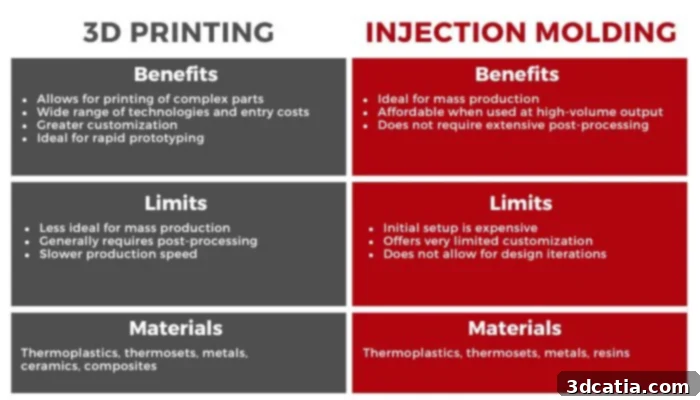
Injection molding is celebrated for its remarkable efficiency and cost-effectiveness in high-volume production, cementing its status as a cornerstone of mass manufacturing across diverse industries. The primary and most significant advantage of injection molding is its capacity to produce vast quantities of identical parts with minimal material waste per cycle once the process is optimized. After the initial molds are designed and fabricated, the production process becomes exceptionally rapid, with each cycle yielding a fully formed part in a matter of seconds. This speed makes it the ideal choice for mass production in sectors like consumer electronics, automotive components, and medical disposables. The inherent efficiency translates directly into substantial cost savings per unit as production volumes scale up, effectively amortizing the considerable initial setup expense over millions of parts. For large series production, injection molding invariably proves to be more profitable and economical than most additive manufacturing methods.
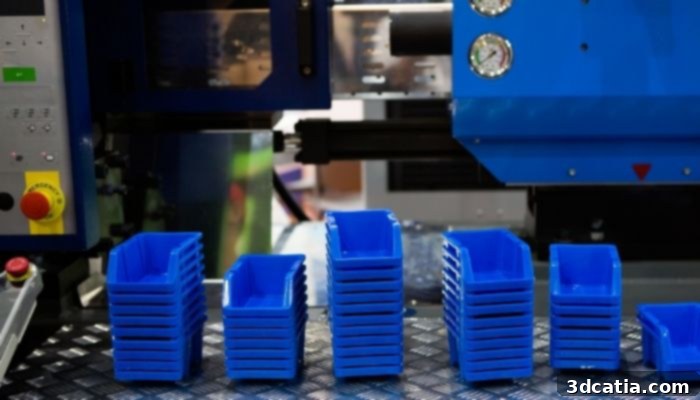
The main advantage of injection molding compared to additive manufacturing is the production of large volumes of identical parts.
However, injection molding is not without its significant challenges, particularly concerning initial setup time and investment. The process of designing and fabricating precision molds is inherently time-consuming, often requiring several weeks to months, depending on the complexity of the part and the required mold features. This lengthy lead time renders injection molding less flexible for rapid design iterations or last-minute modifications compared to 3D printing. Furthermore, the high upfront costs associated with specialized mold creation (which can range from thousands to hundreds of thousands of dollars), the acquisition of injection molding machinery, and bulk material procurement can pose significant barriers to entry for smaller enterprises and startups. Design constraints also play a critical role, as highly intricate geometries, significant undercuts, or complex internal features can be challenging to mold without compromising part integrity or dramatically increasing mold complexity, cost, or production time. Additionally, the design of sprues, runners, and gates (the channels through which molten material enters the mold) must be meticulously engineered and calibrated to ensure even material flow, prevent warping, and avoid premature cooling. Despite these initial hurdles, once the substantial investment in mold creation is made, the per-part cost drops considerably as production volumes increase, making it exceptionally cost-effective for mass-produced items.
Additive Manufacturing (3D Printing)
On the other side of the spectrum, additive manufacturing offers distinct advantages that cater to different production philosophies. It requires minimal setup time compared to injection molding, making it an incredibly valuable tool for rapid prototyping, agile product development, and on-demand production. This quick setup is particularly advantageous for companies in fast-paced, innovation-driven industries like aerospace and automotive, which benefit immensely from rapid design iterations, shortened lead times, and the ability to quickly test and validate concepts, leading to significant cost and time savings in the early development phases. When design modifications become necessary, AM facilitates quick and cost-effective adjustments, requiring only a digital file update rather than expensive and time-consuming physical mold changes, as would be the case with injection molding.
Furthermore, additive manufacturing holds a distinctive advantage over injection molding in terms of sustainability. The additive nature of the process means material is deposited only where needed, building the part layer by layer, thereby drastically reducing material waste in most cases. While injection molding can be relatively efficient compared to other traditional subtractive methods, AM generally produces significantly less scrap material, as there are no sprues, runners, or excess material generated from misaligned molds. This efficiency not only contributes to environmental benefits but can also lead to material cost savings, especially when using expensive or exotic materials.
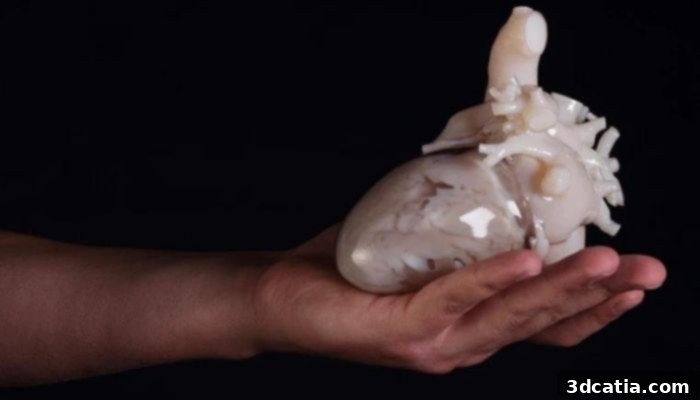
Photo Credits: Materialise
However, additive manufacturing also presents its unique set of challenges. While initial setup is quick, the actual production speed of 3D printing is typically much slower than that of injection molding for high-volume output. This makes it less suitable for mass-producing millions of identical parts within short timeframes. Additionally, despite continuous advancements in printing technologies and materials, the surface finish of many 3D printed parts often requires extensive post-processing (as discussed earlier) to achieve the desired smoothness, accuracy, or aesthetic quality. This limitation, which is generally not experienced by injection molding due to the mold’s inherent finish (though some advanced AM technologies like material jetting can produce very smooth parts), adds both time and cost to the overall production process, particularly for parts demanding a premium finish. Furthermore, the entry price for AM can vary significantly, ranging from relatively inexpensive desktop printers for hobbyists to industrial-grade machines costing hundreds of thousands or even millions of dollars. While AM offers unmatched design flexibility and can be a reliable, affordable option for specific use cases, it is typically not the most economical choice for mass-producing simple, uniform components where injection molding reigns supreme.
Production Time: Speed, Setup, and Complexity
The overall production time for both additive manufacturing and injection molding is influenced by a multitude of factors, with setup time and part complexity being critical determinants. Although exact timings are highly specific to each project, a general understanding of these factors can help in selecting the appropriate technology.
For injection molding, a significant portion of the initial timeline is dedicated to mold preparation. This intricate process involves the conceptual design of the mold, its precise fabrication, and subsequent machining. Mold design is not merely about replicating the part’s structure; it also encompasses the entire intricate mechanism surrounding the mold, including the cooling system, ventilation channels (breathers), and the meticulously engineered injection channel (sprue and runner system). This complex engineering ensures optimal material flow, consistent cooling, and efficient part ejection. Consequently, this phase can be exceptionally time-consuming and capital-intensive. In contrast, for parts intended for 3D printing, the design time is almost exclusively focused on the part geometry itself and, if necessary, the design of temporary support structures. In both manufacturing methods, the total design time ultimately varies based on the inherent complexity of the parts and the number of iterations required to achieve the desired functional and aesthetic results.
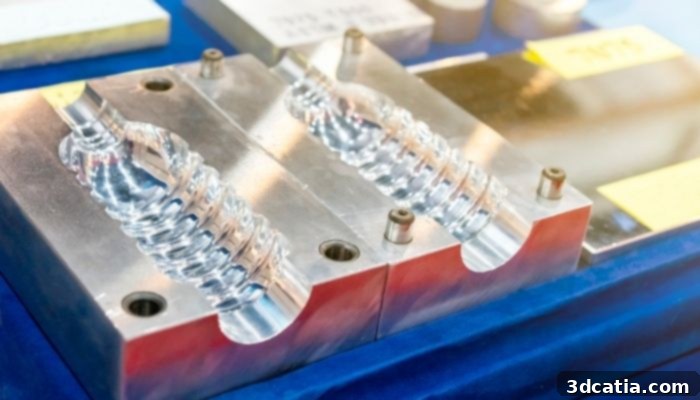
Example of a mold for the production of plastic bottles.
When it comes to the actual production phase, additive manufacturing durations are highly variable, contingent upon factors such as the part’s geometry, the required print resolution, the specific materials being used, and the chosen 3D printing technology. Small, straightforward components can be printed relatively quickly, often in a matter of minutes or a few hours. However, larger, more complex parts, especially those requiring high resolution or specialized materials, may necessitate print times spanning several hours or even multiple days. In stark contrast, injection molding excels profoundly in manufacturing speed once the mold is ready. Its highly precise and repetitive material injection process allows for exceptionally fast cycle times. Machines are meticulously calibrated to inject molten material with high accuracy and consistency, enabling the production of large volumes of parts in mere seconds per part, making it unmatched for sheer production output.
Price Comparison: Investment and Running Costs
Another crucial aspect when comparing additive manufacturing and injection molding is the overall cost of production, which includes both initial investment and recurring operational expenses. The initial investment for industrial injection molding equipment can be substantial, typically ranging from $50,000 for smaller machines to well over $200,000 for high-capacity, advanced systems. With the recent proliferation of more accessible desktop 3D printers, the injection molding industry has also responded by offering compact, small-scale injection molding solutions. While high-end industrial 3D printers can indeed approach the price points of injection molding machinery, one of the most significant cost differentiators between the two processes is the investment in molds. Molds are often the most expensive single component in injection molding, particularly for complex geometries or multi-cavity designs, with costs potentially reaching up to $100,000 or more. However, this high initial mold cost is offset by the exceptionally low price per part achieved once mass production commences.
Both processes also necessitate investment in software. Specialized software is required for both design (CAD) and process monitoring, optimization, and simulation. Given the unique investment profiles for each process, various online calculators and professional estimating services are available to serve as benchmarks for manufacturing cost calculations. For injection molding, examples of such tools include Hubs, ICOMold, or CustomPart. For additive manufacturing, solutions like AMOTool or ShatterBox can assist with estimations. It is essential to remember that in both scenarios, additional costs related to installation, facility setup, ongoing maintenance, labor (skilled operators and technicians), and raw materials must be factored into the total cost of ownership and time to market.
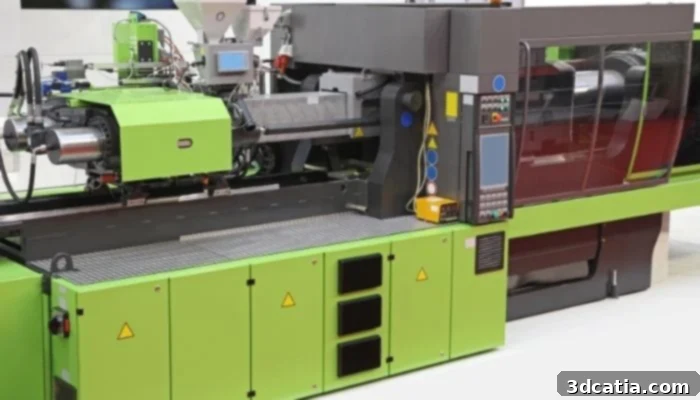
Injection molding is ideal for large quantities of identical parts.
Historically, additive manufacturing has been predominantly favored for low-volume projects, highly customized parts, and rapid prototyping. However, its role in the manufacturing landscape is rapidly expanding and evolving. A recent report by Protolabs on market trends highlights a significant emerging trend: professionals are increasingly turning to additive manufacturing for producing high-volume parts. These are parts that were traditionally manufactured using conventional technologies such as injection molding. This indicates a substantial potential for additive manufacturing to broaden its application into industrial and manufacturing sectors previously monopolized by traditional methods, suggesting a future where AM plays a more prominent role in production beyond just prototyping and niche applications, potentially complementing or even challenging injection molding in certain high-volume scenarios.
Conclusion: Choosing the Right Manufacturing Path
Ultimately, the choice between injection molding and additive manufacturing is not about one being inherently “better” than the other, but rather about selecting the most appropriate tool for a given job. Injection molding remains the undisputed champion for mass production, offering unparalleled speed, material versatility, and low per-part costs once the initial mold investment is made. It delivers consistent quality and excellent surface finishes for high-volume, standardized parts, making it ideal for industries like automotive and consumer goods where millions of identical components are needed. Its limitations, however, lie in its high upfront tooling costs, long lead times for mold creation, and reduced flexibility for design changes.
Additive manufacturing, on the other hand, excels in scenarios demanding design freedom, customization, rapid iteration, and low-to-medium volume production. It is the go-to technology for complex geometries, personalized products, rapid prototyping, and applications in high-value sectors such as medical and aerospace, where custom designs and functional complexity are paramount. Its advantages include minimal setup time, reduced material waste, and the ability to make swift design modifications digitally. However, it typically faces challenges with slower production speeds for very high volumes, often requires more extensive post-processing for smooth finishes, and can have varying entry costs depending on the machine and materials chosen.
In many modern manufacturing strategies, these two technologies are not mutually exclusive but rather complementary. Additive manufacturing can be used for rapid prototyping and creating molds or tooling for injection molding, while injection molding then handles the mass production of the finalized design. Understanding the unique strengths and weaknesses of both injection molding and additive manufacturing is key for engineers, designers, and manufacturers to make informed decisions, optimize production processes, and bring innovative products to market efficiently and cost-effectively.
What are your thoughts on this comparison of additive manufacturing vs. injection molding? Let us know in a comment below or connect with us on our LinkedIn, Facebook, and Twitter pages! Don’t forget to sign up for our free weekly newsletter here for the latest 3D printing news straight to your inbox! You can also find all our videos on our YouTube channel.