
Additive Manufacturing: Unlocking the Future of Production with 3D Printing Technology
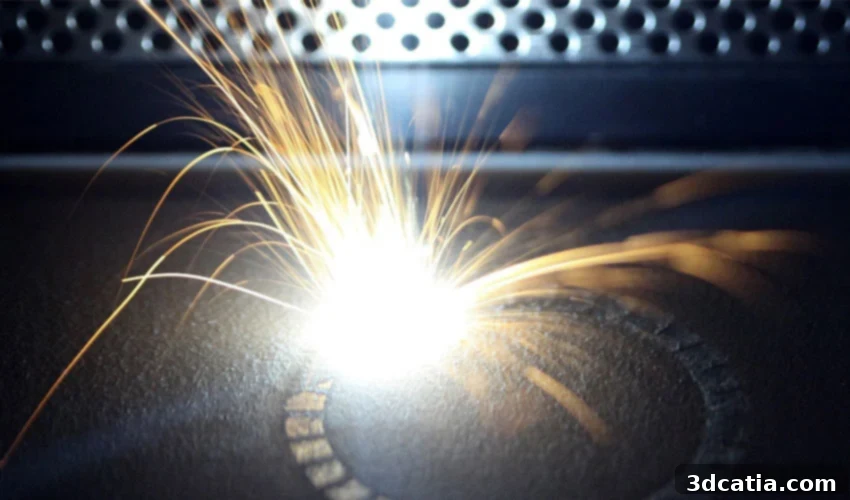
Far from being merely a gadget or a fleeting trend, additive manufacturing, commonly known as 3D printing, represents a monumental technological revolution. Hailed as a cornerstone of the fourth industrial revolution, this transformative process fundamentally redefines how products are conceived and created. At its core, additive manufacturing operates by meticulously building objects layer by layer. Material is successively deposited in precise, controlled increments, gradually accumulating to form a complete, three-dimensional object based on a digital design. This ‘additive’ approach stands in stark contrast to traditional ‘subtractive’ manufacturing methods, such as milling, machining, or injection molding, where material is removed from a larger block until the desired shape is achieved. Instead, 3D printing optimizes material usage and allows for the creation of intricate geometries previously impossible to produce.
Invented in 1986 by Charles Hull with the groundbreaking stereolithography (SLA) process, additive manufacturing has since permeated numerous industrial sectors globally. Its versatility and efficiency have made 3D printing an indispensable tool across a vast spectrum of industries, including automotive, aerospace, medical, and consumer goods. The decades following its invention have seen a rapid proliferation of patents, fostering continuous innovation and expanding its applicability to an ever-growing array of markets. Compared to conventional manufacturing techniques, additive manufacturing offers compelling advantages, most notably unparalleled design flexibility, significant cost reductions, and dramatically shortened production lead times. These benefits have captivated professionals worldwide since its inception, leading to a diverse range of applications, fueled by the continuous development of new processes and a broader selection of compatible materials.
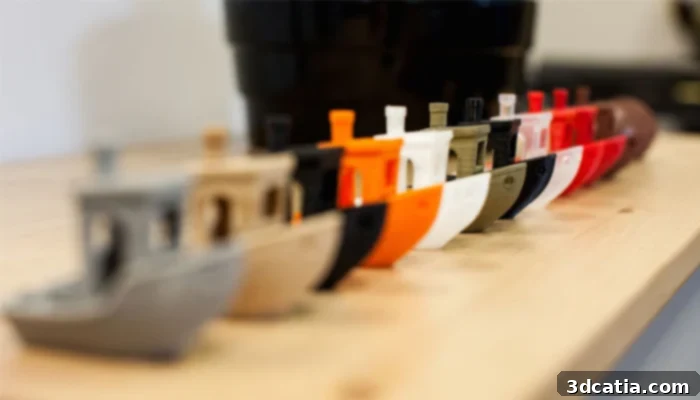
Models created using FDM technology (photo credits: OneMaker Group)
The Genesis of Additive Manufacturing: From Concept to Global Impact
The journey of additive manufacturing has been marked by significant milestones and relentless innovation, propelling it from a nascent technology to a global industrial force. A pivotal moment arrived in late 1988 with the commercialization of the first 3D printer by 3D Systems, a company co-founded by Charles Hull himself. This breakthrough paved the way for widespread adoption and further research. The subsequent decades witnessed a flurry of remarkable achievements, demonstrating the technology’s expanding capabilities: from the successful bioprinting of a kidney in 2011, showcasing its potential in regenerative medicine, to the deployment of the first 3D printer in space, highlighting its utility in off-world manufacturing. Even the construction sector felt its impact with the creation of the first inhabited 3D printed house, heralding new possibilities for rapid and affordable housing.
Despite its current widespread adoption, additive manufacturing wasn’t always so accessible. In its early years, most 3D printing processes were protected by patents, which naturally restricted market competition and limited the availability of machines. This period of exclusivity meant that the technology remained largely within specialized research and industrial circles. However, as these foundational patents gradually expired, key additive manufacturing technologies entered the public domain. This shift was a game-changer, democratizing access and accelerating adoption among a much broader user base. A significant catalyst in this movement was the RepRap (Rapid Replication) project, which emerged in 2005. This initiative championed the idea of a self-replicating 3D printer, where the machine itself could print most of its own components. The RepRap movement fostered the growth of the vibrant ‘maker community,’ comprising DIY enthusiasts, hobbyists, and 3D printing devotees. This community, now symbolized by accessible kit 3D printers, continues to drive innovation, share knowledge, and expand the reach of additive manufacturing into homes and small businesses.
Unlocking Potential: Diverse Processes and Materials in 3D Printing
Key Additive Manufacturing Processes
While the fundamental principle of adding layers remains constant, additive manufacturing encompasses a variety of distinct processes, each optimized for specific materials and applications. All these processes typically begin with a digital model, whether created from scratch or scanned from an existing object, which is then converted into a standardized format like STL using CAD software before being sliced and processed by the 3D printer. Some of the most prevalent processes include:
- Fused Deposition Modeling (FDM) / Fused Filament Fabrication (FFF): This is the most common and accessible method, extruding a thermoplastic filament through a heated nozzle, depositing it layer by layer onto a build platform.
- Stereolithography (SLA): As one of the earliest processes, SLA uses a UV laser to cure liquid photopolymer resin layer by layer, solidifying it into a desired shape. It’s known for producing highly detailed and smooth parts.
- Selective Laser Sintering (SLS): SLS employs a high-power laser to selectively fuse small particles of polymer powder into a solid structure. Unfused powder supports the part during printing, allowing for complex geometries without additional support structures.
- Digital Light Processing (DLP): Similar to SLA, DLP uses a digital light projector to cure an entire layer of photopolymer resin at once, often leading to faster print times for certain geometries.
- Binder Jetting: This process uses a liquid binding agent selectively deposited onto layers of powder material (metal, sand, ceramics) to bind the particles together, forming a solid part.
- Direct Metal Laser Sintering (DMLS) / Selective Laser Melting (SLM): These metal-specific processes use a laser to fully melt and fuse metallic powders, creating high-density, strong metal parts suitable for demanding industrial applications.
The Evolving Landscape of Additive Manufacturing Materials
The choice of material is as crucial as the printing process itself and varies greatly depending on the technology and the desired properties of the final product. The most popular materials are undoubtedly plastics, compatible with several processes. For instance, FDM printers primarily utilize thermoplastic filaments like PLA, ABS, and PETG. Stereolithography and DLP rely on liquid photopolymer resins, while laser sintering techniques typically employ polymer powders such as nylon (PA11, PA12). However, the material landscape extends far beyond plastics.
Other widely used materials include metals, critical for high-performance engineering applications, often processed using laser powder bed fusion (DMLS/SLM) or binder jetting. Ceramics, known for their high temperature resistance and hardness, are also gaining traction in specialized applications. Furthermore, the material spectrum continues to expand rapidly. Researchers and companies are constantly discovering and developing new materials, pushing the boundaries of what can be 3D printed. For instance, some advanced plastics, such as PEEK (Polyether Ether Ketone) and PEKK (Polyether Ketone Ketone), are considered high-performance thermoplastics. These materials boast exceptional mechanical properties, chemical resistance, and temperature stability, allowing them to compete with, and sometimes even outperform, certain metals in specific applications. Beyond traditional engineering materials, innovative applications are emerging with biomaterials, including human cells for tissue engineering, and various composite materials that combine the benefits of different elements.
To delve deeper into the vast array of technologies and materials shaping the additive manufacturing sector, you can explore our comprehensive guide HERE, which offers detailed explanations of most 3D printing processes and their material compatibility.

3D printed parts with SLS technology (photo credits: BMW)
Transforming Industries: Broad Applications of 3D Printing
From Rapid Prototyping to End-Use Production
Historically, additive manufacturing was primarily associated with rapid prototyping, enabling designers and engineers to quickly create physical models of their concepts. For over two decades, the technology also proved invaluable for producing tooling parts for factories, jigs, fixtures, and other assembly line components, significantly streamlining manufacturing workflows. However, recent advancements in 3D materials and processes have propelled additive manufacturing beyond these traditional roles. Industries are now increasingly utilizing 3D printing not just for prototypes but also for the direct manufacturing of end-use products. This trend is particularly evident in the aerospace industry, where critical components such as lightweight turbine blades, complex structural elements, and internal ducts are now routinely 3D printed, offering superior performance and weight savings. Similarly, in the consumer goods sector, brands like Adidas have embraced additive manufacturing to mass-produce thousands of bespoke products, such as customizable shoe midsoles, leveraging the technology’s ability to create intricate lattices and tailored designs.
Driving Innovation in Automotive and Beyond
The automotive industry has been an early and enthusiastic adopter of 3D technologies. Ford, for example, recognized the potential as early as 1988, acquiring a 3D printer to dramatically accelerate their prototyping phases and reduce development cycles. In the years that followed, countless other automotive manufacturers, recognizing the competitive edge offered by additive manufacturing, followed suit. Today, 3D printing is an indispensable technology across the automotive sector, from concept design to production. Leading companies like BMW and General Motors have heavily invested in additive manufacturing, establishing dedicated centers to innovate and integrate 3D printing into their core operations, producing everything from specialized tools to lightweight vehicle components and spare parts on demand.
Revolutionizing Medicine and Construction
The impact of 3D printing is not confined to the manufacturing of vehicle parts; its flexibility and ability to significantly reduce production costs have enabled its expansion into an astonishingly diverse range of sectors. In the construction industry, a growing number of companies are leveraging large-scale 3D printing to construct houses and various other buildings with unprecedented speed and efficiency. Pioneers such as ICON and WASP have specialized in this innovative field, leading to a rapid multiplication of additively manufactured structures globally. Perhaps one of the most transformative applications is in medicine, where the technology, often referred to as bioprinting, is widely considered the future of personalized healthcare. From custom-fit prostheses and highly accurate surgical guides to the ambitious goal of bioprinted organs for transplantation, 3D printing empowers healthcare providers to deliver precise, patient-specific care, revolutionizing treatment possibilities.
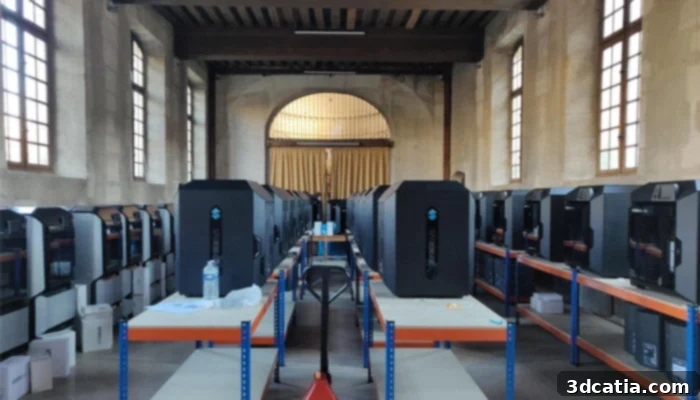
Stratasys 3D printers helped with the shortage of medical equipment during the health crisis (Photo credits: Le Parisien/Damien Licata Caruso)
Pioneers and Leaders: The Additive Manufacturing Ecosystem
Global Innovators in North America
Since its inception by Charles Hull, numerous companies have emerged as titans in the additive manufacturing market, each contributing to its remarkable growth and evolution. The Israeli-American giant Stratasys stands as a perennial market leader. A pioneer in 3D printer manufacturing since 1989, Stratasys first developed and patented fused deposition modeling (FDM) technology. Today, the company offers a comprehensive portfolio of machines tailored to various industrial sectors, alongside a wide array of specialized materials. Unsurprisingly, 3D Systems, the company co-founded by the inventor of the technology, Charles Hull, remains a profoundly influential player. Like Stratasys, 3D Systems provides an extensive range of machines and services covering multiple 3D printing processes. In the realm of resin-based 3D printing, Formlabs has carved out a niche as a specialist in SLA 3D printers, widely recognized for its high-quality, accessible machines. Another formidable presence is HP, a company renowned for its traditional printing and computing devices, which has successfully transitioned to become a world leader in industrial 3D printing, offering innovative solutions for diverse sectors, including the medical field. Furthermore, Desktop Metal, founded in 2015, has experienced rapid growth, becoming a crucial innovator, particularly in metal additive manufacturing, bolstered significantly by its strategic acquisition of EnvisionTEC, a historical leader in resin-based additive manufacturing.
European and Asian Market Dynamics
Across the Atlantic, a vibrant ecosystem of companies has also flourished, establishing themselves as major forces in the European and global additive manufacturing markets. German-based EOS is a globally recognized leader in industrial 3D printing, particularly for polymer and metal laser sintering. Materialise, a Belgian company, provides extensive software solutions and industrial 3D printing services, playing a critical role in the digital backbone of the industry. Ultimaker, headquartered in the Netherlands, is celebrated for its accessible and reliable FDM desktop 3D printers, popular among professionals and educators alike. Within France, Prodways has distinguished itself as a specialist in industrial 3D printing, offering advanced machines and materials. Volumic caters to professionals with its range of FDM machines, while Addup specializes in cutting-edge metal additive manufacturing solutions. Meanwhile, the Asian market is witnessing explosive growth, especially in China, where numerous manufacturers are contributing to the democratization of 3D printing by offering a wide selection of desktop FDM machines, including popular brands like XYZPrinting and Creatbot. This dynamic global landscape underscores the widespread adoption and continuous innovation driving the additive manufacturing industry.
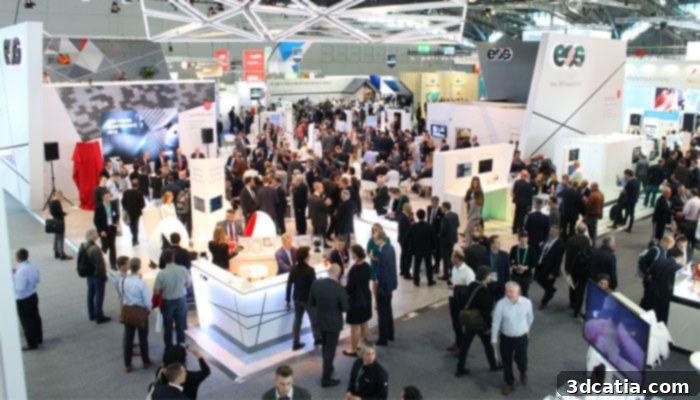
The Formnext 2018 trade fair in Frankfurt, Germany (photo credits: Mesago / Thomas Masuch)
The Future of Additive Manufacturing: A Glimpse Ahead
The trajectory of additive manufacturing points towards an increasingly integrated and transformative role in global industry. Future trends are likely to focus on further advancements in material science, leading to new polymers, metals, ceramics, and composite materials with enhanced properties, expanding the range of applications. Automation and artificial intelligence will play a crucial role, making 3D printing processes more efficient, self-optimizing, and easier to integrate into existing production lines. The concept of mass customization, where products are individually tailored to consumer needs at scale, will become more prevalent, driven by the inherent flexibility of additive manufacturing. Furthermore, its contribution to sustainability is expected to grow, with optimized material usage, reduced waste, and the ability to produce lighter components that improve energy efficiency in various applications. As the technology matures, we can anticipate a future where 3D printing is not just a specialized manufacturing tool but an indispensable component of a circular economy and smart factories worldwide.
What do you think of additive manufacturing and its ongoing revolution? Let us know in a comment below or on our Facebook and Twitter pages. Don’t forget to sign up for our free weekly newsletter, with all the latest news in 3D printing delivered straight to your inbox!
*Thumbnail Photo Credits: Symop