
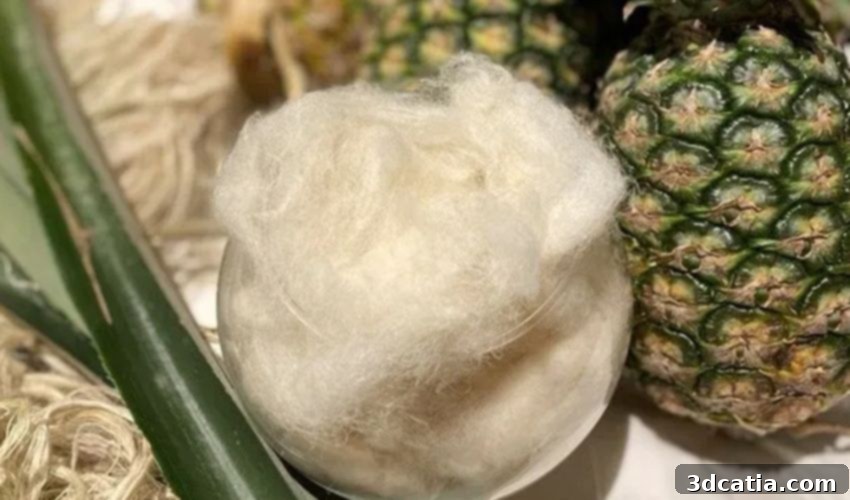
Revolutionizing 3D Printing: Pineapple Leaf Fiber (PALF) Enhances Sustainable PLA Composites
In an era marked by increasing environmental consciousness and the relentless pursuit of sustainable manufacturing, the field of 3D printing is experiencing a significant transformation. At the forefront of this evolution is the development of innovative composite materials that not only deliver superior performance but also minimize ecological impact. A groundbreaking study conducted by an international consortium of researchers has unveiled a promising solution: the integration of pineapple leaf fiber (PALF) to reinforce polylactic acid (PLA), a widely used thermoplastic in additive manufacturing. This research offers a compelling vision for the future of 3D printing, suggesting that agricultural waste can be harnessed to create stronger, more sustainable filaments.
Polylactic acid (PLA) stands as the most popular plastic filament material for Fused Deposition Modeling (FDM) 3D printing, celebrated for its unique combination of characteristics. Its partial biodegradability makes it a more environmentally friendly alternative to traditional petroleum-based plastics, while its excellent thermal stability and ease of processing contribute to its widespread adoption across various industries, from medical devices and packaging to consumer goods and educational tools. However, pure PLA often exhibits limitations in terms of mechanical strength and ductility, which can restrict its application in high-performance or demanding environments. Consequently, any method that can effectively enhance its inherent properties holds immense importance for expanding the utility and impact of 3D printing technology.
The Research Process: Unlocking the Potential of PALF
The innovative study was spearheaded by a distinguished international team of scientists, including Dr. Mansingh from India, Dr. JS Binoj of Malaysia, and Associate Professor Eugene Wong from Singapore. Their collaborative effort focused on exploring the symbiotic relationship between plant materials and advanced 3D printing techniques. To meticulously assess the reinforcing capabilities of pineapple leaf fiber, the researchers prepared two distinct types of PALF samples. One batch was deliberately left untreated, preserving its natural state, while the other underwent a controlled alkali treatment using various weight percentages. This alkali treatment is a common procedure in natural fiber composites, designed to remove hemicellulose and lignin, thereby improving the surface roughness and enhancing the chemical adhesion between the fiber and the polymer matrix.
Following the preparation phase, each PALF type—raw and alkali-treated—was meticulously combined with PLA. This composite material was then subjected to an FDM (Fused Deposition Modeling) extrusion process, utilizing a state-of-the-art Ultimaker 3 3D printer. FDM, a layer-by-layer additive manufacturing technique, is particularly suited for such experiments due to its versatility and widespread industrial use. The carefully prepared filaments were then put through a series of rigorous tests designed to thoroughly evaluate the newly acquired properties of the composite products. These comprehensive assessments included:
- Infrared Spectroscopy (FTIR): This technique was employed to identify and analyze the chemical bonds and functional groups present in the materials. FTIR helped confirm the effectiveness of the alkali treatment by detecting changes in the chemical structure of the PALF and assessing the interaction between the fiber and the PLA matrix, providing insights into the compatibility of the composite.
- Microscope Viewing (SEM): Scanning Electron Microscopy (SEM) was utilized to examine the microstructure of the composites at a high magnification. This visual inspection was crucial for checking for impurities, evaluating the dispersion of PALF within the PLA matrix, and analyzing the interface between the fiber and the polymer. A strong, well-integrated interface is vital for efficient stress transfer and improved mechanical properties.
- Thermal Analysis (TGA/DSC): This method involved assessing the thermal stability of the materials by monitoring how their mass changed over time in response to varying temperatures. Techniques such as Thermogravimetric Analysis (TGA) and Differential Scanning Calorimetry (DSC) provided critical data on decomposition temperatures, glass transition temperatures, and melting points, which are essential for determining the processing parameters and application limits of the new filaments.
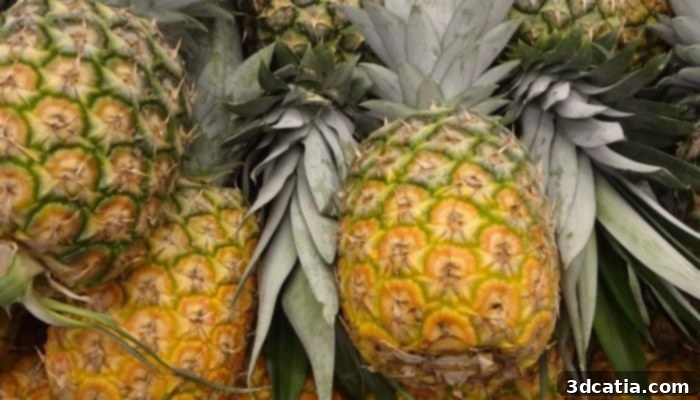
The researchers investigated the potential of pineapple waste to create stronger, yet still biodegradable, filament when combined with PLA for 3D printing. (photo credits: David Adam Kess, CC BY-SA 4.0, via Wikimedia Commons)
Key Findings and Their Significance for Material Science
The meticulous testing yielded compelling results that underscored the distinct advantages offered by both raw and alkali-treated PALF. The researchers observed that untreated, or raw, PALF composites exhibited significantly higher elongation at break compared to their alkali-treated counterparts. This characteristic translates directly to better ductility—the material’s ability to deform considerably without fracturing. This makes raw PALF-reinforced PLA particularly suitable for applications where flexibility and toughness are prioritized, such as packaging or components that might experience impact stress.
Conversely, the alkali-treated PALF reinforcement, specifically at a 3 wt% concentration, demonstrated superior tensile and flexural characteristics. Tensile strength refers to a material’s resistance to breaking under tension, while flexural strength indicates its ability to withstand bending forces. The enhanced performance of the alkali-treated fibers is likely due to the removal of non-cellulosic components, which cleans the fiber surface and improves its mechanical interlocking and chemical bonding with the PLA matrix. This optimized condition provides a material with higher rigidity and load-bearing capacity, making it ideal for structural components or applications requiring greater stiffness and strength.
Crucially, both types of PALF reinforcement—raw and alkali-treated—demonstrated a marked improvement over pure PLA in all evaluated mechanical properties. This unequivocal success strongly suggests that agricultural plant waste, often considered a disposal challenge, can indeed be effectively utilized in 3D printing to significantly enhance the properties and expand the functional range of existing materials. These findings pave the way for a new generation of high-performance, sustainable composites that leverage natural resources to address industrial demands.
The Broader Implications for Sustainable Additive Manufacturing
While the initial experimental findings might appear abstract and confined to the laboratory, their long-term implications for the 3D printing industry are profound and far-reaching. The additive manufacturing sector is continually striving to achieve two primary objectives: optimizing material properties to create better-performing products and rigorously improving its overall sustainability footprint. The successful integration of biodegradable plant materials, such as pineapple fibers, to enhance PLA for 3D printing offers a compelling answer to both these challenges. This approach is particularly attractive given that pineapple fibers are an abundant, readily accessible, and inexpensive agricultural waste product, making them an economically viable and eco-friendly raw material source.
The environmental benefits of this innovation are considerable. By incorporating PALF, the overall reliance on petroleum-based plastics can be reduced, contributing to a lower carbon footprint and decreased plastic waste. Furthermore, it promotes a circular economy model by valorizing agricultural waste, transforming what would otherwise be discarded into a valuable industrial resource. This not only diverts waste from landfills but also creates potential new revenue streams for agricultural communities. Economically, using such accessible and low-cost natural fibers can significantly reduce the material cost of 3D printing, making advanced manufacturing more affordable and scalable for a wider range of businesses and applications.
This pioneering study is not an isolated incident but rather a significant contribution to a growing trend within the additive manufacturing landscape. The use of plant-based materials for 3D printing has gained considerable momentum in recent years, demonstrating a clear industry shift towards sustainability. For instance, the Austrian company Extrudr has already made notable strides by creating a range of bio-responsible filaments under their GreenTec and Biofusion lines, which offer performance comparable to traditional plastics while maintaining environmental integrity. Similarly, the Italian company WASP collaborated with the luxury brand Dior to construct a striking pop-up store using locally sourced, eco-friendly materials, showcasing the aesthetic and structural potential of sustainable composites in large-scale architectural applications. These examples underscore the commercial viability and creative versatility of plant-reinforced materials, signaling a promising future for eco-conscious additive manufacturing.
The potential applications for PALF-reinforced PLA are vast and diverse. Imagine stronger, more sustainable packaging materials that biodegrade naturally, reducing landfill burden. Consider biomedical devices with enhanced mechanical properties and reduced environmental impact, or even automotive components that are lighter, stronger, and derived from renewable resources. From consumer products and educational aids to construction elements and specialized industrial parts, the ability to tailor PLA’s properties with accessible natural fibers opens up unprecedented design and engineering possibilities. This research provides a crucial step towards making these sustainable innovations a widespread reality.
For those interested in delving deeper into the specifics of this groundbreaking study, a comprehensive write-up of the report is available. You can access it by clicking HERE. The full, detailed scientific report is published and readily accessible in Polymer Composites, a highly respected scientific journal in the field of materials science.
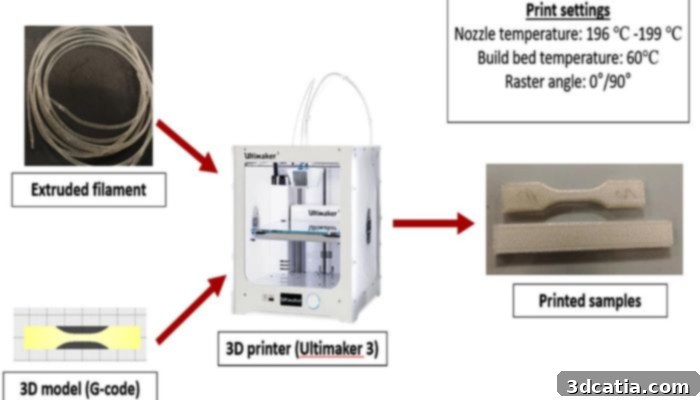
Illustrative experiment process demonstrating the creation of products through 3D printing utilizing plant waste. (Photo credits: Umar Abdul Hanan, Shukur Abu Hassan, Mat Uzir Wahit, Joseph Selvi Binoj, Bright Brailson Mansingh, Kheng Lim Goh, in Polymer Composites).
This study marks a significant milestone in the quest for more sustainable and high-performance materials in additive manufacturing. By demonstrating the efficacy of pineapple leaf fibers in enhancing PLA, researchers have not only opened doors to new material innovations but also reinforced the critical role of agricultural waste in fostering a truly circular economy. The implications are clear: the future of 3D printing is greener, stronger, and more resourceful than ever before.
What are your thoughts on this exciting development in material science? How do you envision the future use of PLA being transformed by such sustainable reinforcements? Share your insights and join the conversation by leaving a comment below or connecting with us on our LinkedIn,Facebook, andTwitter pages! Don’t forget to sign up for our free weeklyNewsletter here to receive the latest 3D printing news directly to your inbox. You can also explore all our informative videos on ourYouTube channel.
*Cover photo credit: NextEvo/Sourcing Journal