
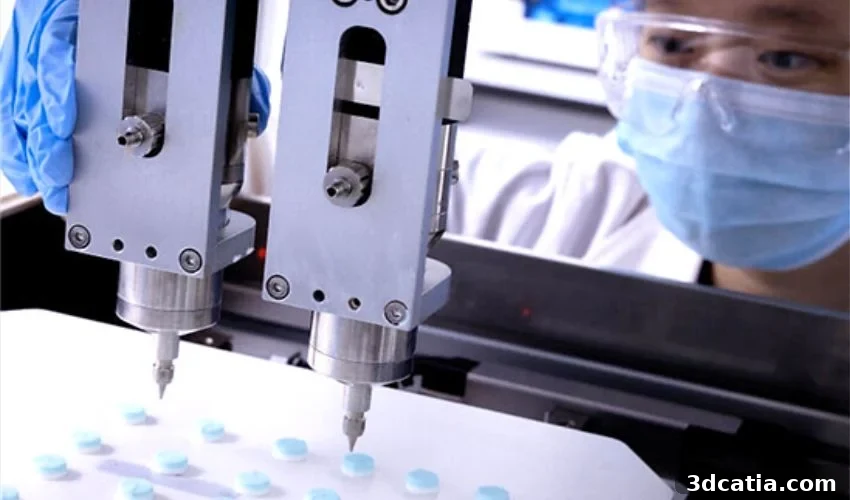
Toronto-based PharmaTher Holdings Ltd. has launched Personaliz3D Peptides™, a new division focused on developing and commercializing personalized peptide products using 3D printing and artificial intelligence. Shortly after the announcement, the company revealed a collaboration with Singapore-based Craft Health Pte. Ltd. to evaluate the CraftMake™ pharmaceutical 3D printer as the manufacturing platform for this initiative.
Together, the two announcements establish a clear strategy: create a dedicated personalized-medicine division and pair it with an additive manufacturing platform capable of producing individualized peptide doses. The collaboration will concentrate on formulating peptides for 3D printing and assessing CraftMake™ as a reliable platform for producing personalized doses, combination formulations, controlled-release profiles and alternative dosage forms.
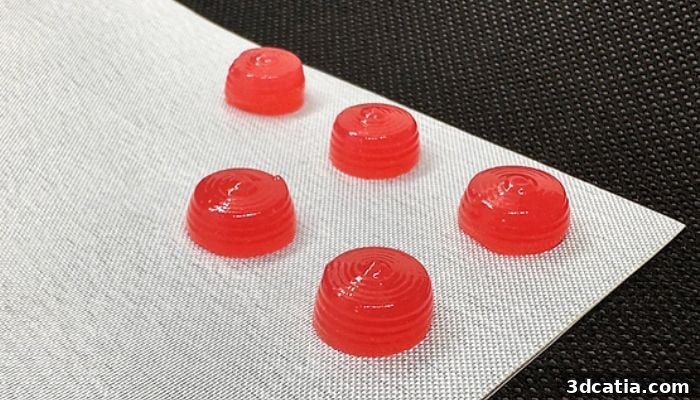
Gummies made by CraftMake
“Patients and healthcare providers should not have to rely on a one-size-fits-all approach when individual treatment needs can differ significantly,” said Fabio Chianelli, Chairman and Chief Executive Officer of PharmaTher. “Personaliz3D Peptides™ is being built to make personalized peptide care more precise, convenient, connected and manufactured under strict quality and GMP-aligned standards.”
What Are Peptides, and Why Personalize Them?
Peptides are short chains of amino acids that play key roles in biological processes such as tissue repair, inflammation modulation and hormone signaling. Because of these functions, peptides have attracted attention in therapeutic development. PharmaTher and Craft Health intend to evaluate six peptides specifically: BPC-157, KPV, TB-500, MOTS-c, Epitalon and Semax.
Currently, peptide compounding is often limited to fixed doses and injectable or liquid forms and is delivered through fragmented networks of prescribers, pharmacies and technology providers. PharmaTher aims to provide an alternative by using personalized manufacturing to tailor dosages, customize combinations and adjust release profiles to the needs of individual patients.
The timing of the initiative aligns with recent regulatory discussions. The U.S. Food and Drug Administration’s Pharmacy Compounding Advisory Committee (PCAC) has recommended that the six peptides mentioned above be considered for inclusion on the Section 503A Bulks List. While the PCAC recommendation is advisory and compounded drugs remain outside formal FDA approval, the recommendation indicates a possible move toward a more defined regulatory framework for compounded peptide medicines in the United States.
How the 3D Printer Works
CraftMake™ uses semi-solid paste extrusion at room temperature, avoiding heat or UV curing. This approach supports single-material, multi-material and pill-in-pill constructions, which enables taste-masking and sequential-release designs within a single dose. Such flexibility allows manufacturers to design doses that combine immediate and delayed release or separate actives within one unit.
Craft Health offers a GMP-oriented configuration called CraftMake™ Production Plus. This configuration adds an enclosed printing environment and dual printheads capable of depositing two materials at once. The company reports dosing accuracy around ±1% and repeatability exceeding 99%, metrics that are important for regulated pharmaceutical manufacturing.
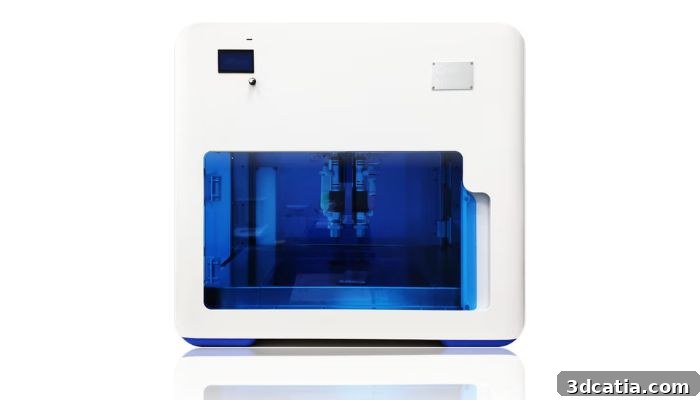
The CraftMake™ platform
The CraftMake™ hardware is paired with CraftControl™ software for managing print workflows and CraftBlends™, a library of printable formulations. Together these components create an integrated hardware-software-formulation stack designed to support on-demand, small-batch pharmaceutical production under controlled conditions.
A Growing Category in Additive Manufacturing
Pharmaceutical 3D printing is moving from research laboratories toward regulated, on-demand production as manufacturers seek dose personalization, small-batch flexibility and complex release profiles that are challenging to achieve with conventional tableting. Market analysis projects continued growth for 3D-printed drug production driven by these trends and the increasing interest in individualized therapies.
3D Printed Peptides: What Comes Next
PharmaTher and Craft Health will evaluate the six PCAC-recommended peptides across multiple dosage formats and release profiles, including oral thin films and gummies. PharmaTher is also exploring a broader commercial relationship that could lead to CraftMake™ systems being implemented in qualified pharmacies.
For the additive manufacturing industry, this collaboration illustrates a practical application of extrusion-based 3D printing in regulated pharmaceutical manufacturing, extending beyond early tablet-printing pilots to more varied dosage forms. The effort focuses on reproducibility, dose accuracy and the ability to meet GMP-aligned quality standards for personalized peptide medicines.
*All photo credits: CraftMake