
Volumetric Additive Manufacturing: Revolutionizing Personalized Medicine with PERFI Technologies
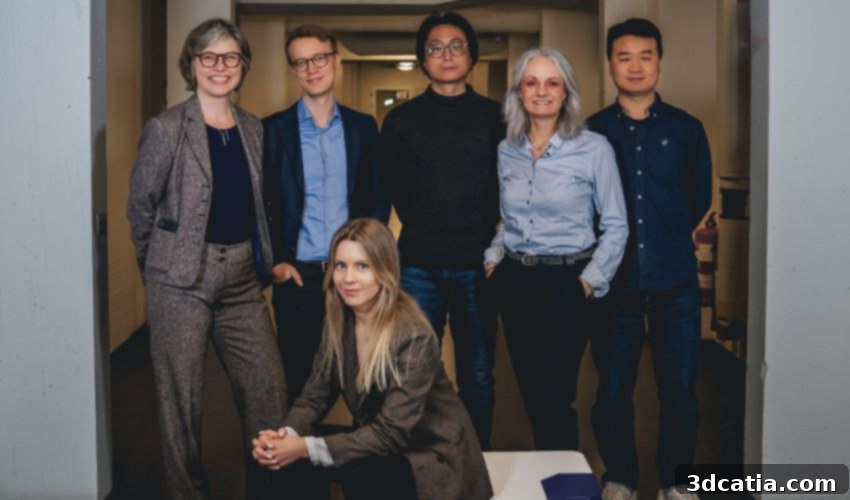
Personalization stands as one of the most compelling promises of 3D printing, yet its widespread adoption in medical applications has been hindered by extended lead times and complex post-processing procedures. PERFI Technologies is challenging this paradigm. Instead of employing traditional layer-by-layer construction, this innovative startup harnesses the power of volumetric additive manufacturing (VAM) to produce fully formed, custom medical components in mere seconds. By initially targeting audiology and dental care, PERFI is focusing on applications where speed, precision, and personalized solutions are paramount. We engaged with the PERFI team to delve into the mechanics of their technology, understand their strategic prioritization of audiology and dental applications, and explore the future potential of volumetric AM.
Understanding PERFI Technologies and Volumetric Additive Manufacturing
3DN: For those unfamiliar with PERFI, could you provide a brief introduction to the company and its mission within the additive manufacturing landscape?
PERFI Technologies is at the forefront of the next generation of industrial 3D printing with its groundbreaking Volumetric Additive Manufacturing (VAM) technology. Unlike conventional layer-by-layer printing methods, VAM solidifies entire parts simultaneously within a rotating volume of photosensitive resin. This innovative approach enables the production of components in seconds, a significant leap from the hours required by traditional methods. VAM also eliminates the necessity for support structures and layered formations, significantly reducing labor-intensive post-processing and allowing for the recovery of unused material. This results in a production process that is not only rapid and waste-free but also delivers exceptional resolution.
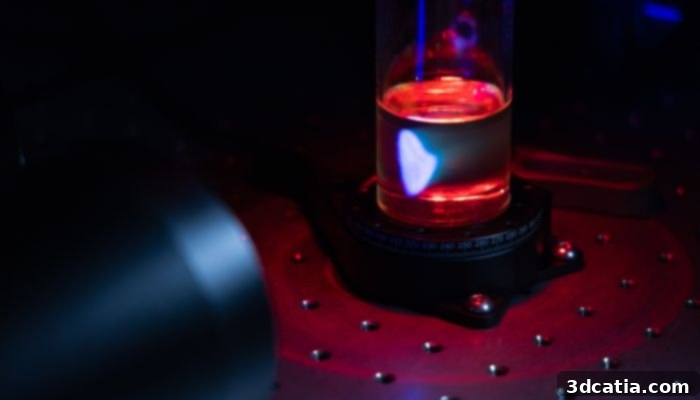
Our primary focus is on audiology and dental applications, where speed, precision, and personalized solutions are of utmost importance. By facilitating on-demand, point-of-care production, we aim to democratize personalization, enhance patient outcomes, and establish a new benchmark for sustainable, high-throughput manufacturing across various medical device sectors. Our vision is a future where personalized medical solutions are readily accessible and efficiently produced, improving lives globally.
Meet the Visionaries Behind PERFI Technologies
3DN: Could each of you introduce yourselves and share your journey into the realm of additive manufacturing and the development of volumetric AM?
The Genesis of Volumetric Additive Manufacturing
3DN: PERFI has revolutionized 3D printing by moving away from the traditional layer-by-layer approach. What sparked the idea for volumetric additive manufacturing, and when did you realize its significant market potential?
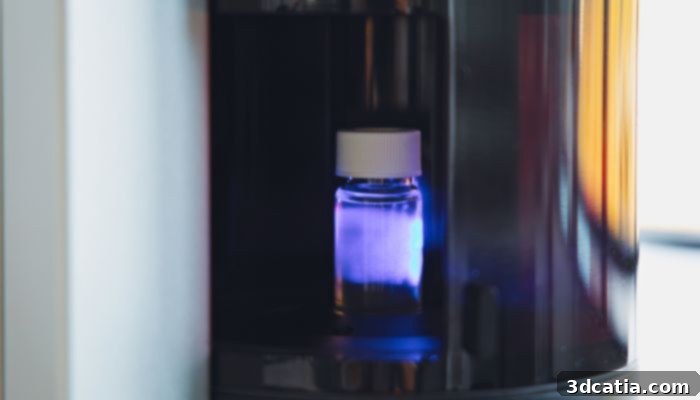
The concept emerged approximately six years ago when our founder, Yi Yang, encountered limitations in research that necessitated the rapid production of intricate parts, a feat unattainable with conventional methods. The pivotal breakthrough came with the realization that projecting light into a rotating resin volume could solidify entire parts simultaneously, dramatically reducing both production time and manual labor.
The market potential of this technology became apparent after analyzing its applicability to personalized medical devices, particularly hearing aid earmolds. These products demand rapid turnaround times, precise fit, and biocompatible materials, making them ideally suited for VAM. Through collaborations with early clinical partners, we were able to validate both the technical feasibility and the clear real-world need for our technology. This validation reinforced our belief that VAM could transform the landscape of personalized medicine.
From Idea to Industry: Milestones and Challenges
3DN: Transforming a groundbreaking idea into a tangible product is invariably a journey. What were the key milestones that led you to believe, “Okay, this is ready for the industry,” and what was a significant challenge, be it technical, regulatory, or cultural, that most influenced that process?
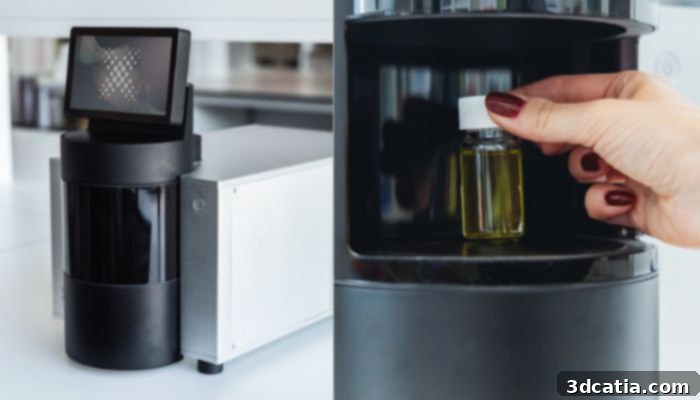
Key milestones included achieving Technology Readiness Level (TRL) 5, demonstrating biocompatibility with medical-grade materials, and integrating the core technology into a standalone unit capable of producing industry-standard hearing aid earmolds. Obtaining MDR documentation and CE marking to facilitate entry into the European market also marked a significant step forward.
Navigating the complex and resource-intensive regulatory landscape proved to be one of the most significant challenges. Securing reliable suppliers for hardware components and the machine enclosure on the manufacturing front was also critical. Throughout this process, the support of organizations such as DTU Skylab, Manufacturing Academy of Denmark, Danish AM Hub, and Tech Nordic Advocates proved invaluable in overcoming these hurdles. Their guidance and resources were instrumental in shaping our path to success.
Audiology and Dental Care: A Strategic Starting Point
3DN: You have initiated your efforts in audiology and dental care, two sectors heavily reliant on precision and personalization. What makes these fields the optimal starting point for VAM?
Personalization in audiology and dental care directly enhances comfort, device performance, and overall quality of life for patients. However, current solutions often suffer from slow turnaround times, high costs, and centralized production models, limiting accessibility for many individuals. Volumetric additive manufacturing enables on-demand, point-of-care production, reducing wait times from weeks to under an hour. By democratizing personalization, we can make high-quality, custom medical devices accessible to a wider population. This strategic focus allows us to demonstrate the immediate impact of VAM in addressing critical needs within these specialized fields.
Overcoming Real-World Obstacles
3DN: Every breakthrough is accompanied by its own set of challenges. What is one real-world obstacle, whether technical, regulatory, or cultural, that has shaped PERFI’s evolution?
Hardware development and regulatory compliance have posed significant challenges. While our team possesses the expertise to design key components in-house, securing reliable manufacturers capable of producing them at scale has been crucial. Navigating the complexities of CE marking and MDR compliance has also been a demanding process. However, our collaborations with regulatory experts and professional networks have provided invaluable guidance, enabling us to navigate these challenges effectively. These partnerships have been instrumental in ensuring that our technology meets the highest standards of safety and performance.
Pushing the Boundaries of VAM: Limitations and Future Improvements
3DN: Your technology is frequently lauded for being 20 to 50 times faster than traditional AM, offering support-free printing and high surface quality. What are the current limitations of VAM, and what improvements are you currently pursuing?
One of the primary challenges has been scaling up production to accommodate larger parts without incurring significant cost increases. We have addressed this challenge through the development of a patented algorithm that enables cost-efficient upscaling. Moving forward, our focus is on enhancing resolution, achieving greater control over material properties within a single part, and expanding throughput to cater to a broader range of industrial applications. We are committed to continually pushing the boundaries of VAM technology to unlock its full potential.
The Missing Piece in the Manufacturing Puzzle
3DN: In a rapidly expanding AM landscape, what is one key aspect you wish more people understood about volumetric 3D printing and its differentiation from other technologies?
VAM represents the final missing piece in the manufacturing landscape by enabling true personalization at the point of delivery for everyone. Unlike traditional 3D printing, which is often slow and labor-intensive, VAM delivers complete, ready-to-use parts in seconds. This unlocks scalable, on-demand, and sustainable production capabilities that were previously unattainable. VAM is not merely an incremental improvement; it represents a paradigm shift in how personalized products are manufactured and delivered to consumers.
PERFI’s Approach in a Single Word
3DN: In conclusion, if you had to encapsulate PERFI’s approach in a single word, what would it be?
Revolutionizing!
What are your thoughts on PERFI Technologies and their volumetric additive manufacturing approach? Share your insights in the comments below or connect with us on our LinkedIn or Facebook pages. To stay informed about the latest 3D printing news, subscribe to our free weekly Newsletter. And don’t forget to explore our YouTube channel for all the latest videos.
All Photo Credits: PERFI