
Revolutionizing Oil & Gas Pipe Repair: How 3D Scanning Minimizes Downtime and Maximizes Efficiency
In the high-stakes environment of oil and gas refineries, where leaks, damaged pipes, and faulty valves can trigger substantial financial losses, the urgency to act swiftly and accurately is paramount. The guiding principle is clear: respond rapidly, execute repairs flawlessly, and prevent costly shutdowns. These incidents can disrupt operations, leading to production delays, environmental hazards, and safety risks. Therefore, efficient and reliable repair methods are essential to maintaining operational integrity and minimizing potential damage.
However, the corrosive conditions, extreme pressures, and presence of hazardous substances inherent in these settings often push traditional repair techniques to their limits. Traditional methods often involve manual measurements, which can be time-consuming and prone to error, especially in complex geometries or areas with limited accessibility. This is where 3D scanning emerges as a transformative technology, offering a more precise, efficient, and safe approach to pipe repair.
The Challenges of Traditional Pipe Repair in Emergency Situations
Historically, repairing industrial pipes has depended on methods that, while familiar, possess inherent limitations. These conventional approaches typically involve:
- Manual measurements: Technicians physically measure the damaged area, a process that can be inaccurate, particularly in complex geometries.
- Approximate diagrams: Sketches and drawings are created based on these measurements, which may not fully capture the intricate details of the damaged pipe.
- Reliance on field experience: The success of the repair often hinges on the expertise and judgment of experienced technicians.
While these traditional methods may be adequate in certain situations, they often fall short when faced with more complex challenges. The limitations become particularly apparent when:
- Geometries are complex: When dealing with intricate pipe shapes and configurations, manual measurements and approximate diagrams are often insufficient to accurately capture the details required for a precise repair.
- Access is limited: Confined spaces or obstructed views can make it difficult or impossible to obtain accurate measurements using traditional methods.
- Hazardous fluids are present: If the fluid being transported poses a risk to technicians, obtaining reliable measurements becomes even more challenging and potentially dangerous.
The consequences of these limitations can be significant. Rework, extended delays, and an elevated risk of production stoppages are just some of the potential outcomes. In an industry where time is money, these inefficiencies can translate into substantial financial losses. Moreover, inaccurate repairs can lead to further damage, safety hazards, and environmental concerns.
3D Scanning: A Solution That Sees Reality Accurately
To address these challenges, Artec 3D, a global leader in professional 3D scanners, and The Colt Group, a prominent American company specializing in pressure pipe repair with a widespread presence across the United States, have forged a collaborative partnership. This collaboration seeks to leverage the power of 3D scanning technology to revolutionize pipe repair processes in the oil and gas industry.
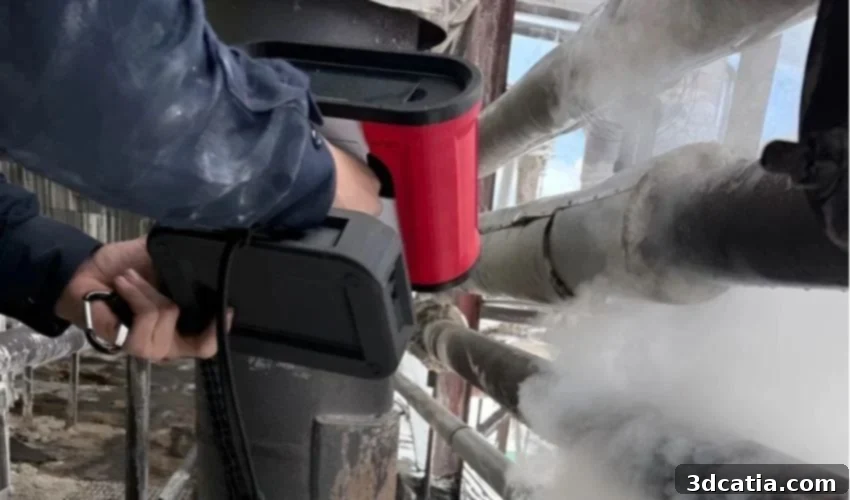
The technology of choice is the Artec Leo, a portable, wireless, AI-assisted 3D scanner specifically designed for deployment in demanding field environments. The Artec Leo’s features address the limitations of traditional methods, enabling technicians to capture accurate and detailed data quickly and efficiently.
The Artec Leo’s key advantages include:
- Rapid capture of complex geometries: The scanner’s advanced technology enables it to capture intricate details of pipe shapes and configurations quickly and accurately.
- Integrated touchscreen: The built-in touchscreen eliminates the need for an external computer, streamlining the scanning process and making it more convenient for technicians in the field.
- User-friendly interface: The Artec Leo is designed for ease of use, allowing technicians to quickly learn and operate the device with minimal training.
According to The Colt Group, equipment digitization is now up to 18 times faster compared to their previous methods, marking a significant leap in efficiency. This speed boost translates directly into reduced downtime and faster repair cycles, allowing refineries to resume operations more quickly.
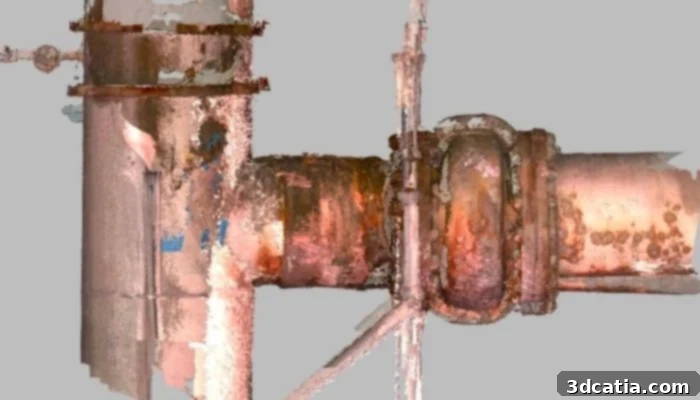
Complex geometries can be scanned in 3D quickly and easily.
Seamless Transition from Scan to Repair
Once the data has been captured using the Artec Leo, it is then processed using Artec Studio, a powerful 3D scanning software platform. Artec Studio transforms the raw scan data into a usable and highly accurate 3D model. This digital workflow unlocks a range of possibilities for improved pipe repair:
- Accurate reproduction of component geometry: The 3D model provides a precise representation of the damaged pipe, allowing for the creation of custom-fit repair solutions.
- Anticipation of mechanical stresses: By analyzing the 3D model, engineers can identify areas of stress concentration and design repairs that effectively address these issues.
- Design of customized repair solutions: The accurate 3D model enables the design of repair solutions tailored to the specific characteristics of the damaged pipe.
- Drastic reduction in on-site adjustments: The precision of the 3D model minimizes the need for adjustments during the installation of the repair, saving time and reducing the risk of errors.
The combination of the Artec Leo and Artec Studio creates a comprehensive digital workflow that streamlines the pipe repair process, enhances accuracy, and reduces the potential for errors.
The Measurable Impact on Industrial Productivity
The benefits of 3D scanning extend far beyond just speed and efficiency. The technology also delivers significant structural advantages that contribute to improved safety, reliability, and productivity:
- Reduced technician exposure to hazardous environments: By enabling remote data capture, 3D scanning minimizes the need for technicians to work in potentially dangerous areas.
- Enhanced repair reliability: The accuracy of 3D scanning leads to more precise repairs, reducing the risk of future failures and extending the lifespan of the repaired pipes.
- Simultaneous management of multiple projects: The speed and efficiency of 3D scanning allow companies to manage multiple repair projects concurrently, optimizing resource utilization.
- Improved production continuity: By minimizing downtime and ensuring reliable repairs, 3D scanning helps maintain consistent production levels and prevent disruptions to operations.
In an industry where every hour of downtime comes at a substantial cost, the 3D scanner transforms from a mere measuring tool into a strategic asset. Its ability to reduce downtime, enhance accuracy, and improve safety makes it an invaluable addition to any oil and gas refinery.
The adoption of 3D scanning by The Colt Group exemplifies the transformative potential of this technology in the oil and gas industry. By embracing innovation and leveraging the power of 3D scanning, companies can achieve significant improvements in efficiency, safety, and reliability, ultimately leading to increased profitability and a more sustainable future.
What are your thoughts on The Colt Group’s implementation of 3D scanning? Share your insights in the comments below or connect with us on LinkedIn or Facebook! Stay informed about the latest 3D printing advancements by subscribing to our free weekly Newsletter for direct delivery to your inbox. Explore our video content on our YouTube channel.
*All Photo Credits: The Colt Group