
Additive Manufacturing in 2025: Key Trends, Market Shifts, and Technological Advancements
As 2025 draws to a close, we at 3Dnatives are reflecting on the defining moments and key trends that have shaped the additive manufacturing (AM) industry. This year has undeniably been marked by technological maturation and a significant reconfiguration of the market landscape. From shifts in market dynamics and the consolidation of applications to a clear push toward real-world adoption, 2025 has been a pivotal year for the AM sector. This article delves into the key trends that have characterized the year, providing context to better understand the industry’s evolution and its trajectory for the future.
In 2024, the additive manufacturing market experienced what we described as a “gloomy” period, largely fueled by heightened activity among major industry players. High-profile disputes and strategic acquisitions created uncertainty. However, this turbulent period set the stage for 2025, a year of market stabilization, the validation of key applications, and the differentiation of companies that successfully adapted to the evolving landscape from those that struggled.
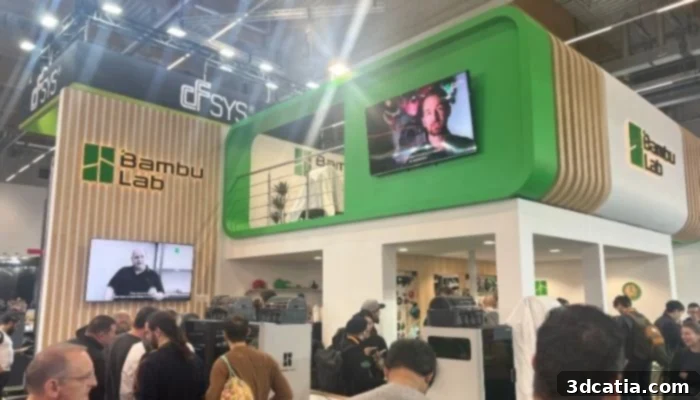
The Bambu Lab booth at Formnext 2025. The company continues to experience significant growth in the desktop 3D printing sector. (Photo Credit: 3Dnatives)
Several trends that emerged in 2024 gained significant momentum in 2025. China further solidified its position as a central player in the market, while established manufacturers like Stratasys, HP, and Raise3D strategically expanded their portfolios with new materials and technologies. Furthermore, critical sectors such as defense and aerospace provided definitive proof that additive manufacturing has moved beyond its experimental phase and is now a vital component of their operations. The question is no longer whether the industry is in a “gloomy” period, but rather what kind of industry is emerging from this period of adjustment.
Natural Selection in Additive Manufacturing: Consolidation and Restructuring
The additive manufacturing industry is no stranger to cycles of growth and contraction. 2025 will be remembered as a year of significant corporate reconfiguration, exemplified by the experiences of Nano Dimension, Desktop Metal, and Markforged. Nano Dimension’s stated intention to acquire Desktop Metal and Markforged in 2024 culminated in the completion of both deals in 2025, although not without considerable challenges.
The acquisition of Desktop Metal was particularly turbulent, marked by legal disputes and internal instability. Desktop Metal filed a lawsuit against Nano Dimension, alleging that the acquiring company failed to meet its regulatory obligations, specifically regarding approval from the Committee on Foreign Investment in the United States (CFIUS). These proceedings occurred amidst internal leadership changes at Nano Dimension, including the dismissal of then-CEO Yoav Stern. The legal battle continued into early 2025, with expedited hearings and a trial scheduled for March, before the acquisition was ultimately finalized in April.
Nano Dimension itself also underwent leadership instability during this period. At the end of 2024, the company dismissed Yoav Stern after five years as CEO. Julien Lederman served as interim CEO, followed by the appointment of Ofir Baharav as chief executive in April 2025. Baharav was tasked with accelerating the integration of Desktop Metal and Markforged, but his tenure was short-lived, as he stepped down in September 2025. A few months later, Nano Dimension appointed David Stelhin as its new CEO, marking a period of significant leadership flux.
Meanwhile, Desktop Metal reached a critical juncture in March 2025, filing for Chapter 11 bankruptcy protection to restructure its debt. As part of this process, the company began divesting several of its key international subsidiaries, including ExOne and EnvisionTEC, to stabilize its operations and preserve its core technological capabilities. These strategic decisions reflect the challenging economic conditions and the need for restructuring within the company.
In 2025, Nano Dimension completed the acquisition of Desktop Metal and Markforged, marking a significant consolidation in the additive manufacturing sector. (Photo Credit: Nano Dimension)
The impact of these acquisitions and restructuring efforts became evident in Nano Dimension’s financial results at the end of 2025. The company reported third-quarter revenues of $26.9 million, a substantial increase from $14.9 million in the same period the previous year. A significant portion of this growth, $17.5 million, was directly attributable to the acquisition of Markforged. However, Desktop Metal was reclassified as a discontinued operation following its bankruptcy and subsequent deconsolidation. These strategic moves, while resulting in growth, came at a high cost, underscoring the ongoing reorganization within the additive manufacturing industry, a process of “natural selection” where not all players are able to adapt at the same pace.
Another notable adjustment in 2025 involved BCN3D Technologies, a Spanish manufacturer of industrial FFF printers. The company faced several months of uncertainty after entering insolvency proceedings, following unsuccessful attempts to restructure its debt despite its strong technological credentials and numerous public and private investments. Ultimately, its assets and operations were acquired by Quantum, a newly formed investment group that ensured continuity for the business and its team. This new phase aims to establish a leaner organizational structure, focused on consolidating BCN3D’s position in light industrial applications, signaling a renewed focus and strategy.
Finally, Arburg, a German manufacturer best known for its Freeformer pellet-based systems, made a significant decision in 2025 by withdrawing from the additive manufacturing market. The company cited a challenging economic environment and the need to refocus on its core business of injection molding as the primary reasons for its exit. Arburg’s exit from additive manufacturing will take effect on December 31, but the company will continue to provide technical support, spare parts, and ongoing service for its existing users, ensuring minimal disruption for its customer base.
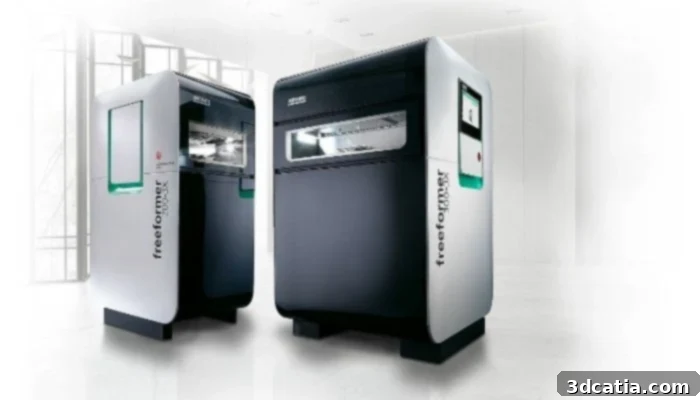
In 2025, German company Arburg withdrew from the additive manufacturing market, citing economic challenges and a refocus on its core business. (Photo Credit: Arburg)
The events of 2025 suggest that additive manufacturing is undergoing a phase of structural adjustment rather than continuous expansion. At the same time, the year can be viewed as a period of selection, where the market is beginning to define which players will lead the next phase of additive manufacturing. The ability to adapt, innovate, and strategically position within the market will be crucial for long-term success.
Diversification Strategies of Major Manufacturers
Another prominent trend in 2025 was the strategic diversification undertaken by several established manufacturers. Stratasys, HP, and Raise3D all began expanding their portfolios to include new technologies and materials, broadening their reach and appealing to a wider range of applications.
Stratasys made a particularly strategic move by formally entering the metals and ceramics space through a partnership with Tritone Technologies, the developer of MoldJet technology. This process enables the production of high-density metal and ceramic parts using plastic-printed molds, effectively combining Stratasys’ expertise in polymer additive manufacturing with Tritone’s industrial production capabilities. This partnership allows Stratasys to offer a more comprehensive solution to its customers, catering to a wider range of material needs.
With this move, Stratasys aims to address growing customer demand, particularly from sectors such as defense, aerospace, and government, which require solutions capable of integrating polymers and metals within a single manufacturing ecosystem. HP, meanwhile, garnered attention at Formnext with the launch of its first industrial filament 3D printing platform, the HP IF 600HT, designed for high-temperature materials and high-performance environments such as aerospace and defense. This move signals HP’s intention to expand its portfolio beyond Multi Jet Fusion, targeting demanding applications that require complex and durable parts.
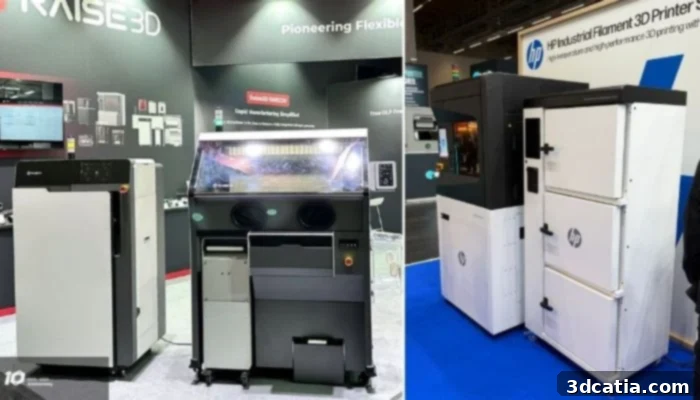
On the left, the new SLS printer from Raise3D. (Photo Credit: Raise3D) On the right, the new filament solution from HP. (Photo Credit: HP AM Solutions)
In line with this broader diversification trend, Raise3D also took a significant strategic step in 2025 with the launch of its first SLS printer, the RMS220. Known for its professional FDM systems and, more recently, its resin platforms, the company announced its entry into selective laser sintering at the TCT Asia trade show. With this launch, Raise3D aims to position itself as a multi-technology player in the professional segment, offering solutions across filament, resin, and SLS. These strategic shifts collectively illustrate how major manufacturers are moving toward more comprehensive offerings designed to address a wide range of additive manufacturing needs across the industry, reflecting a market-wide trend toward diversification.
The Ascendancy of the Chinese Market
The label “Made in China” has evolved significantly over the past two decades, and the additive manufacturing industry provides clear evidence of this transformation. China has firmly established itself as one of the sector’s leading players, driven by its robust technological capabilities and a carefully executed global ambition.
This consolidation was clearly reflected at Formnext, where Asian manufacturers once again dominated the show, significantly outnumbering their US counterparts, despite the United States being the historical birthplace of additive manufacturing. In the previous edition, Formnext featured 53 US exhibitors compared to 101 Chinese companies. In 2025, although the fair slightly reduced its overall exhibitor count, the trend persisted, with 54 US exhibitors versus 95 Chinese ones. This indicates that despite a slight reduction in total exhibitors, the Asian presence remained proportionally stronger, showcasing the growing influence of Chinese manufacturers.
Within this broader context, Bambu Lab has emerged as one of the most influential names in the industry, becoming a prominent figure in the world of 3D printing. While its rapid growth had been widely anticipated, 2025 marked a particularly important year for the Chinese manufacturer with the launch of what are, to date, its most advanced desktop 3D printers: the H2D and the H2S. Bambu Lab’s success is not accidental. The company has effectively combined technical innovation, ease of use, and a highly competitive value proposition, making 3D printing more accessible to a broader audience.

Bambu Lab stole the show at Formnext 2025 with the presentation of its latest solutions, further solidifying its position as a leader in the desktop 3D printing market. (Photo Credit: 3Dnatives)
Bambu Lab has not only become one of the most popular brands within the maker community, but has also successfully expanded into industrial and educational environments, while reaching new audiences such as children and young people discovering the technology through its machines. This expansion has been accompanied by a commercial strategy rarely seen in the 3D printing market, including the opening of a physical retail store in China to increase brand visibility and strengthen its connection with users, marking a unique approach to market penetration.
In 2025, Bambu Lab’s influence has continued to grow. Its trajectory reflects a broader demand for solutions that are reliable, intuitive, and offer strong value for money. This trend remains a key driver of the market and is pushing other manufacturers to rethink their positioning and strategies to remain competitive in the face of this growing influence.
The growth of Asian manufacturers is no longer confined to the desktop market. Several companies from the region have strengthened their presence in the industrial segment, competing in technologies that were previously dominated by a small group of Western players. A clear example is electron beam melting (EBM), a process long associated with Arcam, which is now seeing new entrants from Asia. Companies such as QBeam, Xi’an Sailong Metal, and JEOL, drawing on their experience with other electron beam systems, are increasingly moving into this space, challenging the established players.
At the same time, established players such as Farsoon, E-Plus-3D, and BLT continue to strengthen their capabilities in other metal additive manufacturing technologies. By expanding their solution portfolios, improving system reliability, and gaining traction in demanding industrial sectors, these companies are further reinforcing Asia’s growing role in the industrial AM landscape, positioning the region as a key driver of innovation and growth.
Technological Maturity in Critical Sectors: Defense and Aerospace
In 2025, the defense and aerospace sectors have definitively demonstrated how additive manufacturing is moving beyond the prototyping phase to establish itself in real-world, highly demanding applications. This shift was also evident on the exhibition floors of Formnext this year, where numerous companies showcased advanced applications of AM in these sectors.
Within the defense sector, the current geopolitical climate has played a decisive role. Ongoing conflicts and rising international tensions have prompted many countries to strengthen their military capabilities and prepare for potential conflict scenarios. In this context, additive manufacturing has emerged as a strategic tool, offering capabilities such as rapid prototyping, on-demand part production, and customization for specific mission requirements. Throughout the year, there has been a noticeable increase in the acquisition of industrial 3D printers by government agencies, particularly in the United States, alongside growing collaboration with 3D printing service providers for military applications, highlighting the sector’s increasing reliance on AM.

The defense sector has experienced significant growth in the adoption of additive manufacturing during 2025, driven by the need for rapid prototyping and on-demand part production.
This strategic shift became even clearer with the recent approval of the National Defense Authorization Act (NDAA) in the United States. The legislation marks a turning point for advanced manufacturing, as for the first time additive manufacturing has been formally recognized as critical infrastructure within the United States Department of Defense, making it subject to clearly defined standards for security, traceability, certification, and scalability. The implications of this decision are far-reaching, directly affecting how parts are designed, validated, produced, and maintained across areas such as defense, aeronautics, naval operations, and ground-based systems.
One of the most significant aspects of this legislation is the redefinition of trust requirements in defense. The National Defense Authorization Act prohibits the United States Department of Defense from using additive manufacturing systems that are manufactured, developed, or connected to entities in countries such as China, Russia, Iran, or North Korea. This measure reinforces the strategic role of 3D printing in defense and is likely to have a direct impact on technology choices and overall market dynamics, potentially shifting the focus toward domestic or allied suppliers.
This new framework confirms that additive manufacturing is now firmly embedded within the defense industrial ecosystem and is no longer viewed merely as a tool for experimentation, marking a significant step toward widespread adoption and integration.
Turning to the aerospace sector, the maturity of 3D printing has been particularly evident in the production of engines and other critical components. Throughout 2025, multiple companies carried out testing and validation of rocket engines incorporating 3D-printed parts into operational systems. Examples from New Frontier Aerospace, POLARIS Spaceplanes, AVIO SpA, and Agnikul Cosmos demonstrate that additive manufacturing is now fully integrated into aerospace programs, contributing to cost savings, weight reduction, and improved performance. These advances have been enabled by the continued evolution of metal additive manufacturing solutions capable of producing parts that withstand high temperatures and extreme mechanical stresses, meeting the stringent requirements of aerospace applications.
The vision of 3D printing in zero gravity remains very much alive. Following the first metal 3D printing operation carried out in space by the European Space Agency at the end of 2024, multiple additional tests were conducted throughout 2025 to determine which materials and processes can function effectively under microgravity conditions. This is a trend that is expected to continue into 2026, according to project announcements such as that of Auburn University in the United States, which plans to 3D print semiconductors in zero gravity next year, potentially revolutionizing space manufacturing and enabling on-demand production of critical components in orbit.
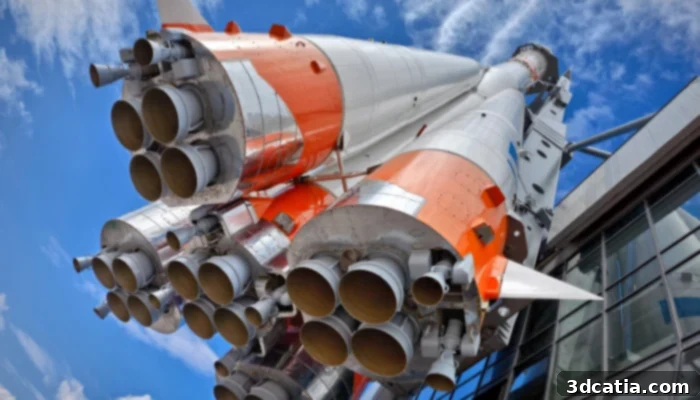
Testing of 3D-printed rocket engines has increased significantly, showcasing the advancements in additive manufacturing for aerospace applications.
Contrasting Trajectories Across Sectors
Last year, in 2024, we highlighted all the news surrounding 3D food printing. Numerous projects, startups, and research initiatives emerged with the goal of bringing this technology into the kitchen. In 2025, however, this application appears to have slowed. While development has not stopped altogether, with ongoing research projects such as those focused on nutrition for people with dysphagia, food 3D printing no longer seems to be progressing at the same pace as in previous years, suggesting that challenges related to scalability, cost, and consumer acceptance remain significant.
By contrast, construction continues to stand out as a growing and increasingly mature application. In 2025, the sector saw a strong push toward more sustainable materials, including recycled mixes and formulations with a lower environmental impact, reflecting the broader global shift toward a circular economy and highlighting the increasing focus on environmentally friendly construction practices.
One construction player that drew particular attention this year was Caracol. The Italian company, which specializes in large-scale robotic additive manufacturing, raised $40 million. With this funding, Caracol aims to accelerate its international expansion, notably across the United States, the European Union, and the Middle East, indicating a growing demand for its innovative construction solutions.
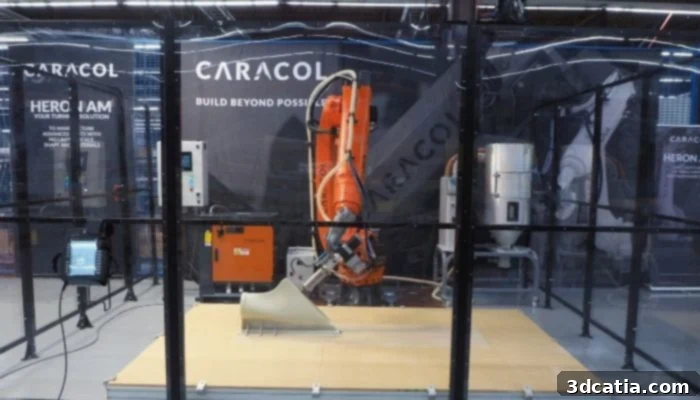
(Photo Credit: Caracol)
As the year comes to a close, 2025 can be accurately described as a period of maturity and adjustment for additive manufacturing. Over the past twelve months, the industry consolidated real-world applications, diversified its material offerings, and underwent a reconfiguration of key players, highlighting how 3D printing continues to evolve toward more comprehensive solutions tailored to industrial needs. We will continue to follow these developments closely and report on the key trends and innovations shaping 2026, providing in-depth analysis and insights into the future of additive manufacturing.
What are your thoughts on the key trends that shaped the additive manufacturing industry in 2025? What changes do you expect to see in 2026? Let us know in a comment below or on our LinkedIn or Facebook pages! Plus, don’t forget to sign up for our free weekly Newsletter to get the latest 3D printing news straight to your inbox. You can also find all our videos on our YouTube channel.